A tiny sound can make a big change. If you hear at and then hear cat, only one sound was added, but now it is a new word. If you hear hat and then hot, one sound changed, and the word changed too. Good readers and speakers listen closely to these little sound changes.
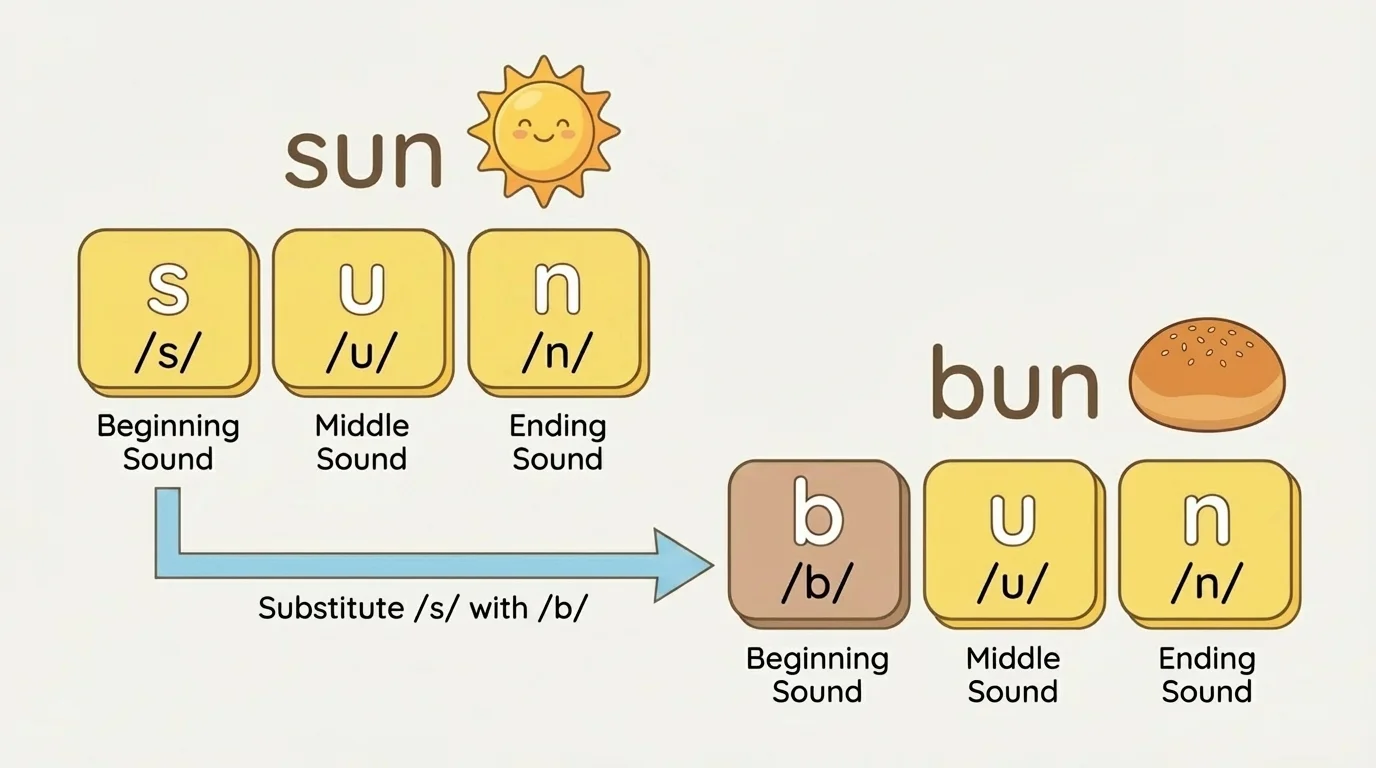
A phoneme is the smallest unit of sound in a word that can change meaning. In short one-syllable words, we can often hear a beginning sound, a middle sound, and an ending sound. In sun, the sounds are /s/, /u/, and /n/, as shown in [Figure 1]. When we listen for each sound, we can tell how words are alike and how they are different.
A one-syllable word is a word we say with one beat, like cat, dog, map, or sit. These short words are good for practicing sound changes because each sound is easier to hear.
Beginning sound is the first sound you hear in a word. Middle sound is the sound in the center. Ending sound is the last sound you hear. When one of these sounds changes, the word can become a new word.
When children learn to hear sounds clearly, they build strong reading skills. They begin to notice that pig and big are almost the same, but the first sound is different. They also notice that pin and pan change in the middle.
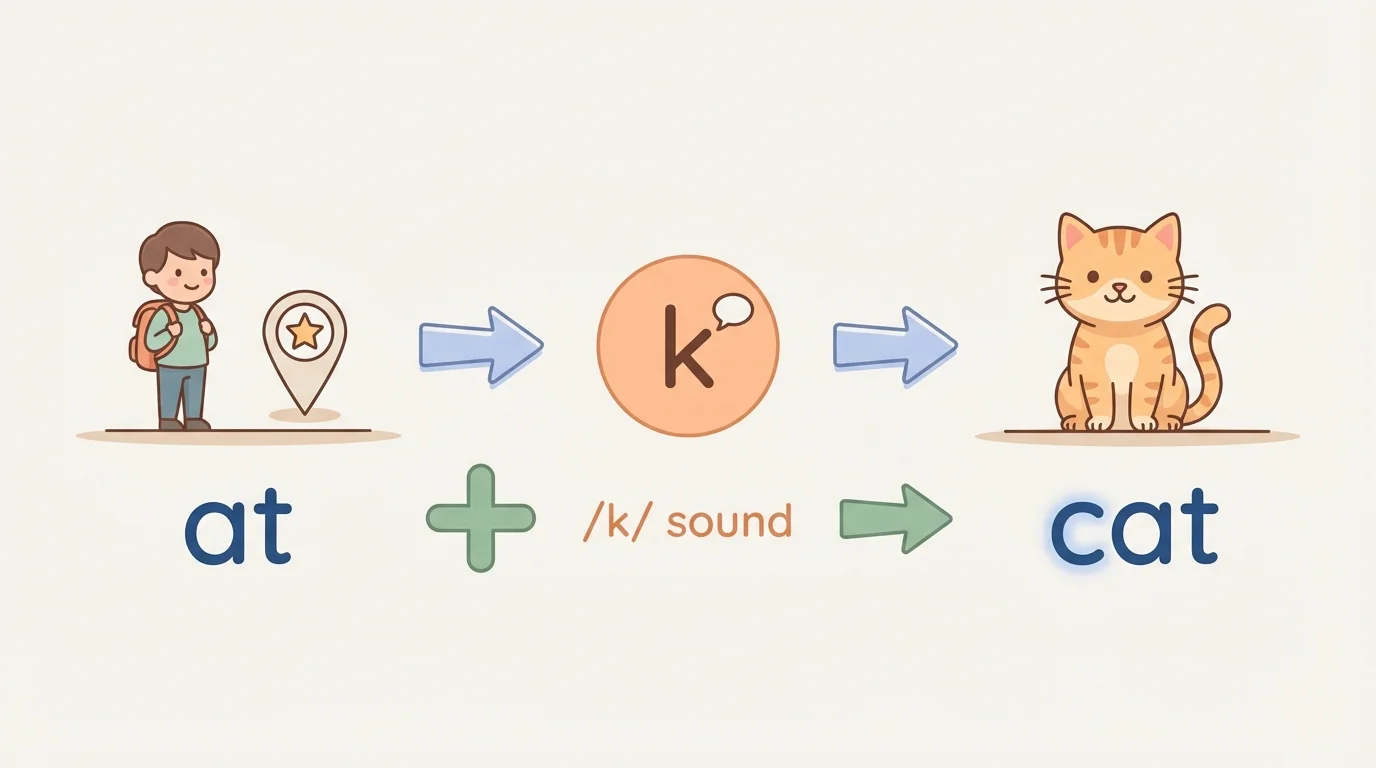
Sometimes we make a new word by adding one sound. We can add a sound to the front of a word or sometimes to the end. For example, at becomes cat when the /k/ sound is added at the beginning. The word an becomes and when /d/ is added at the end.
[Figure 2] Listen to these examples: in to pin, it to sit, no to not. Each time, one new sound is added, and a new word is made.
Adding one sound changes meaning
Words are made of sounds in order. If a new sound is placed at the beginning or end, the order changes. That new order makes a different word with a different meaning.
Careful listening matters. If you hear ice and then mice, the word did not just get longer. It became a new word because a sound was added to the front.
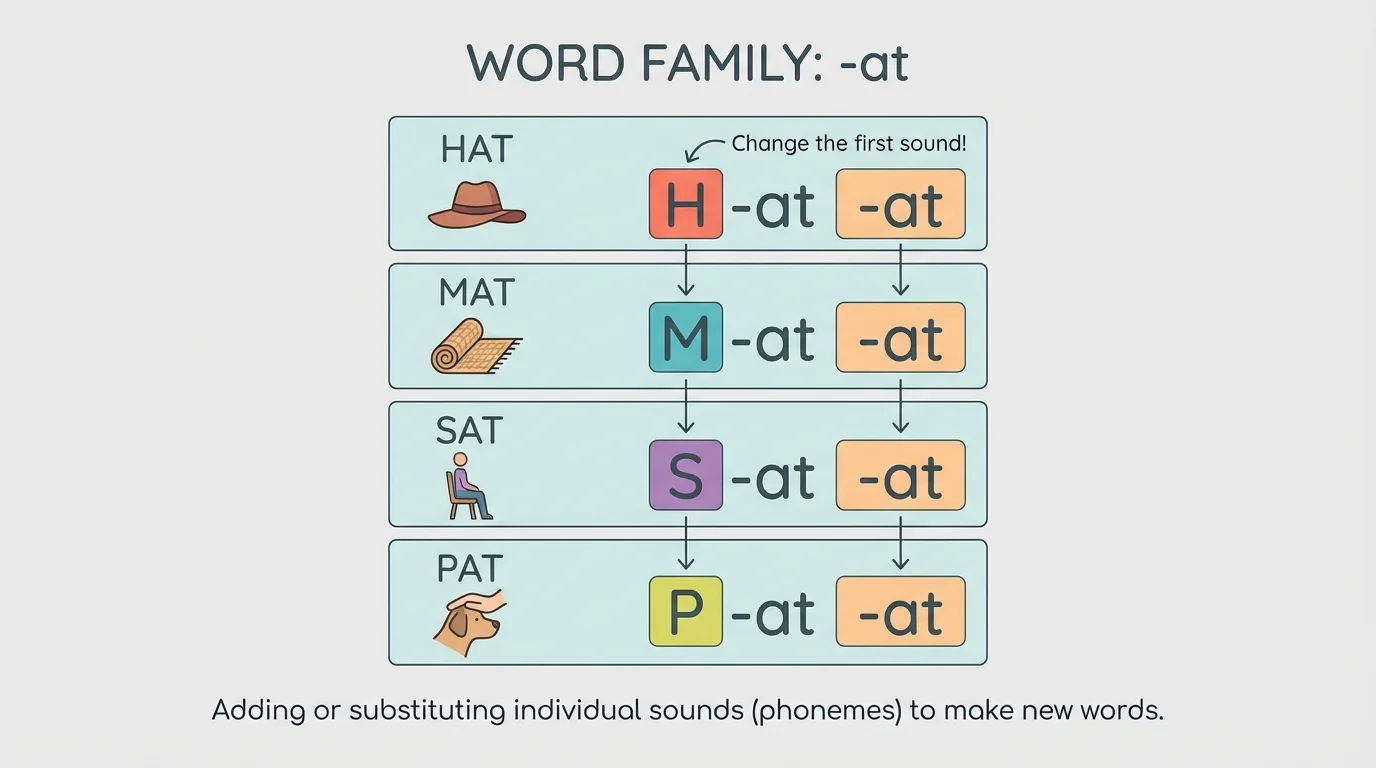
We can also make a new word by substituting, or swapping, one sound for another. If we change the first sound in hat from /h/ to /m/, we get mat. Only one sound changed, but the word is new.
[Figure 3] We can substitute the beginning sound in many short words: sat to pat, bug to rug, ten to hen. The rest of the word stays the same while one sound changes.
Examples of sound substitution
Step 1: Start with map.
Step 2: Change /m/ to /t/.
Step 3: The new word is tap.
Step 4: Start with sit and change /s/ to /f/.
Step 5: The new word is fit.
Sometimes the middle sound changes: pig to peg, cap to cup. Sometimes the ending sound changes: pan to pat, cub to cut.
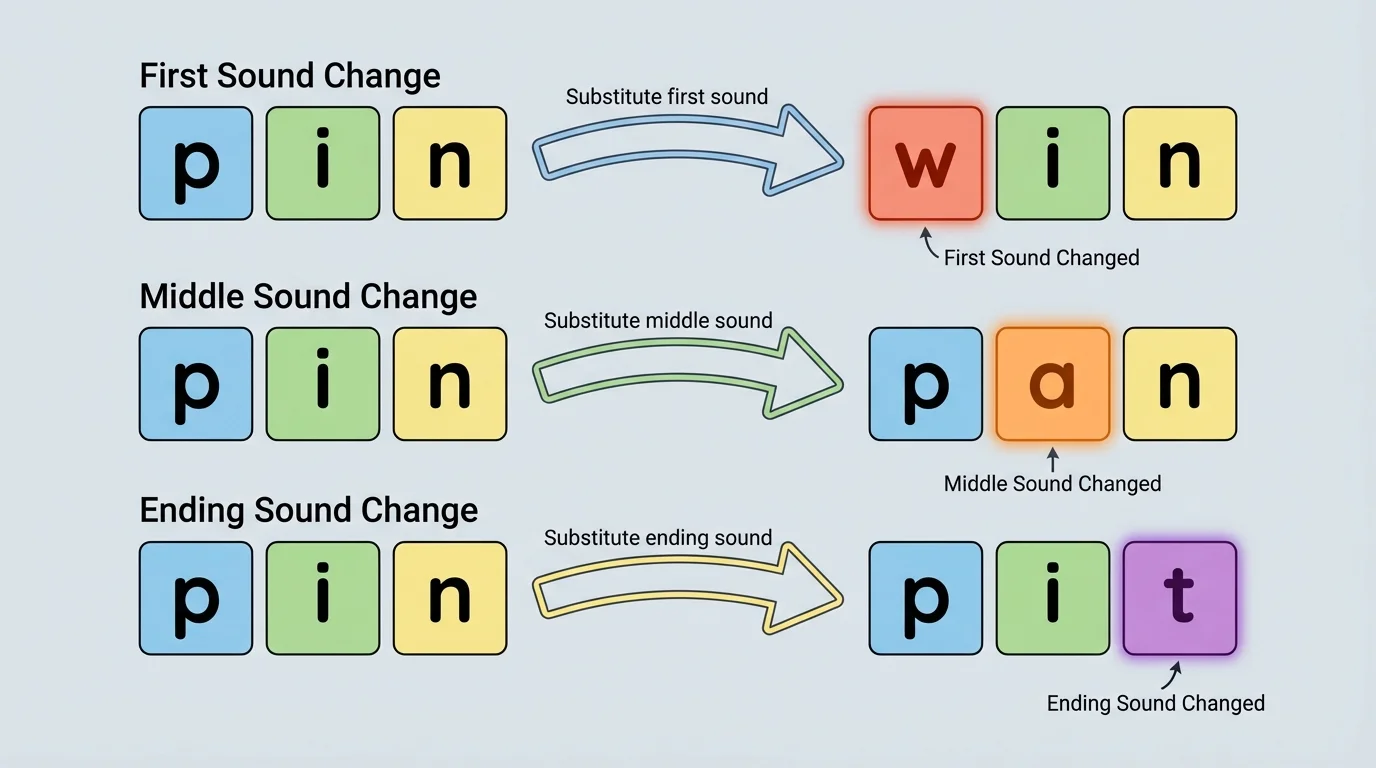
The place where the sound changes matters. A change at the beginning, middle, or end can make different kinds of new words. In [Figure 4], one short word changes in different sound positions so you can compare them clearly.
If we start with pin, we can change the beginning sound to make win. We can change the middle sound to make pan. We can change the ending sound to make pit. Each word has one syllable, but a different phoneme changes each time.
Some words are called minimal pairs because only one sound is different, like bat and bit. These tiny changes help children hear sounds more clearly for reading and spelling.
When we see hat, mat, sat, and pat in [Figure 3], only the first sound changes. Here, the changed sound can move to a different place in the word, and that changes what we hear.
Many one-syllable words belong to a word family. A word family has words that share some of the same sounds. For example, -at words can be cat, hat, mat, rat, and sat. These words help us hear how changing one beginning sound makes a new word.
Other word families include -ig words like big, dig, fig, pig, and wig, or -an words like can, fan, man, and tan. Word families make patterns easier to hear.
| Start Word | Change | New Word |
|---|---|---|
| hat | change /h/ to /k/ | cat |
| pan | change /n/ to /t/ | pat |
| pig | change /i/ to /e/ | peg |
| at | add /b/ at the beginning | bat |
Table 1. Examples of making new one-syllable words by adding or changing one sound.
When children read and speak, they do not just look at whole words. They also listen for each sound. The sound boxes for sun in [Figure 1] remind us that words can be taken apart into small sounds and then put back together.
When a sound is added, the word gets a new sound in its sound order. When a sound is substituted, one sound is replaced. This is why at to cat is different from cat to cut. In the first pair, a sound is added. In the second pair, a middle sound changes.
Good readers often say a word slowly in their minds. They listen for the first, middle, and last sounds. This helps them read new words and notice when one small sound makes a big difference.
These sound changes are important for reading, spelling, and speaking clearly. When children can hear that mop, top, and hop differ by one sound, they are building strong foundations for later reading success.
