Have you ever noticed that the word cat is not just one big sound? It is made of little sounds we can hear: /k/ /ă/ /t/. When we listen closely, we can find the sound at the beginning, the sound in the middle, and the sound at the end. This is an important reading skill because good readers and writers listen carefully to the sounds in words.
A spoken word is made of small parts called sounds. When we listen to a word, we can stretch it out and hear the parts. For example, in dog, we can hear /d/ /o/ /g/. In sun, we can hear /s/ /ŭ/ /n/. These sounds help us match spoken words to letters when we read and write.
We can listen for three places in a word. The beginning sound is the sound we hear first. The middle sound is the sound we hear in the center of a short word. The ending sound is the sound we hear last.
Initial sound is the first sound in a spoken word. Medial sound is the middle sound in a short spoken word. Final sound is the last sound in a spoken word.
When we talk about sounds, we are listening with our ears. Sometimes a letter and a sound match closely, but here we are focusing on what we hear. That means we say the word aloud and notice its parts.
[Figure 1] shows simple spoken words with their first sounds highlighted. The initial sound is the sound we hear first. In sun, the first sound is /s/. In ball, the first sound is /b/. In fish, the first sound is /f/.
We can sort words by beginning sound. Moon and milk begin with /m/. Toy and top begin with /t/. Pig and pan begin with /p/. When two words start with the same sound, they have the same beginning sound.
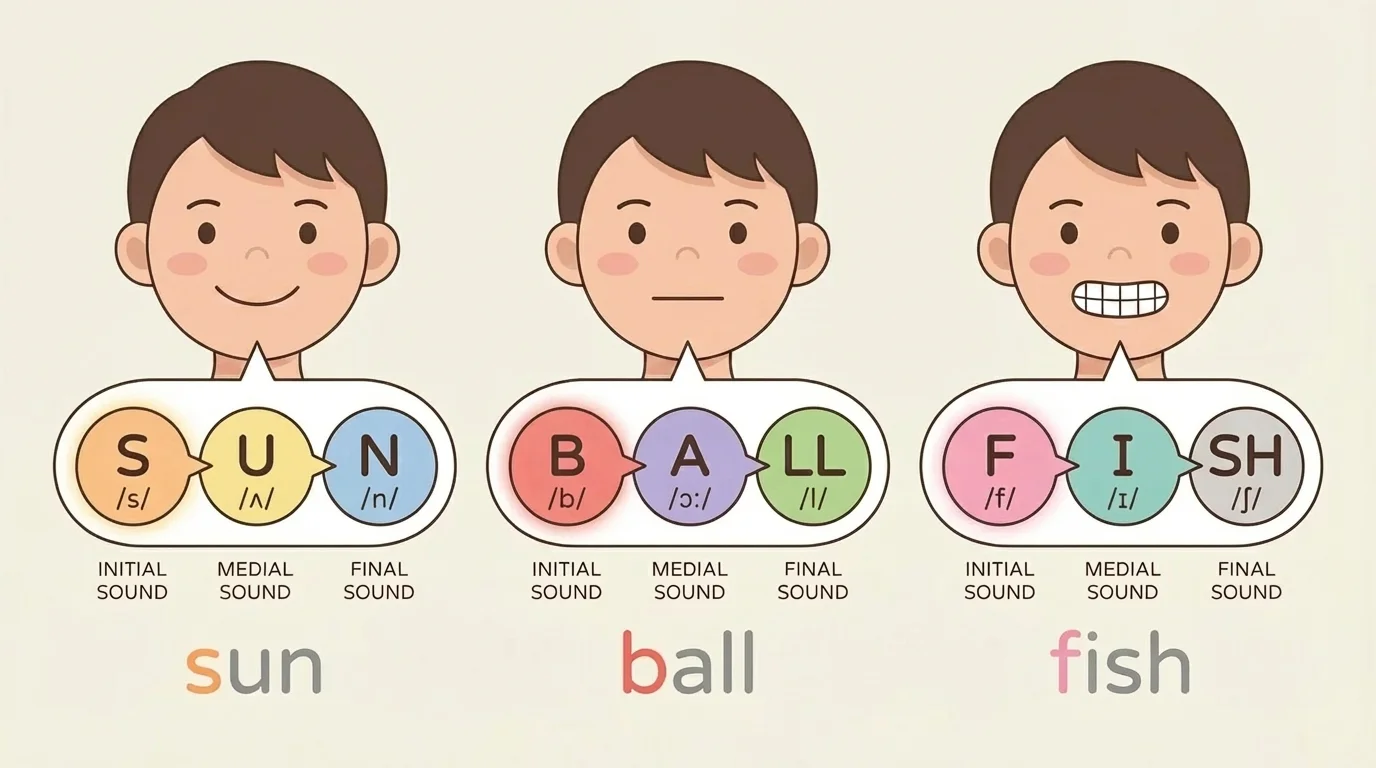
Listening for the first sound helps children connect speech to print. If you hear /k/ at the start of cup, you know what sound comes first when the word is spoken. Later, this helps when matching sounds to letters in reading and spelling.
Many silly tongue twisters are fun because they repeat the same beginning sound. Phrases like big brown bear help ears notice first sounds.
Sometimes many words begin with the same sound even when they are about different things. Baby, banana, and bike all begin with /b/. Hearing that shared sound is part of strong sound awareness.
[Figure 2] helps us notice the middle sound clearly. The medial sound is the sound in the middle of a short word. In cat, the middle sound is /ă/. In bed, the middle sound is /ĕ/. In pig, the middle sound is /ĭ/.
Middle sounds can be harder to hear than beginning sounds because they are tucked inside the word. It helps to say the word slowly: caaat, beeed, piiig. Then the middle sound stands out more clearly.
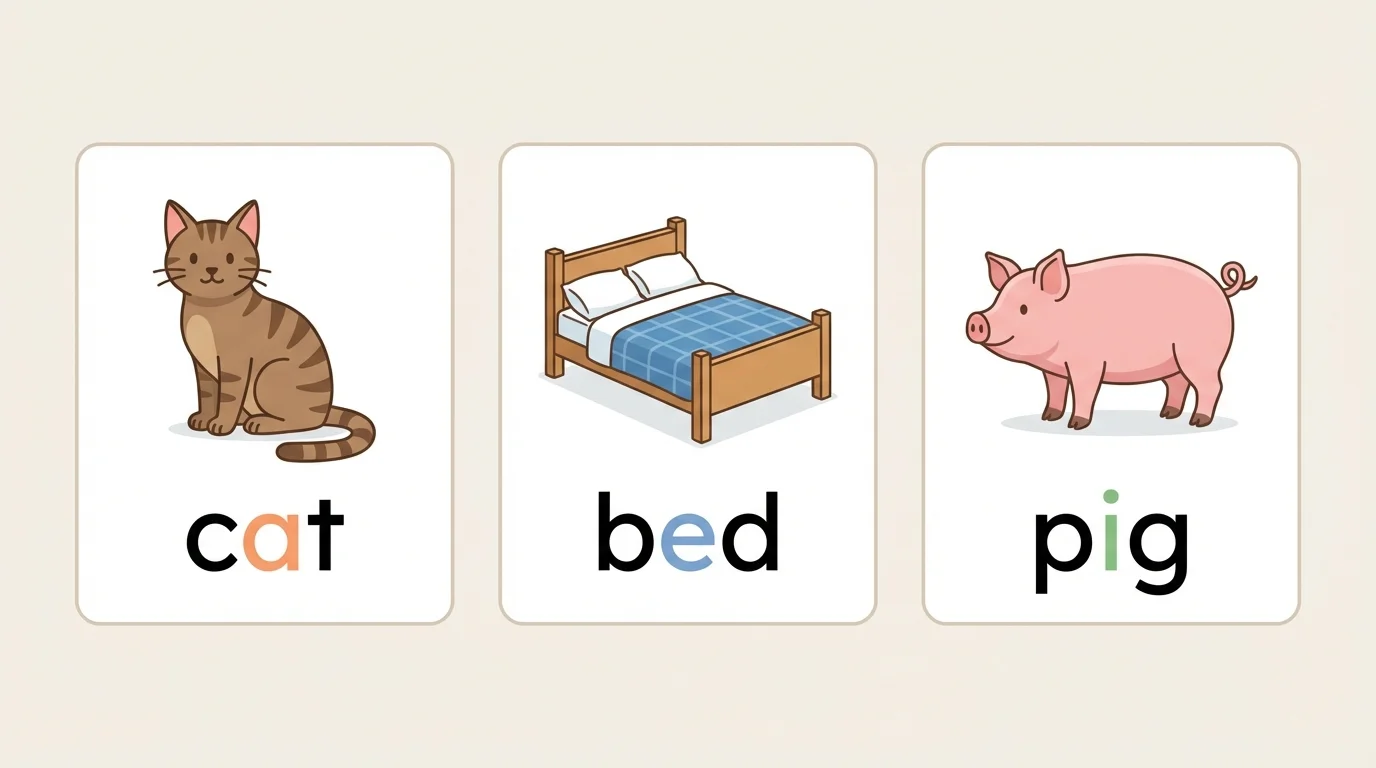
Many middle sounds in short words are vowel sounds. Listen to these words: map, cap, and jam. They all have /ă/ in the middle. Listen to hen, pen, and web. They all have /ĕ/ in the middle.
Why middle sounds matter
When children can hear the middle sound, they can tell similar words apart. For example, pig and peg start with /p/ and end with /g/, but the middle sound changes the word. That one sound changes what the word means.
Listening for the middle sound helps children notice the difference between words like hat, hit, and hot. The beginning and ending sounds may stay the same while the middle sound changes.
[Figure 3] makes it easy to see the last sound in a spoken word. The final sound is the sound we hear last. In bus, the final sound is /s/. In map, the final sound is /p/. In log, the final sound is /g/.
To hear an ending sound, say the word and listen to how it finishes. Fan ends with /n/. Cup ends with /p/. Bell ends with /l/. The last sound closes the word.
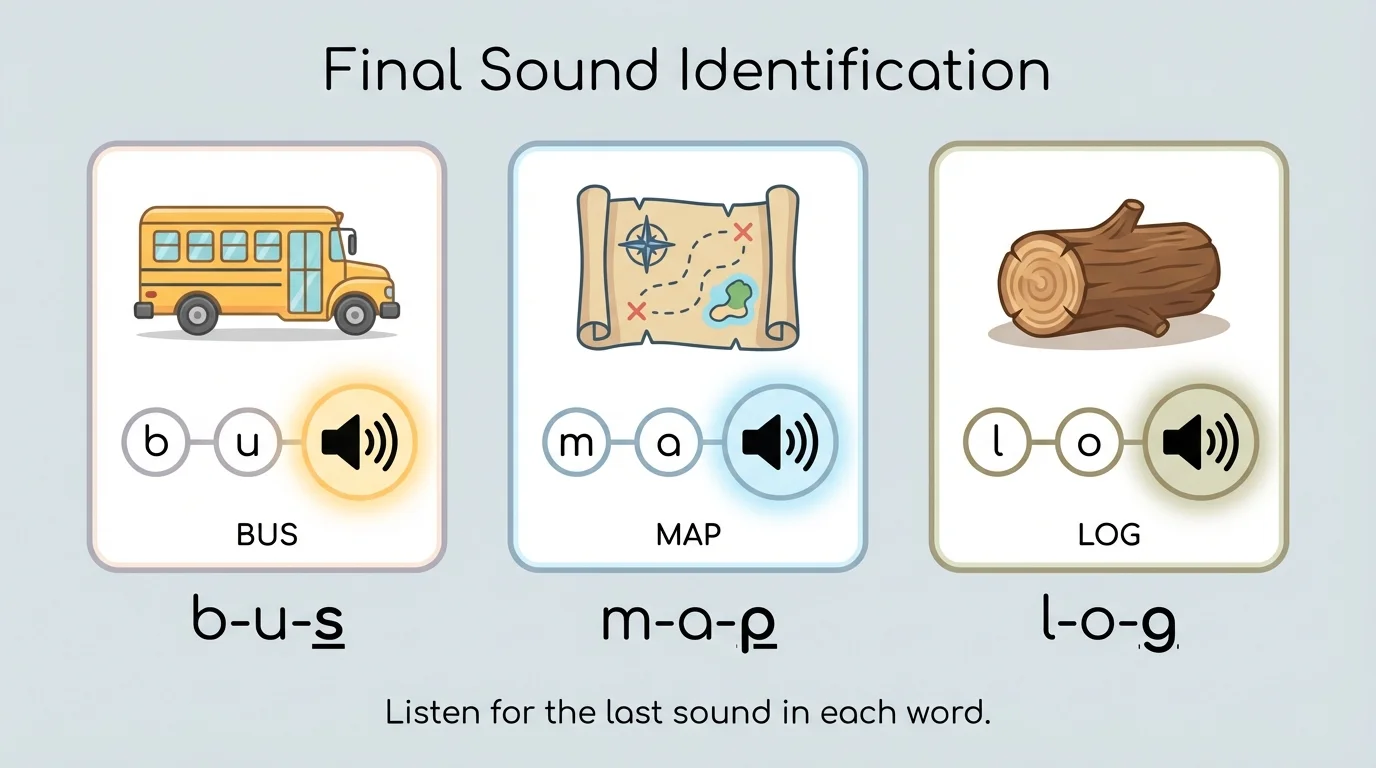
Some words can share the same ending sound. Dog, pig, and bag all end with /g/. Hen and sun both end with /n/. Hearing matching ending sounds helps children compare words and build stronger listening skills.
Ending sounds can also help with spelling. If a child hears that cap ends with /p/, that last sound gives an important clue. The end of the word is where the final sound is heard.
Words can match in different places. Some words have the same beginning sound, like sock and sand. Some words have the same middle sound, like cat and map. Some words have the same ending sound, like bed and red.
Listening carefully helps us compare words. Top and tap begin with the same sound /t/ and end with the same sound /p/, but the middle sound is different. Fan and fin begin with /f/ and end with /n/, but /a/ and /i/ make them different words.
| Word | Beginning sound | Middle sound | Ending sound |
|---|---|---|---|
| cat | /k/ | /ă/ | /t/ |
| sun | /s/ | /ŭ/ | /n/ |
| pig | /p/ | /ĭ/ | /g/ |
| bed | /b/ | /ĕ/ | /d/ |
When children notice which part stays the same and which part changes, they become more careful listeners. This skill supports reading new words and saying them clearly.
Reading begins with hearing sounds in words. If a child can hear the first, middle, and last sounds, it becomes easier to connect those sounds to letters. This is one way children move from spoken language to printed words.
You already know that we can clap parts of words and listen to rhymes. Listening for beginning, middle, and ending sounds is another way to pay close attention to spoken words.
Strong sound listening also helps with writing. A child who hears /m/ at the beginning of mat, /a/ in the middle, and /t/ at the end has important clues for writing the word. Hearing sounds is like taking a word apart and then putting it back together.
As we saw earlier in [Figure 1], words have a sound at the start, and as [Figure 2] and [Figure 3] show, words also have important sounds in the middle and at the end. Careful listening helps children hear all three parts.
