Have you ever played a game and missed a turn because you did only one part of the direction? Listening carefully helps us at school, at home, and on the playground. When we listen with care, we can hear the words, think about what they mean, and do the right actions in the right order.
A two-step direction has two things to do. You do one action first, and then you do the next action. Good listening means you do not just hear sounds. You understand the message.
Listening is part of communication. We use our ears to hear words, our eyes to watch the speaker, and our bodies to show we are paying attention. This is called comprehension. Comprehension means understanding what we hear.
When a teacher says, "Pick up your paper and sit on the rug," there are two parts. If a child only picks up the paper but does not sit on the rug, the whole direction is not finished. Listening all the way to the end helps us know both parts.
Two-step directions are directions with two actions to do in order.
Comprehension means understanding what you hear.
Nonverbal language is communication without words, such as looking at the speaker, nodding, or using a quiet body.
Sometimes two-step directions help keep us safe. An adult might say, "Hold my hand and stop at the curb." Listening closely helps children know exactly what to do.
[Figure 1] Two-step directions happen in a special order. The first action happens first. The second action happens second. If we mix up the order, the direction may not work the same way.
Listen to this direction: "Touch your head and clap your hands." First, touch your head. Second, clap your hands. Both parts matter.
Here is another direction: "Get your book and stand by the door." A good listener remembers both actions. The listener does not stop after only getting the book.
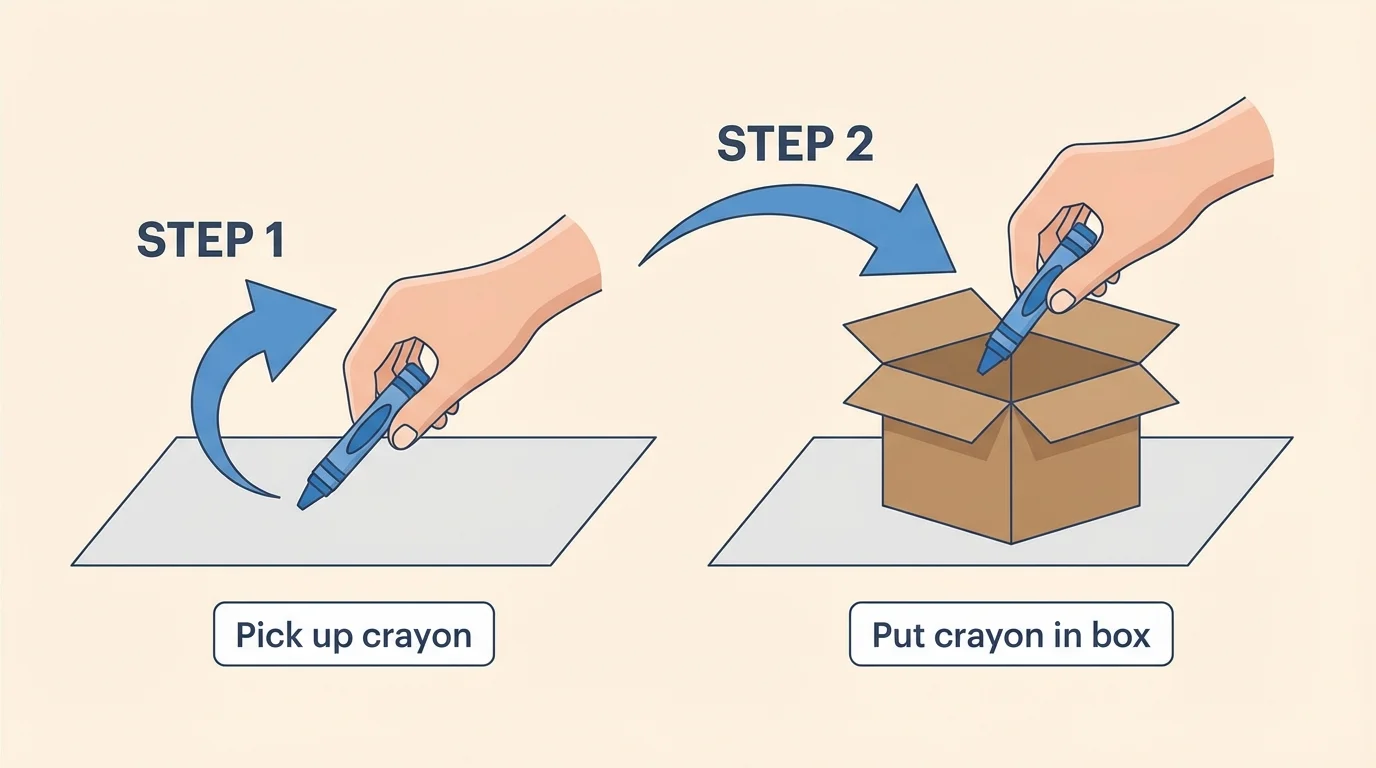
Some directions use action words we know well, such as pick up, sit, stand, point, or bring. Listening for these action words helps us know what to do.
[Figure 2] Good listeners use both words and body clues. They look at the speaker, keep a quiet body, and listen until the direction is finished. These are examples of nonverbal language.
Good listeners can also use verbal language. They may say, "Okay," "First I get my coat, then I line up," or "Can you say it again, please?" Their words show that they are trying to understand.
A child who is ready to listen may have eyes watching, ears listening, hands still, and a brain thinking. These clues help the speaker know the message is being heard.
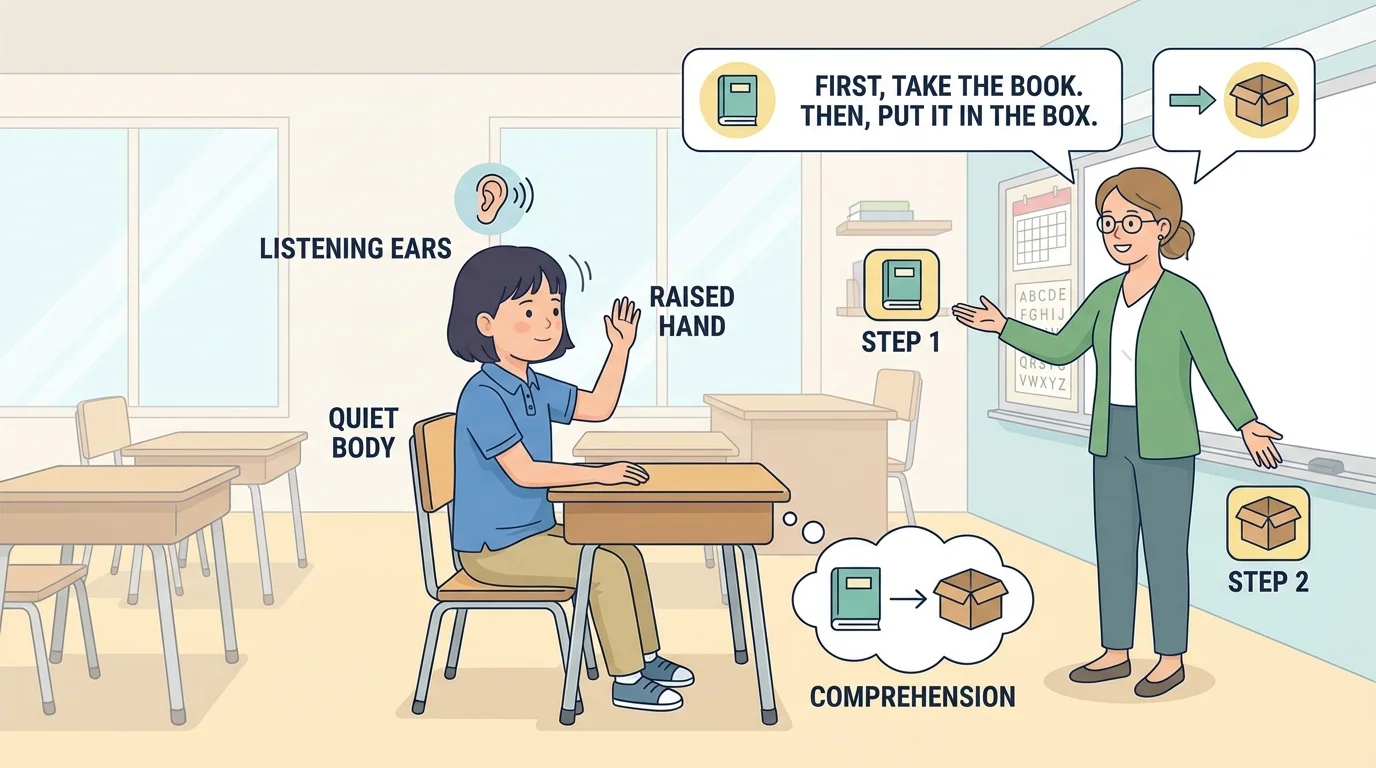
Later, when we follow classroom routines, the same body clues still help us, just like in [Figure 2]. Listening is not only about being quiet; it is about understanding and acting.
Listening uses more than ears. A strong listener hears the words, thinks about their meaning, remembers the order, and then acts. Eyes, face, hands, and voice can all show that the listener understands.
Sometimes the speaker also uses gestures. A teacher may point to the shelf and then to the table. Those motions can help the listener understand the two parts of the direction.
[Figure 3] Some words tell us about order and help make these words clear. Important listening words are sequence words. These are words like first, then, before, and after.
If someone says, "First wash your hands, then sit down," the word first tells what to do at the start. The word then tells what to do next.
If someone says, "Before you color, write your name," the action for writing your name comes earlier. If someone says, "After you clean up, join the circle," cleaning up happens first.
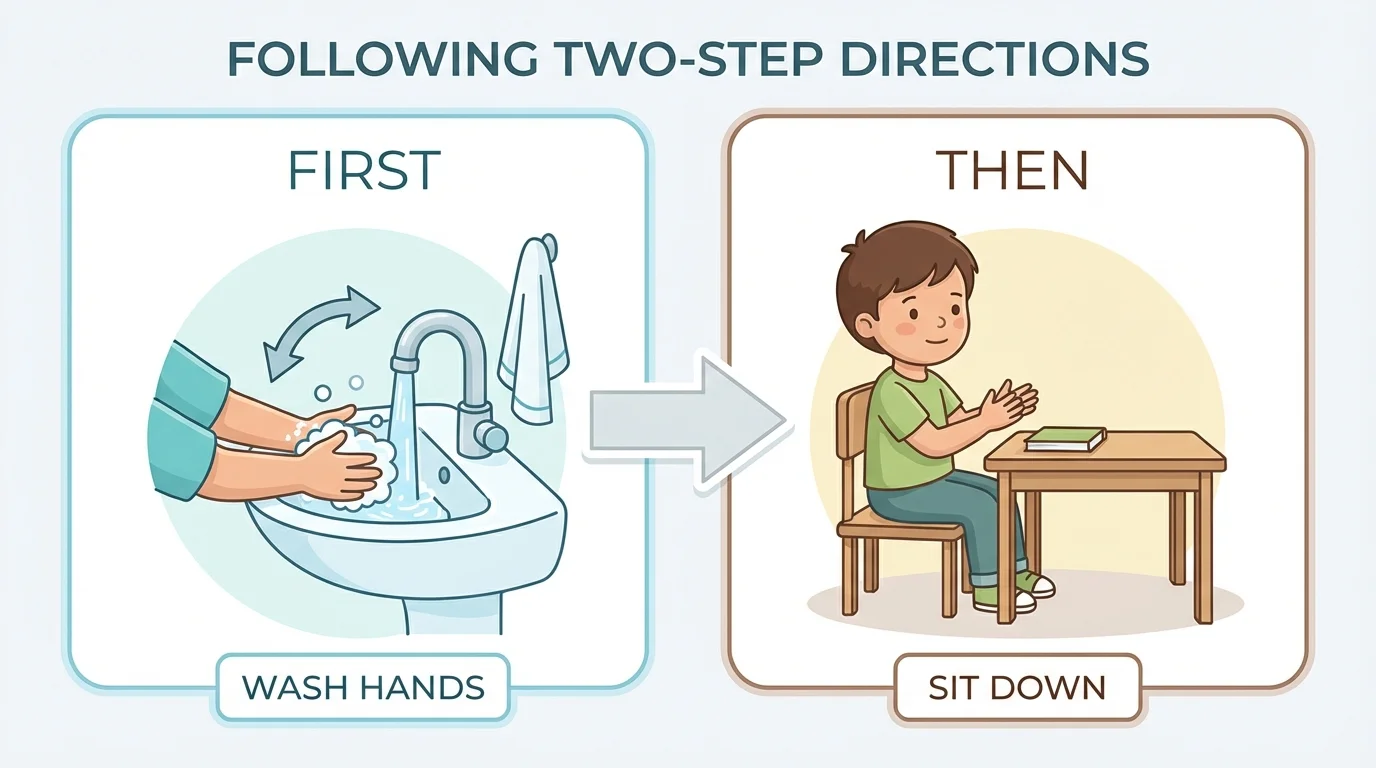
These little words are very important. They help us keep the actions in the right order. When we remember sequence words, following directions becomes easier.
At school, a teacher might say, "Open your folder and take out your paper." At lunch, an adult might say, "Throw away your trash and push in your chair." On the playground, a coach might say, "Grab the ball and stand on the line."
At home, someone may say, "Put on your shoes and get your backpack." In art, someone may say, "Choose a color and draw a circle." In music, someone may say, "Pick up your instrument and sit quietly."
Listening to a direction
Direction: "Pick up the red block and put it on the table."
Step 1: Listen for the first action.
The first action is pick up the red block.
Step 2: Listen for the second action.
The second action is put it on the table.
Step 3: Do the actions in order.
First pick up the block. Then place it on the table.
When we heard the order clearly in the earlier picture example, it became easier to remember that step one and step two are not the same. Order helps the listener succeed.
Sometimes the direction has one object for both steps. For example, "Get your pencil and put it in the tray." The pencil is used in both actions. Other times, the two steps are different actions in different places, such as "Stand up and walk to the carpet."
Even good listeners do not understand every direction the first time. That is okay. A smart listener knows what to do next.
You can ask politely, "Can you say it again?" You can also say, "What do I do first?" or "Do I put away my book and then line up?" Saying the direction back helps check understanding.
It is okay to need help. Asking a question is part of listening and learning.
You can also watch for clues. The speaker's face, hands, or pointing may help. Just like the body clues in the earlier example, speakers and listeners both use nonverbal language to make meaning clear.
We use two-step directions every day. In the morning, someone may say, "Brush your teeth and put on your coat." In class, a teacher may say, "Circle the picture and color it blue." During safety time, an adult may say, "Stop and look both ways."
Listening with comprehension helps us work with other people. It helps us join games, follow routines, learn songs, clean up materials, and stay safe. Sequence words, careful ears, watching eyes, and thinking minds all work together.
Your brain works very fast when you listen. It hears the words, remembers them, and helps your body do the actions in order.
As we saw with the order words in the earlier chart, small words can make a big difference. A careful listener pays attention to the action words and the order words so both steps are done correctly.
