Have you noticed that a whole sentence can be made from just a few short words? When you learn to read words like I, see, the, and can, and you can sound out words like cat and dog, books begin to open in new ways. A reader does something amazing: the eyes look at print, the brain connects letters and sounds, and suddenly the words carry meaning.
Some words are called sight words. These are words readers see often and learn to know quickly. A sight word is a word you recognize quickly because you have seen it many times before. Some common sight words are I, a, the, is, can, see, my, to, and like.
When readers know sight words fast, they do not have to stop at every word. That helps them read a sentence more smoothly. In the sentence I see the dog., the words I, see, and the are sight words. Only one word may need more careful sounding out.
Sight words are words readers learn to recognize quickly. CVC words are short words with a consonant, then a vowel, then a consonant, such as cat, pig, and sun.
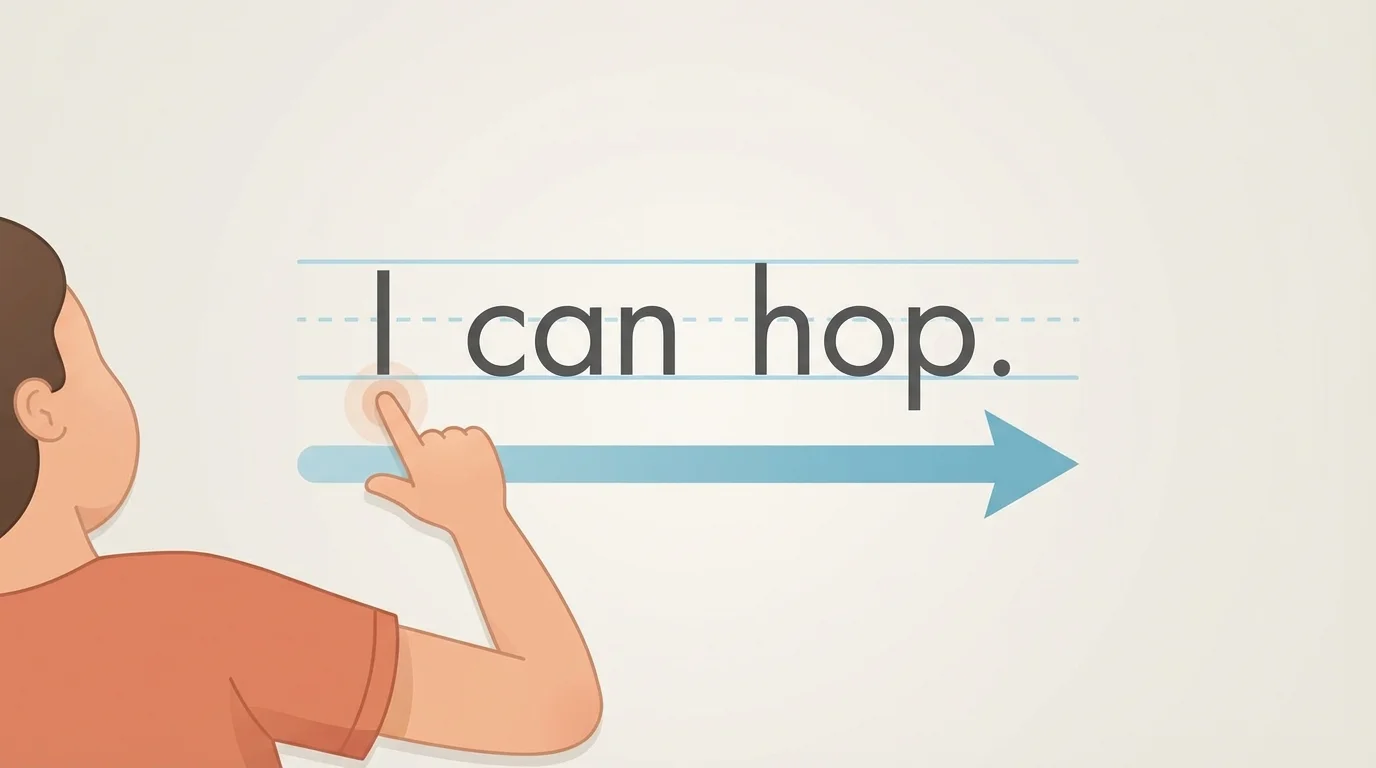
Many short beginner sentences use both kinds of words together. That is why they are so important. As shown in [Figure 1], a sentence like I can hop. mixes sight words and one short word that can be sounded out.
A CVC word has three sounds. In a word like cat, the first sound is /c/, the middle sound is /a/, and the last sound is /t/. When readers put those sounds together, or blend them, they can read the word. This is called decoding, or figuring out a printed word by using its sounds.
Here are some CVC words: cat, dog, pig, sun, hat, map, log, bed. These words are short, but they help readers do important work. They help the eyes and brain work together.
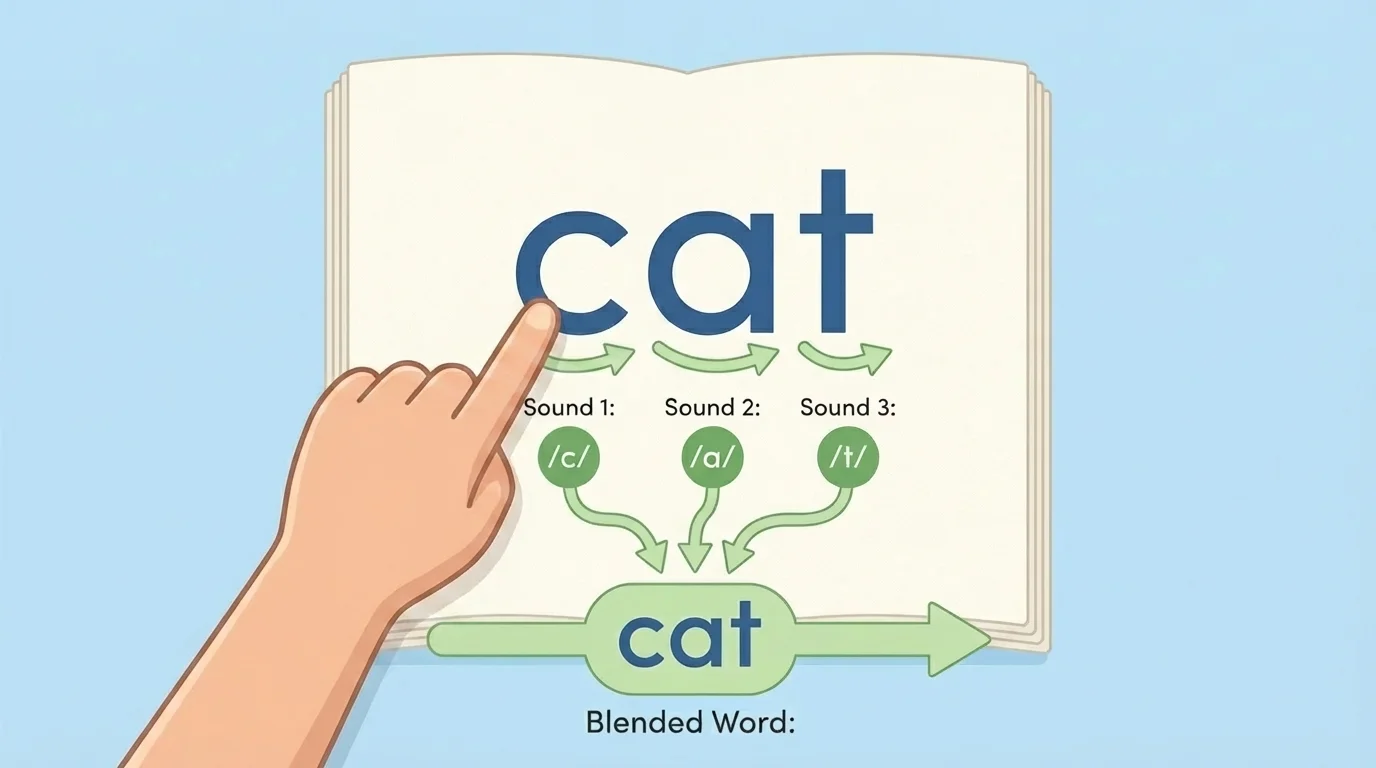
Readers often listen for the beginning sound, the middle vowel sound, and the ending sound. If a reader sees dog, the sounds are /d/ /o/ /g/. If a reader sees sit, the sounds are /s/ /i/ /t/. Blending the sounds smoothly helps the whole word become clear.
Sometimes two CVC words look almost the same. hat, hot, and hit all begin with h and end with t, but the middle vowel changes the word. That small middle sound can change the whole word.
Reading word parts in short words
Step 1: Look at the first sound.
In map, the first sound is /m/.
Step 2: Say the middle vowel sound.
The middle sound is /a/.
Step 3: Say the ending sound.
The last sound is /p/.
Step 4: Blend the sounds together.
/m/ /a/ /p/ becomes map.
When you can read CVC words, you can read many short sentences. As in [Figure 1], blending is not guessing. It is using each letter sound in order.
As shown in [Figure 2], a sentence is a group of words that tells a complete idea. Readers move across the sentence from left to right. They look at one word, then the next word, and keep going until the sentence is finished.
Short sentences often have only three, four, or five words. That helps new readers keep the whole idea in mind. For example: I see a cat. Another example is The pig is big. Each word has a job, and together the words tell something clearly.
Good readers also notice the marks at the end. A period tells us the sentence is finished. A question mark tells us the sentence asks something. In beginner reading, many sentences are simple statements, but readers may also see simple questions like Can I hop?
Pointing under each word can help at first. This is called tracking. Tracking helps readers match the spoken word to the printed word. Later, readers often stop pointing because their eyes can track the words by themselves.
You already know that words are made of sounds. When you hear the sounds in order and match them to letters, you can read words. Then you put the words together to read a whole sentence.
As shown in [Figure 2], keeping the eyes moving in order helps the sentence make sense. If words are skipped or read out of order, the meaning can change or disappear.
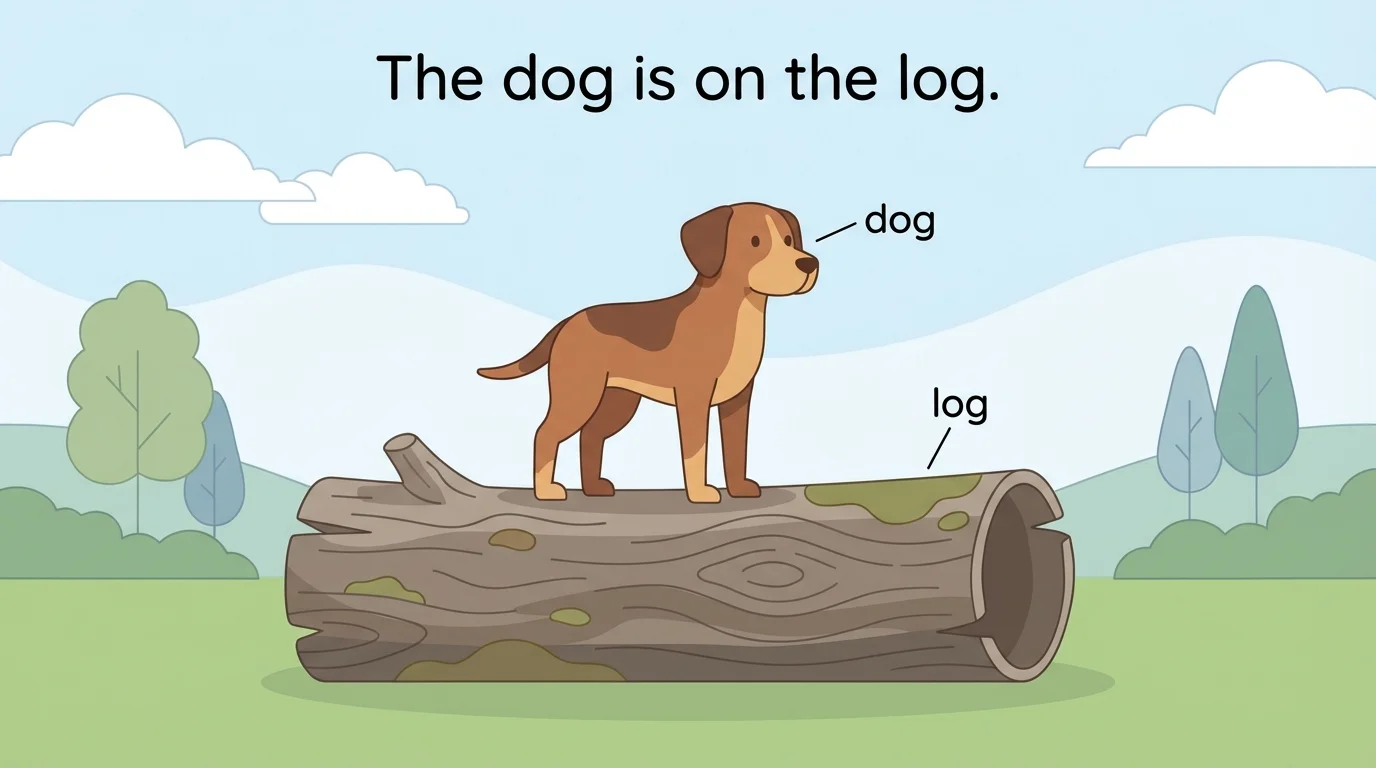
Reading is not only saying words out loud. Reading also means understanding the message. When readers read The dog is on the log., they think about what is happening. They can picture a dog and a log. That mental picture helps the sentence make sense.
As [Figure 3] shows, a short sentence may tell who, what, or where. In I can run., the sentence tells who and what. In The cat is in bed., the sentence tells who and where. Good readers ask themselves, "Does this make sense?"
Pictures can help at the beginning, but the words are still most important. If the words say dog, the reader should not say cat just because a picture shows an animal. The reader checks the letters, the sounds, and the meaning together.
Sometimes a sentence has words that rhyme, such as The cat sat. Rhyming can help a reader notice patterns. If a child can read cat, then sat may be easier because the ending -at stays the same.
Many beginning books use repeated sentence patterns. When children read a pattern like I see the... again and again, they grow stronger at reading both the familiar words and the new word at the end.
Later, when readers meet another sentence like The dog is on the bed., they can use what they learned from [Figure 3]. They know to think about the meaning while also checking each word carefully.
Short beginner text often uses patterns that are easy to follow. The pattern helps the reader know what kind of sentence is coming, and the changing word gives new meaning. Here are some common kinds of short sentences.
| Sentence type | Example | What it does |
|---|---|---|
| Statement | I can hop. | Tells something |
| Statement with the | The cat is big. | Names something and tells about it |
| Seeing sentence | I see a dog. | Tells what someone sees |
| Question | Can I sit? | Asks something |
| Location sentence | The pig is in mud. | Tells where something is |
Table 1. Common patterns of short sentences made from sight words and CVC words.
Some sentences use one CVC word. Some use two or more. For example, The cat sat. has two CVC words. I see the red hen. may include one word that is not CVC, so the reader uses sight-word memory and sound knowledge together.
Short sentences can also repeat a word to build comfort. A reader may see I can run. I can hop. I can sit. The repeated phrase helps the reader focus on the last word each time.
Reading smoothly means saying the words in order, at a comfortable pace, and with understanding. A strong beginning reader may read slowly at first, but the reading should still sound like a message, not a pile of separate words.
When a reader knows some words quickly and can sound out others, short text becomes easier and more fun. That is how simple sentences lead to longer texts.
Every time a child reads a short sentence, several skills work together. The reader looks carefully, hears the sounds, blends them, remembers sight words, tracks across the line, and thinks about meaning. These skills support each other.
If a word is hard, a reader can go back and try again. The reader may look at the first sound, then the vowel, then the last sound. The reader may also reread the whole sentence after figuring out the word. Rereading helps the sentence sound smooth and clear.
For example, if a child reads The cat is on the log. and gets stuck on log, the child can notice /l/ /o/ /g/, blend them, and then reread the full sentence. That makes the meaning stronger.
"Good readers look, sound out, and think."
As children grow, they read more words and longer sentences, but the same early tools still matter. Knowing sight words, reading CVC words, following the words in order, and making meaning are the strong first steps of reading.
