Have you ever noticed that bat and ball start the same way? Your mouth makes the same first sound: /b/. That is a big reading clue. When we learn which sounds go with letters, we can start unlocking words all around us—on signs, in books, and in songs.
A letter is a written mark we see. A phoneme is a sound we hear in a word. Letters and sounds work together. When we see the letter m, we often say /m/, like in moon. When we see the letter s, we often say /s/, like in sun.
Words are made of sounds. If we listen carefully, we can hear the sounds one by one. The word map has three sounds: /m/ /a/ /p/. Each sound helps us figure out the word.
Letter means a symbol we write and see. Phoneme means one small sound in a word. When children identify phonemes for letters, they connect what they hear to what they see.
Some words begin with the same sound. Dog, door, and dip all begin with /d/. Some words end with the same sound. Cat, hat, and bat all end with /t/.
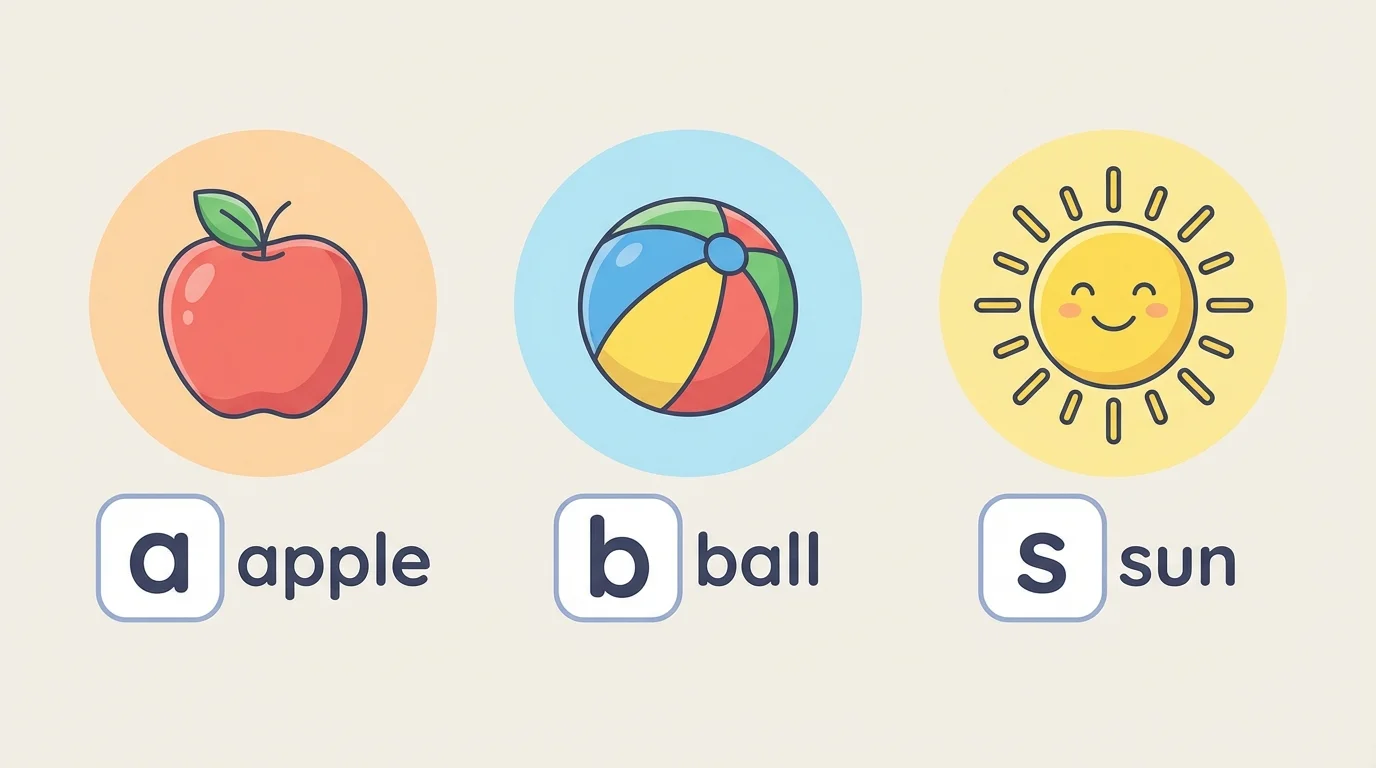
The first sound in a word is called the beginning sound. In words like apple, ball, and sun, the beginning sounds match the letters a, b, and s, as shown in [Figure 1]. Listening for the beginning sound helps us choose the right letter.
If you hear /t/ at the start of top, the word begins with the letter t. If you hear /f/ at the start of fish, the word begins with f. We listen with our ears and connect the sound to the letter we know.
Many consonants make a strong sound we can hear easily at the beginning of words. For example, m says /m/ in man, p says /p/ in pig, and n says /n/ in nest.
Your mouth moves in different ways for different sounds. Put your lips together for /m/ and /p/, but put your tongue behind your teeth for /t/.
That is why careful listening matters. The sounds may be small, but they tell us a lot about which letter belongs at the start of a word.
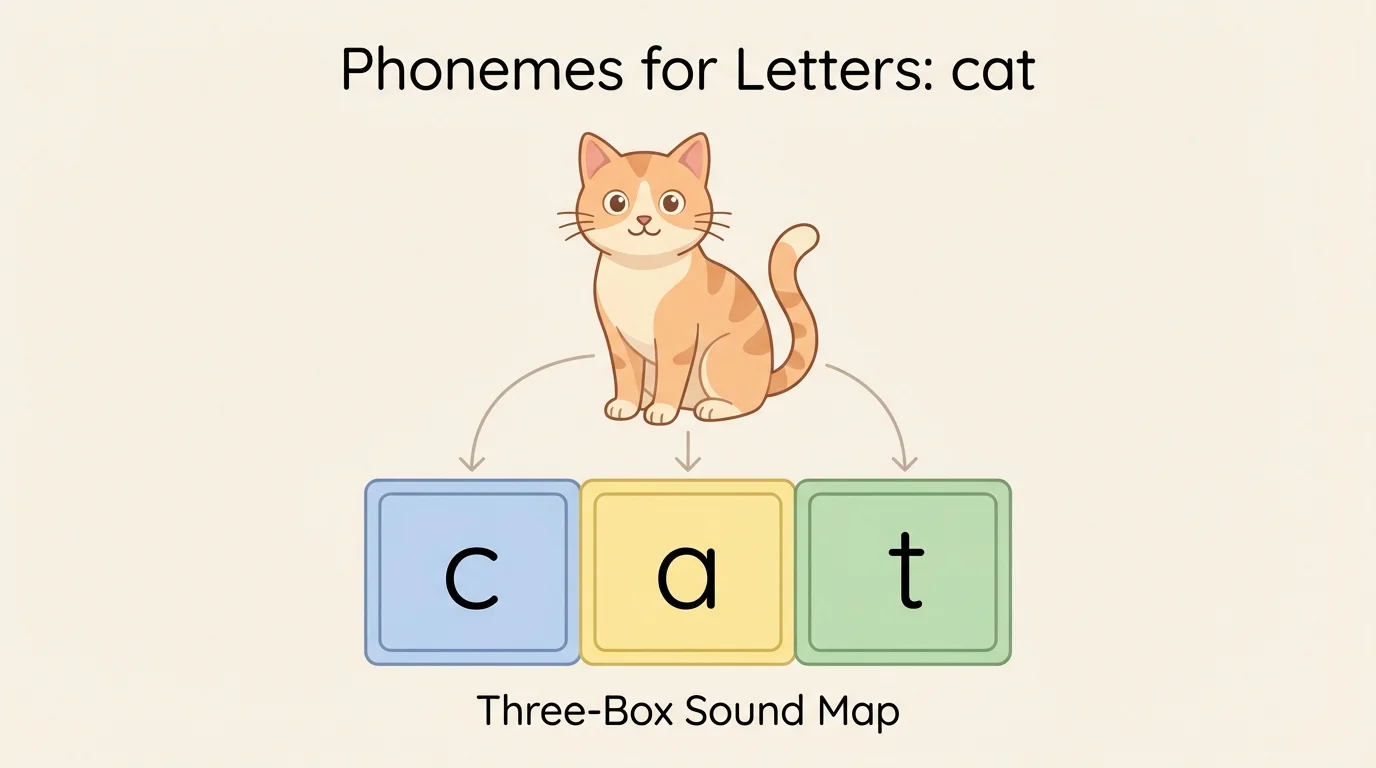
Words also have sounds in the middle and at the end. In the word cat, we can hear /k/ /a/ /t/ as separate sounds, and [Figure 2] shows how each sound fits into its own place. The middle sound is /a/. The ending sound is /t/.
Listen to pig. It has /p/ at the beginning, /i/ in the middle, and /g/ at the end. Listen to sun. It has /s/ at the beginning, /u/ in the middle, and /n/ at the end. Hearing all the sounds helps us read the whole word, not just the first letter.
An ending sound is the last sound we hear. In bus, the ending sound is /s/. In dog, the ending sound is /g/. The last sound helps us tell words apart. Cap and cat start the same, but they end differently.
Listening to a word: mop
Step 1: Say the word slowly: mop.
Step 2: Hear the first sound: /m/.
Step 3: Hear the middle sound: /o/.
Step 4: Hear the last sound: /p/.
The letters m, o, and p match the sounds we hear.
When readers can hear beginning, middle, and ending sounds, they are ready to match more sounds to more letters.
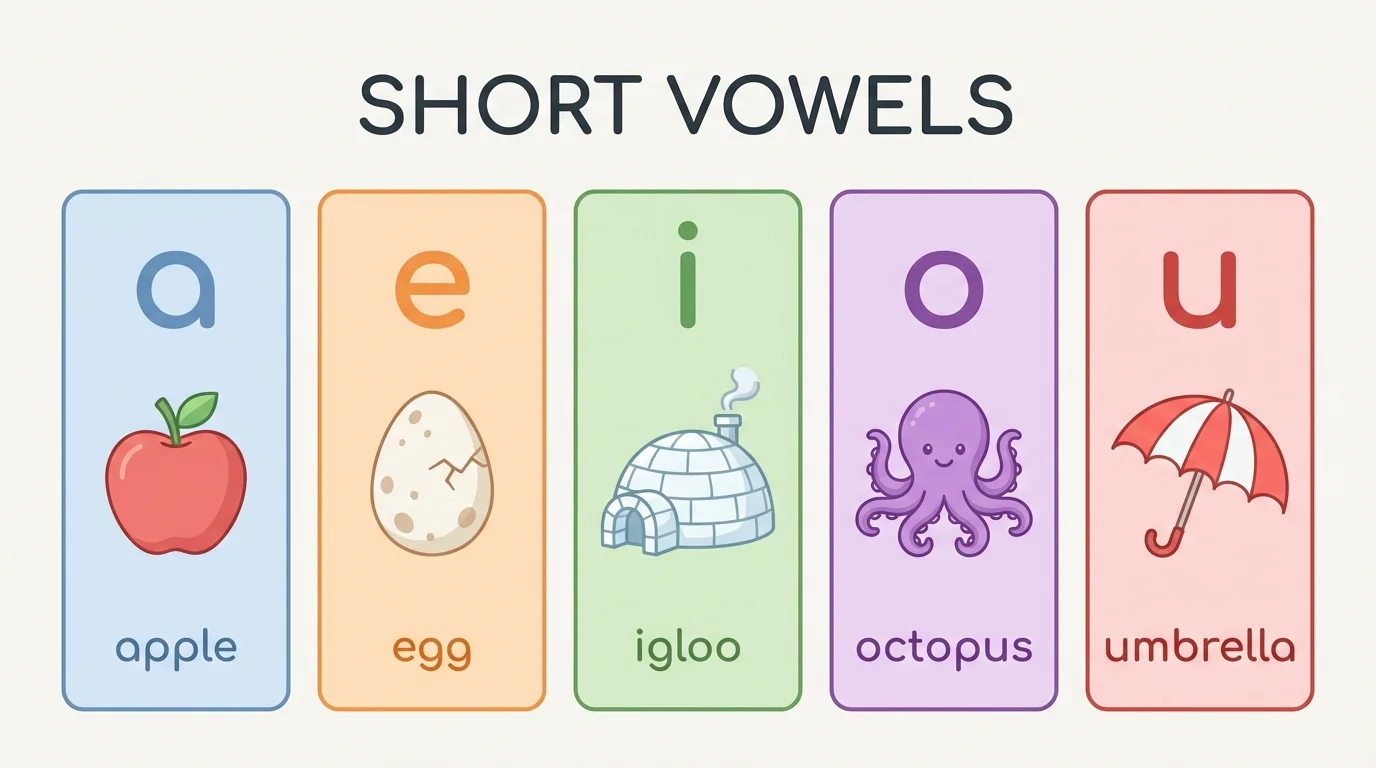
Vowels are the letters a, e, i, o, and u. In many short words, each vowel has a short sound of its own, and [Figure 3] helps us compare these sounds with picture clues.
Short a is heard in apple and cat. Short e is heard in egg and bed. Short i is heard in igloo and pig. Short o is heard in octopus and hot. Short u is heard in umbrella and sun.
Many consonants also make one common sound in simple words. b says /b/, d says /d/, f says /f/, l says /l/, and t says /t/. These sound-letter matches are important because they help us sound out words.
When we look at a short word like bed, we can match each letter to a sound: b is /b/, e is /e/, and d is /d/. Then we blend the sounds together to read the word.
How sound matching helps reading
Readers look at letters, say the sounds, and blend the sounds into a word. If a child sees sat, the child can think /s/ /a/ /t/ and then say sat. This is one of the first big steps in learning to read.
The short vowel chart in [Figure 3] stays helpful when you compare words like sit, set, and sat. Only one middle sound changes, but that one sound changes the whole word.
Some sounds are close to each other, so we need careful ears. The sounds /b/ and /p/ can feel alike because both use the lips. The sounds /d/ and /t/ can also feel alike because both use the tongue near the teeth.
That is why we say words slowly sometimes. Slow listening helps us hear each sound clearly. If we hear /m/ at the start of mat, we choose m, not n. If we hear /g/ at the end of pig, we choose g, not d.
You already know that words we say are made of parts. Now you are listening even more closely to hear the tiny sounds inside the words.
Sometimes one letter can make a different sound in another word, but beginning readers first learn the most common sound. For example, the letter c often says /k/ as in cat. Learning the common sound first makes reading easier.
Books are full of words made of letters. When we know the sounds for letters, we can start reading words by ourselves. A stop sign, a name tag, a label on a cubby, or a favorite storybook all use letters to stand for sounds.
The sound boxes in [Figure 2] remind us that each sound has a place in a word. If we miss one sound, we may read the wrong word. If we hear all the sounds, we can match them to the letters and blend them together.
Learning letter sounds is like collecting keys. Each new sound-letter match unlocks more words. Soon, simple words such as mat, sit, hop, and sun become easier to read because the letters tell us which sounds to say.
