Have you ever wondered why a leaf is green, where a bird goes, or how a seed starts to grow? Good learners ask questions. Then they use their eyes, ears, and minds to find answers. Sometimes the answer comes from a story read aloud. Sometimes it comes from looking closely at something real. Sometimes it comes from doing both.
A question is something we want to know. Questions can be about animals, weather, plants, people, or things in the classroom. A child might ask, "What do worms do in the dirt?" or "Why does ice melt?" Questions help us begin learning.
When we ask a question, we do not always know the answer right away. That is okay. Learning often starts with wondering. We can listen to a book, watch carefully, talk to others, and notice details.
Guided inquiry means finding out about something with help from a teacher or another adult. The teacher helps children ask a question, use resources, and talk about what they learn.
In school, children often learn together. One child may notice something another child did not see. One child may remember a part from a read-aloud. Working together helps everyone learn more.
Guided inquiry is not guessing only once. It is a careful way to learn. First, we ask a question. Next, we use a resource. Then we think and talk about what we noticed. Last, we tell what we learned.
A teacher may say, "Let's find out what plants need." The class might listen to a book about plants. Then the class might look at a real plant near the window. The teacher helps children compare what the book says with what they see.
This kind of learning is important because children learn that answers can come from different places. They also learn that asking, looking, listening, and talking all matter.
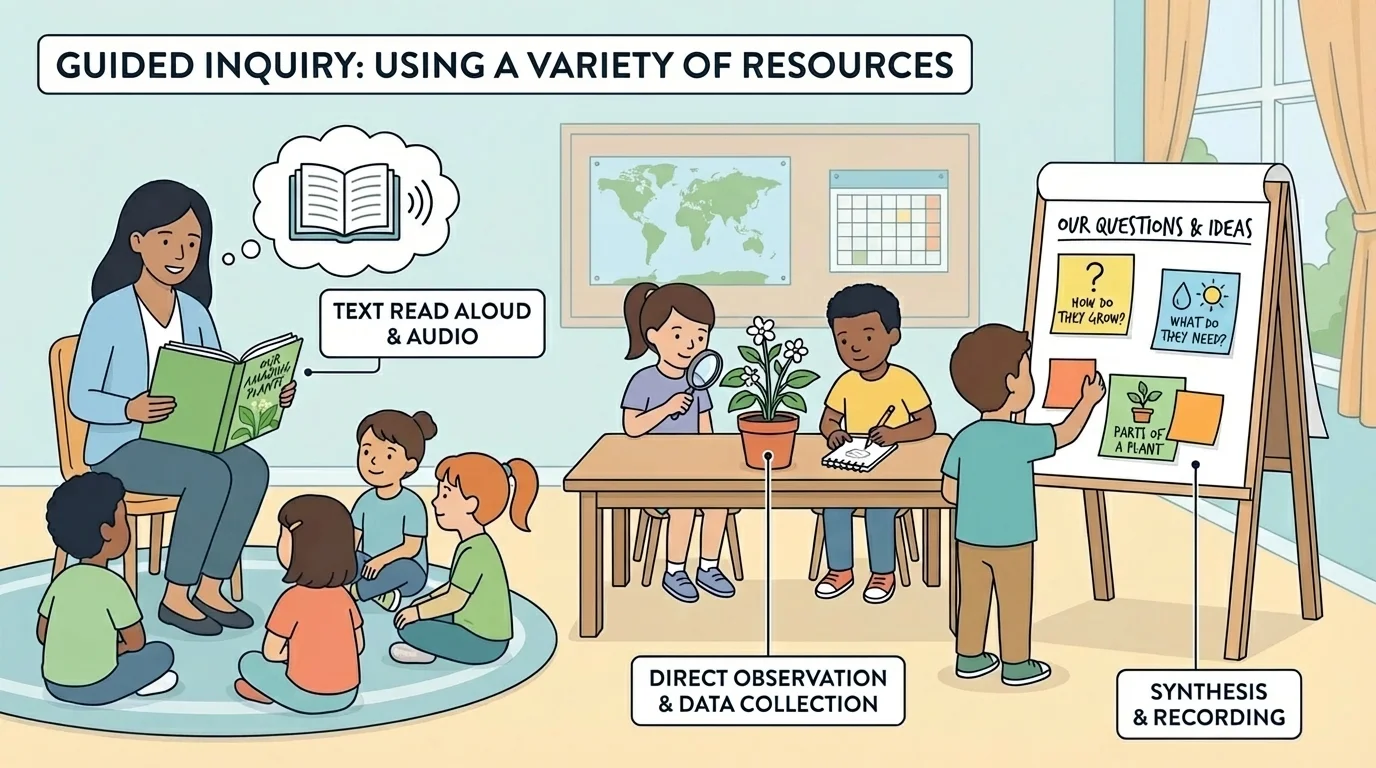
A resource is something that helps us learn. In class, we may use a book read aloud, a picture, a short video, a real object, or a person who knows about the topic. As [Figure 1] shows, one class question can be explored in many ways when children listen, look, and share ideas together.
One resource is a text. A text can be a picture book, an informational book, or words and pictures on a chart. When a teacher reads aloud, children can listen for important facts. If the class asks, "What do baby chicks need?" a read-aloud book may say they need warmth, food, and water.
Another resource is observation. Observation means looking closely, listening carefully, and noticing what is happening. If children observe a class plant, they may see green leaves, soft stems, or dry soil. A real object can give clues that help answer a question, as [Figure 1] illustrates.
People can also be resources. A teacher, librarian, gardener, or family member may know helpful facts. Pictures and videos can help too, especially when something is hard to see in real life, like a baby bird inside a nest high in a tree.
Some questions are answered best by using more than one resource. A book may tell a fact, and a real observation may help children see that fact with their own eyes.
Using different resources helps children build stronger understanding. If one resource says leaves need sunlight, children can look at a plant near a sunny window and notice how it grows.
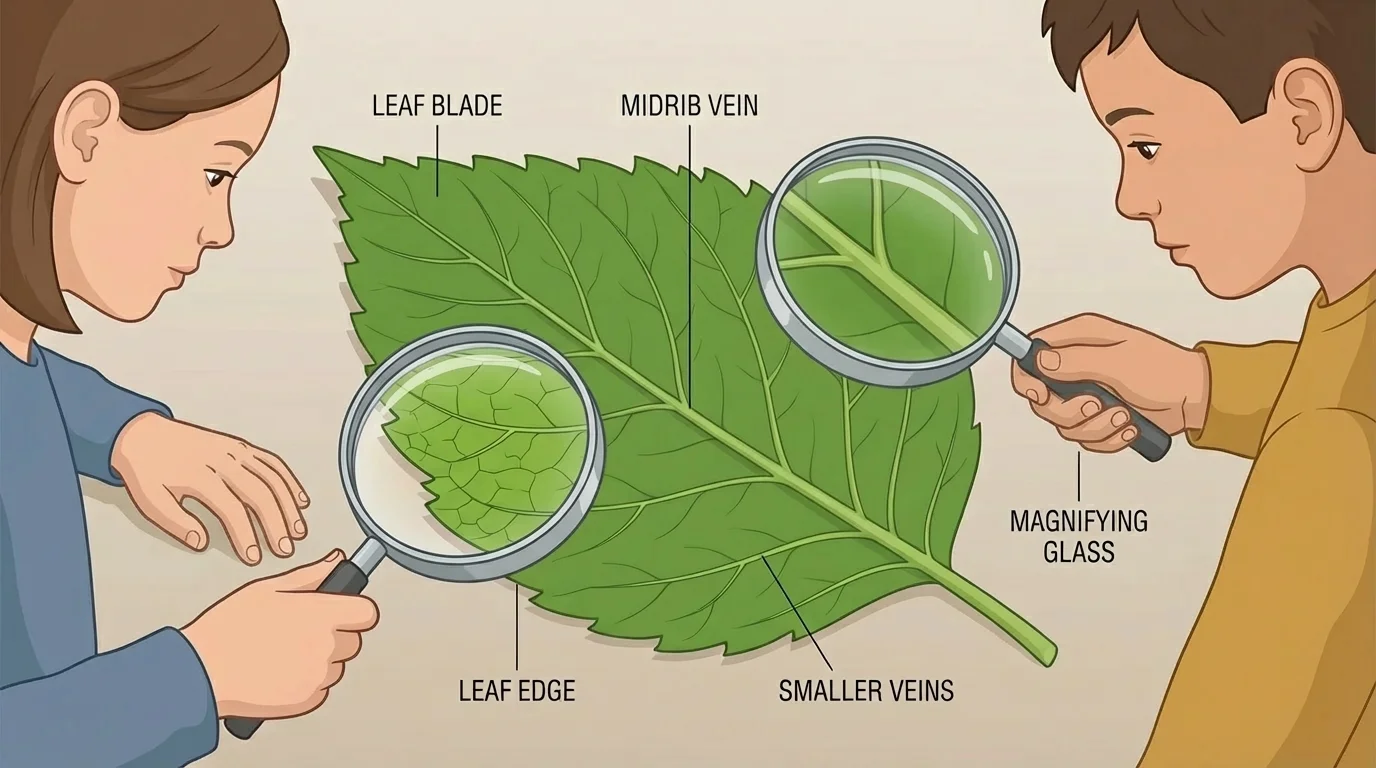
When children do direct observation, they study something that is really there. As [Figure 2] illustrates, this can be a rock, a leaf, a puddle, a shell, or a classroom pet. Close looking helps children notice details such as shape, color, and size.
During observation, children may notice that one leaf is smooth and another is bumpy. They may see that one is light green and another is dark green. These details matter because details help answer questions.
Talking together is also part of inquiry. Children can say what they notice and listen to what classmates notice. One child may say, "I see little lines." Another may say, "I think those are the veins in the leaf." Sharing ideas helps the group learn more.
A teacher helps guide the talk. The teacher may ask, "What do you see?" "What do you think?" or "What in the book matches what we see?" These questions help children connect resources and build understanding.
Looking, listening, and noticing are important parts of inquiry. Children learn to slow down, pay attention, and use evidence from what they hear and see instead of giving random answers.
Later, the class can return to the same object and observe again. As with the leaf in [Figure 2], a second look often helps children notice something new they missed the first time.
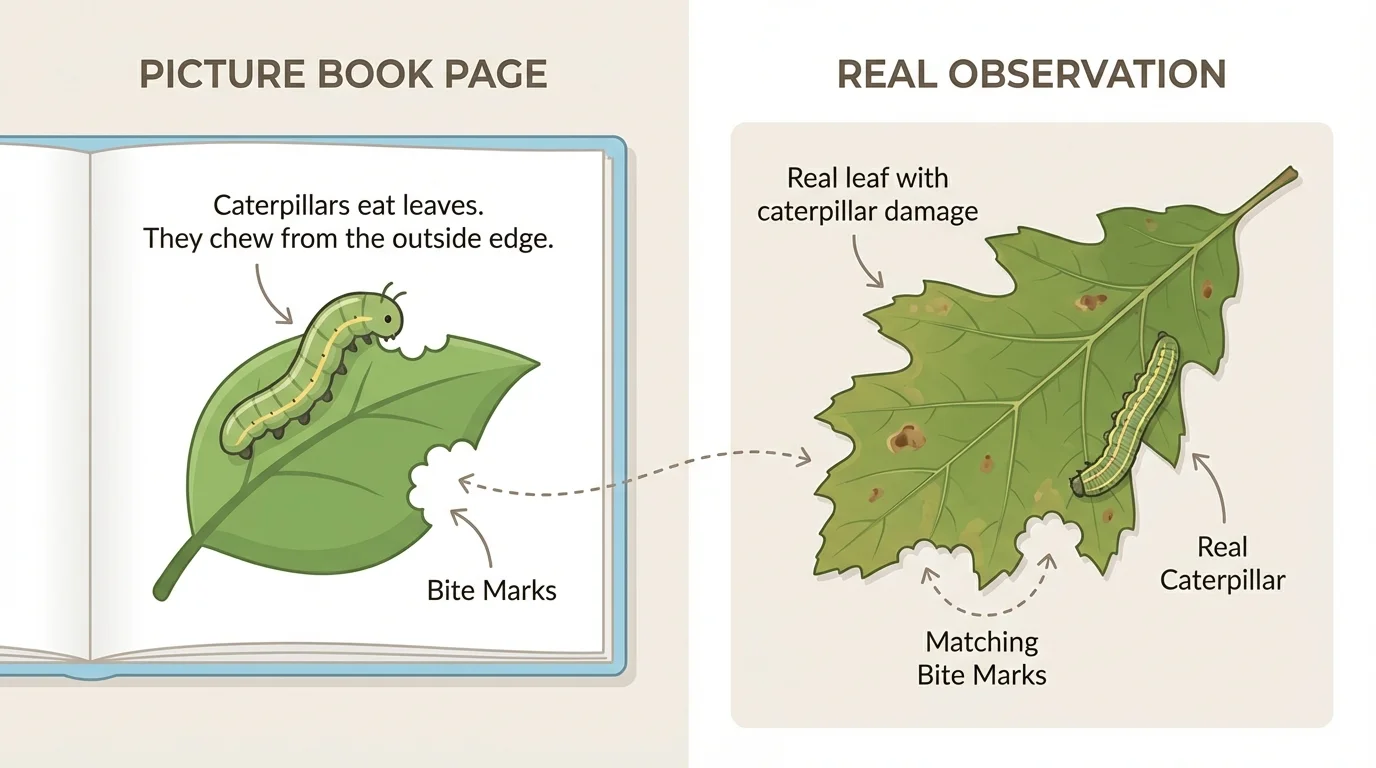
Sometimes one resource gives only part of the answer. As [Figure 3] shows, using more than one resource helps children check ideas and learn more. A book and a real observation can work together through matching details from reading and looking.
For example, a class may ask, "What does a caterpillar do?" First, the teacher reads a book about caterpillars. The children hear that caterpillars eat leaves. Next, the children look at a plant outdoors and see tiny holes in some leaves. Now they can connect the book idea and the observation.
Another example is asking, "What happens when rain falls?" A video may show rain filling puddles. Then children can look outside after rain and observe puddles on the playground. The class uses two resources to answer one question.
When resources fit together, children become more confident in their answer. If the resources are different, the teacher helps the class think more carefully and ask another question.
The class chart, the book, and the real-world observation all help build understanding. In the same way shown in [Figure 1], learners can listen, look, and talk to find an answer.
After children use resources, they can share their learning. They may draw a picture, point to a detail, say a sentence, or help make a class chart. Sharing learning is part of inquiry because it helps children explain their thinking.
A child might say, "We learned that plants need water because the book said it, and we saw the dry plant droop." This answer uses information from a text and from observation. That is strong learning.
Classroom example
The class asks, "What do birds use to build nests?"
Step 1: Listen to a read-aloud
The teacher reads a book and children hear that birds may use grass, twigs, and soft pieces.
Step 2: Observe outdoors
Children look at a picture of a nest or a real nest from far away and notice small sticks and grass.
Step 3: Share the answer
Children tell what they learned: birds use materials such as grass and twigs to build nests.
Children do not need long reports to do real research. At this age, a spoken answer, a labeled drawing, or a simple group chart is enough. What matters most is that the answer comes from careful use of resources.
As children grow, they will use even more resources and ask bigger questions. The important beginning is learning how to wonder, how to look, how to listen, and how to use information from more than one place.
