Have you ever heard someone say a dog is tiny instead of just little, or gigantic instead of just big? Words can be like paint colors. One word gives a little color, and another word gives a brighter, richer color. When we hear many kinds of words, we understand more about people, stories, songs, and the world around us.
Vocabulary is all the words we hear, understand, and begin to use. Some words are easy and familiar, like dog, run, and happy. Some words are more special and tell us even more, like puppy, sprint, and delighted. When children listen to rich language, they learn to understand many ways of talking.
Vocabulary means the words a person knows and understands. Rich vocabulary includes simple words and also more specific, interesting words.
Good listeners do not only hear sounds. They listen for meaning. If someone says, "Please place the blanket on the sofa," a child may understand because blanket and sofa are words that match things they know. Hearing many words over time helps language grow stronger.
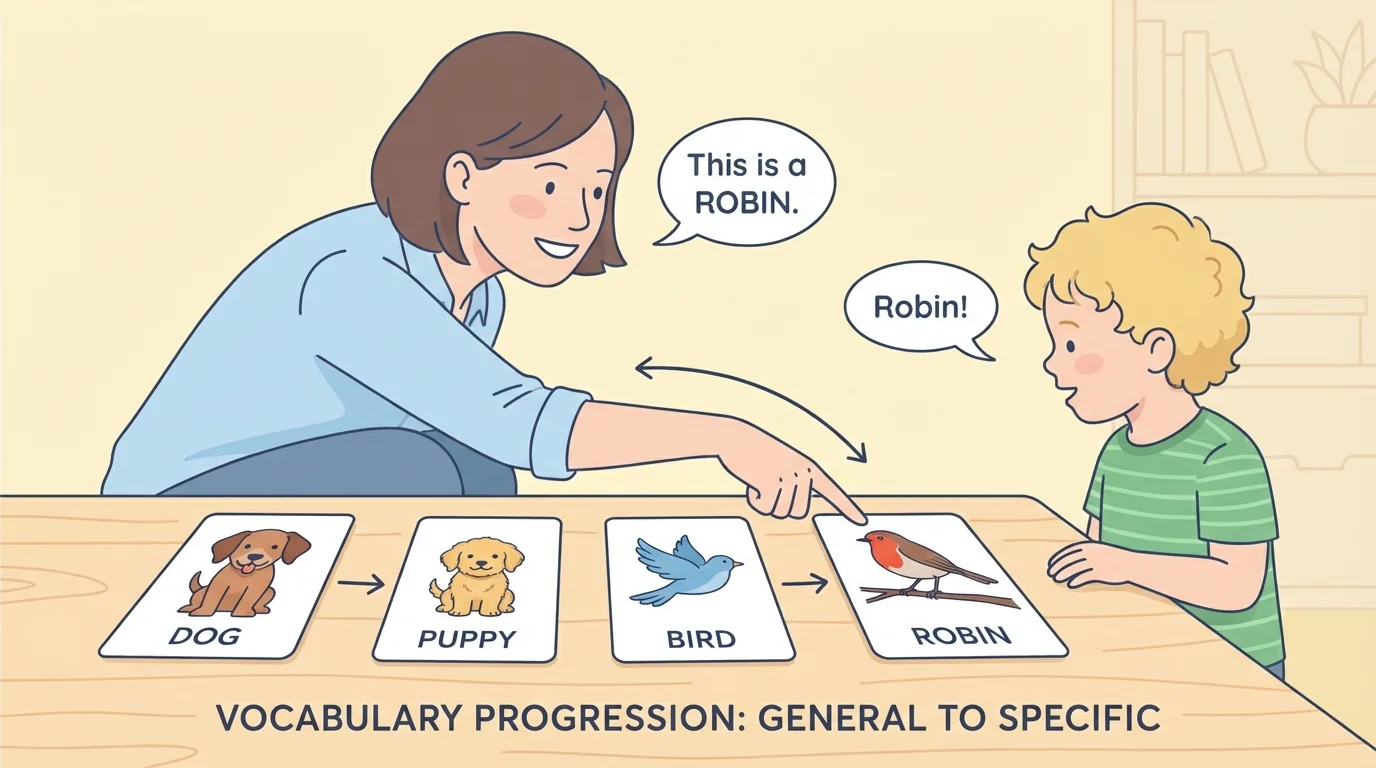
[Figure 1] Some words are broad, and some are more specific. A child may hear bird, and later hear robin. A child may hear fruit, and later hear apple. This helps children understand that language can be general or more specific.
If an adult says, "Look at the flower," that is helpful. If the adult says, "Look at the bright yellow sunflower," that gives even more information. Rich listening helps children understand size, color, shape, kind, and detail.
Children also hear different words for places and objects. A object can be a cup, mug, or bottle. A place can be a room, kitchen, or garden. The more words children hear, the more clearly they can understand what someone means.
A young child can learn many new words just by hearing people talk, sing, read, and play. Even hearing the same idea said in different ways helps the brain build stronger word knowledge.
Later, when children hear a story, those richer words make sense faster. The idea of broad and specific words from [Figure 1] helps them know that one category word can include smaller, more specific words within it.
[Figure 2] Some words tell us about feelings. Instead of only hearing sad, children can also hear feeling words such as upset, lonely, proud, or excited. Some words describe actions. Instead of only hearing walk, children can hear march, tiptoe, or stroll. These words give clearer meaning and connect language to faces and movements.
Describing words help children picture what they hear. A bear can be fuzzy. A blanket can be soft. A cracker can be crunchy. A raincoat can be wet and slippery. Hearing these words helps children make strong connections between language and experience.
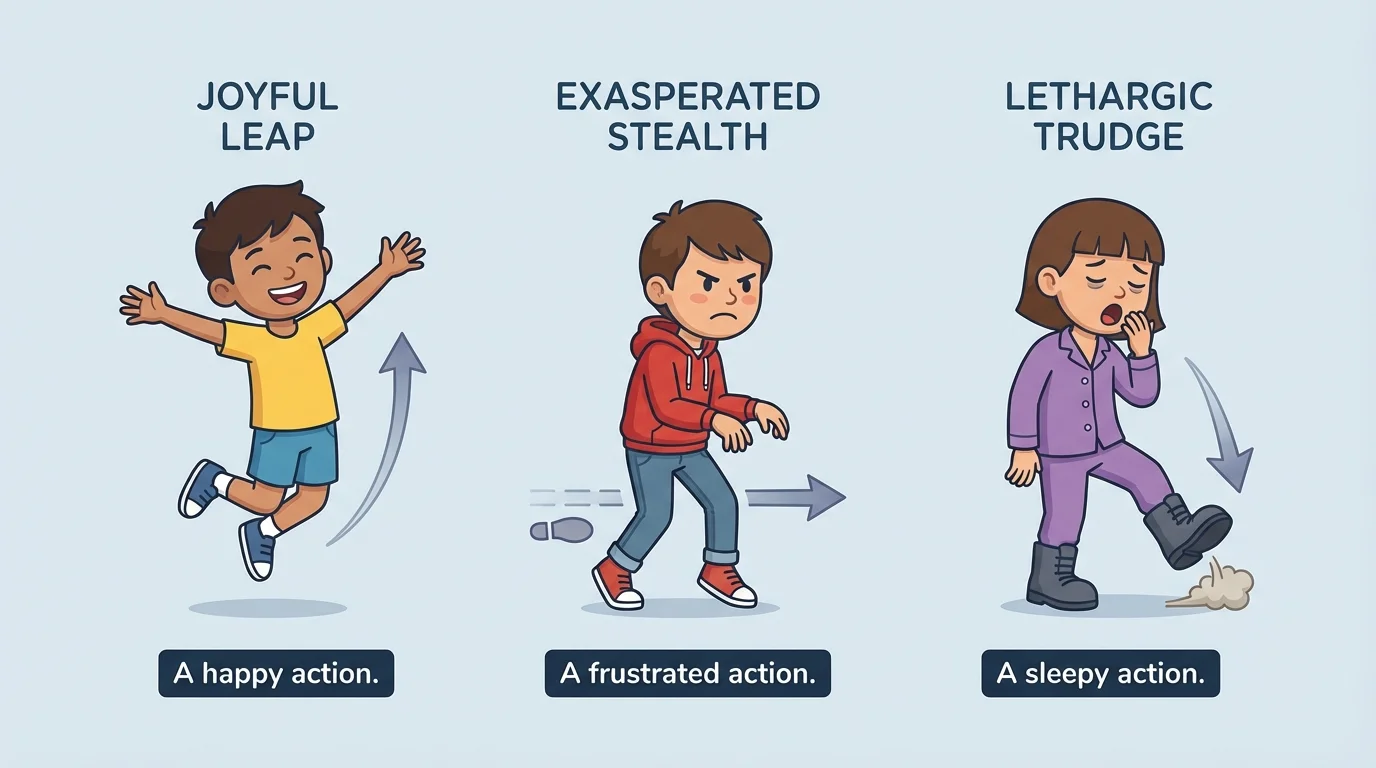
When someone says, "The tired boy trudged home," the action word tells more than "walked." When someone says, "The proud girl smiled," the feeling word tells more than "happy." Rich words help children understand stories, directions, and conversations with greater detail.
Why varied words matter
Children comprehend language better when words are precise. Precise words give the listener more clues. A sentence with richer vocabulary paints a clearer picture and helps the child connect meaning, emotion, and action.
Faces, body movements, and voice tone make these words easier to understand. The actions and expressions in [Figure 2] help children match heard words to what people feel and do.
Sometimes two words are close in meaning. A toy may be small or tiny. A sound may be loud or booming. A child may feel glad or cheerful. Learning different words for similar ideas helps children understand many speakers and many books.
These word pairs are not always exactly the same. Tiny often means even smaller than small. Stomp sounds heavier than walk. Gigantic sounds bigger than big. This teaches children that words can be related but still carry different shades of meaning.
| Simple word | Richer word | What it tells us |
|---|---|---|
| big | gigantic | very, very big |
| small | tiny | very small |
| walk | tiptoe | walk quietly |
| happy | delighted | very happy |
| look | peek | look a little |
Table 1. Examples of simple words and richer words that give more detail.
Hearing this variety helps children listen with care. They begin to understand that language is flexible and expressive. One idea can be said in more than one way.
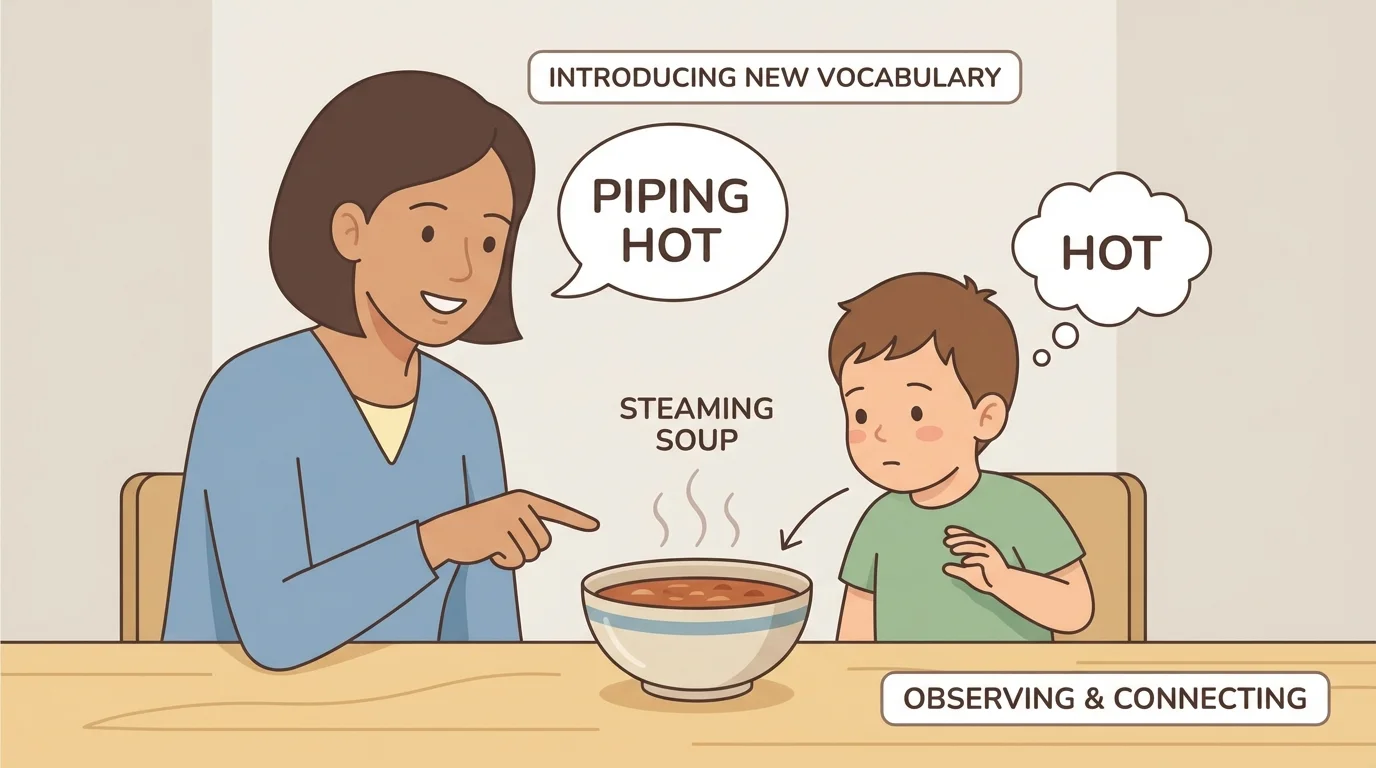
[Figure 3] Children do not need to know every word right away. They can use context clues to understand a new word. Clues come from pictures, pointing, objects, tone of voice, actions, and nearby words. If an adult says, "Careful, the soup is steaming and hot," while pointing to the bowl, the child can use many clues.
If a teacher says, "Let's gather on the rug," children may learn that gather means come together. If someone says, "The kitten is sleepy; it is dozing," children may connect dozing with resting or light sleep. Listening closely helps new words become familiar words.
Children also learn from repetition. When a word is heard again and again in meaningful moments, understanding grows. A child may first hear enormous while looking at a very big pumpkin. Later, the same word in a story makes more sense.
Everyday listening examples
Step 1: Hear the sentence
"Put the slippery fish in the blue bucket."
Step 2: Notice the clues
The fish is wet, hard to hold, and near a blue bucket.
Step 3: Understand the new word
Slippery means it slides easily and is hard to grip.
The clue idea from [Figure 3] works in many situations. Children watch, listen, and connect words to what is happening around them.
Children grow vocabulary when they hear language during play, meals, cleanup, outdoor walks, songs, and stories. A block tower can be tall, wobbly, or steady. A banana can be ripe, sweet, and soft. Rain can be drizzly or pouring. These words make daily life full of meaning.
Books are especially helpful because they often use words children may not hear all the time. Songs and rhymes help too, because repeated patterns make words easier to remember and understand. Hearing adults speak clearly and richly helps children become strong listeners.
"The more words we understand, the more of the world we can understand."
As children listen to increasingly complex and varied words, they build stronger comprehension. They can follow directions better, understand stories more deeply, and make better sense of what others say.
