Words are everywhere. A friend says, "Come play." A song says, "Clap your hands." A story says, "The bear is sleeping." Every day, children hear many words, and they learn by paying close attention to them. When children listen during talking, singing, reading, and play, they grow in understanding.
[Figure 1] Children hear language in many places. They hear it during breakfast, at circle time, on the playground, during clean-up, and while listening to books. They also hear language when adults ask questions, give directions, tell stories, and sing songs.
Some words are familiar, like mama, ball, dog, and go. Some words are new. Children learn new words by hearing them again and again in meaningful moments. If a teacher says, "Put the red block on top," a child begins to connect the words red, block, and top to real actions and objects.
Attend means to listen and notice what is happening. Language means the words people say and understand. Receptive language means understanding words that are heard.
Attending to language helps children understand what others mean. This understanding develops before speaking becomes stronger. A child may first show understanding by looking at the right object, following a direction, or joining an action at the right time.
Paying attention to language uses the whole body. A child can listen with ears, look with eyes, and keep the body ready. This may look like turning toward the speaker, watching a face, and waiting for the next words.
Children also learn from more than words alone. A smile, a pointing finger, a waving hand, or a surprised voice can help explain meaning. When someone says, "Look at the bird!" and points up, the child connects the words to the action and the object.
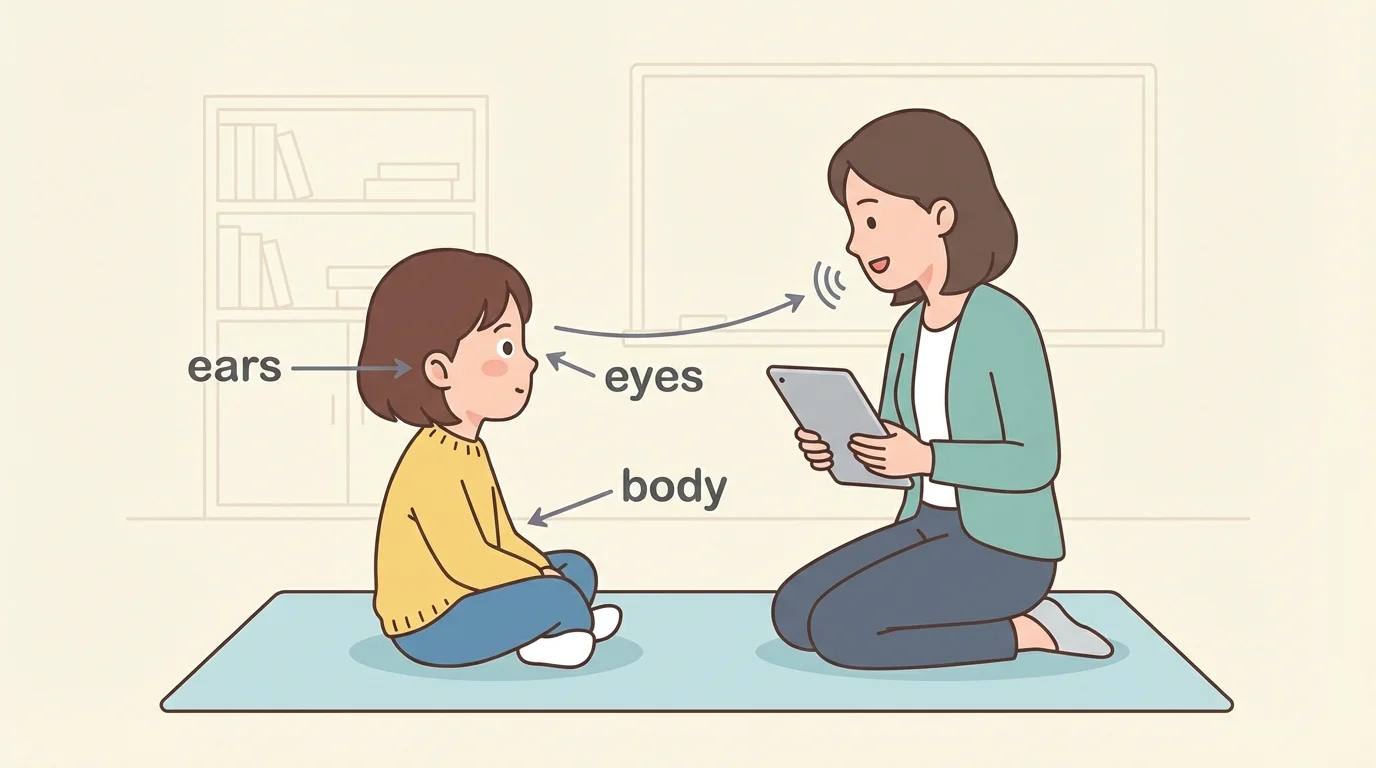
Sometimes attending means listening for one important word. A child may hear their name and know it is their turn. Sometimes it means listening for a short direction, such as "Sit down," "Wash hands," or "Get your coat."
Attending does not always mean being perfectly quiet. Young children may wiggle, sway, or softly repeat words while they listen. What matters is that they are taking in the language and showing understanding.
Very young children often understand many more words than they can say. Listening and understanding grow before speaking becomes easy.
This is why adults often speak clearly, repeat key words, and use gestures. The body cues we noticed in [Figure 1] help children connect sounds, actions, and meaning all at once.
In conversation, children listen to people talking back and forth. They hear greetings like "hello," questions like "Where is your shoe?" and comments like "You built a tall tower." These everyday talks are powerful times for learning language.
A child begins to understand common directions such as "come here," "line up," or "put it in." The child may also understand simple choices like "Do you want milk or water?" Listening during conversation helps children connect words to people, objects, actions, and routines.
Children also listen for tone. A calm voice can mean safety. An excited voice can mean something fun is happening. A gentle question can invite a child to answer with a word, a nod, or a point.
As children grow, they understand more questions. They may respond to "What is this?" by pointing, or to "Where is the teddy bear?" by finding it. Understanding comes before long spoken answers.
Conversation example
An adult says, "Ava, please bring the book." A child who attends to language listens for a name, a polite request, and an object.
Step 1: The child hears the name Ava and knows the message is for her.
Step 2: The child hears the action word bring.
Step 3: The child looks for the book and carries it over.
The child may not say many words, but the action shows understanding.
[Figure 2] These small moments happen many times each day. They help build understanding of who, what, where, and what to do next.
Songs are full of repeated words, and actions help make those words clear. When children hear "clap, clap, clap" and clap at the same time, they connect the word to the action. Repetition makes language easier to notice and remember.
Rhymes also help children hear sounds and patterns. In a simple rhyme, children may notice that some words sound alike. They may not explain the pattern yet, but they can enjoy it and begin to expect what comes next.
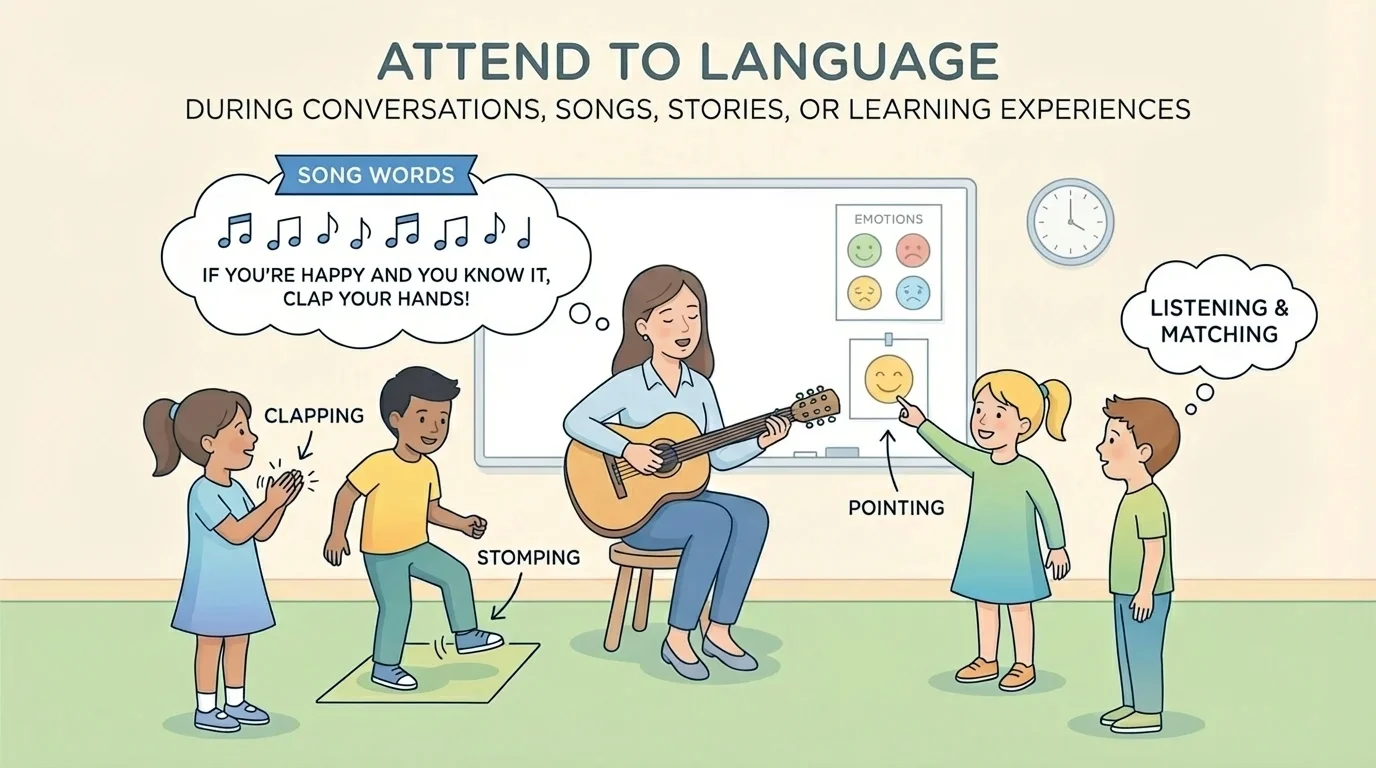
Action songs are especially helpful. If a song says "stomp your feet," "turn around," or "touch your nose," children listen and move. The movement shows they understood the words.
Repeated lines in songs invite children to join in. A child may first listen quietly, then begin to fill in one word, and later sing a whole line. The action-rich listening shown in [Figure 2] supports this growth from hearing to joining.
Why repetition matters
When children hear the same words many times in songs, stories, and routines, those words become easier to understand. Repetition gives the brain many chances to connect a sound with its meaning.
[Figure 3] Songs can also slow language down. The tune and beat make words easier to hear. This helps children notice key action words, names of body parts, and simple ideas like up, down, fast, and slow.
Stories help children listen for people, places, actions, and feelings. When an adult reads, "The puppy runs to the red ball," children hear important words like puppy, runs, and ball. They begin to connect the words with what is happening in the story.
Pictures give strong clues. If the page shows a sleepy bear in a cave, children can connect the spoken words to the image. Looking and listening together supports meaning.
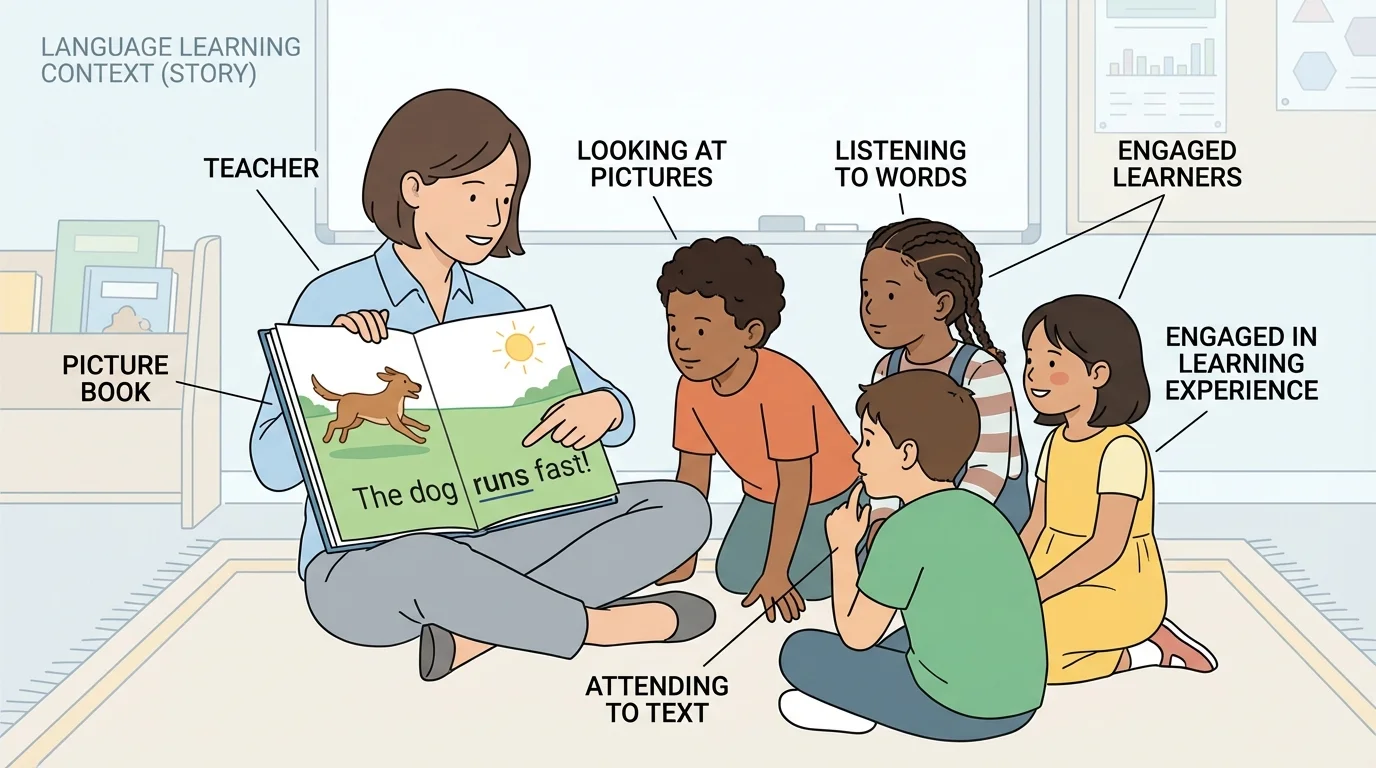
Children often enjoy repeated story lines such as "I'll huff and I'll puff" or "Brown bear, brown bear." Repeated language helps them predict what they will hear next. Prediction is a sign that they are attending closely and understanding the pattern of the words.
Story listening also includes noticing feelings in the voice. A whisper can sound secret. A loud voice can sound surprising. These voice changes help children understand the mood of the story.
Story example
An adult reads, "The little duck splashes in the pond." A child can show understanding in several ways.
Step 1: The child looks at the duck in the picture.
Step 2: The child points to the water when hearing pond.
Step 3: The child wiggles fingers or hands to act out splashes.
These responses show that the child is connecting words to meaning.
Later, children can use the picture support we saw in [Figure 3] to understand new words. Even if one word is unfamiliar, the picture, voice, and repeated sentence pattern help make it clearer.
Language learning does not happen only in books and songs. It also happens in daily routines. During snack, children hear "Take one cup" or "Sit by Mia." During clean-up, they hear "Blocks in the basket." During outdoor play, they hear "Wait," "Go," or "Your turn."
These routine moments matter because they happen often. Repeated routines help children know what certain words mean. A child who hears "wash hands" every day begins to understand the phrase quickly and act on it.
Group times also build listening. A teacher may say, "When you hear your name, come to the rug." Children attend to one important word: their own name. This kind of listening helps children focus on language that is useful right away.
Children do not need to answer with full sentences to show understanding. Looking, pointing, moving, choosing, bringing, and following a simple direction are all strong signs of receptive language.
Everyday language is meaningful because it connects words to real experiences. When children hear words during real actions, the words are easier to understand and remember.
As children attend to language, they build a larger vocabulary. They begin to understand names of objects, action words, describing words, and social words like please and thank you. They also get better at understanding what is happening next.
Strong listening supports later speaking, reading, and learning. A child who understands many words can follow stories more easily, join play with others, and respond during class routines.
Adults support this growth by speaking clearly, repeating important words, pausing for children to think, and using gestures, pictures, and facial expressions. Warm, responsive talk helps children feel safe and ready to listen.
When children listen during conversations, songs, stories, and daily routines, they are not "just hearing sounds." They are building meaning from language and learning how communication works.
