A tiny sentence can do a big job. When you say, "I want juice," "Help me," or "I feel sad," your words help other people understand you. Words are powerful because they let you share what is in your mind and heart. Using language helps you get needs met, join play, make friends, and tell adults important things.
People use words to share ideas, needs, and feelings. An idea can be something you think, notice, remember, or imagine. You might say, "I made a tall tower," "The dog is sleeping," or "I think the red ball is mine." These words tell other people what you know.
When children use words, they are using expressive language. That means using sounds, words, gestures, and sentences to communicate. Some children use short phrases like "more crackers," and some use longer sentences like "I want more crackers, please." Both are ways to express a message.
Expressive language means using words, sounds, signs, or gestures to tell others what you think, need, feel, or know.
Good communication is not only about talking a lot. It is about saying something clearly enough for another person to understand. Clear words help others know what you mean.
[Figure 1] Sometimes the most important words are the words for needs. A child may need food, water, rest, space, comfort, or help. Children use simple words to tell what they need, such as asking for a drink or asking for help. Useful need sentences are "I want milk," "I need help," "Open it, please," and "All done."
Need words can be short and strong. "More," "stop," "mine," "help," and "please" are important words. A child can also point and talk at the same time. For example, pointing to shoes and saying, "Help with my shoes," tells an adult what is needed.
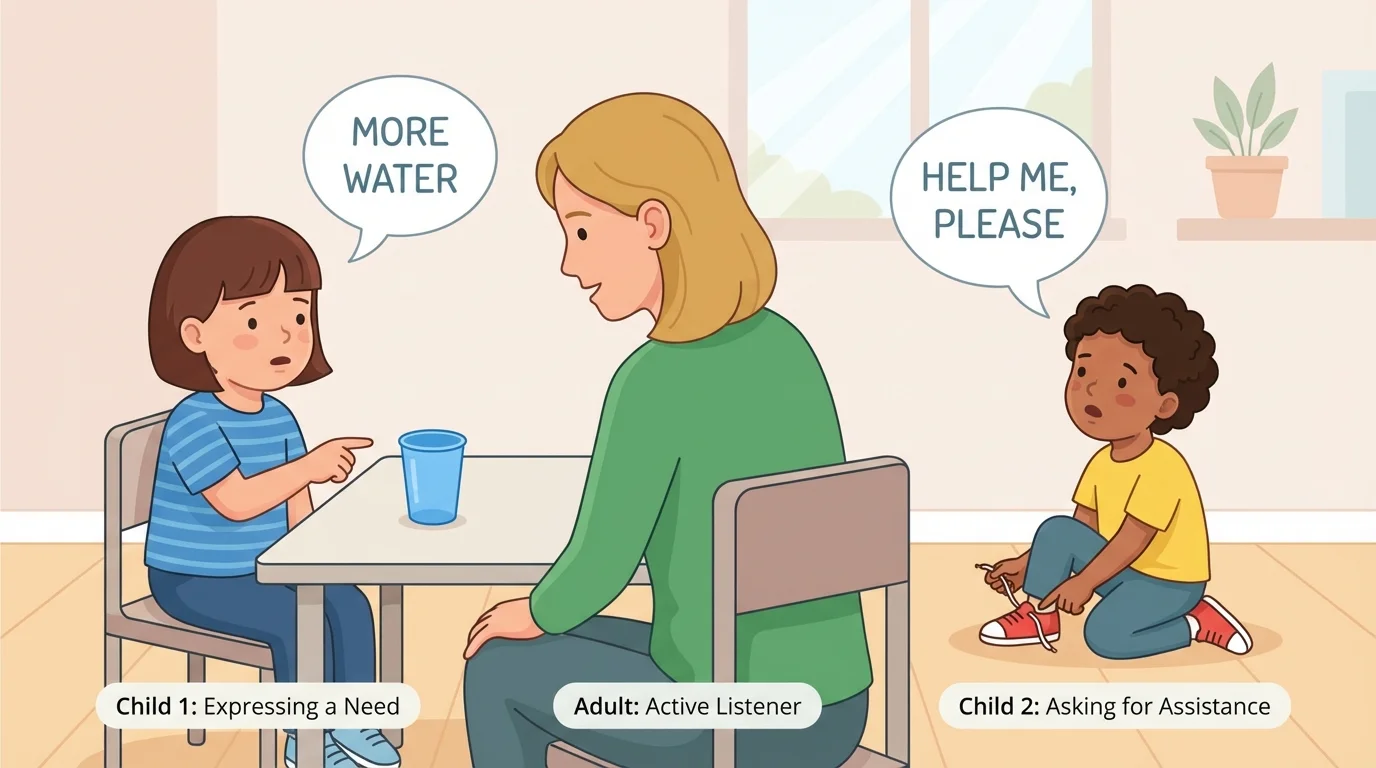
As children grow, they learn to make their requests more complete. Instead of only saying "juice," they can say, "I want juice, please." Instead of crying when something is hard, they can say, "Help me with this." Using words can make communication calmer and clearer.
Everyday need sentences
Step 1: Name the need.
"I am hungry."
Step 2: Ask clearly.
"I want a snack, please."
Step 3: Ask for help when needed.
"Help me open it."
Polite words help too. "Please" and "thank you" make requests sound kind. Kind language helps children build positive relationships with adults and other children.
[Figure 2] Children also use words to say what they think and how they feel. Facial expressions and short sentences can show how language connects to feelings. Children can say, "I feel happy," "I feel mad," "I feel scared," or "I feel excited." Naming a feeling helps others understand what is happening inside.
It is also important to share ideas and choices. A child might say, "I want the blue crayon," "My baby doll is sleeping," or "Let's build a road." These words help play grow because other children can hear the plan and join in.
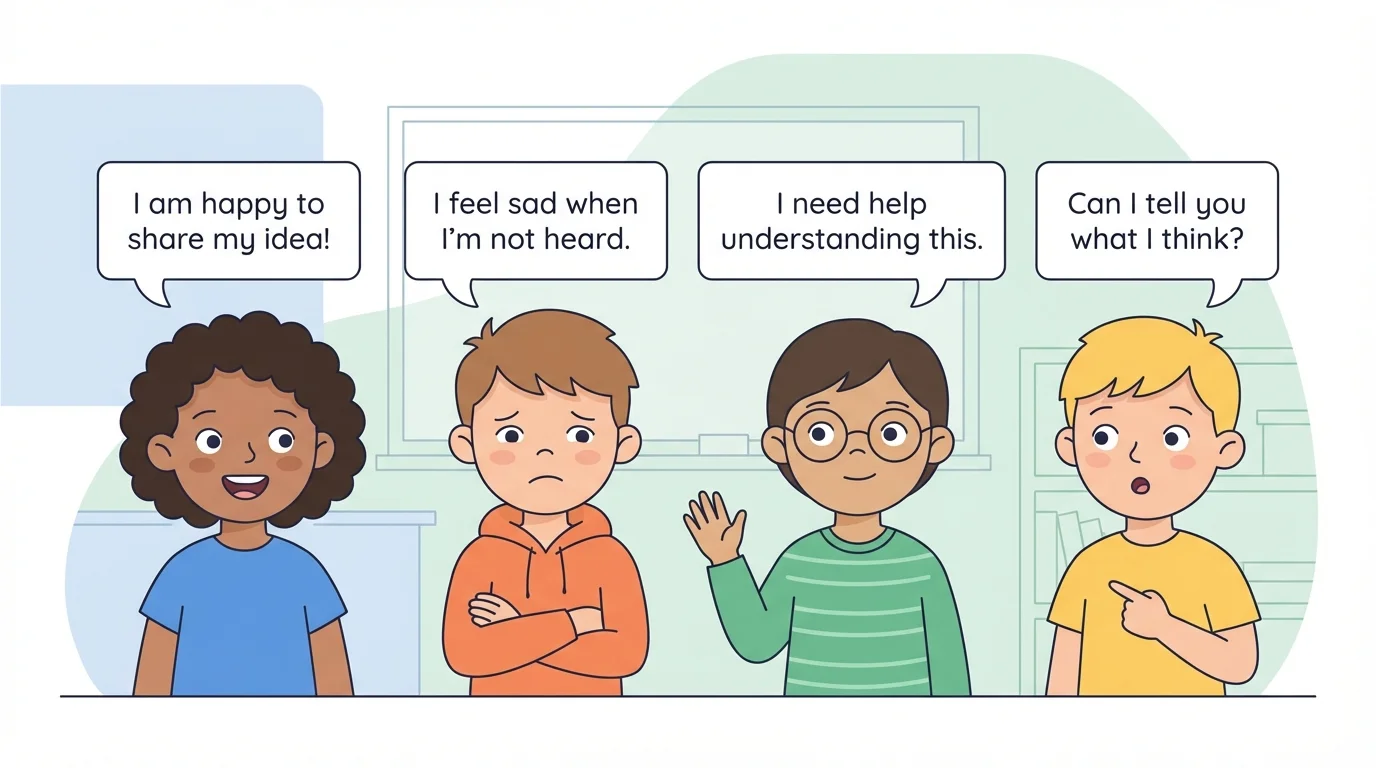
Sometimes children need words for problems. They can say, "I do not like that," "My turn," "Too loud," or "Move back." These words help children protect themselves and solve small conflicts with language instead of hitting or grabbing.
Using feeling words helps children connect emotions to language. When a child says, "I am sad because Mommy left," the child is doing more than naming an emotion. The child is giving a reason, which helps another person respond with comfort and support.
Longer sentences become more powerful. A child may begin with "mad," and later say, "I am mad because he took my block." That extra information helps listeners understand the whole message.
[Figure 3] Talking works best when people also listen. Two children can take turns speaking during play. One child talks, the other listens, and then they switch. This is called conversation. Conversation means people share messages back and forth.
Listening helps children answer in the right way. If a friend says, "I want the big block," you can listen and respond, "Okay, you take it," or "Let's share." When children listen, they learn that words have meaning and that communication is a two-way process.
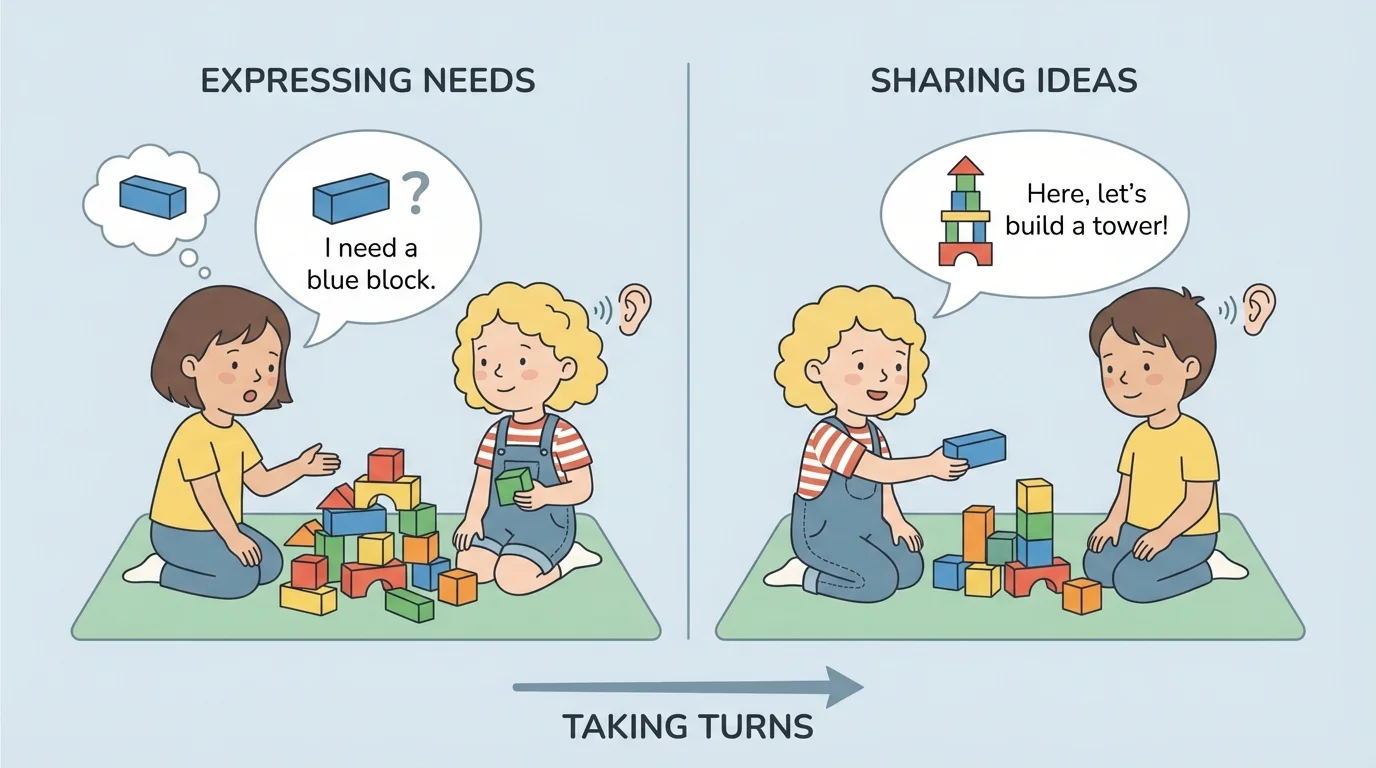
Waiting for a turn is part of speaking. Children do not need to be perfect at this right away. They are still learning. Adults help by modeling language such as "My turn to talk" and "Now your turn."
Young children often understand more words than they can say. That is why patient listening, modeling, and repetition help expressive language grow.
As shown in [Figure 3], turn-taking helps children keep a game going. One child says, "You be the doctor," and the other answers, "I am the doctor. Sit here." The play becomes richer when both children talk and listen.
Language is useful all day long. At snack time, children can say, "More apple, please." During cleanup, they can say, "Where does this go?" On the playground, they can say, "Push me," "My turn," or "Come play." At rest time, they can say, "I want my blanket."
At home, children can use words to tell about their day: "I painted a picture," "We sang songs," or "I played outside." Talking about real events helps children remember and explain experiences in order.
Words for different situations
Children can match their words to the moment.
As seen earlier in [Figure 1], asking clearly for help or for objects is part of daily life. These simple requests teach children that words can solve many problems.
Children build language little by little. First they may use one word. Then they use two words. After that, they begin to use short sentences. Adults can help by listening carefully, adding words, and repeating clear examples. If a child says, "Ball," an adult might answer, "Yes, a big red ball."
Children also learn from songs, books, pretend play, and everyday routines. Hearing many words gives them more tools to speak. The more words children know, the more exactly they can express a need, an idea, or a feeling.
Using language does not always mean only spoken words. Children may also use facial expressions, pointing, signs, or tone of voice along with words to make meaning clear.
As children practice, they move from very simple messages to fuller ones. "Want toy" can grow into "I want the truck," and later into "I want the red truck because I am building a road." That growth helps children communicate with confidence.
