Have you ever opened a book and found a whole world inside? A book can have a sleepy bear, a noisy truck, a baby animal, or a bright red ball. When we read together and when we look at books by ourselves, we learn, wonder, and enjoy new ideas.
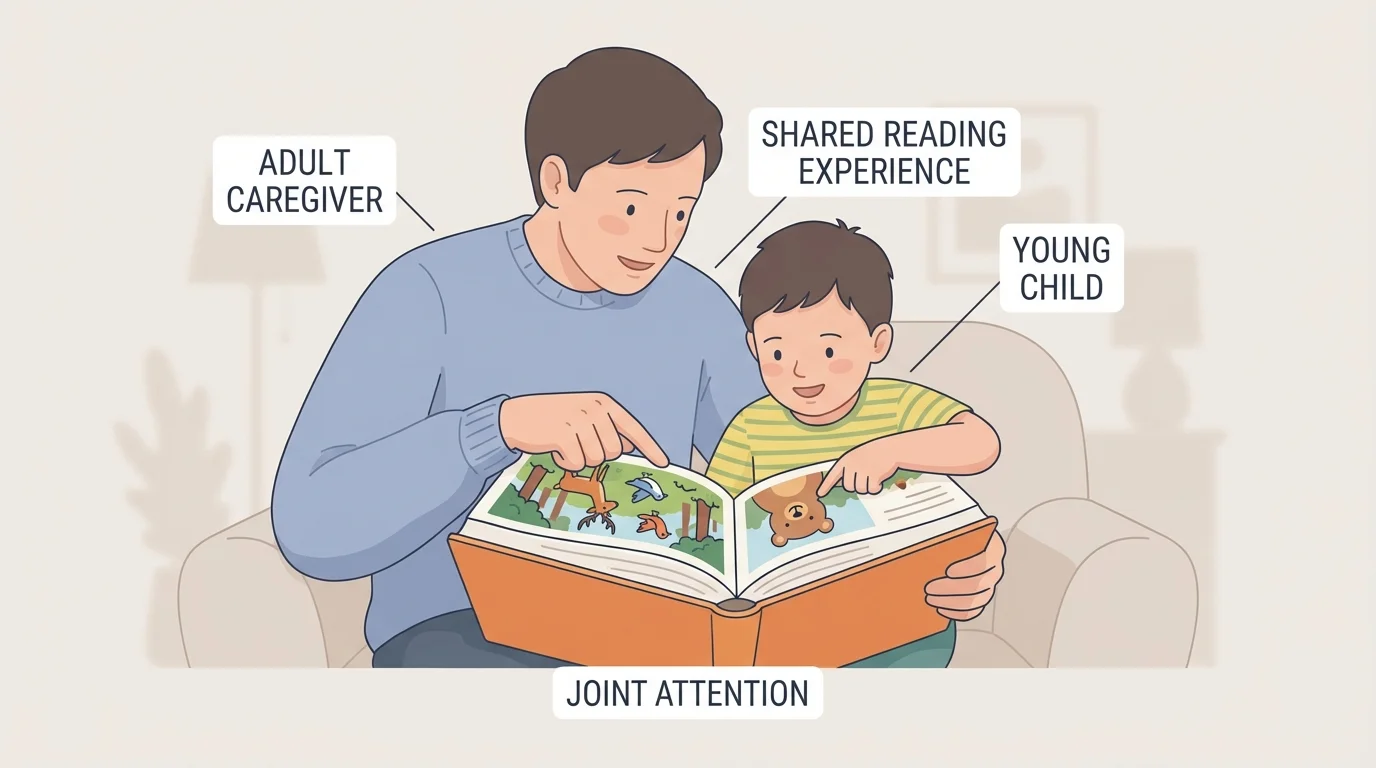
Shared reading means two or more people enjoy the same book together, as [Figure 1] shows. A grown-up, teacher, or older child may hold the book and read the words. The child listens, looks, and joins in.
During shared reading, children begin to understand that books have pictures, words, and meaning. They may smile at a silly page, point to a puppy, or say a word they know. These are important signs of interest. A child does not need to know all the words to be part of reading. Looking, listening, and responding are all part of reading too.
Reading is more than saying words out loud. Reading also means looking closely, listening carefully, and making meaning from pictures and stories.
Sometimes children help read by finishing a line they know. In a favorite book, a child might say, "Brown bear!" or "Goodnight!" before the adult finishes the page. This shows growing confidence and enjoyment.
Children show interest in many ways. They may sit close, look at the page, laugh, clap, ask for the book again, or point to something exciting. They may copy a sound from the story, like "moo" or "beep beep." They may even use their face to show how they feel, like surprise or happiness.
Books invite children to notice details. A child may point to the moon, a hat, or a cat hiding in the picture. A child may turn to a favorite page again and again. This helps build attention and understanding.
When a reader asks simple questions such as "Where is the duck?" or "What do you see?" children learn that books are for talking and thinking. A child might answer with words, sounds, gestures, or pointing. All of these responses matter.
Interest helps understanding
When children are interested in a book, they stay with it longer. They listen more carefully, look more closely, and remember more. Enjoyment and understanding grow together.
Children also learn that stories have things that happen. A character might wake up, look for a friend, eat a snack, or go to sleep. As [Figure 2] illustrates, children begin to follow this order and expect what might come next.
A child can read independently even before reading all the printed words. The child may hold the book, open it, turn pages, and study the pictures. This is an important part of becoming a reader.
When children look at books on their own, they often pretend to read. They may tell the story from memory, name objects they see, or make up their own words. They may start at the front of the book and move page by page. These behaviors show that they understand how books work.
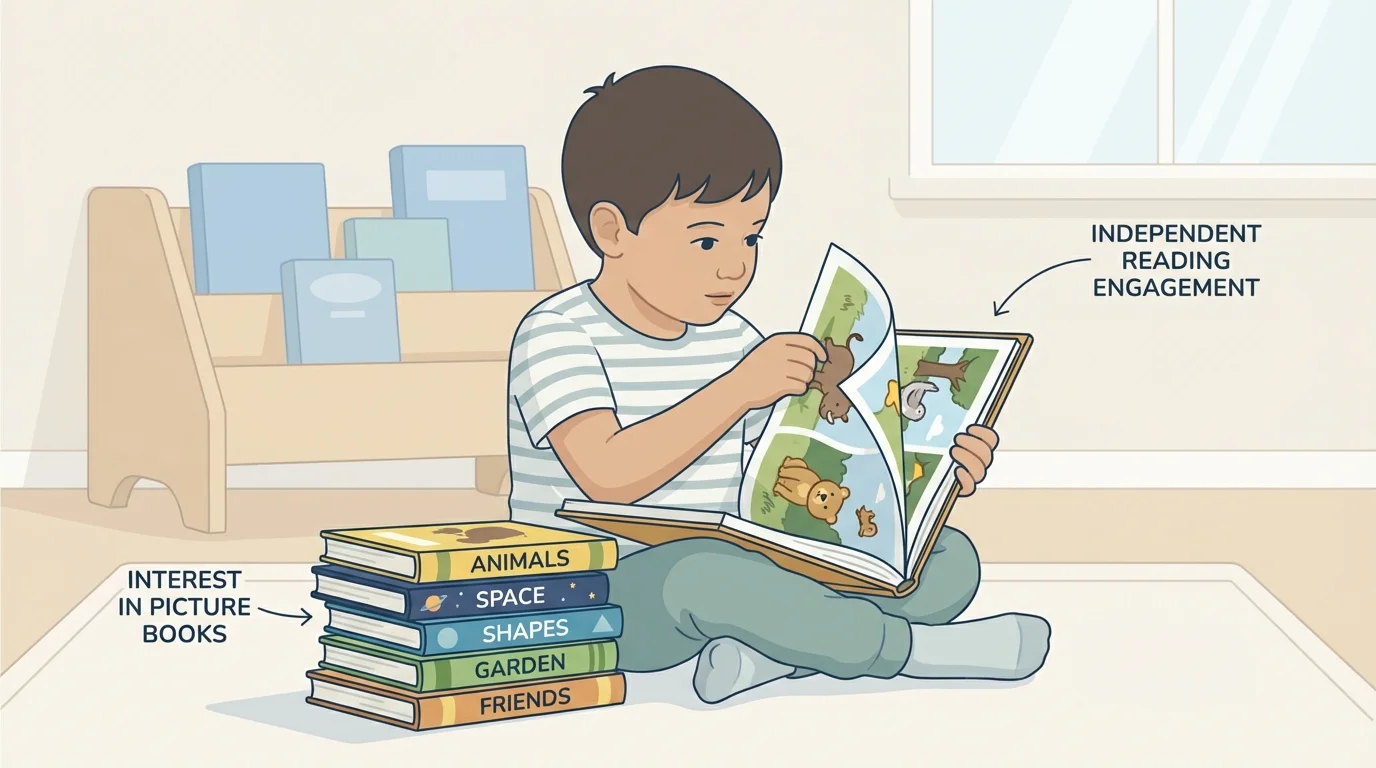
Children may choose the same book many times. Favorite books feel familiar and safe. Repeating a story helps children notice new things each time. One day they may notice the dog in the corner. Another day they may remember what happens next.
Example of independent book looking
A child picks up a book about animals.
Step 1: The child holds the book upright and opens the cover.
Step 2: The child turns one page at a time and looks carefully at each picture.
Step 3: The child points to a lion and says, "Roar!"
Step 4: The child goes back to a favorite page and looks again.
This child is showing strong interest in books and building early reading habits.
Independent book time also helps children make choices. They learn, "I want the truck book," or "I want the book with babies." Choosing a book gives children ownership and joy.
Some books tell made-up stories. These are often called stories. A story might be about a bear who cannot sleep or a rabbit who loses a mitten. Stories can make us laugh, wonder, or feel calm.
Other books give facts and teach us about the world. These are information books. An information book may show real animals, weather, plants, trucks, or families. A child can learn that penguins live in cold places or that seeds grow into plants.
The pictures in a book help children understand what is happening. Even when the words are new, pictures give clues. A child looking at a page with dark clouds and umbrellas may understand that it is raining. Later, that child may connect the picture to words the reader says.
Many children "read" a favorite book from memory before they can read the printed words. They remember the pattern, the pictures, and what comes next.
Books can connect to real life. After reading about apples, a child may notice apples at snack time. After hearing a story about bedtime, a child may talk about brushing teeth and getting cozy. As we saw in [Figure 1], reading with another person helps children talk about these connections.
Books are special objects, and children can learn to care for them gently. We hold books with clean hands, turn pages carefully, and keep books in a safe place. We do not rip pages or scribble on them unless the book is meant for drawing.
As [Figure 3] shows, a cozy reading habit helps children enjoy books often. This may happen on a rug at school, on a couch at home, or in a quiet corner with a basket of books. Looking at books every day helps children see reading as a happy part of life.
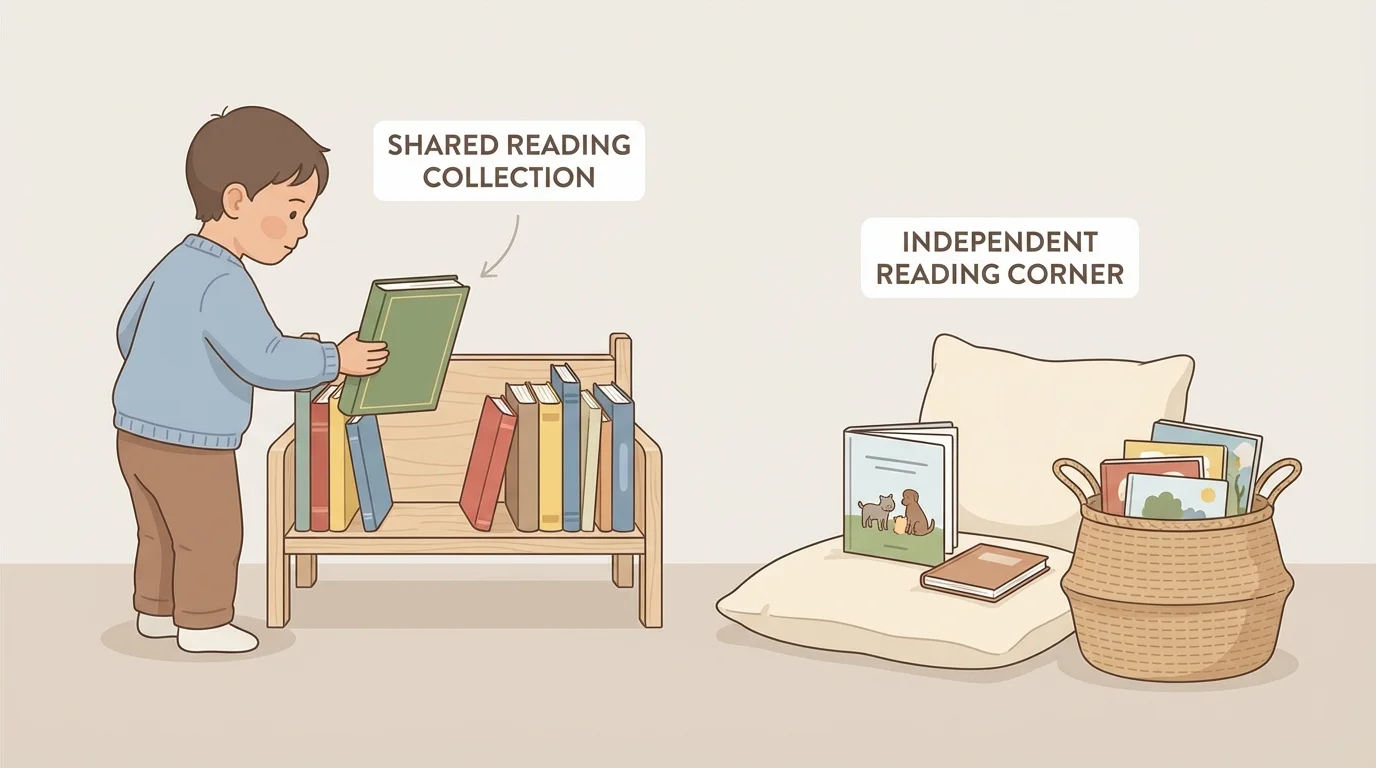
Children who care for books can return to them again and again. They may remember a favorite cover, a funny character, or a page with bright stars. Over time, these repeated reading experiences build confidence and curiosity.
Independent book looking and shared reading work together. One helps children enjoy books with others, and the other helps children explore books on their own. Later, children use both experiences to become stronger readers and thinkers. The careful book handling in [Figure 3] supports this habit because books stay ready to be read another day.
"Books can help us look, listen, think, and wonder."
When children show interest in books, they are building something important. They are learning that books matter, that stories are meaningful, and that reading is something they can enjoy with others and by themselves.
