Have you ever noticed that sun and sock sound a little alike right at the start? Our ears can do amazing work. They can listen to words and hear tiny parts inside them. When we listen for sounds in words, we are getting ready for reading.
Words are made of sounds. When we say a word out loud, we can listen to the parts we hear. Some words start the same. Some words end the same. Careful listening helps us tell words apart and helps us notice when words are alike.
A sound is what we hear when someone speaks. In spoken language, words are made from small sounds put together. We can clap, tap, or say a word slowly to hear those parts more clearly.
Beginning sound is the sound we hear first in a word. Ending sound is the sound we hear last in a word. A phoneme is one small sound in a word.
If we say ball, we hear /b/ at the beginning. If we say cup, we hear /p/ at the end. Listening to these sounds is called phonological awareness. It means we pay attention to the sounds we hear in language.
[Figure 1] The first sound in a word is called the beginning sound. Words like sun, sock, and sand all begin with the same sound. Our ears can notice that they all start with /s/.
Other words begin differently. Ball begins with /b/. Moon begins with /m/. Dog begins with /d/. When we compare words, we can ask, "Do these words start the same, or do they start differently?"
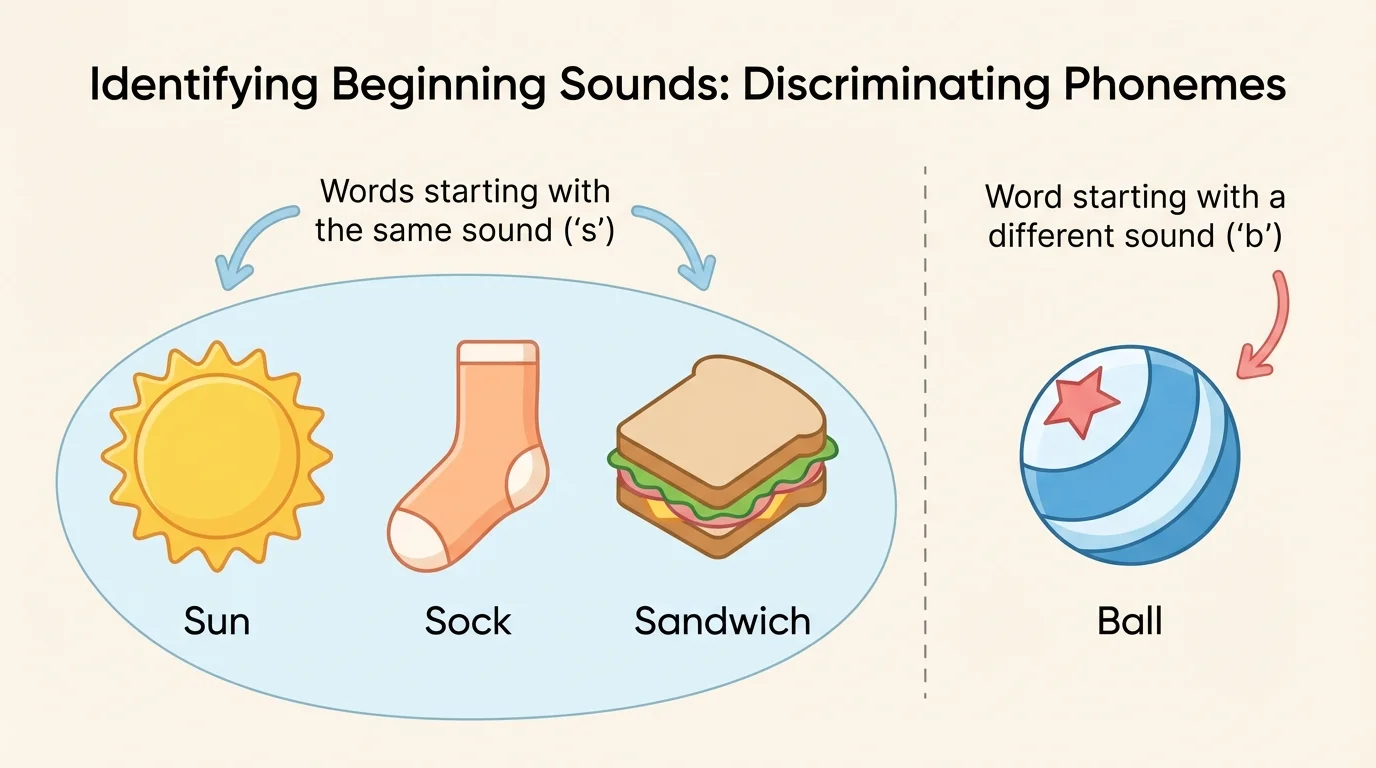
Listening for beginning sounds helps us match words by what we hear, not just by what things mean. A sock and a sandwich are not the same kind of thing, but they share the same first sound. That is an important listening skill.
Hearing beginning sounds
Step 1: Say the word map.
Step 2: Listen to the first sound: /m/.
Step 3: Say the word moon.
Step 4: Listen to the first sound: /m/.
Map and moon begin with the same sound.
We can also hear when beginning sounds are different. Pig starts with /p/, but toy starts with /t/. These words do not begin the same.
[Figure 2] The last sound in a word is called the ending sound. Words like cat and hat end with the same sound. They both end with /t/.
Ending sounds matter too. Cup ends with /p/. dog ends with /g/. bus ends with /s/. When we listen all the way to the end of a word, we can hear how words may match or differ.
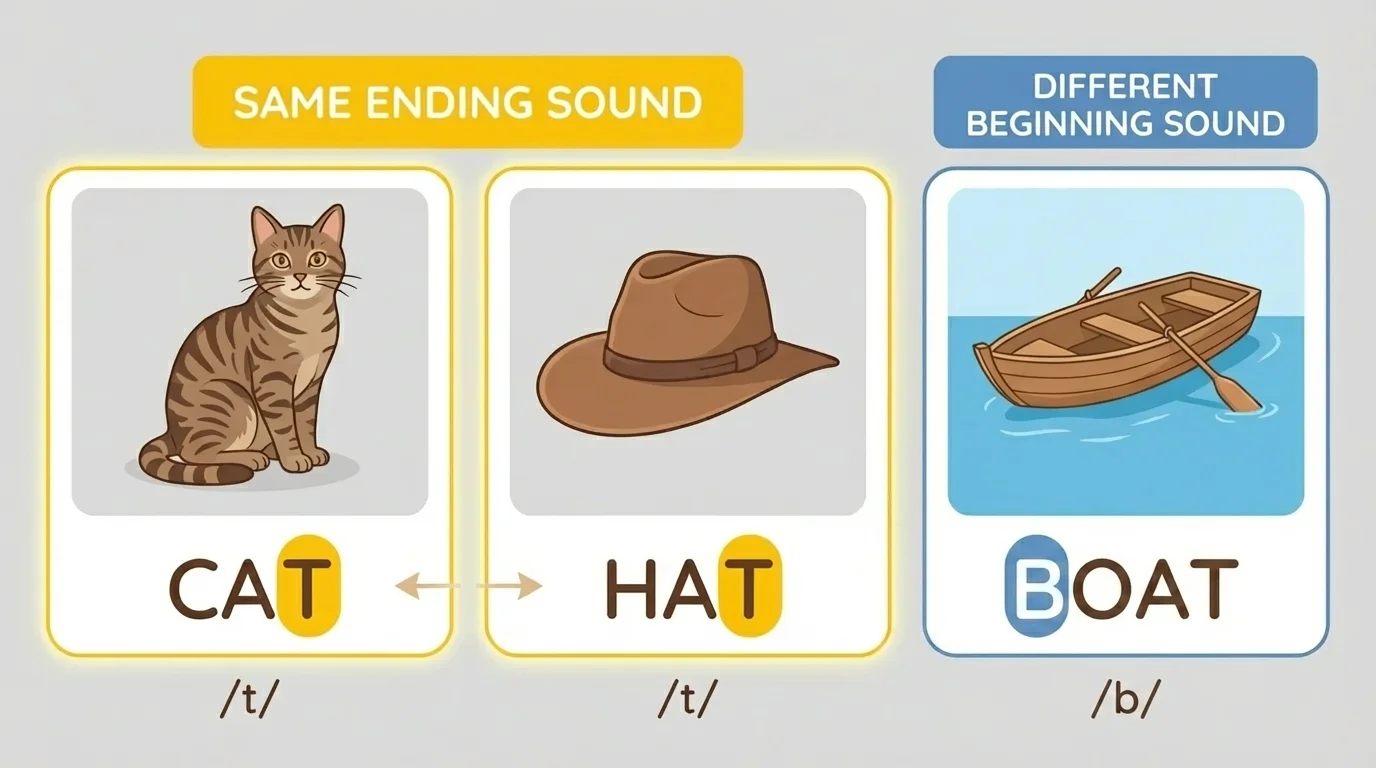
Sometimes a child notices the beginning sound first because it comes right away. Ending sounds can be trickier, so we listen carefully to the very end. Stretching a word slowly can help our ears catch the final sound.
Think about cup and hop. They are different words, but both end with /p/. Think about fan and sun. They both end with /n/. This kind of listening helps us hear patterns in spoken words.
Very young children often hear big parts of words before they hear tiny parts. With practice, ears get better at noticing the first and last sounds in words.
Later, when children learn letters, they connect these heard sounds to printed symbols. For now, the important job is hearing the sound clearly.
[Figure 3] Different words can share one sound. We can group words by the sound we hear. Some words start the same, and some words end the same.
For example, mouse, milk, and moon all begin with /m/. Also, cap, cup, and hop can share the ending sound /p/. The words are different, but one sound matches.
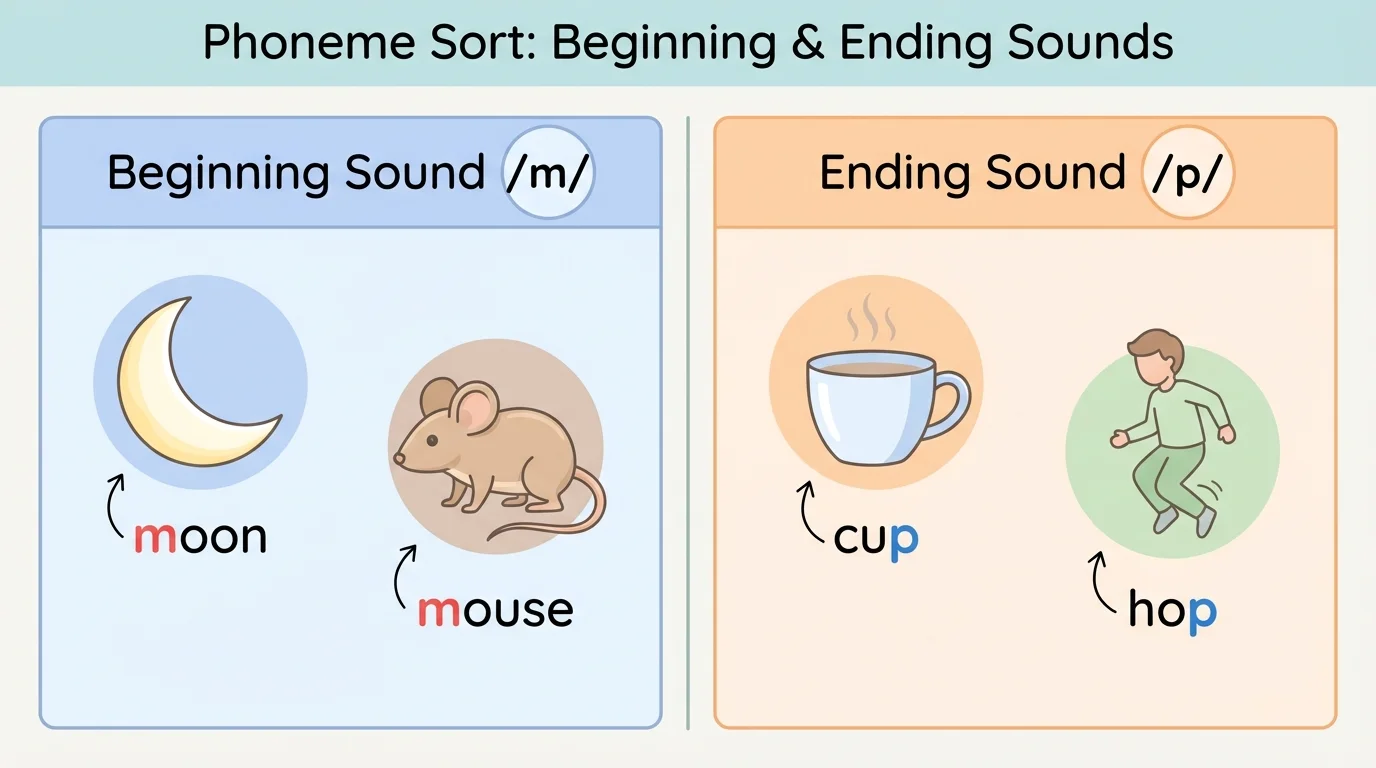
We can listen and sort by sound. One group may be words that begin with /b/: ball, baby, book. Another group may be words that end with /t/: cat, boat, hat. This helps us hear how words connect to each other.
As we saw in [Figure 1], words that begin the same can belong together even when their meanings are different. In the same way, [Figure 2] reminds us that words can match at the end too.
A phoneme is one small sound we hear in a word. Preschool children do not need long definitions, but they can begin to notice that words are made of these tiny sounds. For example, me begins with /m/, and tea begins with /t/. Those first sounds are different phonemes.
When two words start with different phonemes, they sound different right away. When two words end with the same phoneme, they sound alike at the end. Hearing these little sound parts is a big early step in language growth.
Why tiny sounds matter
Children learn spoken language before they read printed words. By hearing small sounds in words, they build a strong listening foundation. Later, this helps them connect sounds to letters and read words more easily.
Even simple word pairs are useful for listening. Bat and bag start the same but end differently. Top and tap start the same and end the same, but the middle sound changes. This shows that every small sound in a word matters.
When children notice beginning and ending sounds, they are doing important early reading work. They are training their ears to hear language carefully. That careful listening supports speaking, singing, rhyming, and later reading and writing.
Everyday life is full of chances to hear sounds. Names, songs, storybooks, and playful talk all use sounds again and again. A child may notice that Mama and milk begin the same, or that cup and up end the same. These discoveries make spoken language feel exciting and meaningful.
Before children read printed words, they learn by listening. Hearing words, repeating them, and noticing sound parts are strong first steps toward reading success.
Good listeners learn to tell whether words sound the same at the beginning, the same at the end, or different in both places. That skill grows little by little, one word and one sound at a time.
