A tiny note on a fridge, a name on a cubby, and a bedtime story all have something special in common: they are ways people share messages. Writing is not only for big kids and adults. Even when children make scribbles, draw pictures, or write letter-like shapes, they are learning that writing can tell others something important.
Writing is a way to communicate. To communicate means to share a message with someone else. People use writing to say what they know, what they saw, what they want, and what they think. A child might draw a sun and say, "We played outside." That picture and those marks are helping the child send a message.
Writing is making marks, pictures, symbols, or letters to share meaning. Communication is sharing ideas, feelings, or information with other people.
When children begin to write, their writing may look like lines, swirls, dots, or shapes. That still matters. Early writing shows that children are learning that marks on paper can stand for words and ideas.
People write for many reasons, as [Figure 1] shows. Sometimes writing gives information. Sometimes writing tells a story. Sometimes writing shares an opinion. Each kind of writing has a purpose.
If someone writes "The fish is in the bowl," that gives information. It tells a fact. If someone draws a picture and says, "The bunny ran and hid in the grass," that shares a story. If someone says, "I like red apples best," that gives an opinion. An opinion tells what someone thinks or likes.
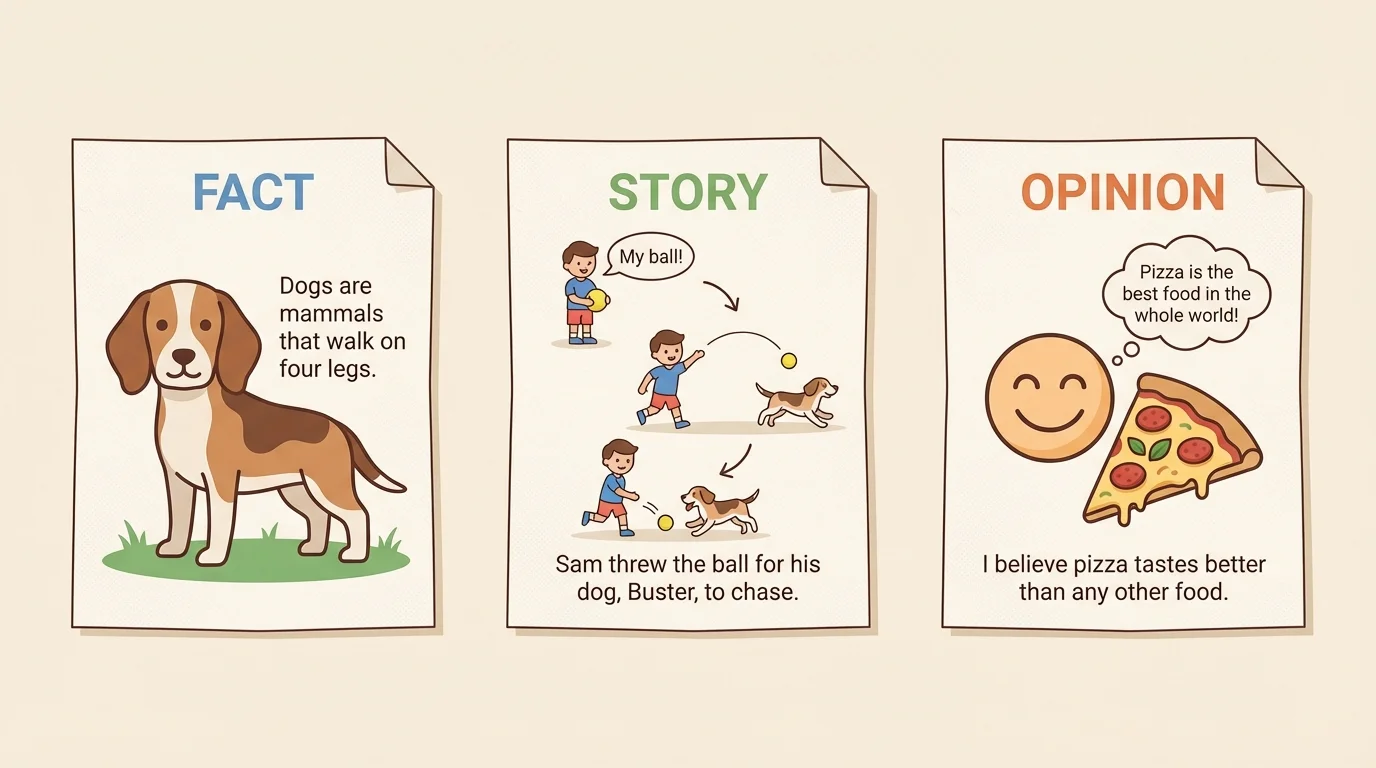
Children can write for these purposes too. A child may make a card for a grandparent, label a picture with a name, or make marks to say, "I love trucks." Even one word, one letter, or one drawing can have a clear purpose.
Examples of writing purposes
A preschool writer can share different messages in simple ways.
Step 1: Giving information
A child draws rain and says, "It is wet outside."
Step 2: Sharing a story
A child draws a dog, a ball, and a park and says, "The dog ran fast."
Step 3: Giving an opinion
A child writes letter-like marks and says, "Blue is my favorite color."
Later, when children hear stories read aloud and see adults write notes, they begin to understand even more clearly that writing is for real messages. The three purposes in [Figure 1] appear again and again in books, signs, and everyday papers.
Young children often begin with drawings, scribbles, and symbols, and these all can carry meaning, as [Figure 2] illustrates. A picture of a house may mean "my home." A row of wavy lines may mean "this says I went to the park." Over time, children begin to add shapes that look more like letters.
These early forms are sometimes called symbols or letter-like forms. A symbol is a mark or picture that stands for something. A heart shape can stand for love. A child's first letter from their name can stand for the whole name. This is an important step in becoming a writer.
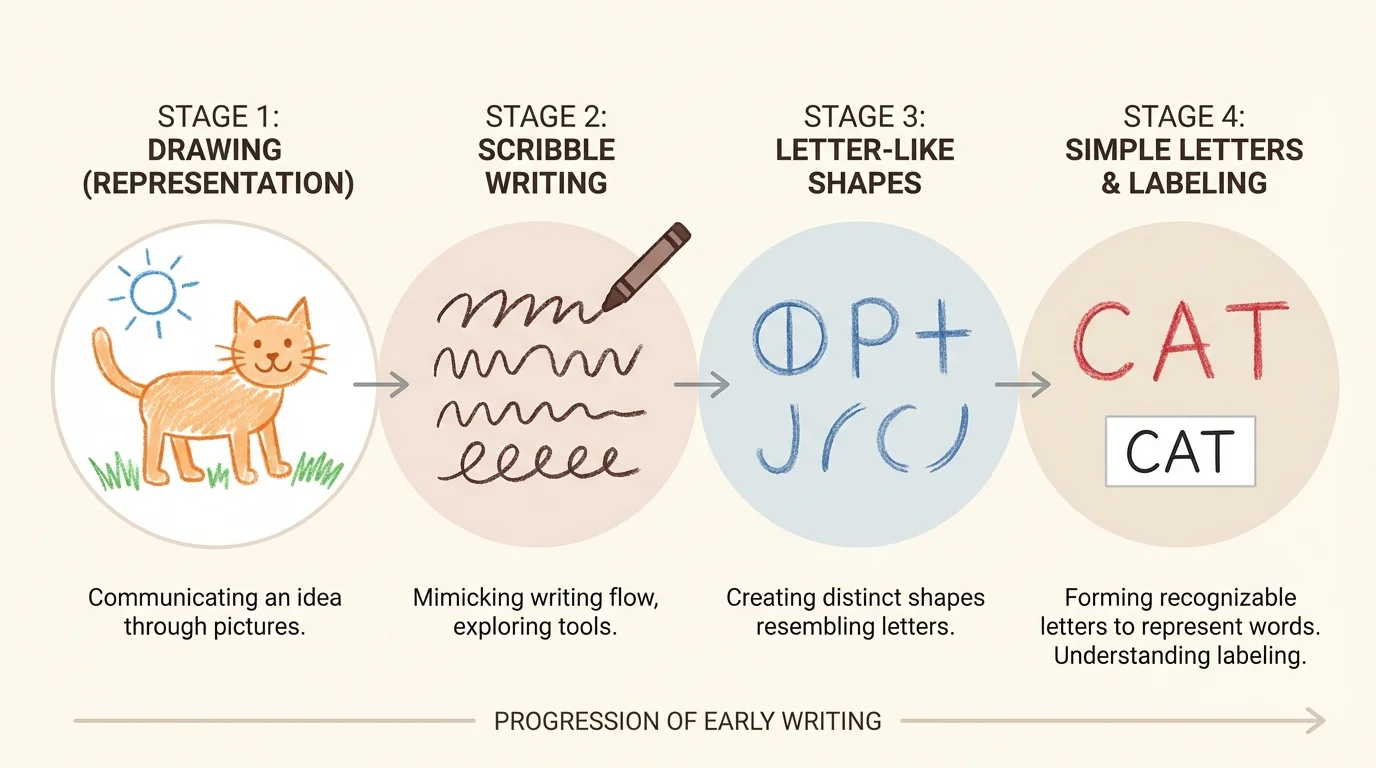
Children do not need perfect spelling to communicate. If a child writes "M" and says, "That says Mommy," the child is learning that writing connects to spoken words. If a child draws a cookie and makes circles beside it, then explains "I want cookies," the marks have meaning because they carry a message.
Emerging writing grows in stages
Writers often begin by making random marks. Then they use drawings and repeated lines. Next, they try symbols and letter-like shapes. After that, they begin to use real letters, especially letters from their own names. Each stage helps children understand that writing stands for language.
Adults help by listening to what the child says about the page. When an adult asks, "What does your writing say?" the child learns that writing is something people read and understand.
Children use many tools to write: crayons, markers, pencils, chalk, and paintbrushes. These writing tools help children make lines, curves, dots, and shapes. Learning to hold and control a tool is part of learning to write.
Children also begin to notice simple conventions. Conventions are usual ways writing works. In many English books, people look from left to right and from top to bottom. Pages turn one at a time. Words are separated by spaces. Preschool children are just beginning to notice these patterns.
Children often learn the letters in their own names first. A name is one of the most meaningful words a child sees again and again.
When children pretend to write a grocery list or add their names to their artwork, they are practicing both hand movement and the idea that writing follows special patterns. They may not do it in the usual way yet, but they are learning what writers do.
Writing is everywhere in daily life. We see names on folders, signs on doors, labels on bins, lists in kitchens, and cards for birthdays. These are all messages made for a reason.
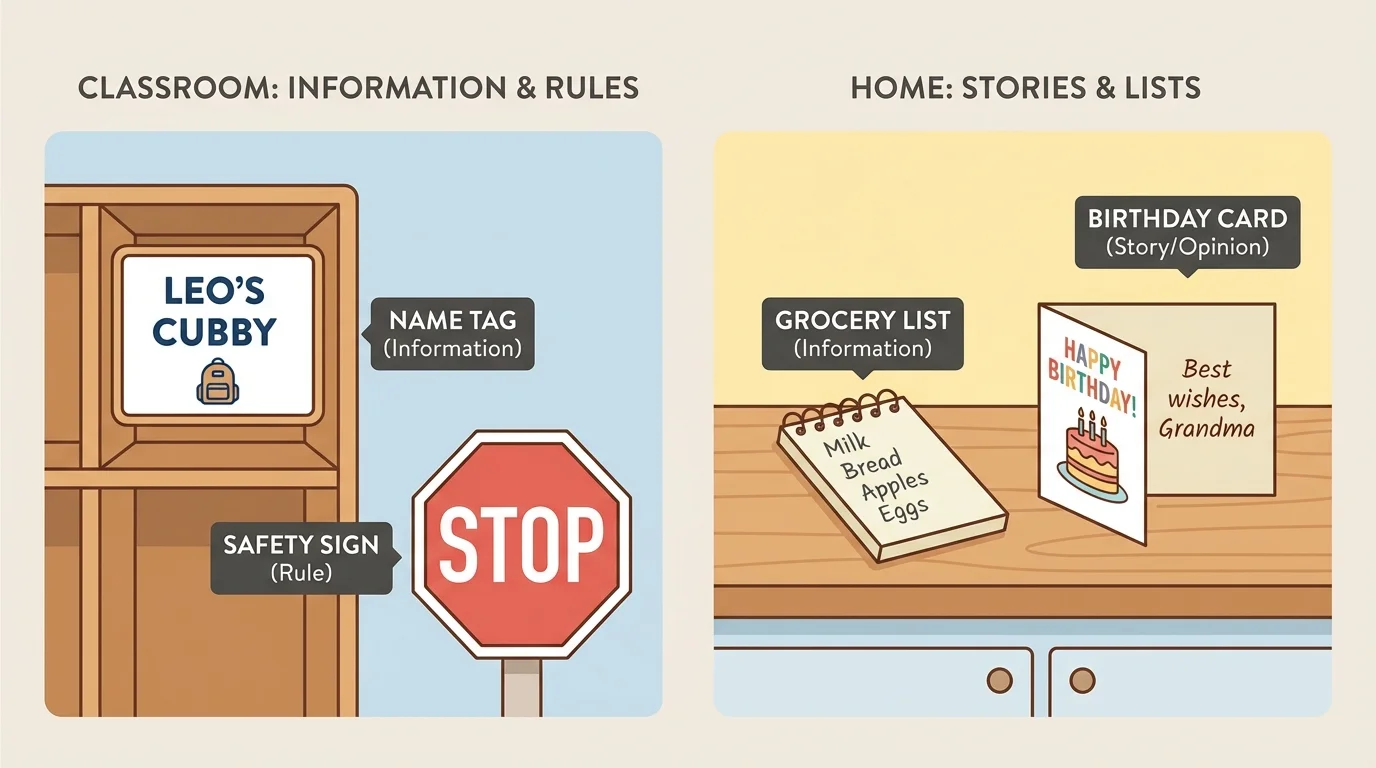
[Figure 3] A stop sign gives information. A birthday card shares kind feelings. A menu helps people choose food. A label on a toy bin helps children know where to put blocks or cars. Writing helps people remember, organize, tell, invite, and share.
Children often become excited writers when they see real uses for writing. They may want to write their name on a picture, make a sign for a block tower, or help make a shopping list. Everyday messages make the purpose of writing clear.
| Kind of writing | What it does | Example |
|---|---|---|
| Information | Tells a fact | "The plant needs water." |
| Story | Tells what happened | "The bear found honey." |
| Opinion | Tells what someone thinks | "I like yellow best." |
| Label | Names something | "Blocks" on a bin |
Table 1. Different kinds of writing and the messages they communicate.
Later, children can connect the real-life writing in [Figure 3] to their own work. A page of marks can be a list. A drawing with a name can be a label. A sentence told aloud can become the start of a story.
A child becomes a writer by learning that marks on a page mean something. The message matters most. Clear communication can begin with a picture, a scribble, a symbol, or a few letters. With practice, children add more details, more letters, and more words.
Speaking, listening, drawing, and reading all help writing grow. When children talk about their ideas and hear language from books and conversation, they have more messages to share in writing.
Writers do not all start the same way. One child may love drawing stories. Another may like writing the first letter of every family member's name. Another may make pretend lists. All of these are meaningful steps because they show that the child knows writing is for communication.
When children say, "This says my dog is sleepy," they are doing something powerful. They are using writing to connect their thoughts to another person. That is the heart of writing: sharing meaning.
