Have you ever wanted a toy, looked for your shoes, or said to someone, "I am happy"? Talking helps us every day. We use words to tell things and to ask things. When we say what we think or feel, we are sharing our ideas. When we ask for help or ask about something, we learn from other people too.
We talk for many reasons. We may say, "The ball is red." We may ask, "Where is my ball?" We may share a feeling and say, "I am sad," or "I am excited." Good speaking and listening help us be understood.
When children speak, they can share something they want, something they need, an idea, or a feeling. Talking also helps with taking turns, playing with friends, and asking grown-ups for help.
A statement is a sentence that tells something. A question is a sentence that asks something. A statement gives information. A question asks for information.
A speaker can use either kind of sentence about the same thing. For example, "The dog is sleeping" is a statement. "Is the dog sleeping?" is a question. Both are about the dog, but they do different jobs.
[Figure 1] shows examples of statements and questions. A statement tells something. It can tell what you see, what you want, what you know, or how you feel. A child might say, "I have a teddy bear." Another child might say, "My cup is blue."
Statements can be short and clear. "I am hungry." "The blocks fell down." "Mommy is here." These sentences help other people know what is happening.
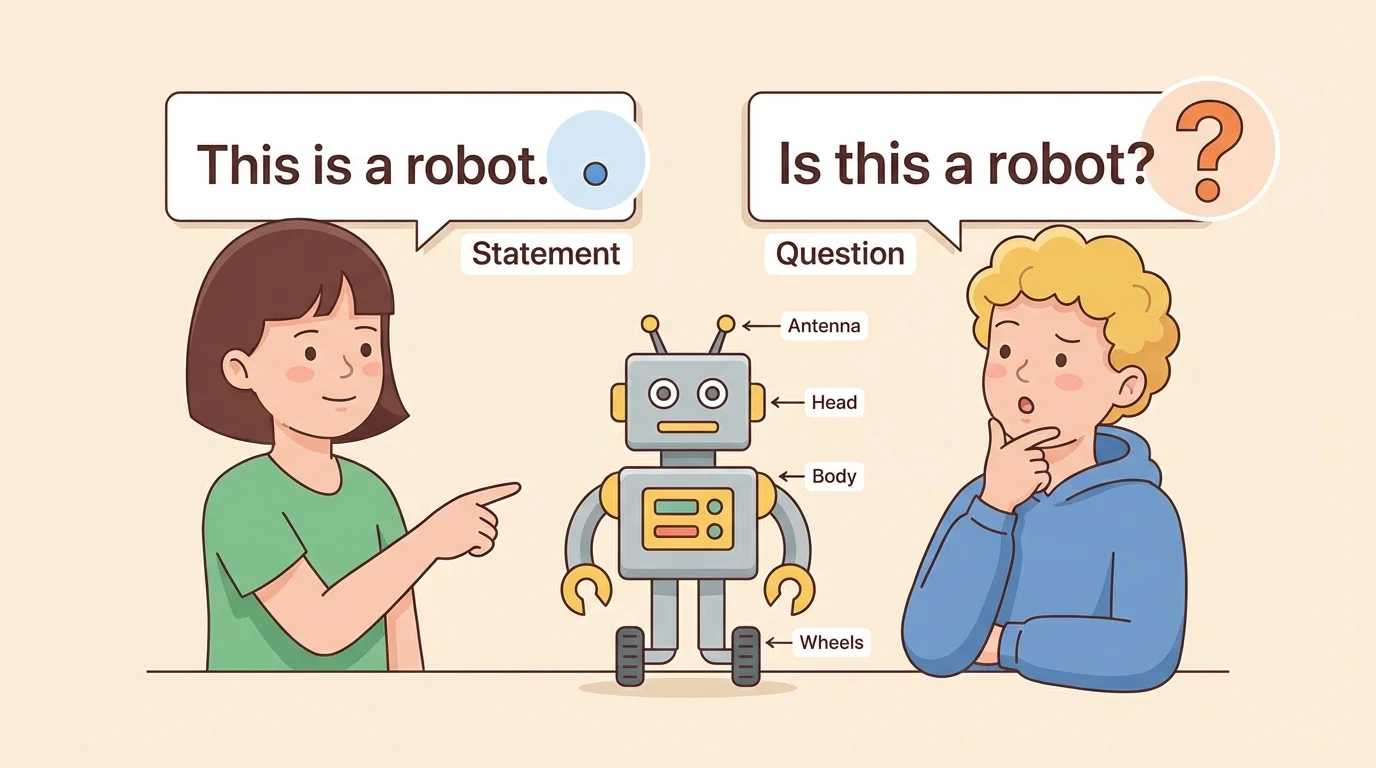
Statements can also share feelings. A child may say, "I feel tired," or "I feel mad." These words help others understand and respond in a kind way.
A question asks something. A question helps us learn, find things, or get help. We can ask, "Where is my shoe?" "Can I have water?" or "Who is that?" Questions are important because they help conversations grow.
Some questions can be answered with yes or no. "Do you want milk?" "Is it raining?" Other questions need more words. "What are you drawing?" "Why are you crying?"
Questions and statements work together. A question starts a search for information, and a statement gives the information. One child asks, "Where is the ball?" Another child answers with a statement: "The ball is under the chair."
We can hear the difference too. Questions often have a rising tone at the end. Statements often have a steady or falling tone. When we listen carefully, we can tell what kind of sentence someone is using.
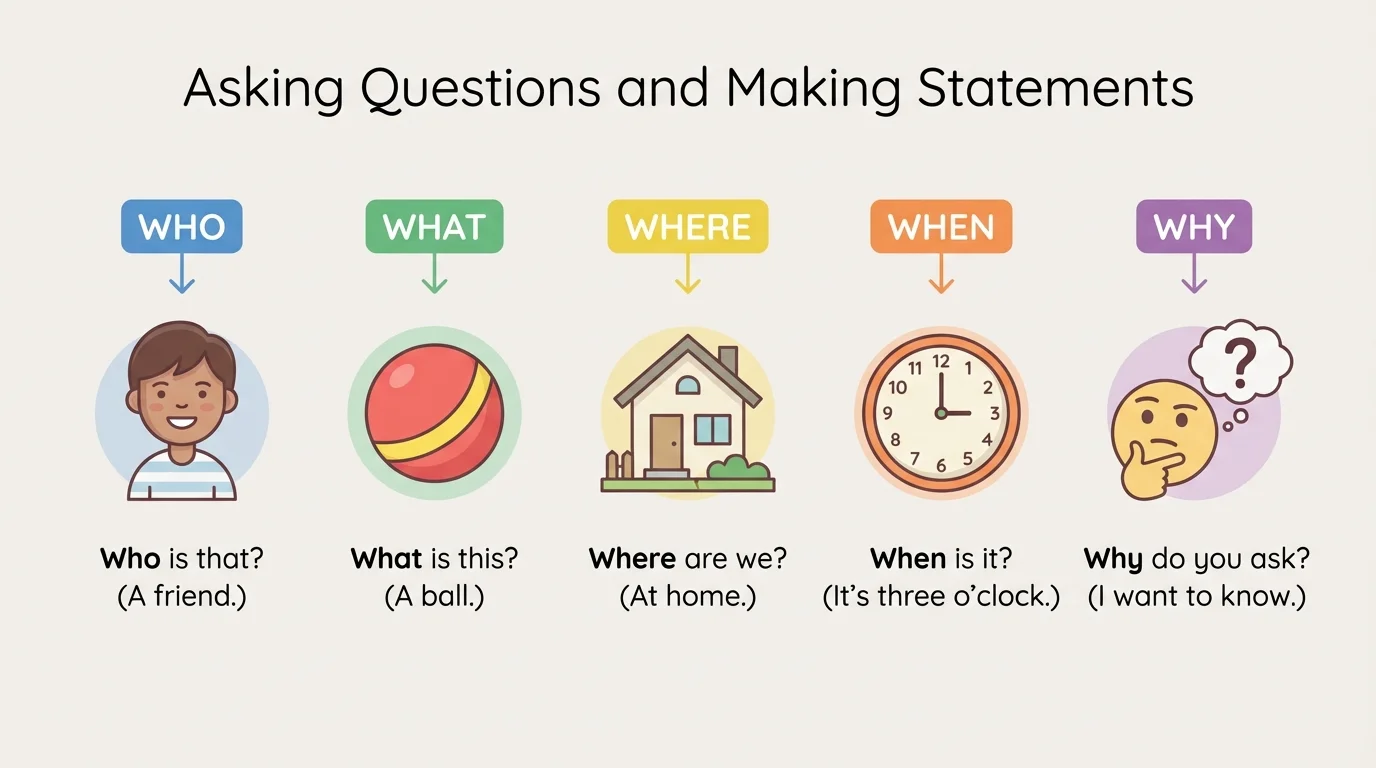
[Figure 2] shows some common question words. Many questions begin with special words that help us ask for different kinds of information. Question words include who, what, where, when, and why.
Who asks about a person: "Who is at the door?"
What asks about a thing or idea: "What is in the box?"
Where asks about a place: "Where is my hat?"
When asks about time: "When is snack?"
Why asks for a reason: "Why is the baby crying?"
Some questions begin with helping words like is, are, do, and can. For example: "Is the door open?" "Are you ready?" "Do you see the bird?" "Can I play too?"
Using the right question word helps the listener know how to answer. If you ask "Where is my book?" the answer should tell a place, such as "It is on the table."
Talking is not only speaking. Talking also means listening. In a conversation, people take turns. One person speaks and the other person listens, then they switch. This is called a conversation.
[Figure 3] shows how people take turns in a conversation. When someone asks a question, we listen to the words and think about the answer. If a friend asks, "What do you want to play?" a good answer matches the question: "I want to play with blocks."
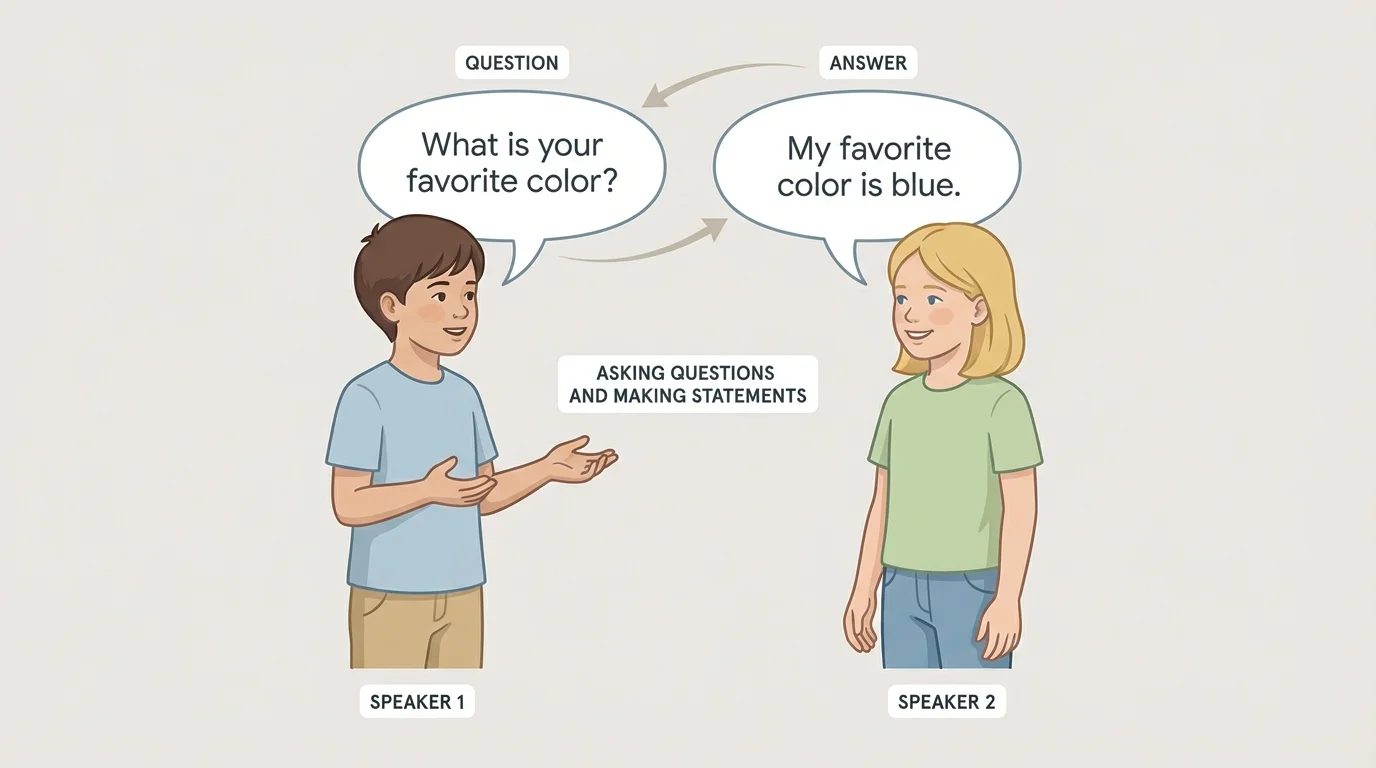
Looking at the speaker, staying quiet while the other person talks, and answering about the same topic all help a conversation work well. Thinking about turn-taking reminds us that both speaking and listening matter.
Everyday talking examples
Step 1: A child wants help.
Question: "Can you open this?"
Step 2: The grown-up answers.
Statement: "Yes, I can open it."
Step 3: The child shares a feeling.
Statement: "Thank you. I am happy."
Answers do not have to be long. They only need to make sense. If someone asks, "Where is the cat?" a good answer might be, "On the couch."
At home, children use statements and questions all the time. "I want juice" is a statement. "Can I have juice?" is a question. At playtime, "I made a tower" is a statement. "Do you want to build with me?" is a question.
At school or in a group, children may say, "I need help," "I am finished," "Where do I sit?" and "What is next?" These words help teachers and classmates understand what the child needs to know or say.
We also use language to share feelings. "I feel scared." "I feel excited." "Why are you sad?" "Are you okay?" These words help children connect with others kindly.
Young children learn a lot of language through back-and-forth talk. Short conversations during meals, play, and story time help children grow stronger speaking and listening skills.
Questions and statements can be about the same thing. We saw in [Figure 1] that one child can tell about a toy and another can ask about it. This helps children stay on one topic and keep a conversation going.
Speaking clearly means using words that others can understand. A clear voice, simple words, and calm talking help the listener. Kind words matter too. "Please," "thank you," and "Can I have a turn?" help people feel respected.
Good listeners can give better answers. The question words in [Figure 2] help us think about what kind of answer is needed. A where question needs a place. A who question needs a person.
Children grow as speakers when they practice using language for real reasons: asking for help, telling what happened, explaining what they want, and sharing how they feel. Each time they ask or tell, they build stronger expressive language.
"Words help us tell, ask, and connect."
When children use statements and questions well, they can join play, solve little problems, and share their ideas. Talking and listening together help children feel heard and understood.
