Look around a room with books, signs, and labels. There are so many little marks everywhere. Some marks are pictures. Some marks are numbers. Some marks are just lines and doodles. But some marks are very special: they are letters. Letters are the marks we use to make words, and each one has its own name.
A letter is a special kind of mark we can see and recognize, as [Figure 1] shows. A letter is not the same as a picture of a dog, a heart shape, or a scribble. Letters belong to a special group called the alphabet.
When we look at print, we can learn to tell, "That is a letter," and "That is not a letter." For example, A is a letter. B is a letter. A drawing of a sun is not a letter. The number 3 is not a letter. A zigzag scribble is not a letter either.
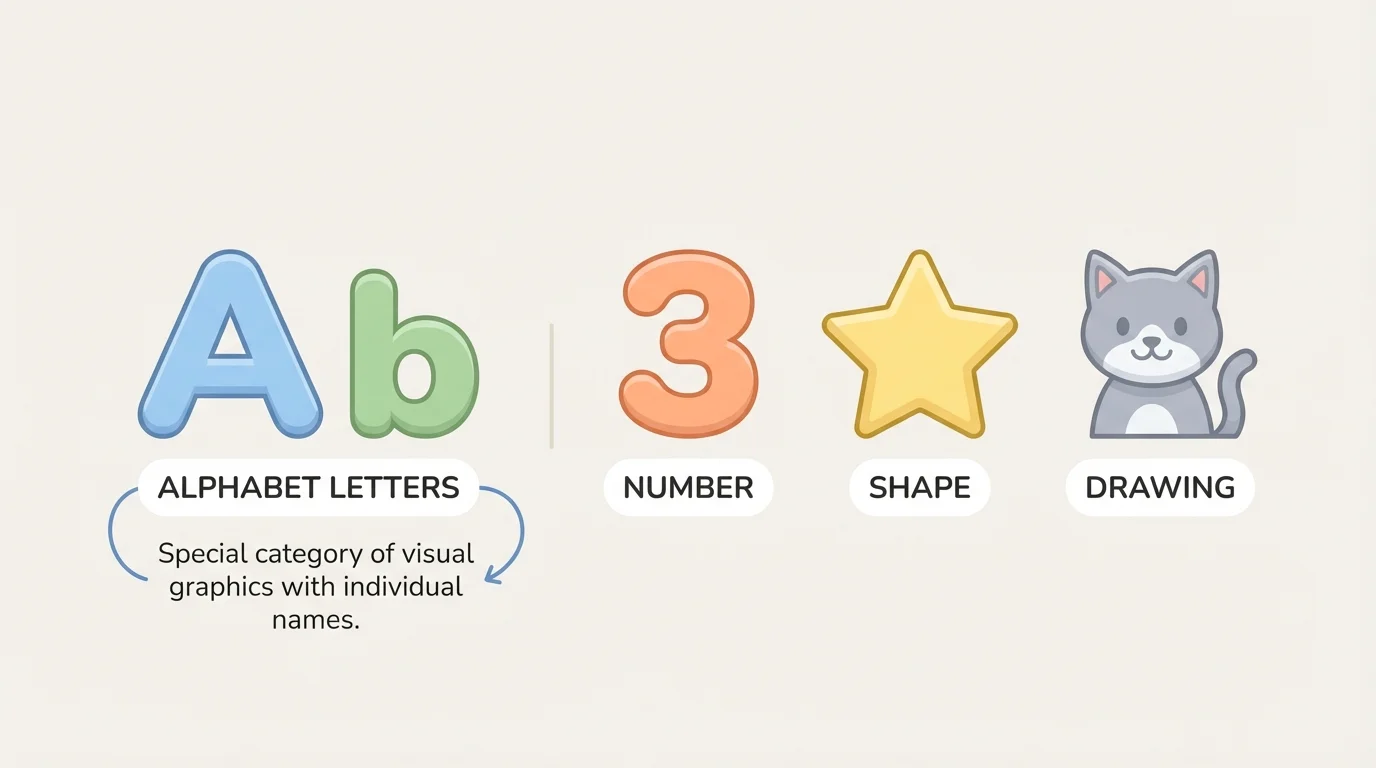
This matters because reading begins with noticing what kind of mark we are looking at. Letters are made to stand for the words we say. That makes them different from pictures, which show what something looks like.
Alphabet means the set of letters we use in order. Visual symbol means something we can see on a page or screen, such as a letter, number, shape, or picture. Letters are one special kind of visual graphic.
Children see letters in many places: on book covers, on blocks, on food boxes, and in their own names. The more we notice them, the easier it becomes to tell letters apart from other marks.
Every letter can be named one by one. We can point to a letter and say its name: A, B, C, and so on. Letter names help us talk about print. If someone says, "Find the letter M," we know which letter to look for.
Some children first learn the letters in their own names. A child named Mia may notice M. A child named Leo may notice L. That is exciting because it shows that letters are not just marks on a page. They are named parts of words.
Why letter names matter
When children know letter names, they can match what they see with what they hear from a teacher or family member. Saying "This is B" helps connect the shape of the letter with its name. Later, children also learn that letters can stand for sounds in words.
We can name letters in many orders, not only in the alphabet song. If we see S on a sign, we can say "S". If we see T in a book, we can say "T". Naming letters one at a time is an important part of learning to read.
Letters can have a uppercase form and a lowercase form. These are sometimes called big letters and small letters. As [Figure 2] illustrates, a big letter and a small letter can look a little different, but they still have the same name.
For example, A and a are both named A. B and b are both named B. M and m are both named M. We do not give them different names. They are the same letter in two forms.
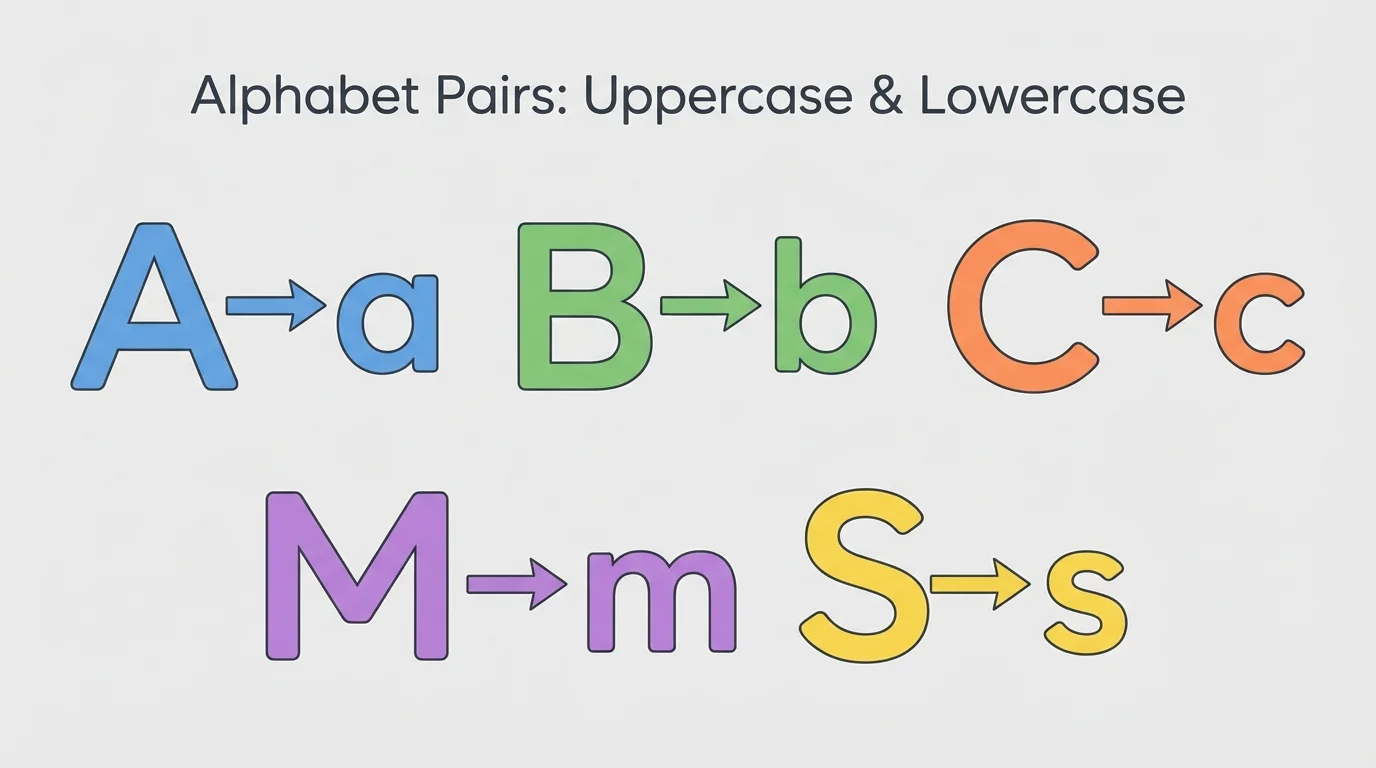
Books use both uppercase and lowercase letters. We often see an uppercase letter at the start of a name, like L in Leo, and many lowercase letters in the rest of the word. Knowing both forms helps children recognize letters wherever they appear.
The first letter in a person's name is often one of the first letters that a child learns to spot. Names make alphabet learning feel personal and important.
Later, when children look at words in stories and labels, they can remember that the same letter may appear in a big form or a small form. That is why matching pairs matters, just as we see again in [Figure 2].
Letters are used to make words. Words are used in books, notes, labels, menus, and signs. When children recognize letters and know their names, they are building early alphabetic knowledge.
Alphabetic knowledge means understanding letters well enough to notice them, name them, and begin connecting them to reading and writing. A stop sign, a cereal box, and a bedtime story all use letters. This is one reason letters are so important in everyday life.
When adults read aloud, they may point and say, "This word starts with B," or "I see the letter O." That talk helps children understand that the marks on the page are not random. They are letters with names, and those letters work together in words.
You already know that pictures tell us what something may look like. Letters do a different job. They help us read words and write words.
As children grow, they also learn letter sounds, but first they need to notice that letters are a special set of visible marks. Recognizing and naming letters is one of the earliest steps toward reading.
Some letters look a little alike, so we need to look carefully at their shapes. A small change can make one letter different from another. For example, O is round all the way around. C has an opening. Q has a little tail.
[Figure 3] Other letters are made with straight lines or curved lines. L has a tall line and a short line. T has a tall line and a line across the top. S curves. X crosses. Looking for these parts helps children tell letters apart.
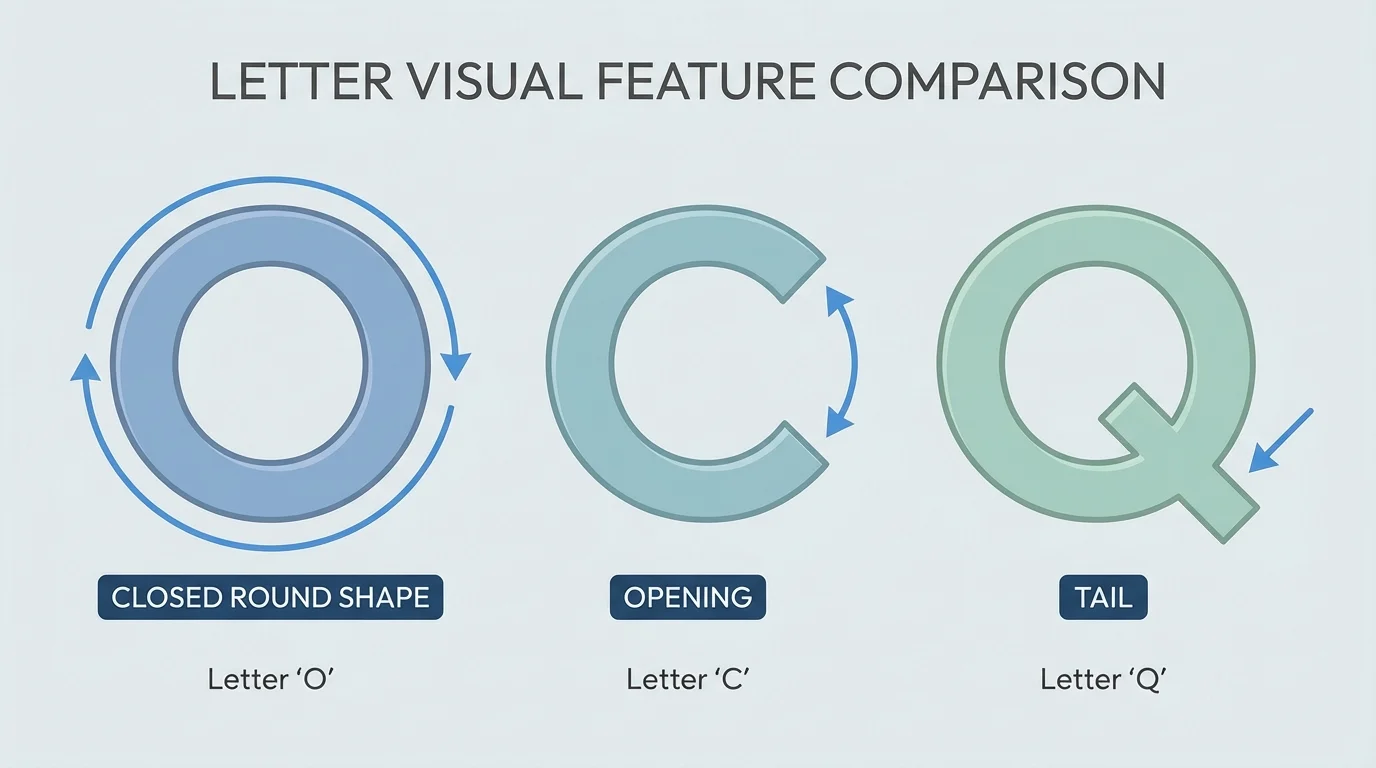
Careful looking helps with naming letters. If a child sees a round shape with a tail, that child can learn, "That is Q." If the shape is open on one side, that child can learn, "That is C." The details matter.
Letter noticing in real life
A child sees print in three places during the day.
Step 1: On a cubby label, the child sees E at the start of Emma.
Step 2: On a book cover, the child notices B in a title.
Step 3: On a toy bin, the child sees a picture of blocks and also the printed word blocks. The picture is not a letter, but the printed word is made of letters.
This shows how children learn to separate letters from other things they see and to name the letters they find.
When children study letter shapes, they become better at recognizing letters quickly. That skill supports later reading, writing, and spelling.
The alphabet is a special set of visual marks. Each letter can be seen, recognized, and named. Learning that idea helps children understand what print is and why it matters.
