Have you ever known a word just from its very first sound? When someone says "bbbball," your ears can catch the beginning and help your brain guess ball. That is an important early reading skill. Developing readers learn to listen for the first sound in a word and look for the first letter they see.
A beginning sound is the sound we hear at the start of a word. The first sound comes before the rest of the word, so a child can hear /s/ in sun or /b/ in ball. We are not listening for the whole word first. We are listening for how the word starts.
[Figure 1] Some familiar words have easy beginning sounds to hear. Mom starts with /m/. Dad starts with /d/. Cat starts with /k/. Dog starts with /d/. When we say the words slowly, the first sound stands out more clearly.
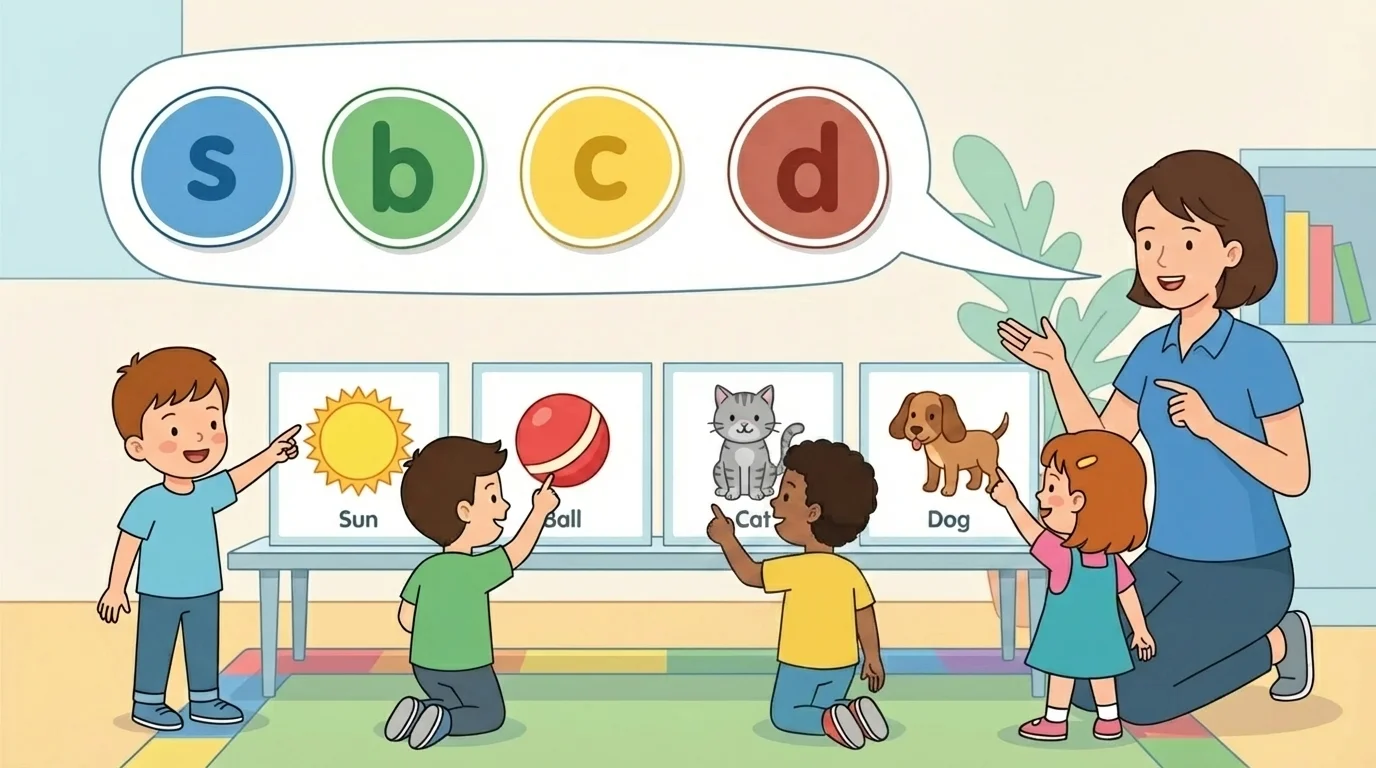
Children often learn beginning sounds by listening to names, toys, foods, and animals they already know. If a child hears baby, the first sound is /b/. If a child hears milk, the first sound is /m/. These first sounds help the child notice how words are alike and different.
Beginning letter is the first letter we see in a written word. Sound is what we hear when we say a word. The first letter and the first sound often work together to help us read familiar words.
When we talk, sounds come first to our ears. When we look at print, letters come first to our eyes. Reading grows when children connect the sound they hear to the letter they see.
[Figure 2] The beginning letter is the first letter in a word. When we look at mom, we see m first. When we look at ball, we see b first. That first letter gives us a clue about how the word begins when we say it.
Children do not need to read every word all at once. They can begin by noticing the first letter. If the word is sun, the child can look at s and think of the /s/ sound. If the word is cat, the child can look at c and think of the /k/ sound.
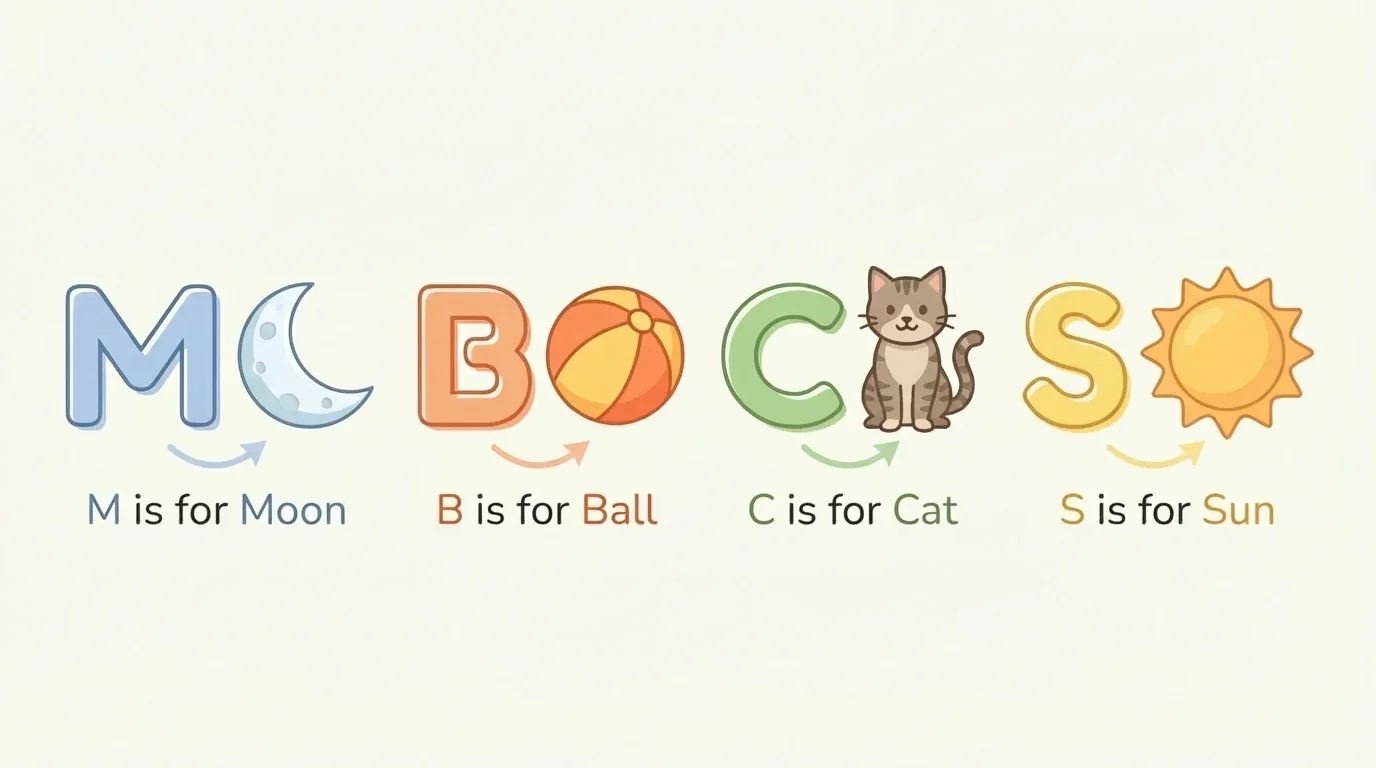
This is part of alphabetic knowledge. Alphabetic knowledge means knowing that letters have names and letters stand for sounds. A child does not need every letter at once. Learning a few strong letter-sound matches, such as m, b, s, and c, builds confidence.
A child's own name is often one of the first places where beginning letters matter. A child named Mia may quickly notice that Mia, mom, and milk all start with m.
When children notice print in the world, they can use beginning letters too. The label on a cubby, a name card, or a favorite book cover often becomes easier to recognize because the first letter stands out.
Familiar words are the best place to practice noticing first letters and sounds. Children already know what words like mom, dad, dog, cat, ball, and sun mean. Because the words are known, the child can focus on how they start.
For example, ball starts with b and /b/. baby also starts with b and /b/. cat starts with c and /k/. cup also starts with c and /k/. Familiar words make these patterns easier to notice.
Using the first part as a clue
When children attend to the beginning of a word, they use an important reading clue. They may not know every letter yet, but they can still notice, "This word starts like my name," or "These two words both begin with /b/." That first clue supports matching spoken words to printed words.
Adults often stretch the first sound a little to help children hear it: ssssun, mmmmom, bbbball. This makes the beginning more noticeable without changing the word.
[Figure 3] Many words can begin with the same letter and sound. Words are grouped by how they start. Ball and baby go together because both begin with b. Cat and cup go together because both begin with c.
This helps children learn that one letter can appear in many different words. The letter stays the same at the beginning even when the rest of the word changes. That is a powerful pattern in early reading.
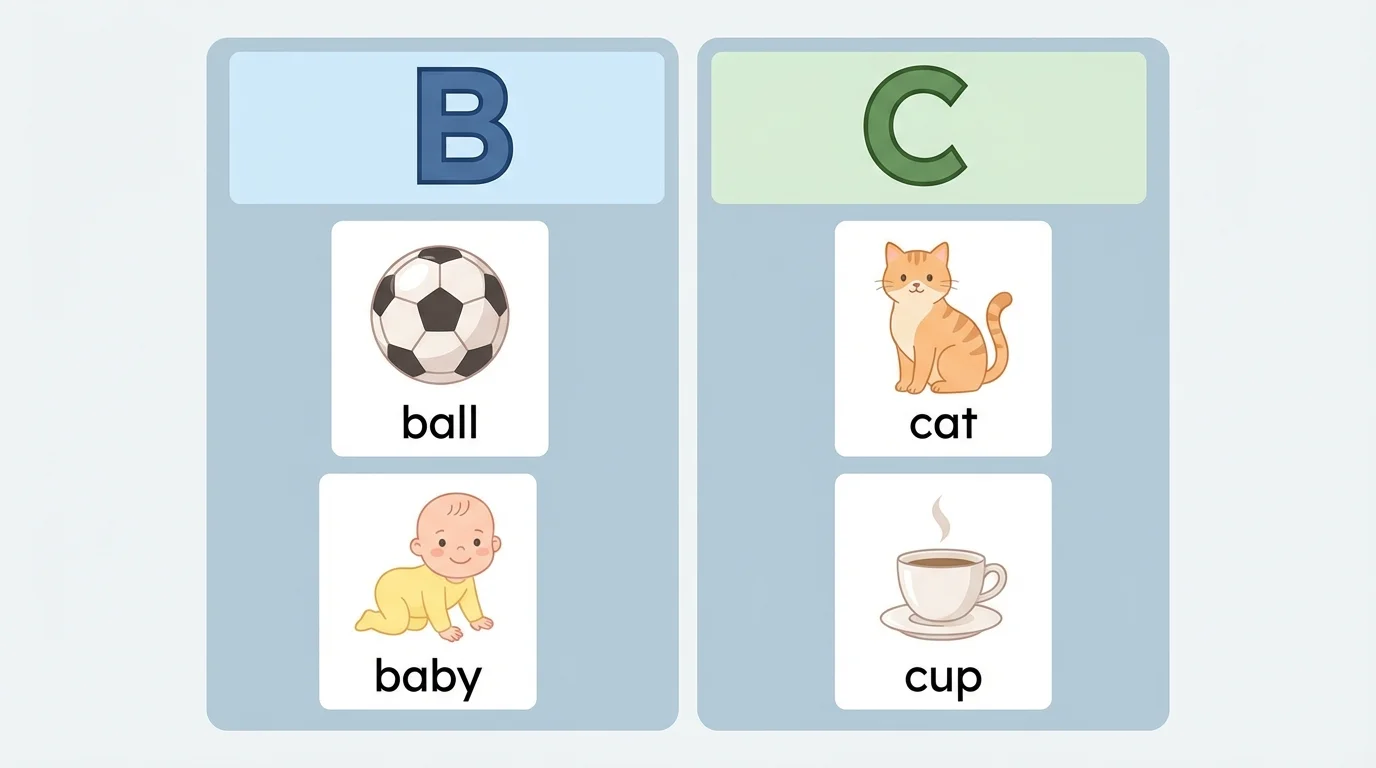
We can say the pairs aloud to hear the match: ball, baby; cat, cup; mom, milk. Hearing and seeing the same start helps children connect speech and print.
Example of noticing the same start
Step 1: Look at the first letter in dog and dad.
Step 2: See that both words begin with d.
Step 3: Say the words and hear that both start with /d/.
These two familiar words begin the same way.
Later, this same idea helps children notice patterns in books. If they know one word that starts with b, they may be quicker to notice another b word on the page, just as the words in the chart are grouped by the same start.
Children also need to notice when words begin in different ways. Sun starts with s. Ball starts with b. Cat starts with c. These words do not begin the same, so they belong in different groups.
This difference matters. If a child sees a word beginning with m, that word is not likely to be ball. The first letter helps narrow the choices. The first sound does the same job when we listen.
You already know that books and labels have print we can look at from left to right. The beginning letter is the letter at the start, on the left side of an English word.
Sometimes two words may sound a little alike later, but the beginning still helps. Cat and hat rhyme at the end, yet they start differently: c and h. Beginning sounds and ending sounds are both important, but here we are paying close attention to the start.
Beginning letters and sounds give children a strong first clue in reading. A child looking at a name card may notice the first letter before anything else. A child listening to a teacher say a word may hear the first sound and connect it to a letter already known.
This skill supports recognizing names, favorite foods, classroom labels, and simple book words. It also helps children talk about words: "Milk starts like mom," or "Sun starts differently from ball." Those observations are the building blocks of reading.
As children grow, they will learn more letters and more sounds. For now, attending carefully to the beginning of familiar words is an important step. A small clue at the start of a word can open the door to understanding the whole word.
