A red sign can tell cars to stop. A tiny label can tell whose backpack it is. The marks we see in books, on signs, and on boxes are not just squiggles. They are print, and print tells us something. When we learn that print has meaning, we begin to understand what reading is for.
Print is made of letters and words. People use print to share ideas, give directions, tell stories, and name things. When you see print on a page, that print is there for a reason. It might say the name of a book. It might tell what is inside a box. It might tell a story about a bear, a bus, or a rainy day.
Pictures help us think about the story too, but print is special. Print is the part that a reader says aloud. If a page has a picture of a dog and the printed words say "The dog runs," the print carries the message in words. The picture helps us understand, but the print is what tells the sentence.
Print is the letters and words we see written down. Meaning is the idea or message that something tells us. When we say print conveys meaning, we mean that print tells us something.
When someone reads to you, they are not making up words from the picture. They are reading the print. That is why the same book can be read again and again with the same words.
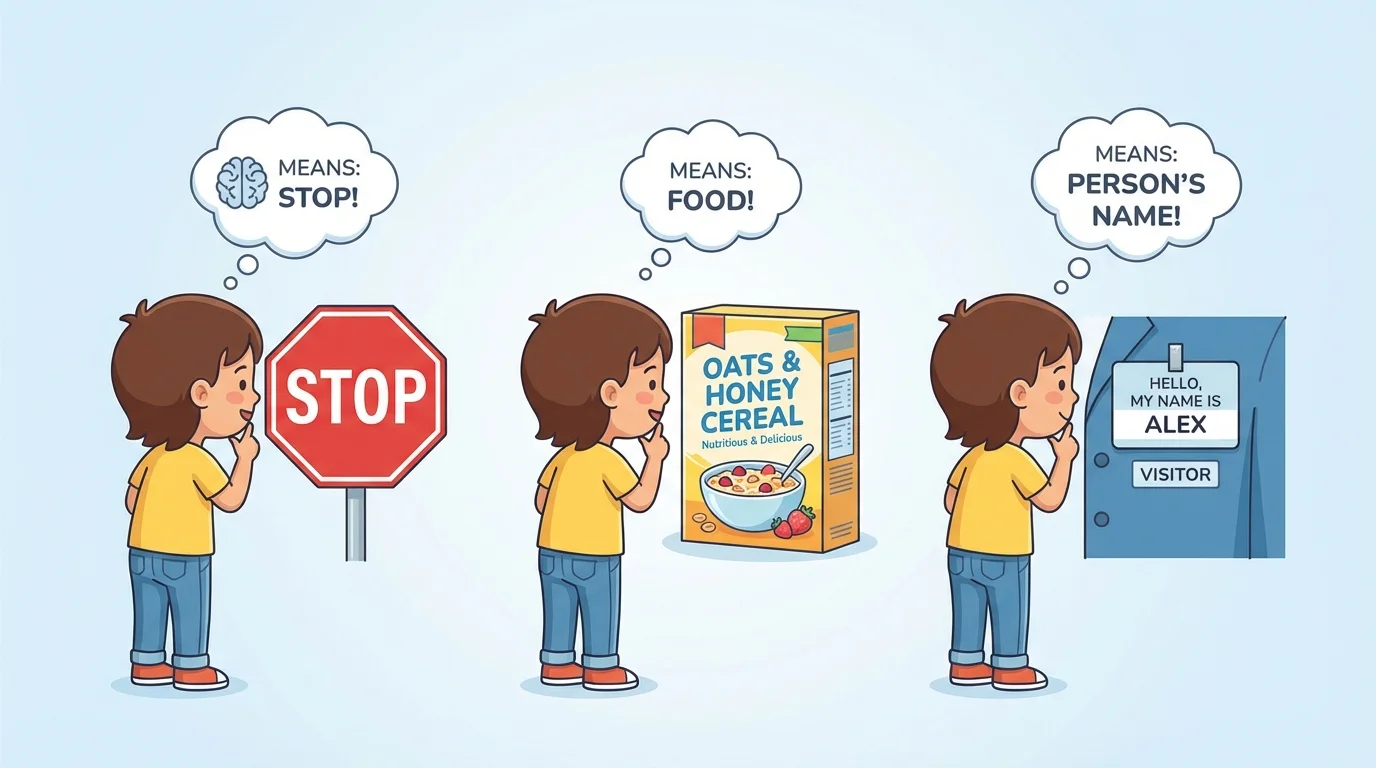
Print is not only in storybooks. It is all around us, as [Figure 1] shows. We see print on signs, food boxes, doors, cubbies, birthday cards, and name tags. A sign can tell us where to go. A label can tell us what something is. A card can tell us who sent it.
Some children first notice environmental print. That means print we see in everyday life. A child may know a store sign, a juice box label, or the word on a favorite snack package. This is an important step because it shows the child understands that print stands for a message.
Books also have print. The cover may have the title. Inside, each page may have words. Sometimes there are many words. Sometimes there are just a few. Even when the print is small, it still carries meaning.
We can look at familiar places and ask what the print is telling us. On a classroom shelf, print may name where blocks go. On a bathroom sign, print may tell which room it is. On a mailbox, print may show an address or a name. Everywhere, print is working.
Long before children can read every word, many can already recognize print they see often, such as their own name or a favorite food label. That shows they are learning that print means something.
When we notice print in many places, we learn that reading matters in real life, not only during story time.
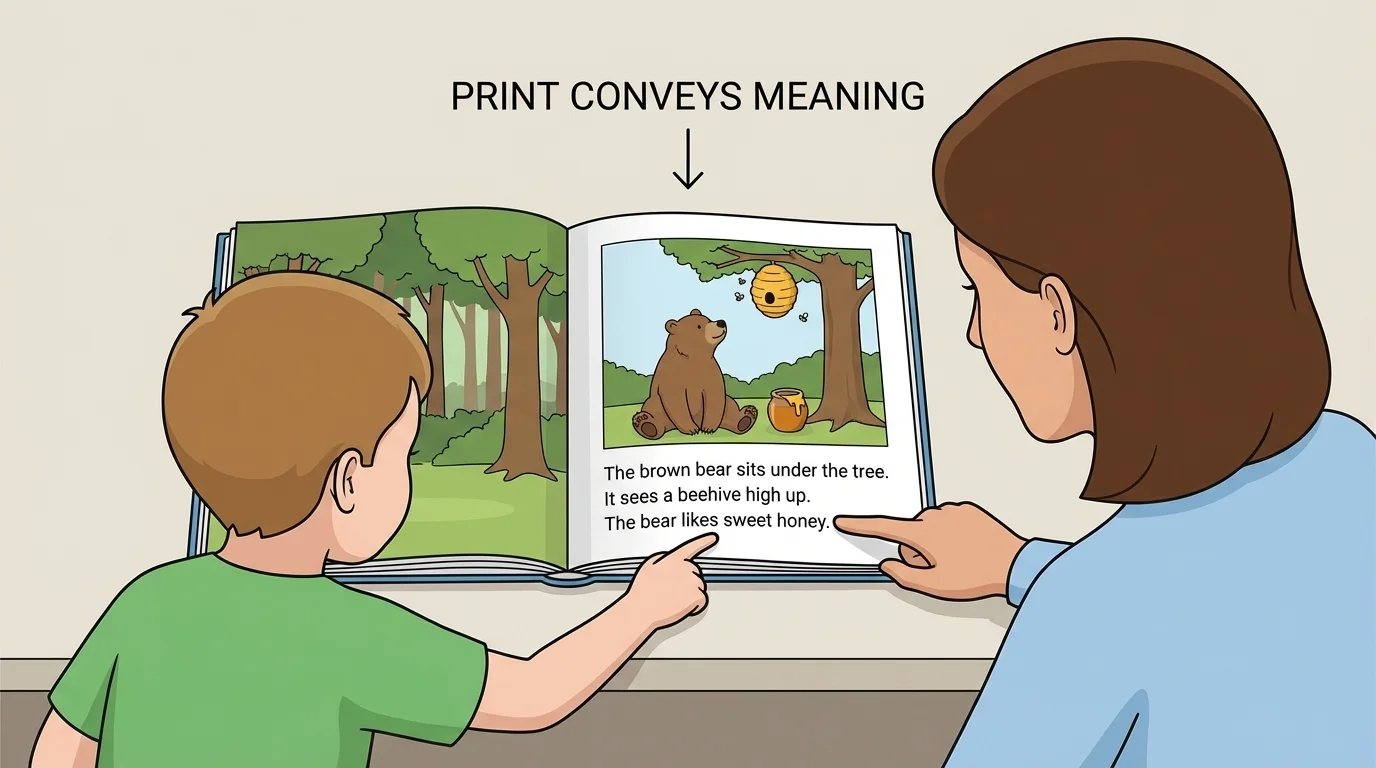
During read-aloud time, the reader's voice matches the print on the page, as [Figure 2] illustrates. If a grown-up points under the words while reading, a child can see that the spoken words go with the printed words. This helps children understand that print is read and that it carries the story.
Print is usually organized on the page. Words are separated by spaces. A sentence has words in order. Pages are turned in order too. We read one part, then the next part. This helps the message make sense.
Young children do not need to know all the letters yet to understand this big idea. They can still learn that the marks on the page are meaningful. They can listen, watch, and notice that the same printed page is read the same way each time.
Pictures and print work together, but they do different jobs. A picture may show a cat climbing. The print may tell, "The cat is on the fence." If the picture changed a little, the printed words would still be the words to read. That is why readers pay attention to print.
Print stays the same
When a book is read today and read again tomorrow, the printed words are still there. The reader may use a different voice, but the print does not change. This helps children learn that print holds a steady message.
Later, when children begin to match more spoken words to more printed words, they build stronger reading habits. The idea starts here: print says something.
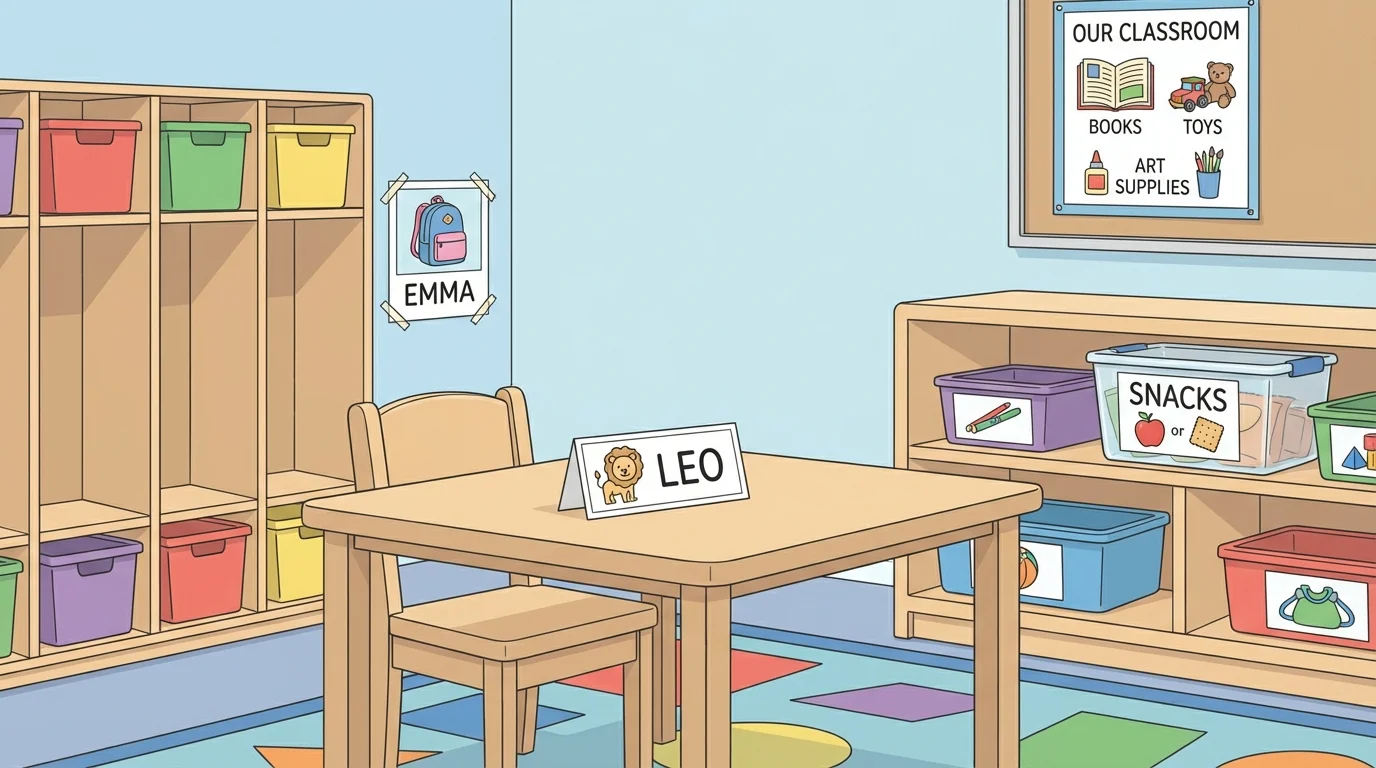
[Figure 3] One of the most exciting kinds of print for young children is their own name. A child learns that the printed name stands for them. Seeing a name on a cubby, paper, or chair helps children connect print to real meaning.
Other familiar words matter too. A label on a toy bin tells what belongs there. A word on a snack container tells what is inside. A repeated line in a favorite book becomes familiar, and children may join in when they hear it. That happens because they are connecting spoken language and printed language.
When children pretend to read a favorite book, they often use the pictures and memory together. This is a valuable step. Over time, they begin to notice more about the print itself: where the words are, how many words there are, and that the same print matches the same words each time.
The classroom labels in [Figure 3] remind us that familiar print helps children feel successful. A child may not read every word, but they can know, "That says my name," or "That label tells where the puzzles go." That is real understanding of meaning.
Examples of print carrying meaning
Step 1: A name card says Ava.
The print shows whose card it is. The letters are not random marks. They stand for Ava.
Step 2: A sign says Stop.
The print gives a message: stop moving and wait.
Step 3: A book page says, "I see the moon."
The print gives the sentence that the reader reads aloud. The picture may show the moon, but the print gives the exact words.
Each example shows the same big idea: print tells us something.
Repeated experiences with names, labels, signs, and books help children grow confident. They start to expect print to make sense.
Books are special places where print lives. We hold a book carefully, turn pages gently, and look where the words are. On many pages, print sits in lines or small groups. A title on the cover names the book. Inside, the words tell the story.
When adults pause and talk about print, children learn even more. They may hear, "These words say the bear is sleepy," or "This label says blocks." Hearing this kind of talk helps children connect what they see to what the print means.
You already know that people talk to share ideas. Print is another way to share ideas. Speech is heard, and print is seen.
Children also learn that scribbles in pretend writing are part of becoming writers and readers. As they watch real print in books and around the room, they begin to notice that real print is organized and used to send messages.
Every time a child notices a word on a sign, listens to a page being read, or finds their name label, they are building an important reading idea. The message in print matters. The environmental print we noticed earlier in [Figure 1] and the read-aloud page in [Figure 2] both show the same truth: print helps people know, remember, and understand things.
At first, children may understand print in broad ways: "That says my name" or "That sign tells us something." Later, they begin to connect more words, more letters, and more meaning. This is how early reading begins.
Print is powerful because it lets stories stay on pages, directions stay on signs, and names stay on labels. When we understand that print conveys meaning, we are taking one of the first big steps toward reading.
