Look at a book page. It may seem like lots of tiny marks, but those marks have a special job. They help us read words. A word is not just one letter. A word is a group of letters that stays together to make a meaningful unit.
When we look at print, we can see little shapes called letters. We can also see empty spaces. Those spaces matter. They help us know where one word stops and the next word starts, as shown in [Figure 1]. If there were no spaces, print would be hard to read.
For example, in the print I see a dog, each part is a separate word. I is one word. see is one word. a is one word. dog is one word. The letters inside each word stay together.
Some words have one letter, like I or a. Some words have many letters, like mom, baby, or cookie. No matter how long the word is, it is still one whole piece of print.
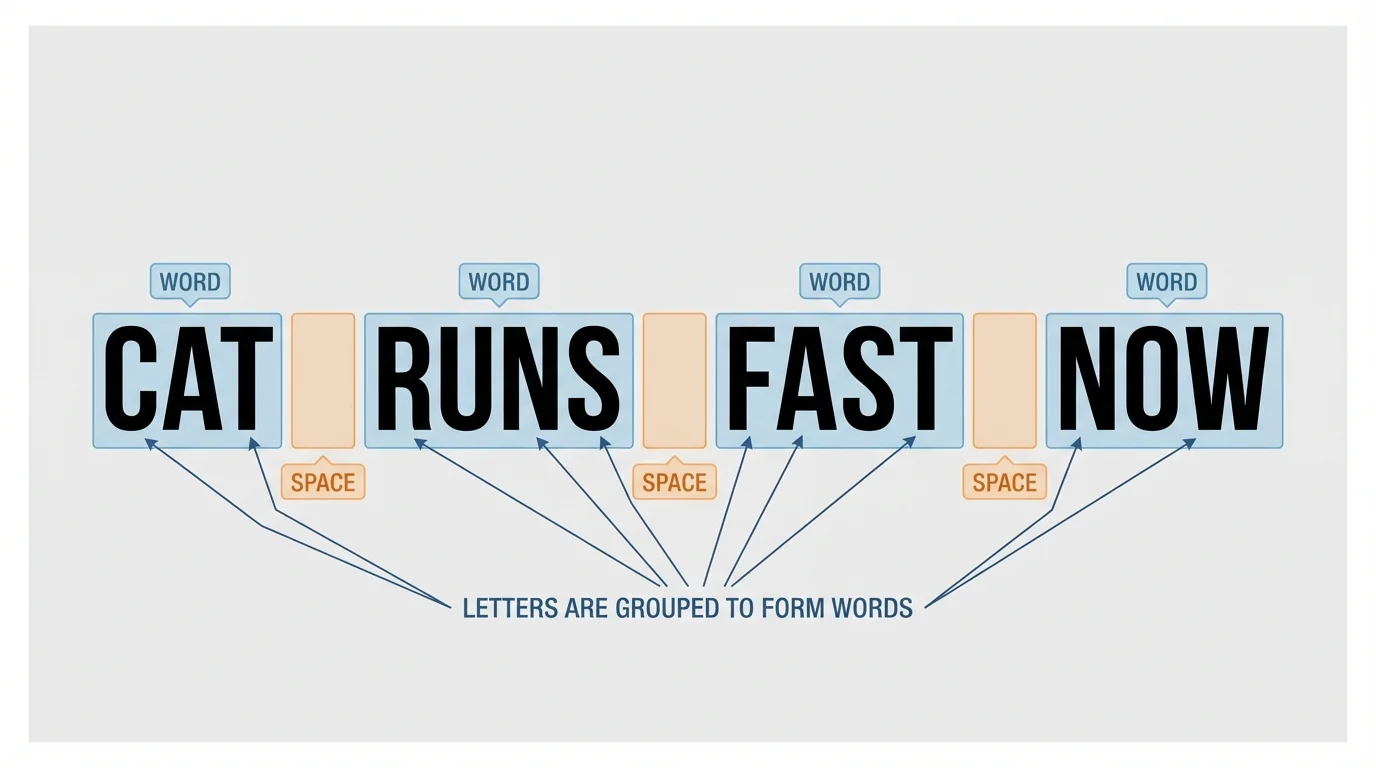
Word is a group of letters in print that goes together. A space helps show where one word ends and another word begins.
When we talk, we say words one by one. Print matches that idea. We can point to one word, then the next word, then the next. That helps us understand that words are units of print.
A unit of print is one piece we can notice in print. For young readers, an important unit of print is the whole word. If we point to cat, we point to all three letters together, not to just one letter by itself.
When someone says the word cat, the printed word cat matches that one spoken word. The same is true for mom, bus, and sun. One spoken word matches one printed word.
This is why spaces are so helpful. A space shows our eyes where one word ends and the next word begins.
Some very short words are only one letter long, but they are still real words. The printed word a is one whole word all by itself.
When children begin to read, they often learn to notice the difference between a letter and a word. A letter is one small part. A word may have one letter or many letters, but it is read as one whole unit.
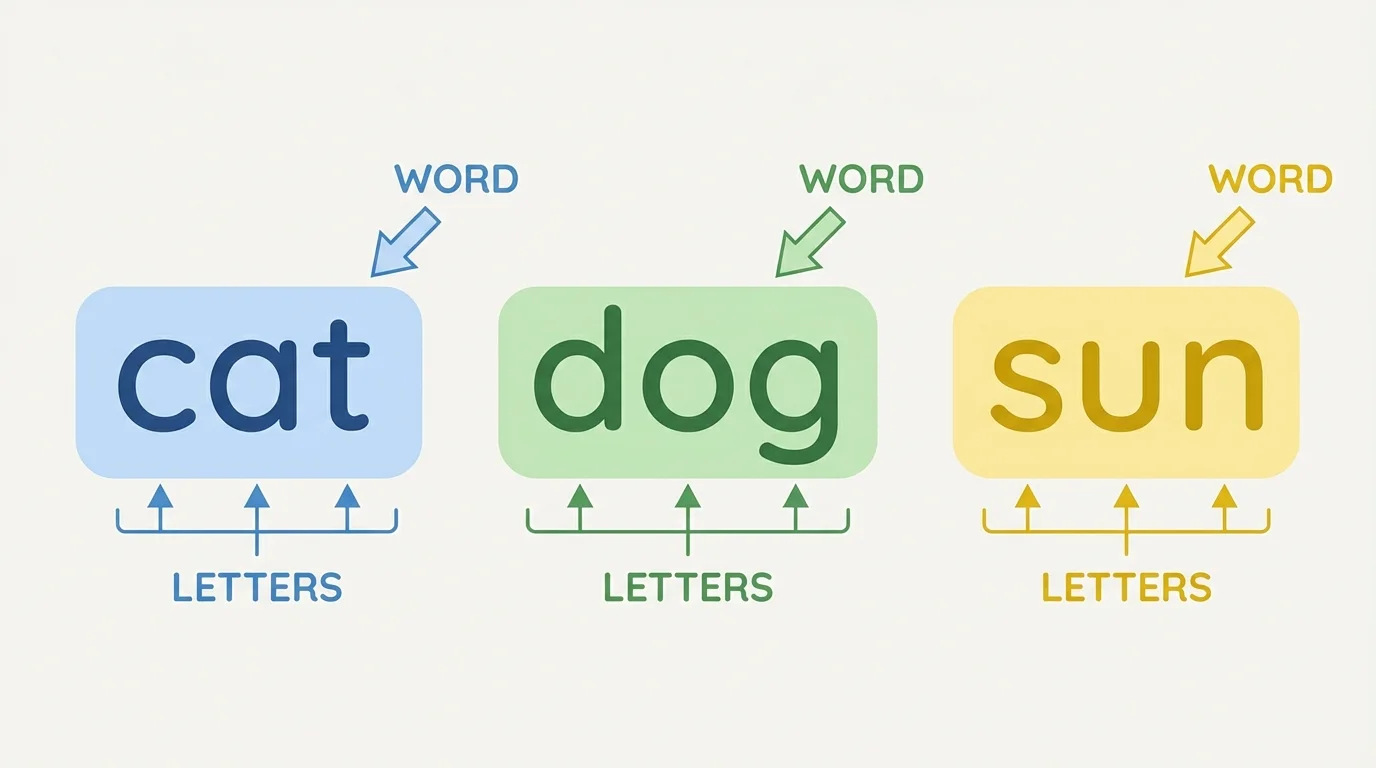
Letters do an important job. They join together to make words, as [Figure 2] shows. When we see d, o, and g together in the right order, they make the word dog.
Think about these examples: cat, sun, hat, mom. Each word is made of letters placed together. If we pull the letters apart, we no longer see one whole word. The letters need to stay grouped.
The order of letters matters too. tap and pat use the same letters, but they are different words because the letters are arranged in a different order.
Looking at simple words
Step 1: See the letters together.
The letters c, a, and t appear together.
Step 2: Read them as one word.
Together, those letters make the word cat.
Step 3: Notice the space after the word.
The space tells us the next word will begin after cat.
Children also begin to notice familiar words in print. They may see their name, the word mom, or a word from a favorite book. Seeing the same group of letters again and again helps the word feel familiar.
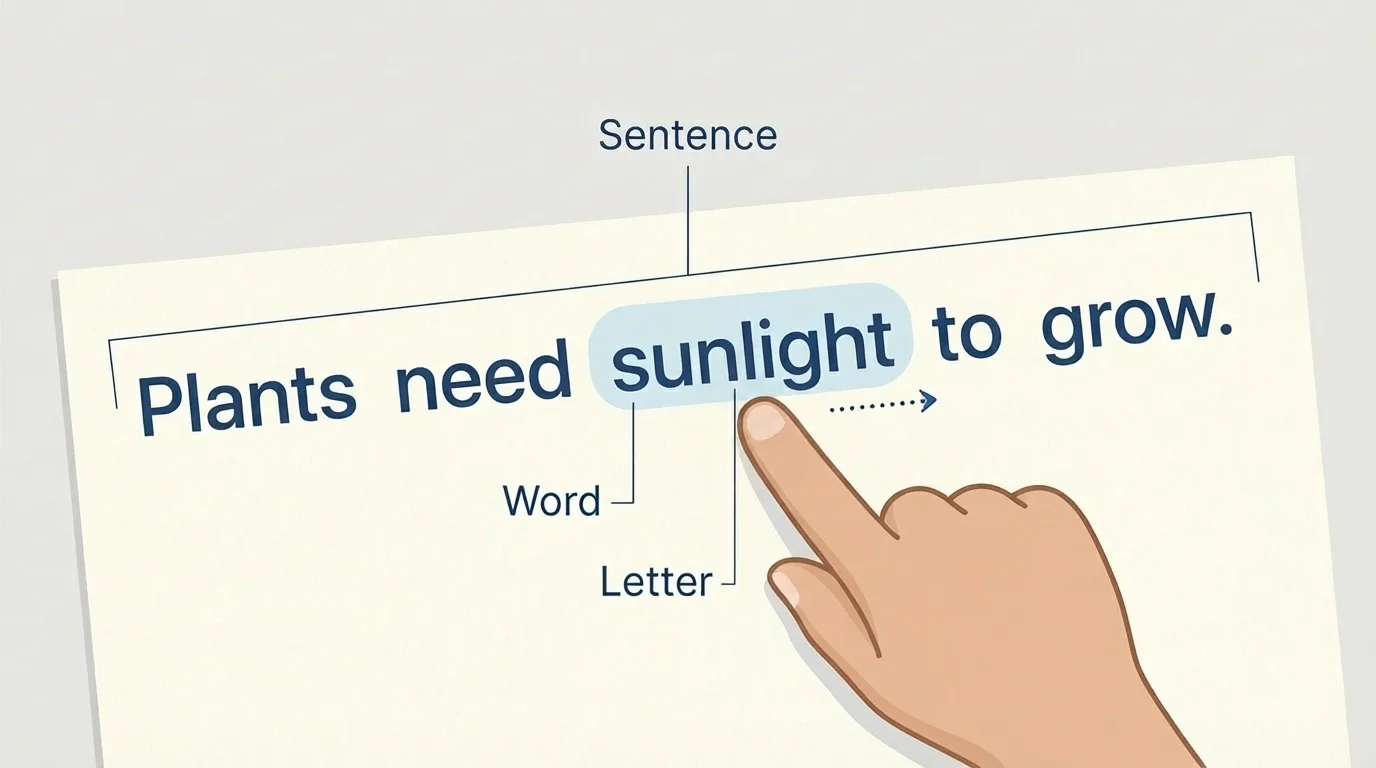
In English print, we look at words from left to right. Our eyes move across the line, and we can point to each word in order, as shown in [Figure 3]. This helps us keep track of where we are reading.
If a sentence says The dog runs, we point first to The, then dog, then runs. We do not jump around. We move word by word.
When we track print, we learn that each word has its own place. The spaces help our finger and our eyes stop at one word and move to the next one.
Why spaces matter
Spaces make print easier to read because they separate one word from another. Without spaces, readers would have trouble seeing each word as its own unit.
Later, children use this same idea to read longer sentences and stories. The understanding begins with noticing separate words and the spaces between them.
Words are all around us. We see them on books, food boxes, doors, labels, and signs. A child might notice the word STOP on a sign or see a name on a cubby. Each printed word is a group of letters with a meaning.
In a picture book, the letters under the picture are not random marks. They are words. Just as we saw earlier in [Figure 1], the spaces separate the words. And like the simple examples in [Figure 2], each word is made from letters working together.
When a child points to words while listening to a grown-up read, the child starts to connect spoken words with printed words. This is an important beginning step in learning to read.
Letters are the small shapes we see in print. Words are made from letters. A space helps us see where one word ends and the next begins.
As children become stronger readers, they recognize more and more words quickly. That growth starts with one simple idea: words are real parts of print, and letters group together to make them.
