A word can be communicated in different ways: we can hear it, see it in a sign, and see it in print. When someone says "ball," signs "ball," or shows the word ball in writing, the message can be the same. Learning this helps young readers understand that print carries meaning.
We use words in different ways every day. A grown-up might say a word out loud. A person might sign a word with their hands. A word can also be written on paper, in a book, or on a label. These are different ways to share the same idea.
Spoken word is a word we hear. Signed word is a word shown with hand shapes and movements. Written word is a word we see in print.
If a teacher says "dog," signs "dog," and points to the printed word dog, the child begins to learn that all three go together. This is an early literacy skill. It helps children know that print is not just marks on a page. Print represents words.
Many familiar words are easiest to learn first. A child may learn their name, the word mom, the word dad, or the name of a favorite toy, such as car. These words matter because children hear, sign, or use them often.
[Figure 1] When children connect one heard or signed word to one printed word, they are learning an important print concept. If the teacher says "cat" and points to the word cat, the child begins to match the spoken word and the written word. The same can happen with a signed word and a printed word.
This matching often starts with very short, familiar words. A child may hear "cup," see a cup, and then notice the printed word cup. The child is learning that the word they know in speech or sign can also appear on the page.
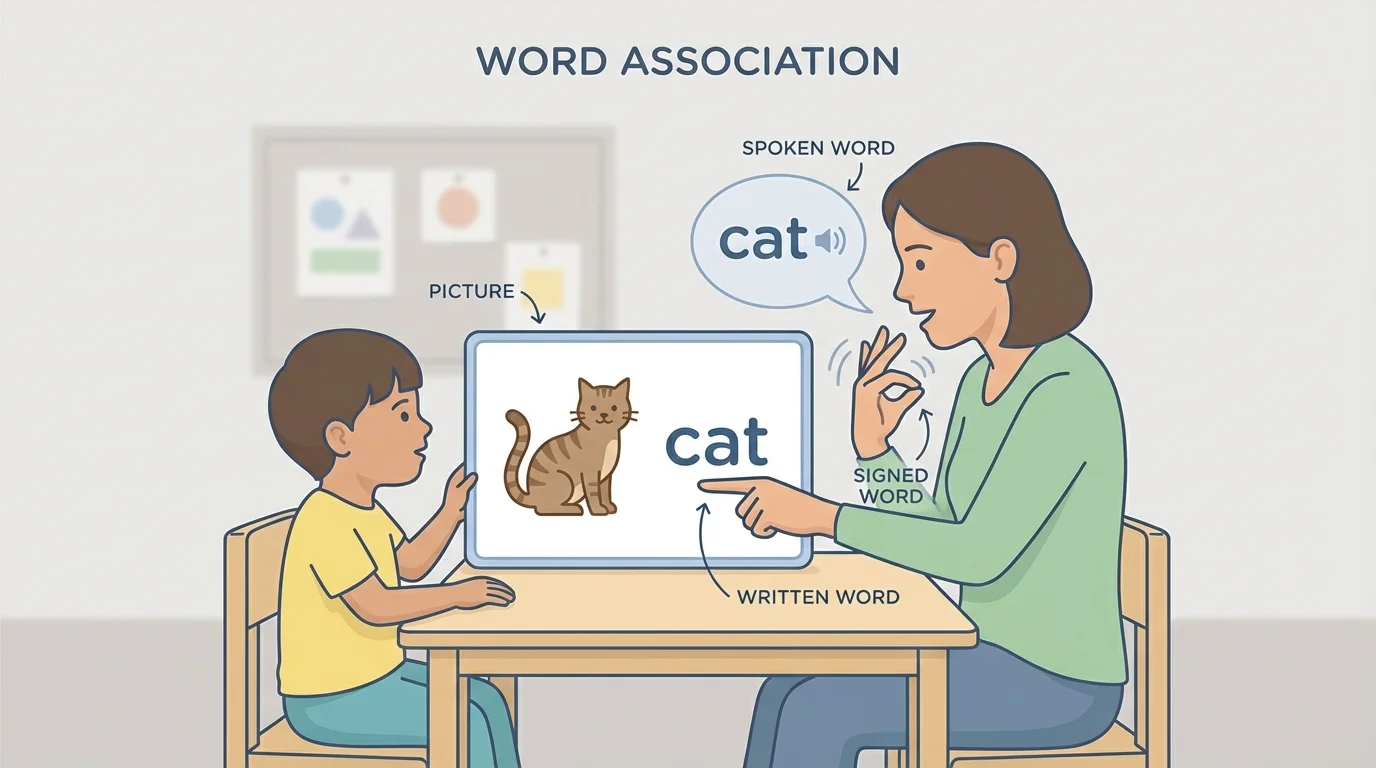
Adults help by pointing to words while reading, speaking, or signing. This shows where the word is. It teaches that the marks on the page are not random. They stand for real words.
Example of matching
Step 1: A teacher shows a card with the printed word ball.
Step 2: The teacher says or signs "ball" while pointing to the card.
Step 3: The child begins to understand that the heard or signed word matches the written word.
This is how word matching develops.
Children do not need to read many words by themselves yet. At this stage, they are learning to match what they hear or see in sign with what they see in print.
[Figure 2] Written words are all around us. Words can be on books, toy bins, doors, cubbies, and snack containers. When a label says door and is placed on a door, children learn that print connects to real things.
In story time, a grown-up may point to words as they read. In a classroom, a child may see their name on a cubby, on a job chart, or on an artwork tag. These repeated experiences help the child recognize that written words carry meaning every day.
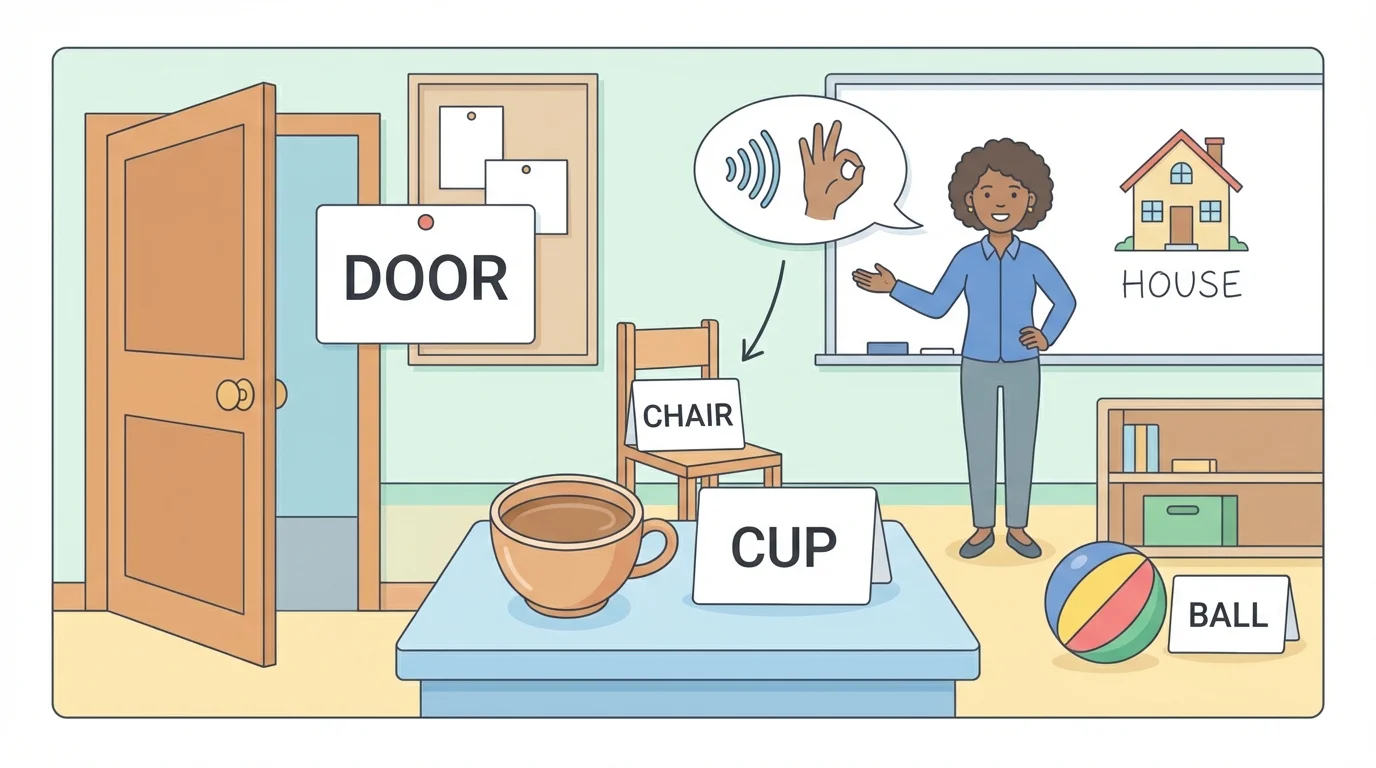
Learning with labels is powerful. A label places a printed word next to the object or place it names. The word chair near a chair, or milk on a milk container, helps a child connect language to print and objects together.
A child often learns to recognize their own name before many other written words because they see it again and again on personal things.
Later, when the child sees those same words in another place, the words may feel familiar. This is one reason repeated print in daily routines matters so much.
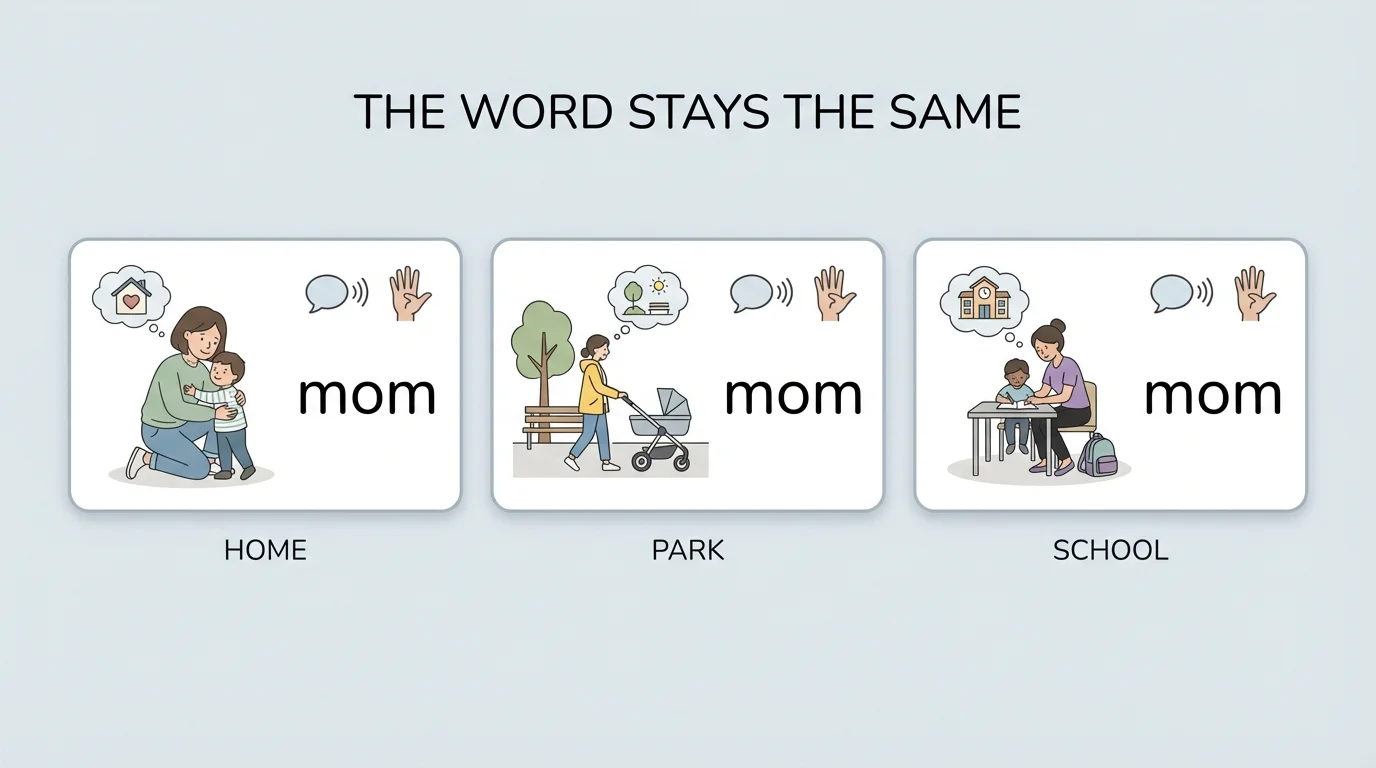
[Figure 3] A key idea is that one spoken or signed word matches a specific written word. If we say "mom," the printed word mom looks the same each time it is written. Print stays stable.
This helps children notice that words are different from pictures. A picture of a dog can look many ways, but the printed word dog uses the same letters in the same order each time. The written word stays the same.
Children also begin to notice that two different words look different. The word cat is not the same as the word car. Even if they begin with the same letter, they are different written words with different meanings.
Print stays the same
When a word is written, its letters stay in a set order. That order helps readers know which word it is. Hearing or seeing the same word again and again helps children recognize its printed form more easily.
Looking back at [Figure 1], we can see why pointing matters. The adult points to only one word at a time, helping the child understand that each spoken or signed word connects to specific print, not to the whole page at once.
Children learn best with words that matter to them. Their name is often a first big success. A written name is special because it is the child's own name in print. Seeing it often helps the child remember its shape and meaning.
Family words, favorite food words, and classroom words are helpful too. Words like mom, dad, baby, book, up, and stop can become familiar through daily use. A child may hear the word, see it signed, and notice it in print again and again.
Looking back at [Figure 2], everyday labels make print part of real life. Looking back at [Figure 3], repeated word cards help children notice that the same written word stays the same wherever it appears.
As children grow, they begin to recognize more written words quickly. This early understanding supports later reading. Before children sound out many words, they first learn a powerful truth: words we hear, words we see in sign, and words we see in print can all be connected.
Books have a front and back, pages turn, and print carries a message. Knowing that print means something helps children make matches between language and written words.
When caring adults speak, sign, point, and read with children, they build these connections in a warm and natural way. Little by little, children learn that print is meaningful, consistent, and full of words they already know.
