Have you ever touched a playground slide on a sunny day and said, "Wow, that is hot!"? That happens because the Sun sends light to Earth, and that light can warm things up. The ground, sidewalks, rocks, water, and even your shirt can feel warmer after being in the sunshine.
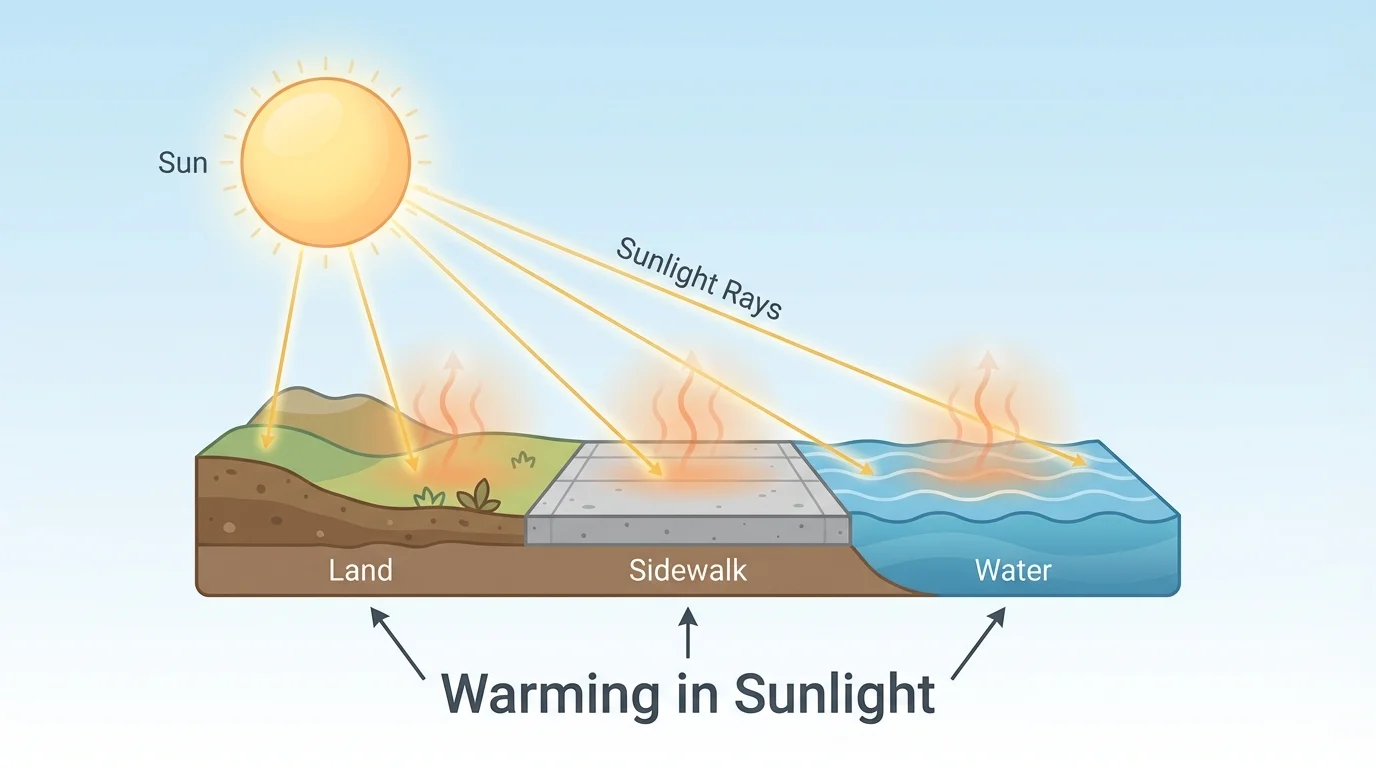
Sunlight is light that comes from the Sun. It carries energy. That energy can warm Earth's surface, as [Figure 1] shows with sunlight reaching land and water. Earth's surface means the outside parts of Earth that we can see and touch, such as soil, sand, grass, roads, and lakes.
When sunlight shines on a surface, the surface can get warmer. A cool rock in the morning may feel warm later in the day. A puddle may become warmer too. The Sun is far away, but its light still reaches us and warms many things on Earth.
Surface means the outside part of something. Warm means having more heat than before. Energy is what can make things happen, including warming things up.
We do not see heat itself, but we can notice its effects. We can feel a warm seat, see snow melt, or watch a wet sidewalk dry after sunshine. These are clues that sunlight is warming the surface.
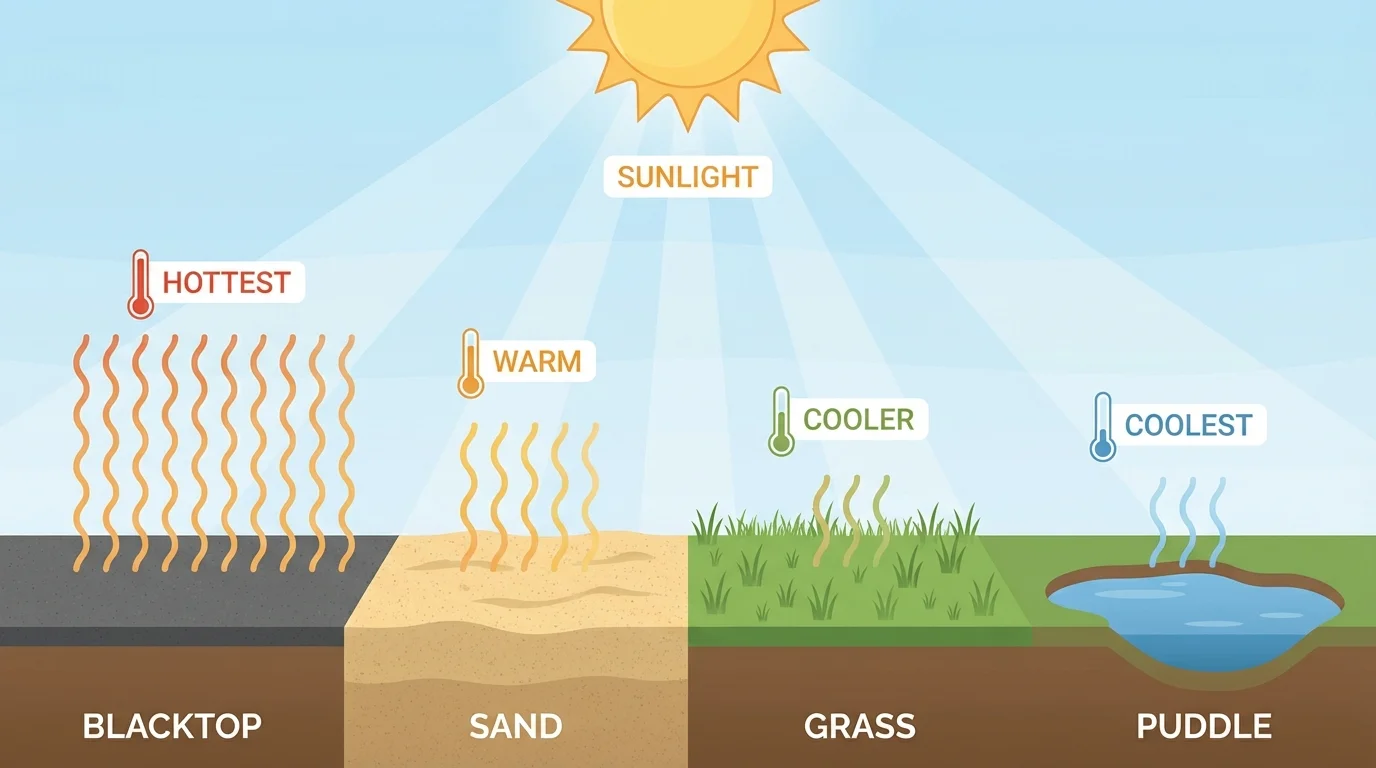
Different surfaces can warm in sunlight, and they do not always warm the same way. As [Figure 2] illustrates, sand, grass, asphalt, and water can feel different even when they all sit under the same Sun.
An asphalt road or dark playground mat often feels hotter than green grass. Sand at the beach can feel very warm on bare feet. A metal car seat buckle may get hot. Water can warm too, but often not as quickly as some dry land surfaces.
This happens because different surfaces take in sunlight in different ways. Some warm quickly. Some warm more slowly. Some stay warm longer. You do not need to memorize which one is warmest every time, but it is important to know that the Sun can warm many kinds of materials.
Even objects people make can get warm in sunshine. A red toy bucket, a wooden bench, and a glass window can all be warmer after sitting in the sun. Later, if clouds come or the Sun goes down, they often cool again.
On a sunny day, a car can become much warmer inside than outside because sunlight shines through the windows and warms the seats, floor, and dashboard.
The same idea from [Figure 1] helps explain why morning feels cooler than afternoon. The Sun has had less time to warm the ground early in the day. After many hours of sunshine, the ground and other surfaces have become warmer.
You can often tell when sunlight is warming something by using your senses carefully and safely. Your skin may feel warm. Ice may melt into water. A wet shirt on a clothesline may dry. These changes happen because energy from sunlight is being transferred to the object or surface.
Heat is the warming that we notice when energy moves from a warmer place or thing to a cooler one. If the sidewalk becomes warm in the Sun, it can also warm the bottoms of your shoes. If a rock is warm, your hand may feel that warmth when you touch it gently.
How warming works
Sunlight reaches Earth and gives energy to the surface. Then the warmed surface can warm the air just above it or warm things touching it. That is why the ground can feel warm and the air near the ground may feel warmer too.
Sometimes sunlight causes changes we can see. A patch of snow may shrink. An ice cube left in sunlight may melt faster than one left in a cooler place. A small puddle may disappear after a while because the water warms, changes into water vapor, and moves into the air.
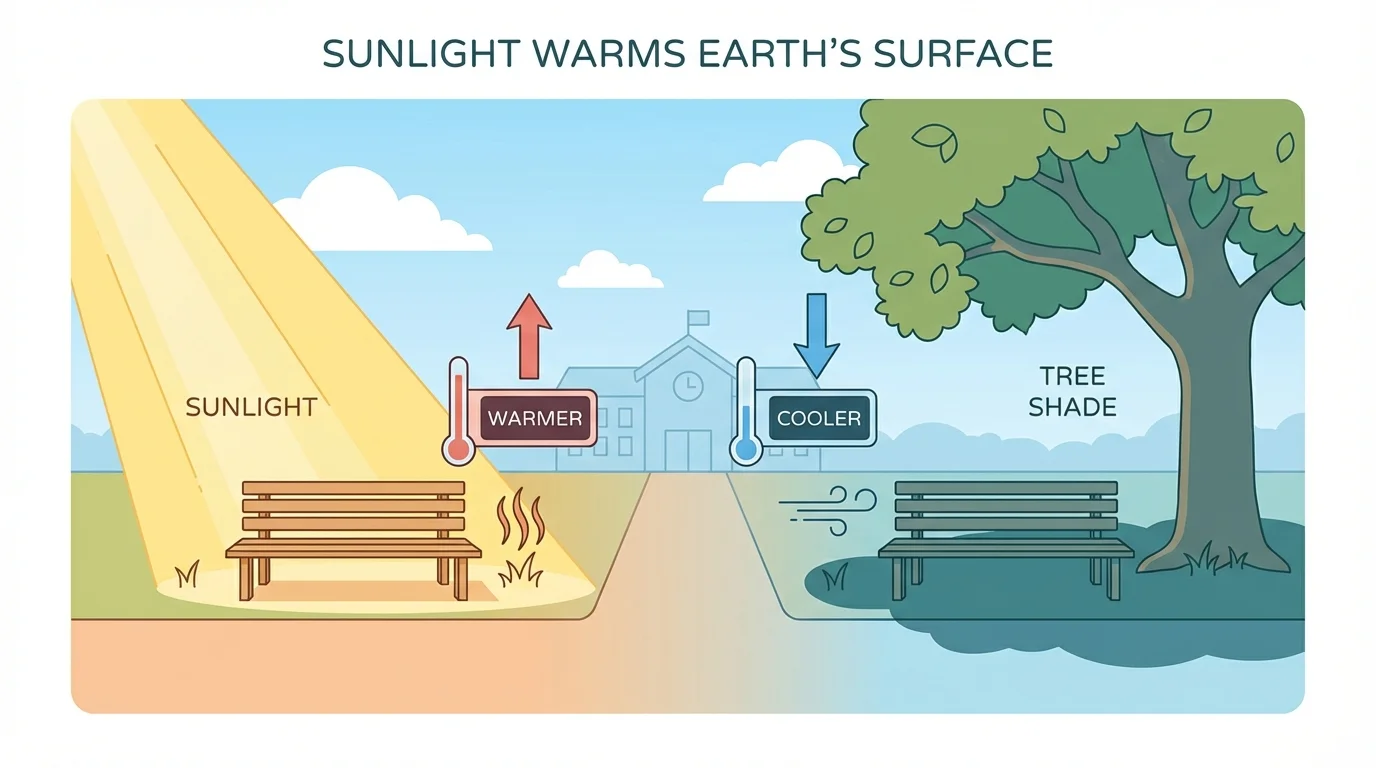
Shade is a place where less sunlight reaches. As [Figure 3] shows, a tree, building, umbrella, or roof can make shade. In a sunny schoolyard, the ground in bright sunlight is often warmer than the ground under a tree.
If you stand in the Sun and then move into the shade, you may feel cooler. That is because less sunlight is reaching you and the surfaces around you. The bench in the shade, the grass under the tree, and the wall on the shaded side of a building often stay cooler than places in full sun.
Shade does not make the Sun stop shining. It means something is blocking some of the sunlight. That is why people look for shade on hot days. Animals do too. A dog may rest under a porch, and birds may sit in leafy branches where it is cooler.
Later, when you compare sunny and shaded places again, [Figure 2] still helps you remember that surfaces warm differently. A dark surface in sunlight may feel much warmer than grass in shade.
Sunlight warming Earth's surface matters every day. Farmers and gardeners notice how sunlight warms soil and helps plants grow. Families choose shady places for picnics on hot days. Builders think about where sunlight hits roofs, walls, and windows.
People also make choices because of sunshine. We wear hats, drink water, and use sunscreen. At the beach, we may wear sandals because sand can become very warm. On a playground, teachers remind children to check whether slides or metal bars are too hot before touching them for long.
Animals respond to sunlight too. Lizards may rest on sunny rocks to warm up. Cows may stand under trees to cool down. Birds may spread their wings in morning sunlight. Living things use warm and cool places in different ways.
Real-world observation: sun and shade
A class wants to see whether sunlight warms Earth's surface.
Step 1: Put one piece of dark paper in sunlight and one piece of the same paper in shade.
Step 2: Wait a short time with an adult helping.
Step 3: Carefully feel near each paper, or use a classroom thermometer if the teacher has one.
Step 4: Compare what you notice. The paper in sunlight is often warmer.
This observation helps show that sunlight can warm a surface.
You can also compare places outdoors. A sunny sidewalk may feel warmer than shaded grass. A rock in sunshine may be warmer than a rock under a bush. These are simple signs that the Sun's energy is warming Earth's surface.
The Sun is like a giant source of light and energy for Earth. When its light reaches the ground, the ground warms. When its light reaches water, the water can warm. When its light reaches objects, those objects can warm too.
So when you feel a warm sidewalk, see snow melting, or step into cool shade, you are noticing energy from the Sun at work. The warming may be small or large, quick or slow, but the big idea stays the same: sunlight warms Earth's surface.
