Have you ever put your hand on a drum and felt it vibrate? That tiny shake is a big clue about sound. Sounds are not magic. They happen because something is moving. When a bell rings, a string is plucked, or a person talks, parts of those materials move back and forth. That motion helps make the sound we hear.
Sound is something we hear. Sound starts when an object moves in a quick back-and-forth way. If you tap a table, clap your hands, or knock on a door, the material that you touched moves a little. Sometimes we can see the movement, and sometimes it is too small to see, but it is still there.
Many things around us make sound: a guitar string, a drum, a barking dog, a humming fan, and our own voices. In each case, some material is moving. A guitar string shakes. A drumhead shakes. Vocal folds in a person's throat vibrate. These vibrations make the sound.
Sound is a form of energy made when something vibrates. We detect it with our ears.
Vibration is a quick back-and-forth movement.
Evidence is what we observe that helps us know something is true.
Even when a sound seems simple, like a tap or a snap, there is a material moving. Scientists look for that movement and use what they observe as evidence.
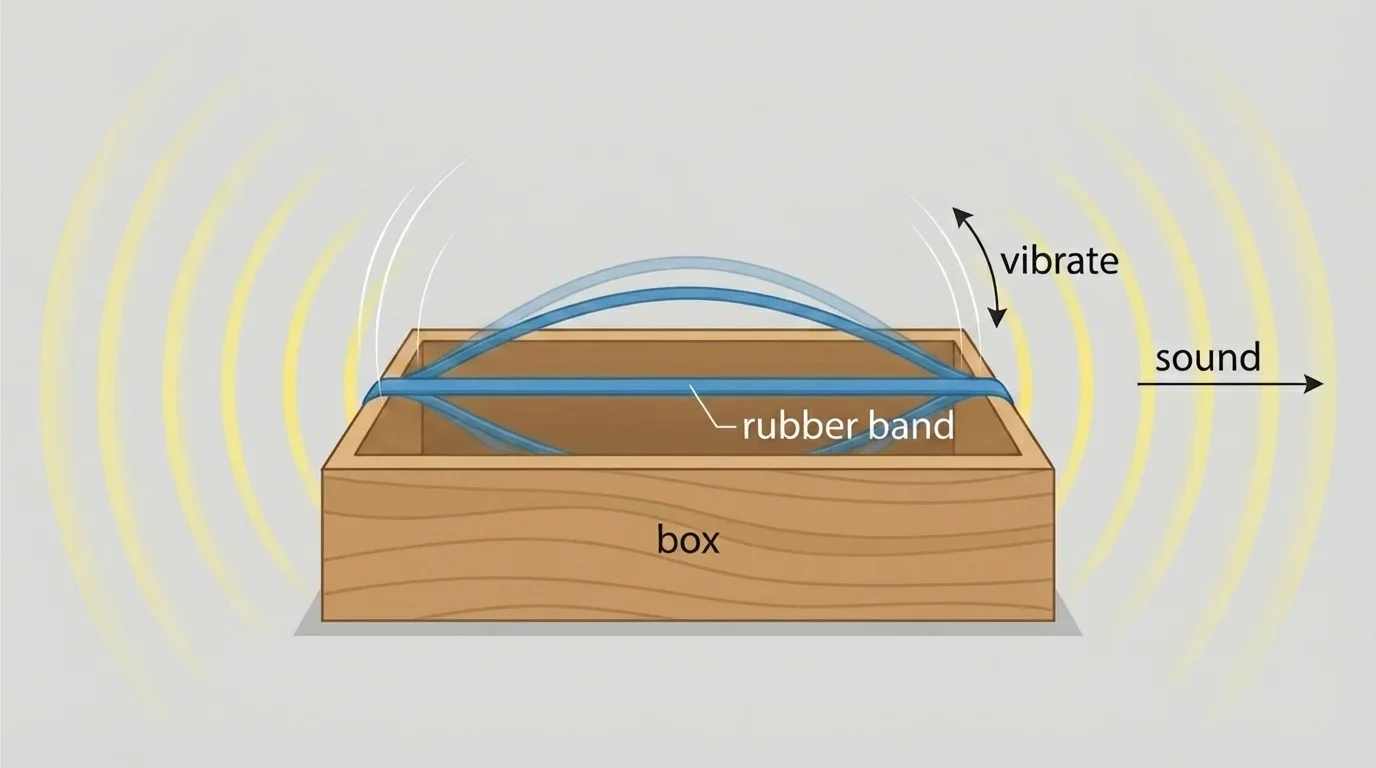
A vibration is a fast back-and-forth motion. A rubber band can vibrate when you pluck it, as shown in [Figure 1]. A ruler hanging over the edge of a desk can vibrate when you flick it. A drumhead can vibrate when you tap it.
When something vibrates, it may blur, wiggle, or buzz. You might hear the sound at the same time. That is a clue: the vibration and the sound happen together.
You can sometimes feel vibrations too. Put a hand gently on your throat and hum. You feel a buzz because parts in your throat are moving. Put a hand on a speaker playing music. You may feel a little shaking. The speaker material is vibrating.
Your ears help you hear because sound makes parts inside your ear vibrate too. Hearing starts with movement.
This is why scientists say that vibrating materials can make sound. Matter means any material, such as strings, paper, metal, plastic, water, and your own body. If a material vibrates, it can make a sound.
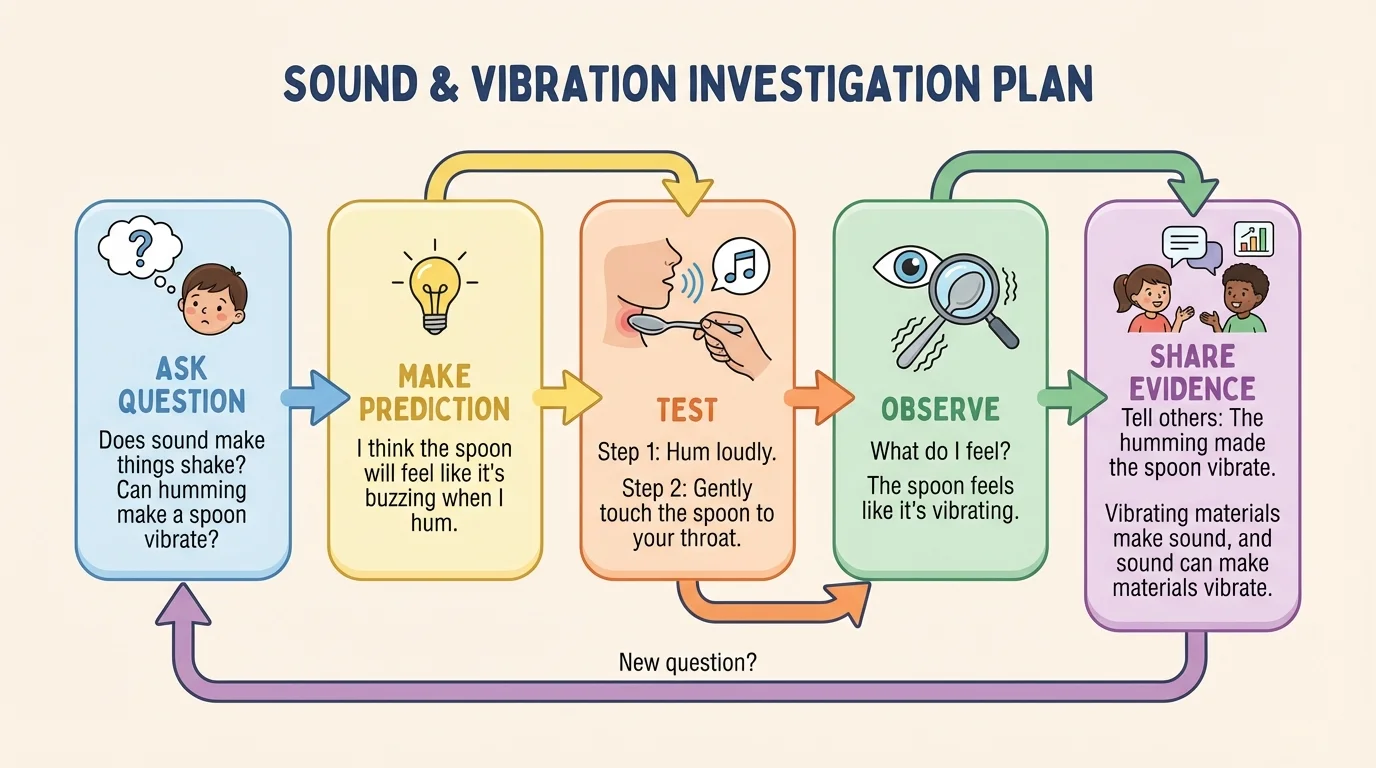
Scientists do not just guess. They make a plan. When we investigate sound, we ask a question, think of a prediction, test materials, observe carefully, and share what we found. [Figure 2] shows these simple steps.
A good question might be: "Which materials make sound when they vibrate?" Another question might be: "Can sound make another material move?" A prediction is what you think will happen before you test. Then you do the test safely and watch closely.
You can record observations with words and pictures. For example, you might say, "The rubber band moved and I heard a twang," or "The paper on the drum jumped when the drum was hit." Those observations are evidence.
When scientists compare what happened in different tests, they learn more. If one object makes a loud sound and another makes a soft sound, both still give evidence that a vibrating material can make sound. We do not need to measure wave properties here. We only need to notice the connection between vibrating and hearing.
One way to investigate is to test different objects that can move. A rubber band can be plucked. A cup can be tapped. A drum can be hit gently. A ruler can be flicked. In each test, watch for movement and listen for sound.
If the object moves back and forth and a sound is heard, that is evidence. For example, when a rubber band is plucked, it wiggles and makes a sound. When a drum is tapped, the drumhead shakes and makes a sound. When a ruler is flicked, the end moves up and down and makes a humming sound.
Example investigation: Which objects make sound when they vibrate?
Step 1: Ask the question.
Which classroom objects make sound when they move back and forth?
Step 2: Make a prediction.
A student might predict that a rubber band and a ruler will make sound because they can wiggle.
Step 3: Test safely.
Pluck the rubber band, flick the ruler, and tap the cup gently.
Step 4: Observe.
The rubber band wiggles and makes a sound. The ruler vibrates and hums. The cup makes a tapping sound when it is tapped.
Step 5: Use evidence.
The observations show that vibrating materials can make sound.
As with the rubber band in [Figure 1], the important idea is that movement of the material comes with the sound. The movement is not extra. It is the reason the sound is made.
[Figure 3] Sound can also make materials move. This may seem surprising, but it is true. If a drum is hit, the sound and vibration can make tiny pieces of paper or grains of rice on the drum move.
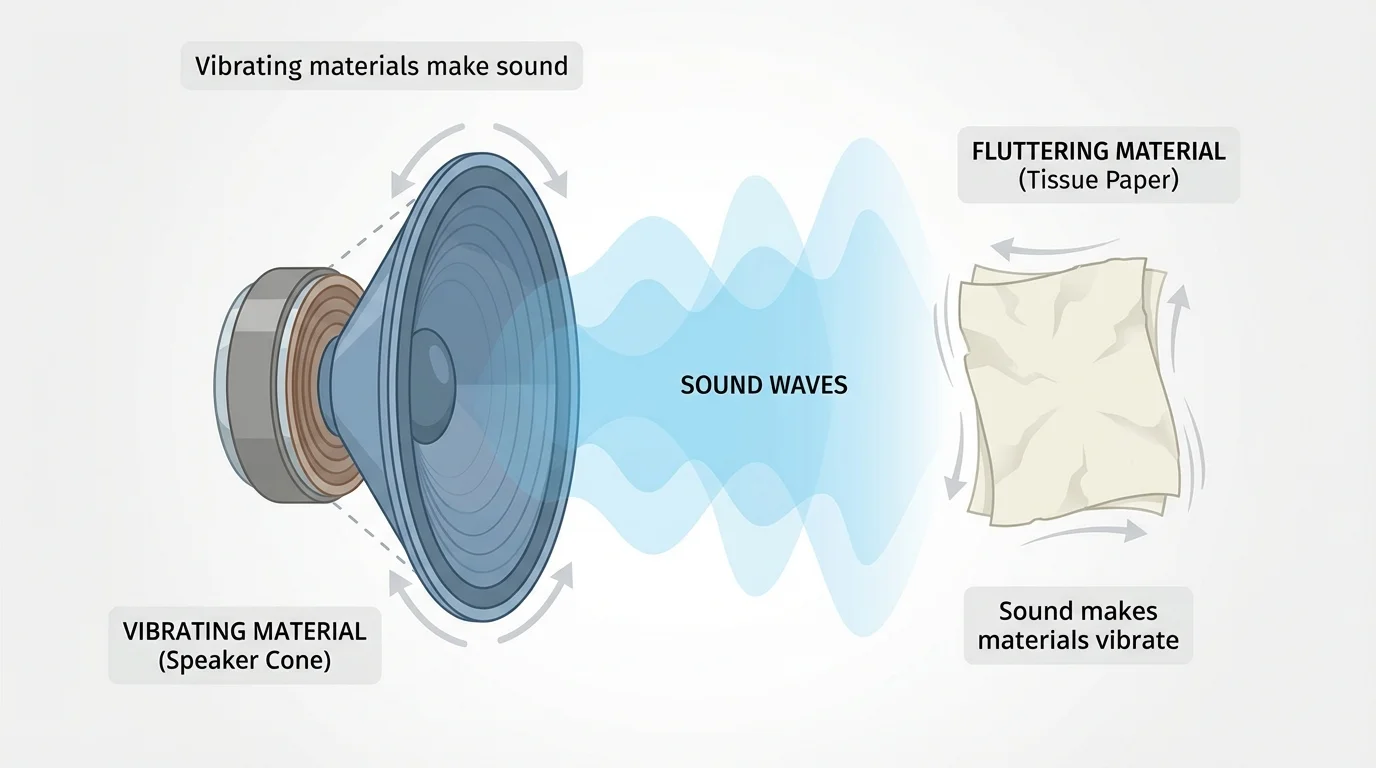
Another way to notice this idea is with a speaker. When music plays, the speaker vibrates. The sound from the speaker can make a light material, like tissue paper, flutter or shake. That means sound can make matter vibrate too.
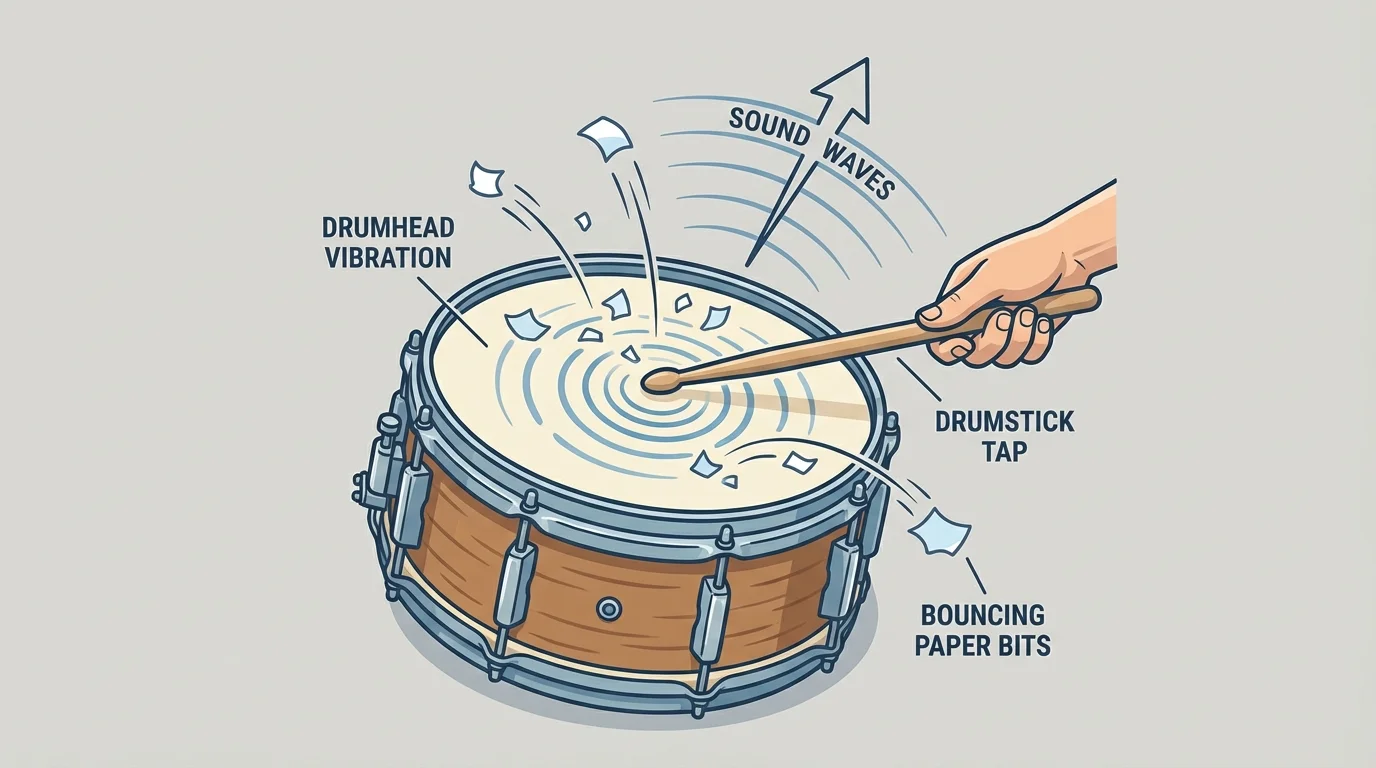
This gives us evidence for the second big idea: sound can make materials vibrate. The sound energy causes movement in another material. If the paper jumps, the tissue flutters, or the rice bounces, that motion is evidence.
Two connected ideas
First, vibrating materials can make sound. Second, sound can make materials vibrate. These two ideas fit together because sound is connected to motion.
Scientists often look for results they can see, hear, or feel. If you hear a drum and also see paper bits bouncing, you have more than one kind of evidence. You hear the sound and see the vibration effect.
When you investigate, it is important to say what you noticed, not just what you think. Good evidence can be stated like this: "I saw the rubber band move," "I heard a buzz," or "The paper moved when the drum was tapped." These are observations.
You can compare investigations in a simple table.
| Object | What happened? | Evidence |
|---|---|---|
| Rubber band | Moved back and forth | Made a twang sound |
| Ruler | Vibrated after a flick | Made a humming sound |
| Drum with paper bits | Paper bits jumped | Sound made material move |
| Speaker with tissue | Tissue fluttered | Sound made material vibrate |
Table 1. Examples of objects, observations, and evidence about sound and vibration.
The moving paper on the drum in [Figure 3] is a strong example because it helps us see what we may not always notice. Some vibrations are hard to see, so scientists use light materials to help show the motion.
When we observe in science, we use our senses carefully. We look, listen, and sometimes feel gently and safely. Then we use those observations as evidence.
[Figure 4] If two students test the same object and both observe a vibration and a sound, that makes the evidence stronger. Scientists like repeated observations because they help us trust the result.
Sound and vibration are part of daily life. A speaker vibrates to make music. A guitar string vibrates to make notes. A bell vibrates when it rings. Even your voice begins with vibrating parts in your throat.
People use this idea to design instruments and devices. Drums, pianos, violins, and horns all make sound because parts of them vibrate. Doorbells and buzzers work because materials inside them move and make sound. Doctors and engineers also study sound because it helps people communicate and learn about the world.
The speaker in [Figure 4] helps us remember both big ideas at once. The speaker itself vibrates and makes sound. Then that sound can make nearby light materials move. One event leads to another.
When you hear a sound, it is smart to ask, "What is vibrating?" When you see something shaking near a sound source, ask, "Did the sound make it move?" Those questions help you think like a scientist.
