Have you ever called to someone in another room or waved a flashlight in the dark? Those are two smart ways to send a message over a distance. People solve the problem of distance by using light or sound. We can build simple devices that help us do that.
Sometimes a person is too far away to hear a quiet voice or see a small hand wave. A friend might be across the playground. A family member might be in another room. We need a way to make our message travel farther.
A device is a tool people make to help solve a problem. In this topic, the problem is how to send information to someone who is not close by. Information can be a word, a signal, or a simple message like "come here," "yes," or "help."
People use their senses to learn about the world. Our ears help us hear sound, and our eyes help us see light.
When we build something to help send a message, we are doing engineering. We choose materials, put them together, and see if they work.
Communication means sharing information. Light and sound can both help with communication over a distance, as [Figure 1] shows. A light can blink on and off. A sound can travel from one place to another.
People use sound when they talk, sing, clap, or ring a bell. People use light when they shine a flashlight, wave a bright signal, or turn a lamp on and off in a pattern. The important idea is simple: a person makes a signal, and another person notices the signal and understands the message.
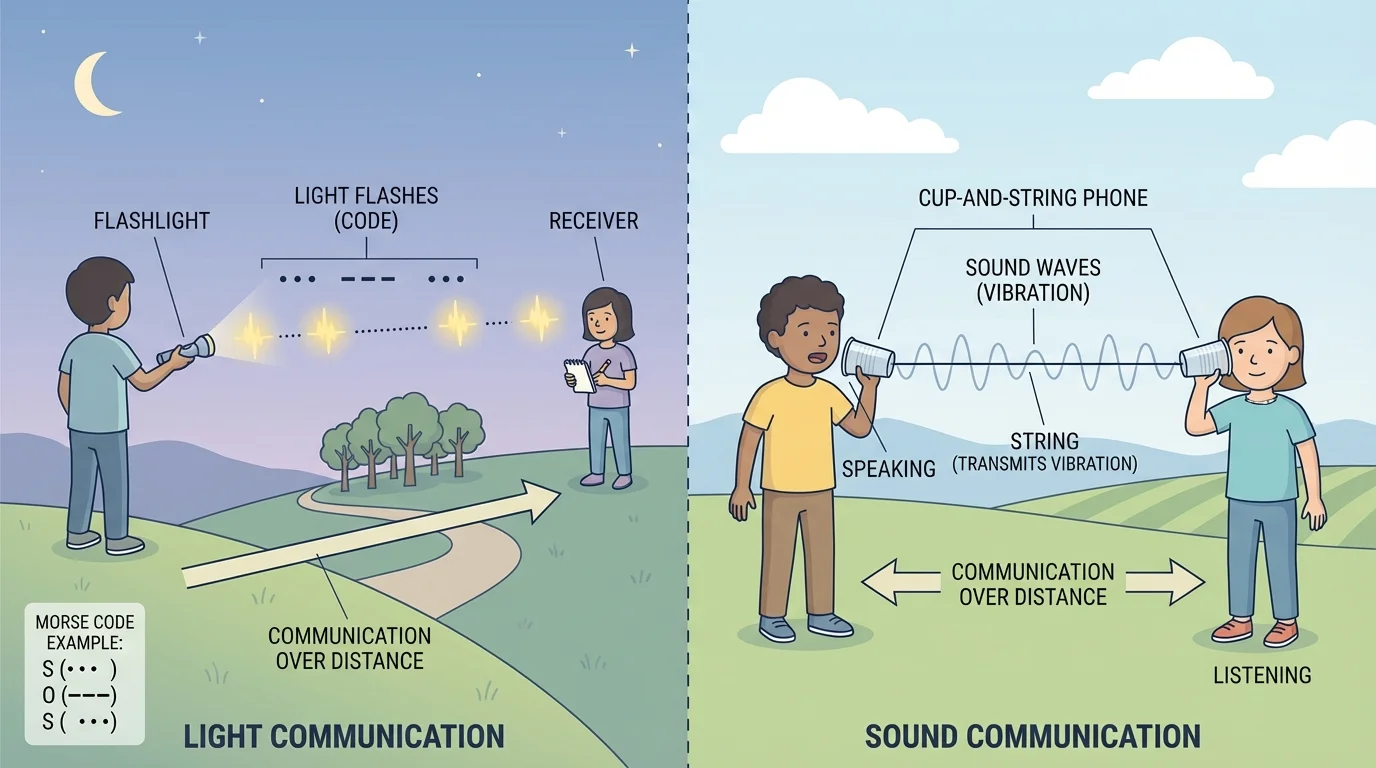
Signal is a sign that carries a message. A signal can be a sound, like a clap, or a light, like a flash from a flashlight.
A signal does not need to be complicated. One flash might mean "yes." Two flashes might mean "no." One tap on a cup-and-string phone might mean "hello." The message can be short and clear.
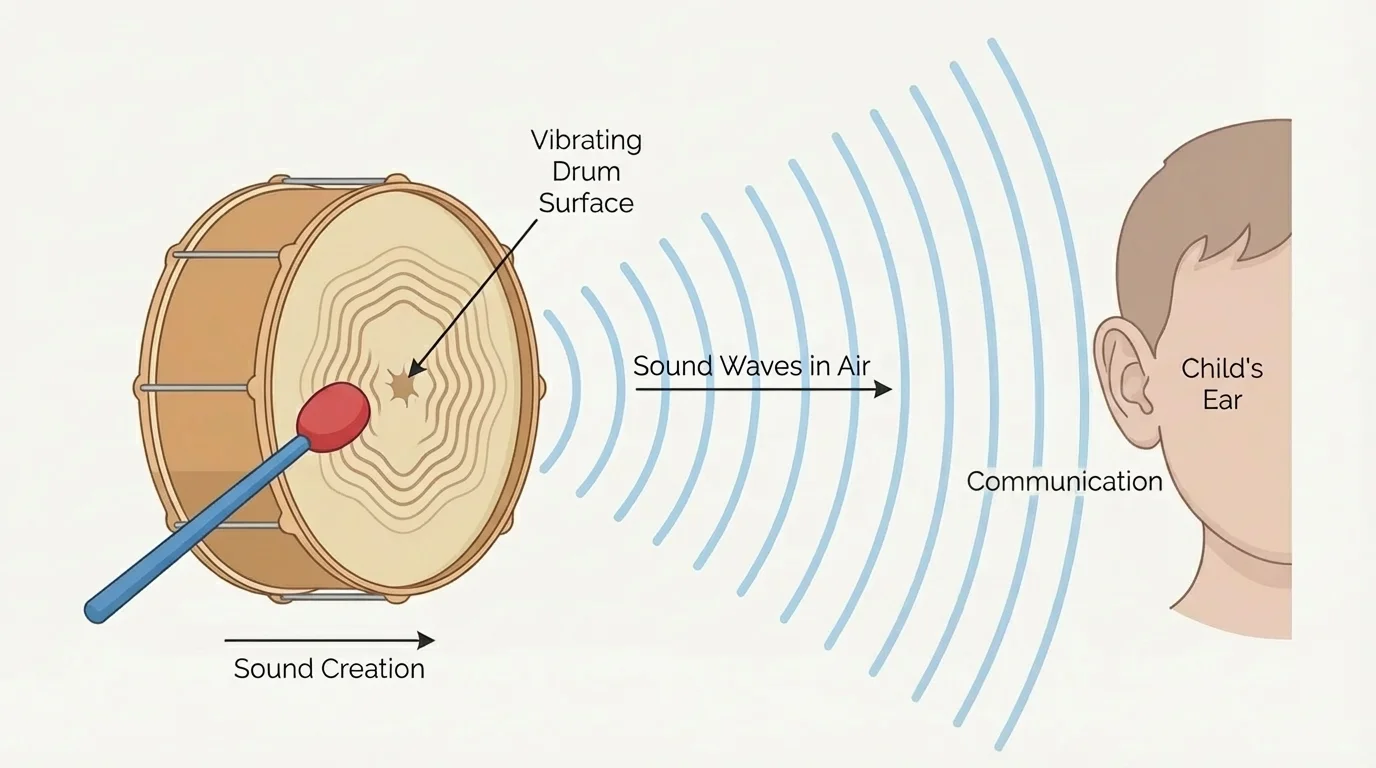
Vibration is a quick back-and-forth movement. Sound begins when something vibrates, as [Figure 2] illustrates. When you tap a drum, the drum surface moves back and forth. That movement helps make sound.
Many things can vibrate: a drum, a ruler, a rubber band, or even your vocal cords when you talk. Vibrating matter can make sound, and sound can make other matter vibrate too. If you put your hand gently on a speaker, you may feel it move. If you touch your throat while humming, you may feel a tiny vibration there too.
How sound travels
When an object vibrates, it makes the material around it move too. In air, that movement carries the sound to our ears. Our ears receive the sound, and our brain helps us understand it.
This is why a tight string in a cup phone can help sound move from one cup to the other. The sound starts with a vibrating voice, and then the materials help the vibration travel.
To build a simple communication device, we choose materials that can do a job well. Some materials are stiff, some are soft, and some let light shine brightly. Good builders think carefully about what they need.
For a sound device, useful materials might include paper cups, string, tape, and scissors with adult help. For a light device, useful materials might include a flashlight, paper, cardboard, and tape. The tools and materials should be safe and easy to hold.
| Device type | Helpful materials | What they do |
|---|---|---|
| Sound device | Paper cups, string, tape | Help vibrations move from one person to another |
| Light device | Flashlight, cardboard, paper | Help make a bright signal that can be seen |
Table 1. Simple materials for sound and light communication devices.
Builders also think about size and strength. A string that is too loose may not work well. A flashlight with weak batteries may make a dim light that is hard to see.
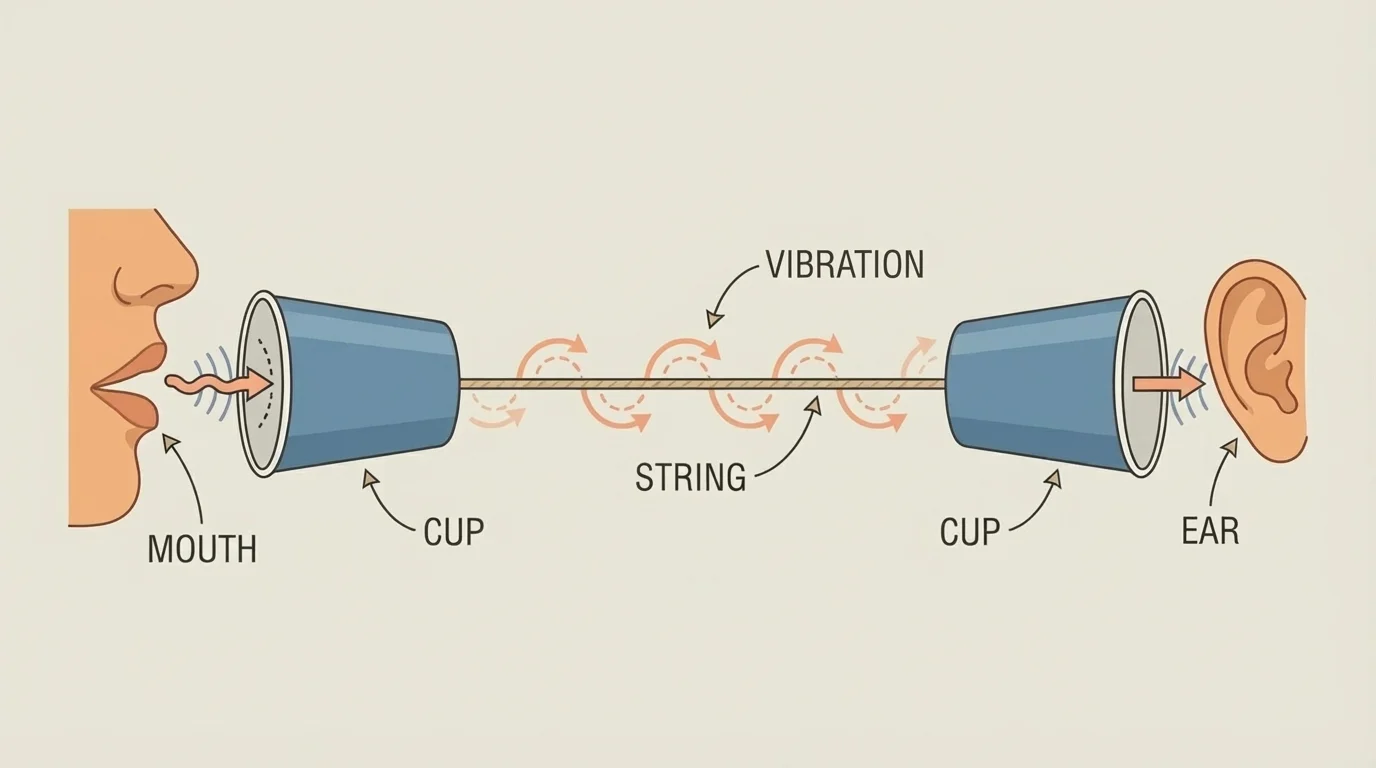
[Figure 3] One simple sound device is a pair of cups connected by a string. This device works best when the string is straight and tight. One person speaks into one cup, and the other person listens at the other cup.
When a child talks into the cup, the bottom of the cup vibrates. The string can carry that vibration to the other cup. Then the second cup vibrates, and the listener hears the sound. This is a simple way to solve the problem of talking over a short distance.
If the string is droopy, the sound may be harder to hear. If the people move too far apart, the string may pull too much or fall. Builders can test different kinds of string to see which one works better.
Testing a sound device
Step 1: Build the cup-and-string device with two cups and one piece of string.
Step 2: Keep the string tight and have one person speak softly.
Step 3: Listen at the other cup and notice whether the message is easy to hear.
Step 4: Change one thing, such as using a tighter string, and test again.
Testing helps builders learn what makes the device work better.
The same idea from [Figure 2] still matters here: sound begins with vibration. The cup phone works because vibrations move through the materials.
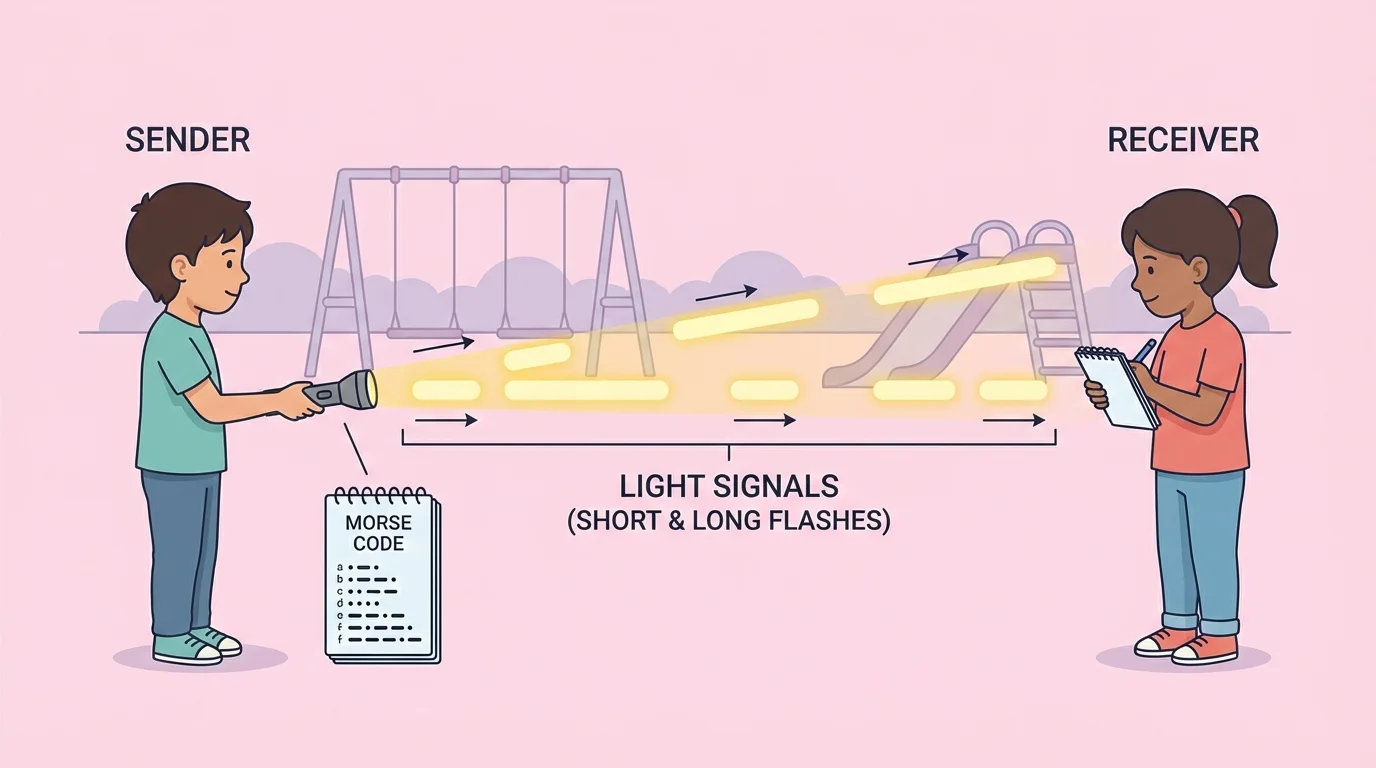
[Figure 4] A light device can be even simpler. A flashlight can turn on and off to send a message over a distance. One flash can mean one thing, and two flashes can mean something else.
This kind of device works best when the other person can see the light clearly. In a dark room or outside at dusk, a bright flashlight is easy to notice. In bright sunlight, the signal may be harder to see.
Some animals also use light or sound signals. Fireflies flash light, and many birds use calls to send messages.
A light signal does not need words. It can use a simple pattern, such as short flash, short flash, long flash. The pattern helps carry information. Later, when builders compare devices, they can think about whether a person needs to hear the message or see it.
When people design something, they think before they build. They ask, "What problem am I solving?" Then they choose materials and make a plan. After building, they test the device and look for parts that can be improved.
Improving means making the device work better. A sound device might need a tighter string. A light device might need a darker place or a brighter flashlight. Builders can try again and again until the message is easier to send and receive.
Test means trying something to see how well it works. Good testing is fair. Builders try one change at a time so they can notice what helped.
What makes a design successful
A successful design helps solve the problem. If the person far away can get the message clearly, the device is doing its job.
We can ask simple questions when we test: Can the other person hear it? Can the other person see it? Is the message clear? Is the device easy to use?
Sometimes a sound device is the better choice. If two people cannot see each other, hearing may help more. Sometimes a light device is the better choice. If a place is noisy, a bright flash may be easier to notice than a sound signal.
As we saw earlier in [Figure 1], both sound and light can carry information. They solve the same problem in different ways. Builders think about the place, the distance, and what materials they have.
The cup-and-string device in [Figure 3] works for short distances when the string stays tight. The flashlight signal in [Figure 4] works when the receiver can see the light. Different problems may need different designs.
"Good engineers make, test, and improve."
Using light and sound to communicate is a wonderful example of science and engineering working together. Science helps us understand vibration, sound, and light. Engineering helps us use that understanding to make a helpful device.
