Have you ever noticed that a duck's feet look like tiny paddles and a turtle wears its shelter on the outside? Nature is full of smart ideas. People watch plants and animals carefully, then use those ideas to make tools and objects that help us. When we copy a helpful part of a plant or animal to solve a problem, we are using nature as a teacher.
All living things have outside body parts. These are called external parts. An external part is a body part on the outside that can be seen. Animals use outside parts like feet, wings, beaks, tails, claws, shells, and fur. Plants use outside parts like leaves, stems, flowers, bark, and spines. These parts help living things get what they need.
A part's function is its job. A bird's beak can help it pick up food. A turtle's shell helps protect it. A cactus has spines that help keep animals from eating it. A plant stem helps hold the plant up toward sunlight. External parts help living things survive, grow, and meet needs such as getting food, staying safe, moving, and finding water or sunlight.
External parts are the parts on the outside of a plant or animal.
Function means the job that a part does.
When scientists and engineers look at nature, they ask simple but powerful questions: What problem does this plant or animal solve? Which outside part helps? How could a person use a similar idea?
Many animal and plant parts have shapes that are just right for a job, as [Figure 1] shows. A duck has wide, webbed feet that push against water. That helps the duck swim. A turtle has a hard shell on the outside. That helps protect its body. A cactus has sharp spines on the outside. Those spines help protect the cactus.
Some plant parts are good at sticking. Burrs are little seed parts that can catch on fur or clothes. This helps the seeds move to new places. Some animals have thick fur or feathers on the outside that help keep them warm. Some birds have long beaks, and others have short, strong beaks. The shape of the beak helps each bird get the kind of food it needs.
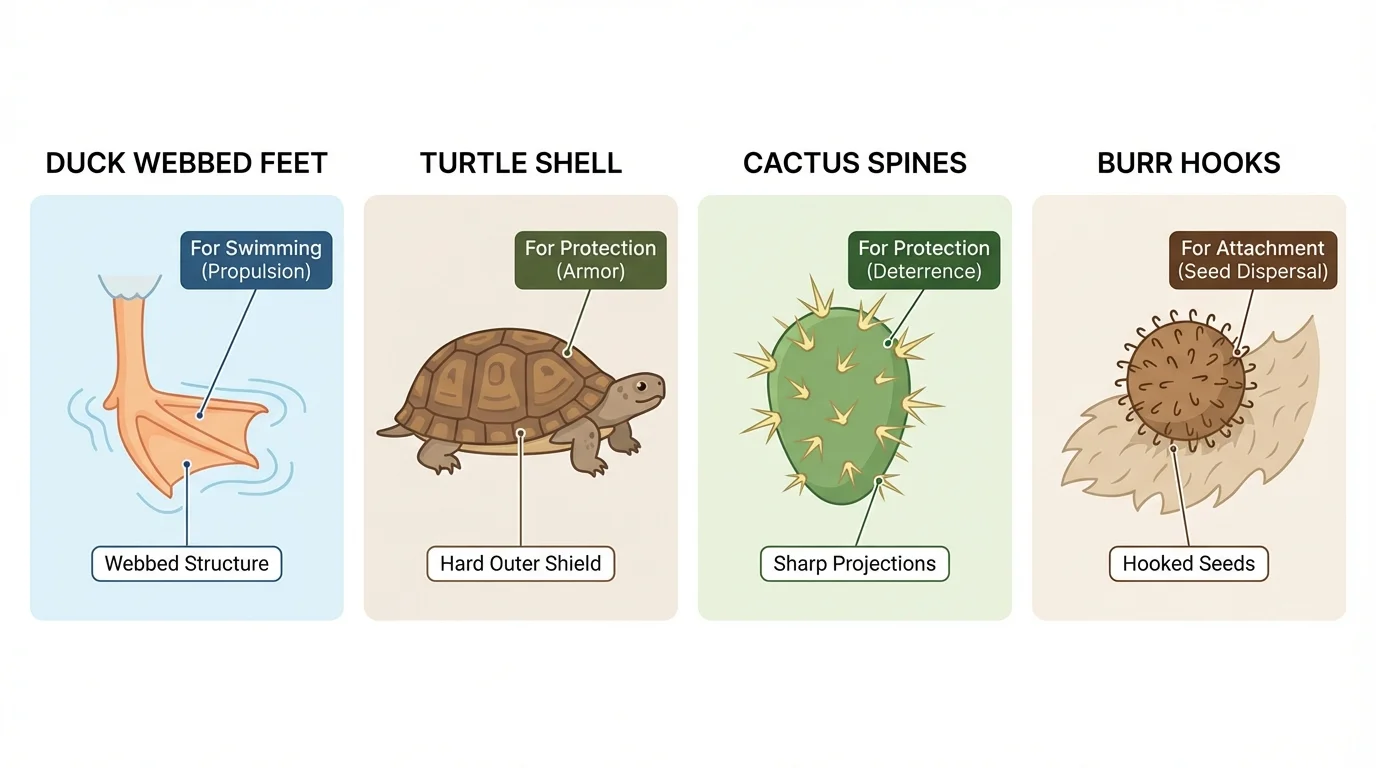
When we study these examples, we do not need to look inside the animal or plant. We can learn a lot just by noticing the outside parts and what they do. That is why careful looking is such an important science skill.
Burrs can stick so well that they helped inspire a useful human invention. A tiny plant part gave people a big design idea.
The same idea appears again and again in nature. Shape matters. Hardness matters. Softness matters. If a part helps with gripping, protecting, covering, catching, or moving, people may be able to copy that idea in a design.
People mimic ideas from nature. To mimic means to copy something. A smart design can begin with a human problem such as, "How can we help a person swim better?" or "How can we make something stick and come apart easily?" Nature gives clues, and [Figure 2] illustrates one famous clue from a plant.
Burrs have tiny hooks that catch on fur. People copied that idea to make hook-and-loop fasteners. These are used on shoes, bags, and jackets. The plant's outside part gave people an idea for something useful.
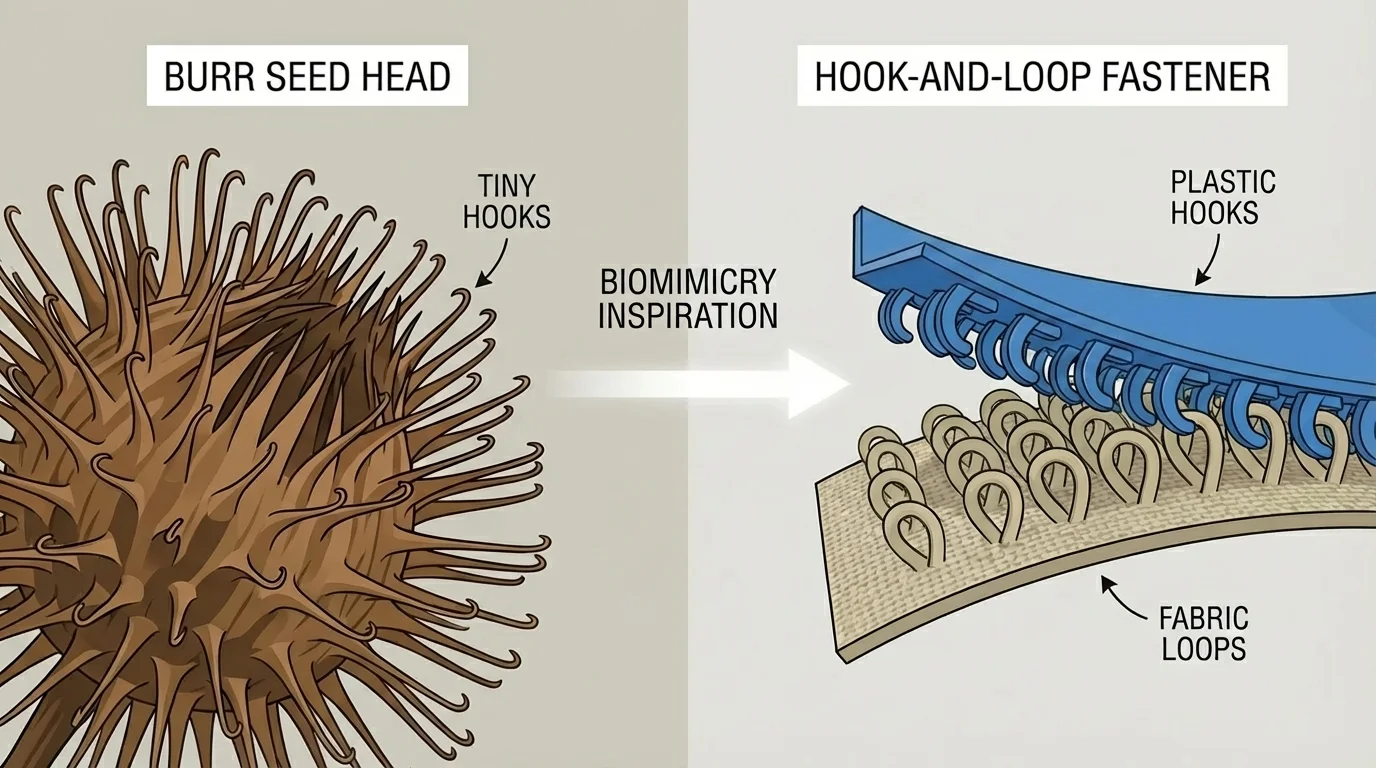
A design does not need to look exactly like the plant or animal. It just needs to copy the helpful job of the outside part. If the outside part grips, the design should grip. If the outside part protects, the design should protect. If the outside part moves water, the design should help move water too.
Nature gives design ideas
Scientists learn how living things use their outside parts. Engineers use that information to make tools and objects for people. This is a simple kind of nature-inspired design: see a problem, notice a helpful outside part in nature, and copy the useful idea.
When we think this way, we start to notice good ideas all around us. The shell, the spine, the hook, and the paddle-like foot are not just body parts. They are solutions to problems.
After we copy an idea from nature, we need to choose the right materials. Materials are what things are made from. A hard shell idea might need stiff plastic or strong cardboard. A soft fur idea might need fabric or foam. A gripping idea might need rubber. Material choice matters, and [Figure 3] shows how different materials match different jobs.
If we want to make something that protects, we choose a material that is hard or strong. If we want to make something bend, we choose a material that is flexible. If we want to make something soft and comfortable, we might choose foam, cotton, or soft fabric.
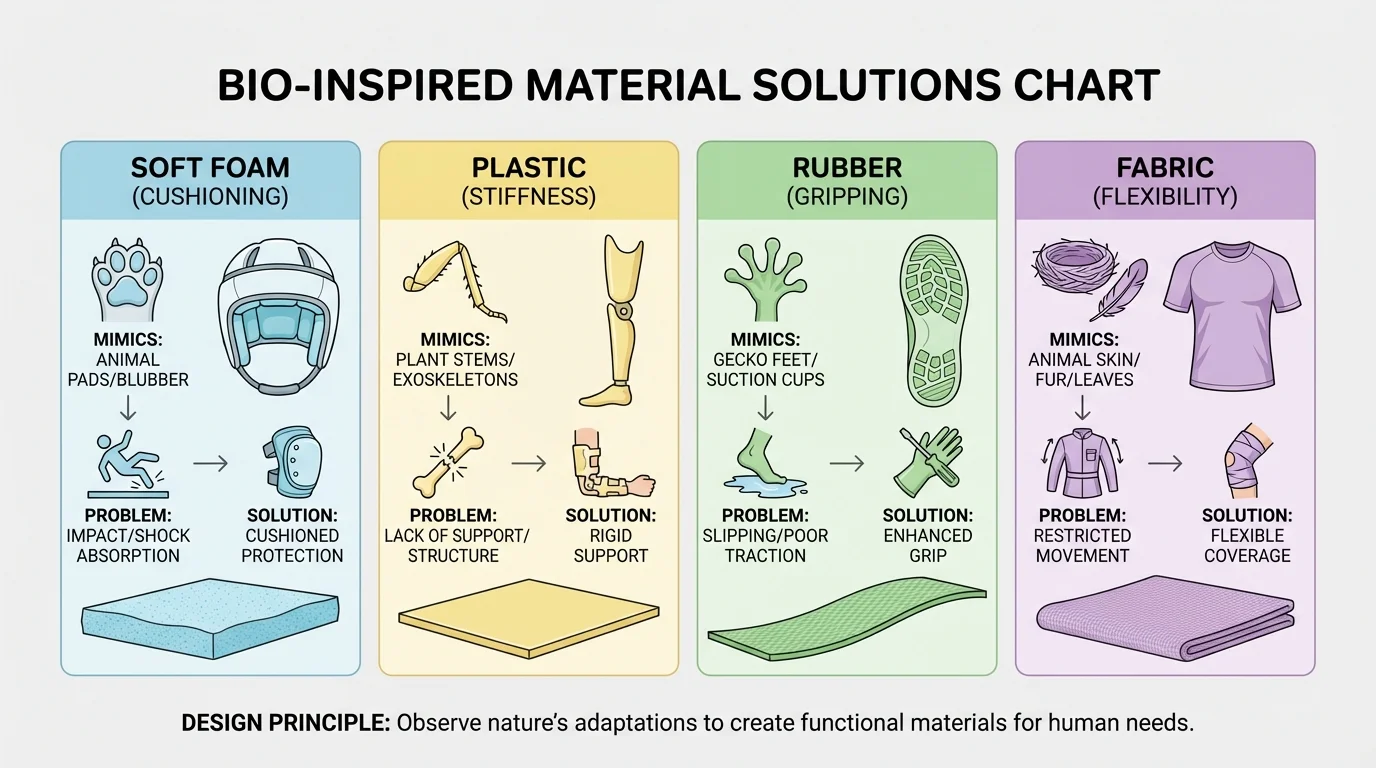
Good designers ask, "What job must this object do?" Then they ask, "Which material will help it do that job?" This is a lot like looking at a turtle shell and noticing that its outside is hard for protection, or looking at a duck foot and noticing that its shape helps push water.
| Nature part | What it does | Possible human design idea | Helpful material |
|---|---|---|---|
| Duck foot | Pushes water | Swim flipper | Rubber |
| Turtle shell | Protects body | Helmet | Hard plastic |
| Burr hooks | Sticks to fur | Fastener strap | Hook-and-loop fabric |
| Cactus spines | Protects plant | Protective fence top | Stiff plastic |
Table 1. Examples of nature parts, their functions, and materials that can be used in human designs.
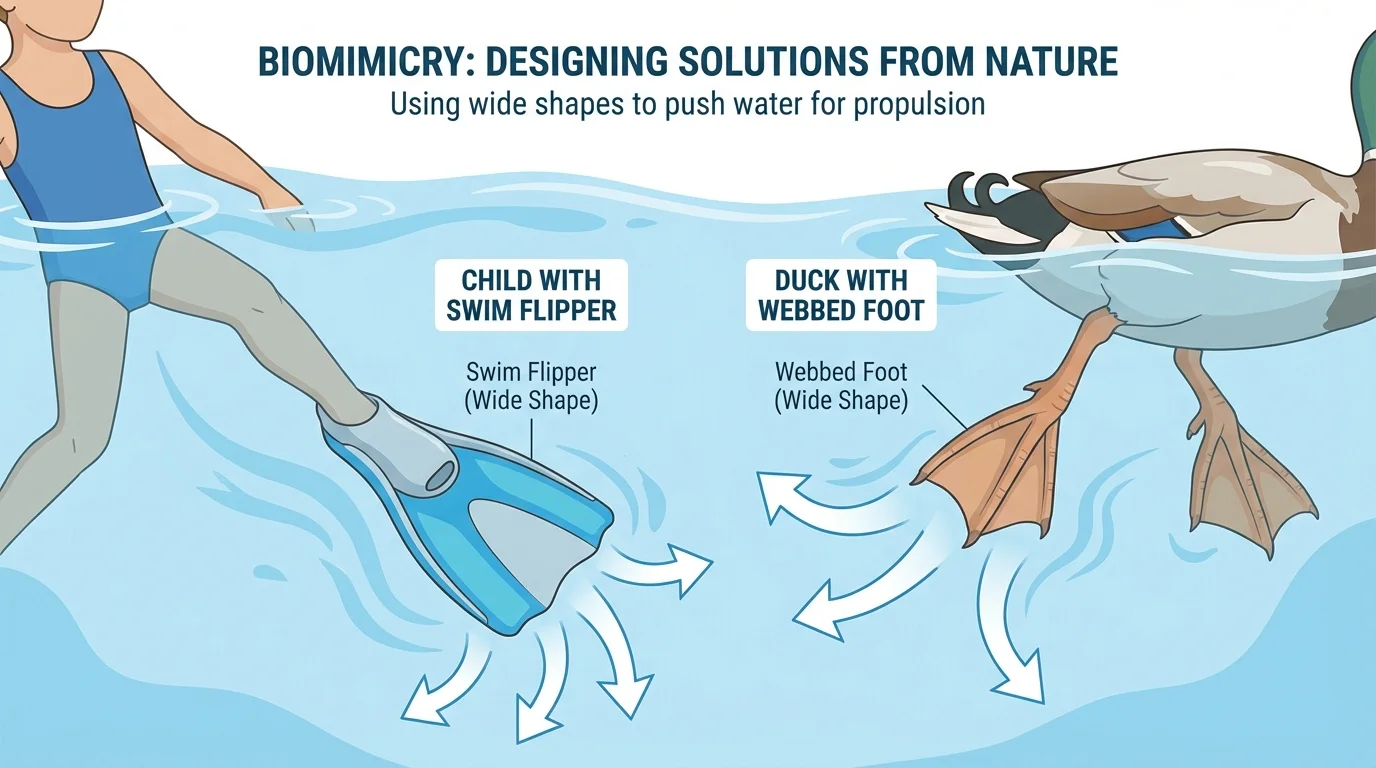
[Figure 4] People solve many problems by copying external parts from nature, including designs for swimming. A swimmer may want to move through water more easily. Duck feet are wide and help push water. People copied that idea to make swim flippers.
Example: Helping a person swim
Step 1: Notice the problem.
A person wants to swim faster and push more water.
Step 2: Look at nature.
A duck's webbed feet are wide and help it move in water.
Step 3: Copy the useful outside part.
Make flippers with a wide shape like a duck foot.
Step 4: Choose the material.
Rubber works well because it bends and pushes water.
The design copies the shape and function of the duck's foot.
Another problem is keeping a person safer while riding a bike or playing sports. A turtle shell gives protection on the outside. People can copy that idea by making helmets with hard outer materials. We can still remember the protective job of the shell from [Figure 1] when we think about strong safety gear.
Another design problem is how to close a shoe quickly. Laces can take time to tie. Hook-and-loop fasteners are easier for many children to use. That idea came from burrs, like the plant part shown in [Figure 2]. Nature inspired a simple tool people use every day.
A designer might also want to protect a garden. Cactus spines protect the plant from being eaten. People can copy that idea by making a fence top with pointed shapes. The design is not a real cactus, but it uses the same helpful idea from the outside part.
When people design something, they do more than copy what nature looks like. They think about the problem, the part's function, and the best material. This is called a design solution. A design solution is a plan or object made to solve a problem.
First, identify the problem. Next, look for a plant or animal with an outside part that does a similar job. Then choose materials carefully. Last, test the design and improve it if needed. For example, if a flipper is too stiff, the designer might use softer rubber. If a helmet is too weak, the designer might choose stronger plastic.
Scientists observe plants and animals carefully. Engineers use what they learn to make helpful things for people.
Nature-inspired designs work best when we really understand the outside part we are copying. We ask: Is it hard or soft? Wide or narrow? Sharp or smooth? Does it help with moving, sticking, covering, or protecting? The answers help us build better solutions.
Plants and animals do not solve human problems on purpose, but their external parts can teach us amazing lessons. A shell can inspire protection. A burr can inspire fastening. A webbed foot can inspire movement in water. When we look closely at nature, we find ideas for solving problems in smart and creative ways.
