Have you ever seen a baby bird open its mouth wide when a parent lands at the nest? That tiny action is not random. It is a clue. In nature, parents and offspring often do the same helpful actions again and again. These patterns help the young stay alive, grow, and develop.
A behavior is something an animal does. A pattern in behavior is an action that happens again and again. When scientists read books, look at photos, or watch videos, they look for repeated actions. If a mother bird keeps bringing food to her chicks many times, that is a pattern. If baby ducks keep staying close to their mother, that is also a pattern.
Parent means a grown animal that cares for its young. Offspring are the young animals, such as chicks, cubs, or fawns. Survive means to stay alive.
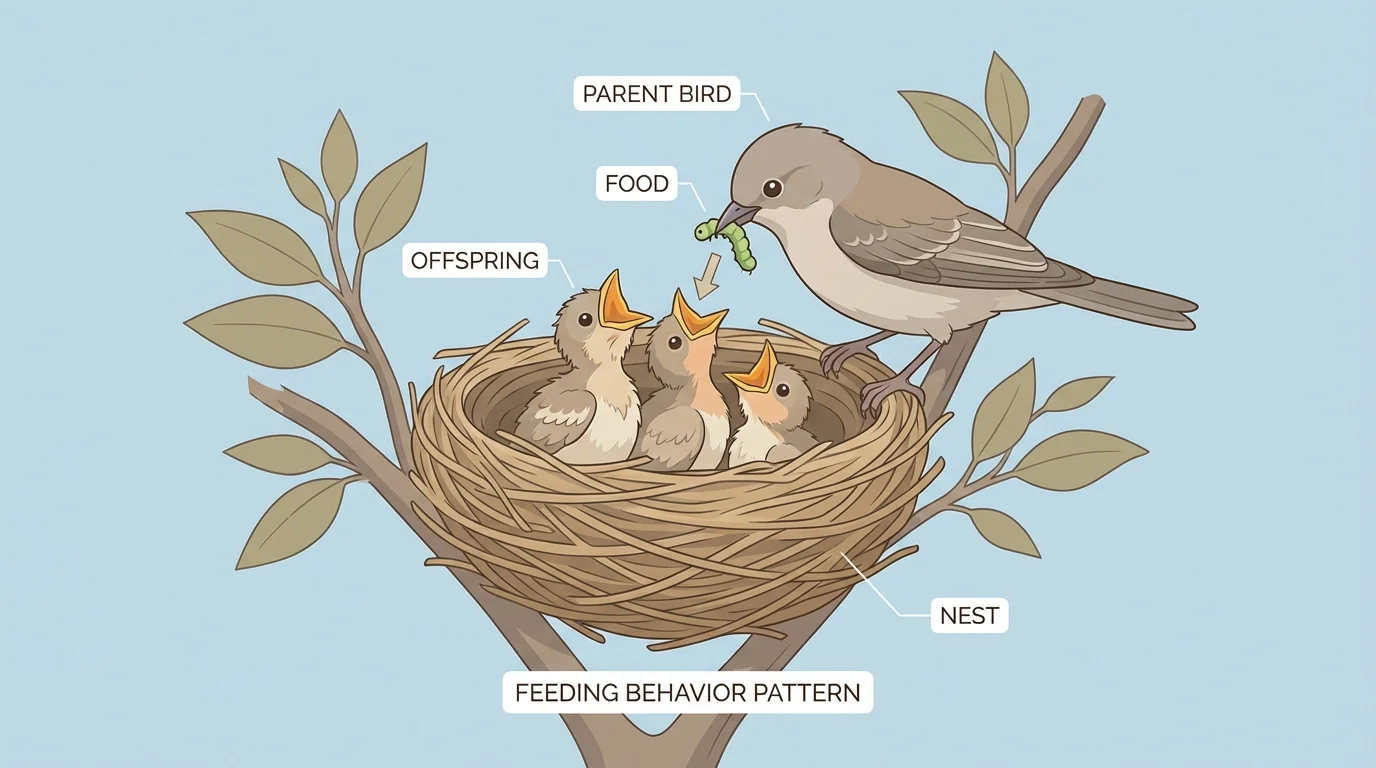
[Figure 1] These patterns are important because young animals need help. Many offspring are small, weak, or unable to find food by themselves. Some cannot stay warm alone. Others do not know when to hide or where to go. Parent and offspring behaviors work together to solve these problems.
One important parent behavior is feeding offspring. In many birds, the parent flies out, finds food, and brings it back to the nest. This repeated action helps the young grow. The chicks often cannot get food on their own, so the parent's behavior is very important.
Another parent behavior is keeping young safe and warm. A penguin parent may keep an egg or chick close to its body. A hen spreads her wings over her chicks. A cat may carry kittens to a safer spot. These actions protect young animals from cold, rain, or danger.
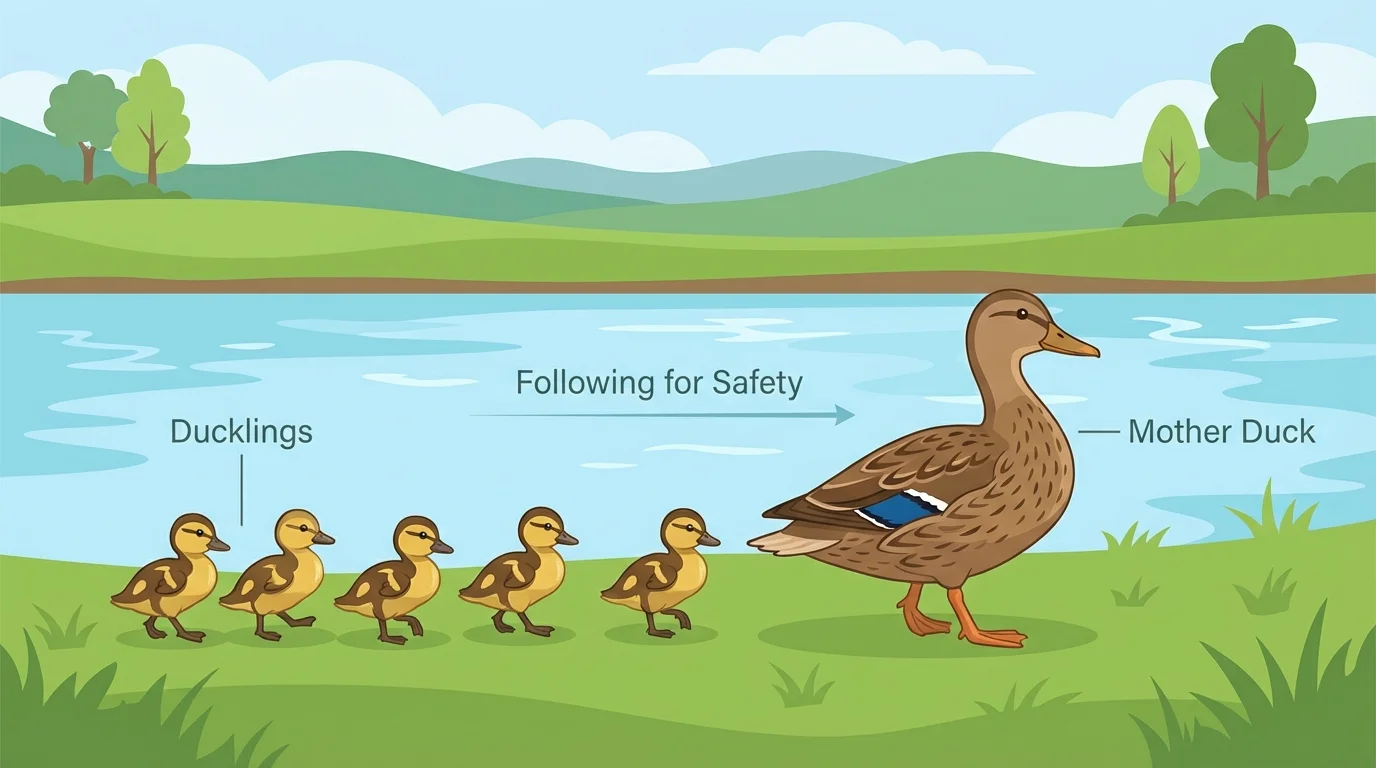
Some parents also lead their young to places where they can live safely. A mother deer returns to care for her fawn. A mother duck leads ducklings across the ground or water. The parent does not just move randomly. The repeated action of staying near, guiding, and caring helps the young survive.
Some baby animals are born needing a lot of care, while others can move very soon after birth. Even when young animals can move early, they still often depend on a parent's behavior for safety.
[Figure 2] When we read a text or watch a nature video, we can ask, "What does the parent keep doing?" That question helps us notice the pattern. If the same caring action happens many times, it is probably helping the young live and grow.
Young animals have helpful behaviors too. Some stay close to a parent for protection. A duckling that follows its mother is more likely to stay safe than one that wanders away. Staying close is a behavior pattern that helps the offspring survive.
Another offspring behavior is asking for care. Baby birds chirp and open their mouths when a parent returns with food. Kittens and puppies may call for their mother. These actions help the parent know where the young are and what they need.
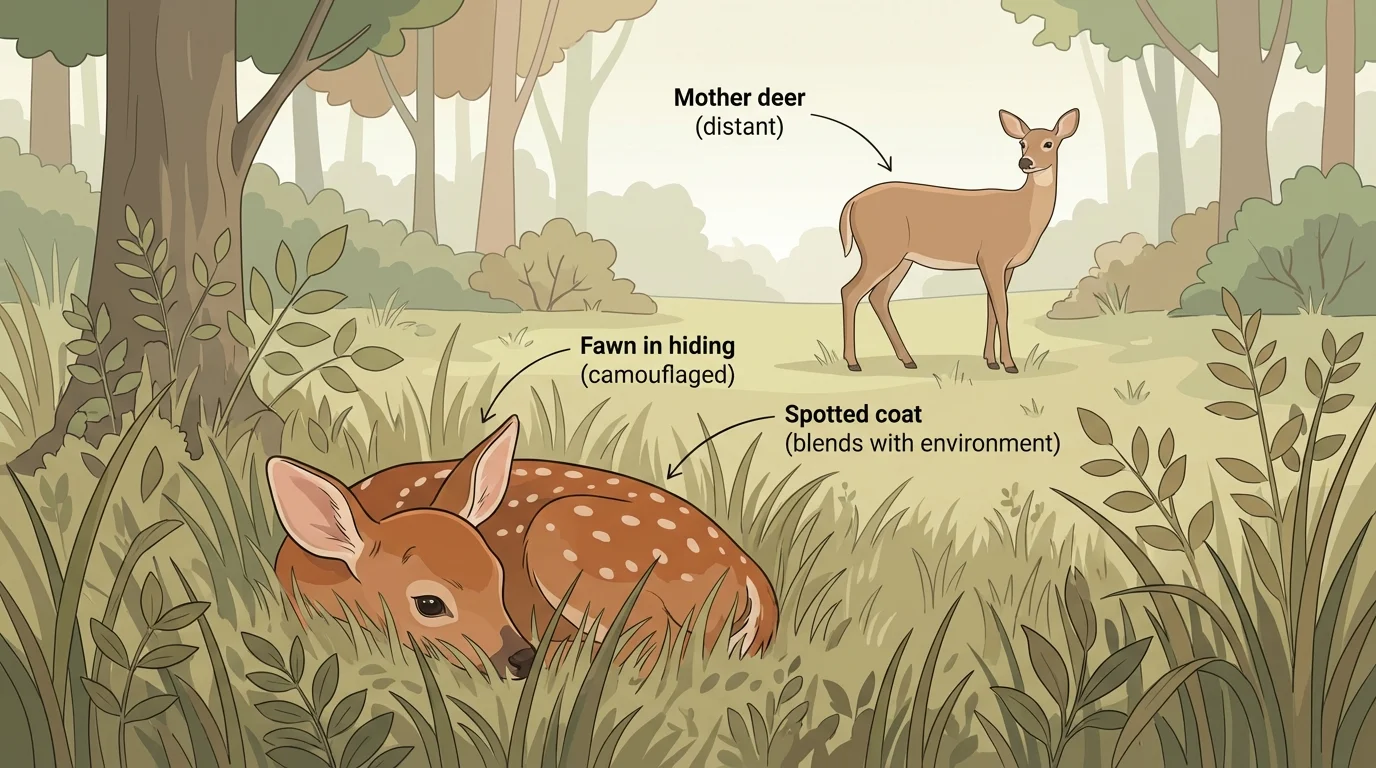
Some offspring survive by staying very still. A young deer, called a fawn, may lie quietly in grass. Its spotted coat helps it blend in, and its still behavior makes it harder for danger to notice it. The young animal is not playing a game. It is showing a survival behavior.
Behaviors match needs
A baby animal's behavior often matches what its body and life are like. If it cannot fly, it may stay in a nest and wait for food. If it can walk early, it may follow its parent. The behavior fits the young animal's needs.
Offspring behaviors and parent behaviors often fit together. The parent bird brings food. The chick opens its mouth. The mother duck leads. The ducklings follow. The mother deer returns to check on the fawn. The fawn stays hidden and quiet. These matched patterns help the young stay alive.
We can learn about animal behavior from different kinds of media. A book may describe a robin feeding its chicks. A photograph may show a polar bear mother close to her cub. A video may show ducklings following their mother step by step. Each kind of source gives us clues.
When using texts and media, look for actions that repeat. Ask simple questions: "Who is the parent?" "Who is the offspring?" "What does the parent keep doing?" "What does the young animal keep doing?" "How does this help the young survive?" These questions help us think like scientists.
Using a photo to find a behavior pattern
Step 1: Look closely at who is in the picture.
You might see a mother duck and several ducklings.
Step 2: Notice the repeated action.
The ducklings are staying close behind the mother.
Step 3: Explain how it helps.
Following the parent helps the ducklings stay together and safer.
Words and pictures work well together. A text might tell us that a penguin parent keeps a chick warm. A picture helps us see how close the chick stays to the parent's body. A video lets us notice that the caring action happens again and again, not just once.
A robin parent may fly back to the nest many times each day with worms or insects. That feeding behavior helps the chicks grow feathers, get energy, and grow stronger. We already saw this caring pattern with the nest example in [Figure 1], where the parent and babies each do their part.
[Figure 3] Penguin parents are another clear example. In cold places, keeping eggs and chicks warm matters a lot. A parent may hold the young close to its body. This behavior protects the chick from dangerous cold.
A fawn lying still in the grass shows a different kind of pattern. The young deer stays quiet and hidden while the mother is away for a time. When the mother returns, she cares for it. Staying still helps the fawn avoid danger.
Ducks give us another easy-to-see example. The mother moves, and the ducklings follow. If you watch a short video, you may notice that the babies do not follow only once. They repeat the behavior again and again. That repeated action is the pattern.
| Animal | Parent behavior | Offspring behavior | How it helps |
|---|---|---|---|
| Bird | Brings food to nest | Opens mouth, waits in nest | Helps young get food |
| Duck | Leads young | Follows parent | Helps young stay close and safe |
| Deer | Returns to check on fawn | Stays still and hidden | Helps young avoid danger |
| Penguin | Keeps chick warm | Stays close to parent | Helps young stay warm |
Young animals do not survive by luck alone. Their bodies help them, and their behaviors help too. Parents use body parts such as wings, legs, mouths, or fur while doing caring actions. Offspring use body parts too, such as mouths for eating or legs for following. The actions and body parts work together.
When we study behavior, we learn that repeated caring actions are important. Feeding, warming, carrying, guiding, calling, following, hiding, and staying close can all help offspring survive. The ducklings in [Figure 2] stay near their mother, and that simple pattern can make a big difference. The hidden fawn in [Figure 3] stays quiet, which helps it remain unnoticed.
Animals have external body parts that help them do daily jobs. A beak can carry food, wings can cover chicks, legs can help young follow a parent, and fur can help keep a baby warm.
Scientists can discover these ideas by reading, looking, and listening carefully. A sentence in a book, a photo in a magazine, or a clip from a nature video can all show the same big idea: parent and offspring behaviors follow patterns, and those patterns help young animals survive.
