Have you ever looked at one small park, yard, pond, or playground and noticed how much life is there? A bird may sit in a tree, an ant may crawl on the ground, a worm may move through the soil, and a fish may swim nearby in water. One area can be full of life in many different places at the same time.
Living things are things that grow, need energy, and have young. Plants are living things. Animals are living things. Tiny living things, such as some microorganisms and fungi, are living things too. An area does not have just one kind of life. It usually has many kinds of living things.
Living thing means something that is alive. Land is the ground we walk on. Water includes places such as ponds, lakes, rivers, and oceans where many living things make their homes.
Some living things are easy to see, like dogs, trees, ducks, and flowers. Some are much harder to see, like tiny mushrooms growing on old wood or very small living things in pond water. Even in one little space, there can be a great variety of life.
When scientists look at nature, they notice that living things are not all the same. They come in different shapes, sizes, colors, and body coverings. A bird has feathers, a fish has fins, a tree has roots and leaves, and grass grows low to the ground. These differences help living things live in different places.
An area may include sunny places, shady places, wet places, dry places, high places, and low places. Different living things can be found in each of these spots. That is one reason the world is full of such great variety.
A spoonful of healthy soil can contain many tiny living things. Even though we cannot see most of them, they help break down dead plants and keep the soil rich.
This variety of life is important. If there were only one kind of living thing in an area, the place would not function as well. Different living things help make the area healthy.
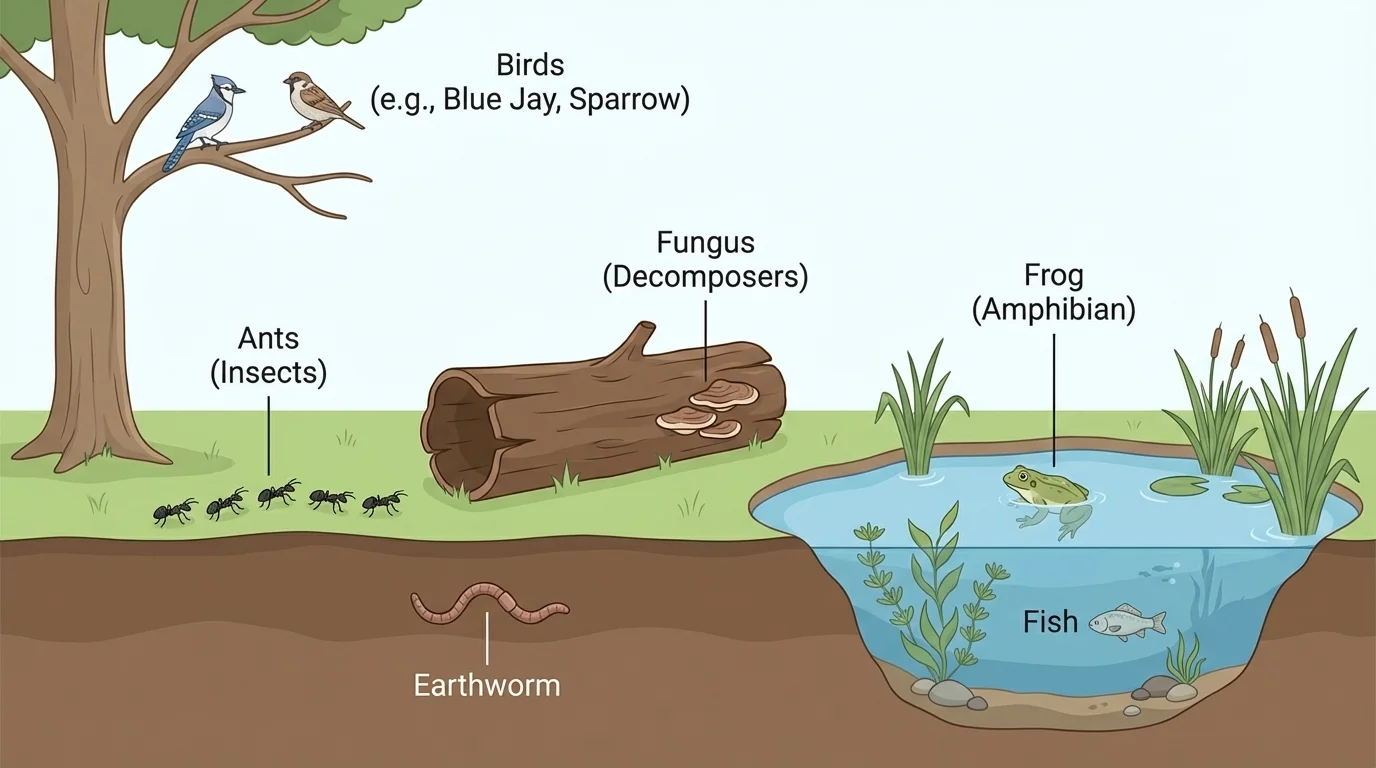
On land, a habitat can be a forest, a garden, a field, a desert, or even the soil under your feet. In one small land area, there are many smaller places for life, as [Figure 1] shows. Birds may live high in branches, squirrels may rest in tree holes, insects may hide under leaves, and worms may move through the ground.
Some living things need lots of sunlight. Flowers and grass often grow well in sunny places. Some need more shade, like moss on a damp log. Some animals hide under rocks or fallen branches because those places feel safer and cooler.
The ground itself is full of life. Ants build tunnels. Beetles crawl across the soil. Earthworms help mix the dirt. On a rotting log, mushrooms and tiny bugs may be busy breaking old wood into smaller pieces. A single park can hold many different land homes for many different living things.
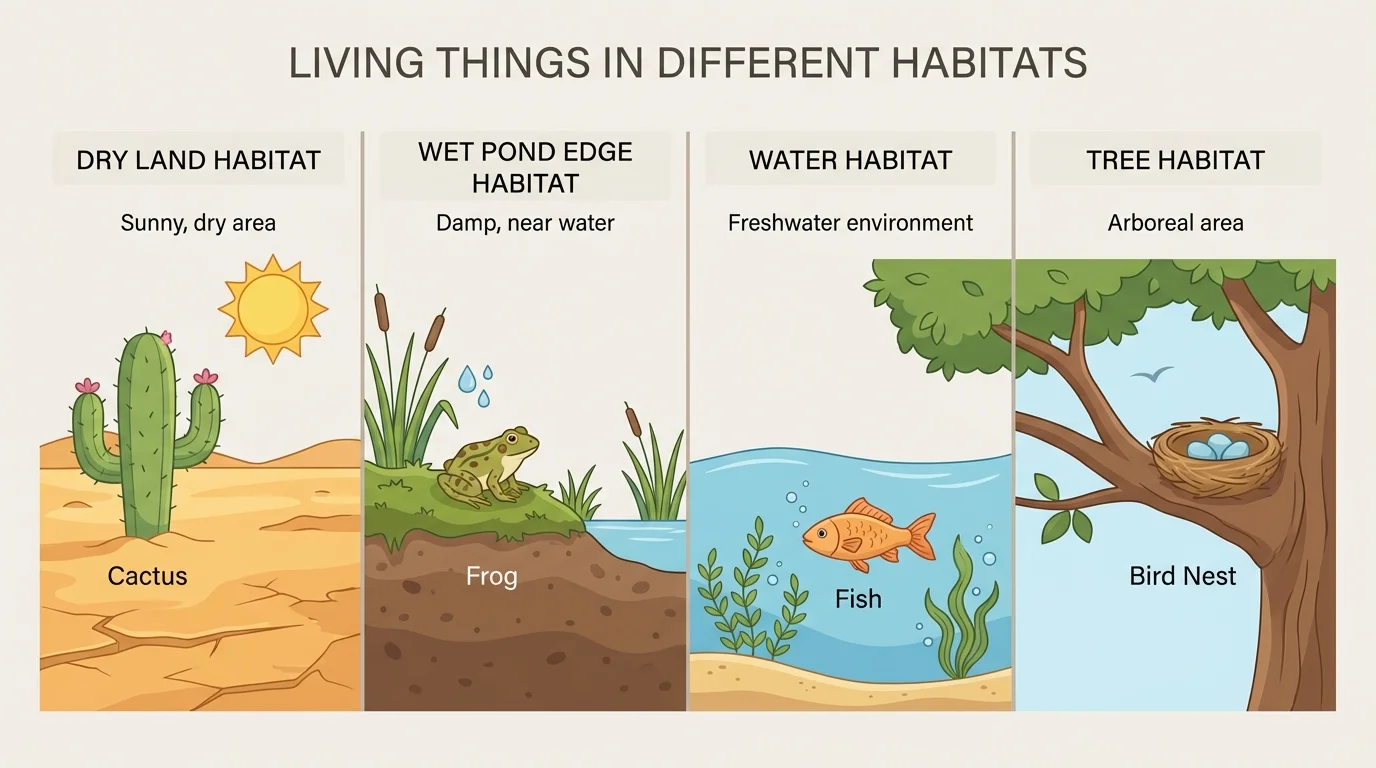
Different land places meet different needs. A rabbit may want grass to eat and bushes to hide in. A woodpecker may need a tree trunk where it can search for insects. A cactus can live in a hot, dry place because it stores water. A frog usually does not stay in a dry desert because it needs wetter places.
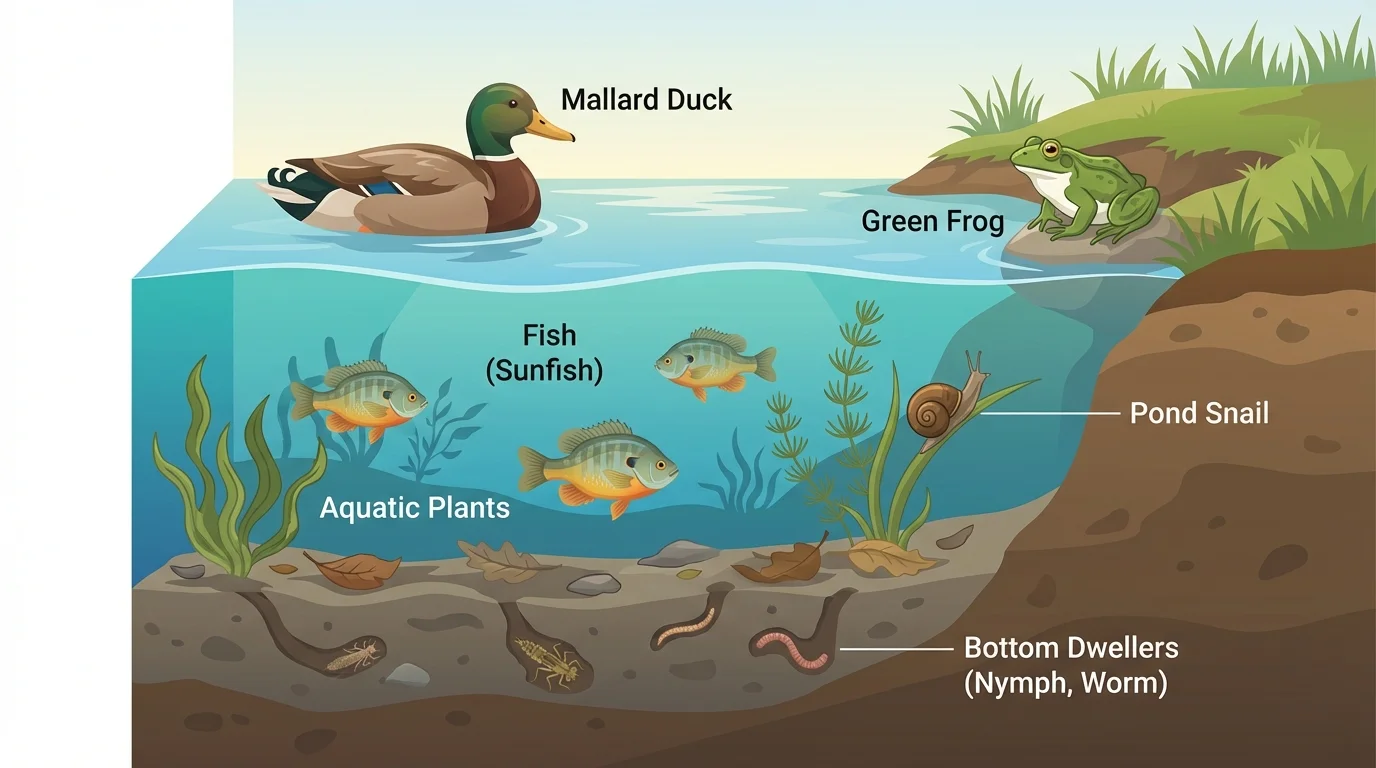
Water is also a home for many kinds of life. A pond, lake, river, or ocean has different living places from the top to the bottom, as [Figure 2] illustrates. Some animals stay near the surface. Others hide among water plants. Some live near the muddy bottom.
Fish, frogs, turtles, ducks, snails, and water plants may all live in or near the same pond. But they do not all use the pond in the same way. A duck may float on top. A fish may swim through the middle. A snail may cling to a plant. A frog may rest at the edge where land and water meet.
Oceans also have many different kinds of living things. Crabs can move along the shore. Seaweed grows in shallow water. Some fish live near coral reefs. Bigger animals may swim in deeper water. Just like on land, one water area can have many different homes inside it.
Land and water can connect. Some living things use both places. Frogs begin life in water and later spend time on land. Turtles may swim in water but climb onto logs or banks to rest. This shows that different places in one area can work together.
Water places can be deep or shallow, still or moving, warm or cool. These differences matter. Some living things do well in fast streams. Others do better in quiet ponds. The place must fit the living thing's needs.
Each living thing lives where it can get what it needs. The place where it lives is called its habitat. A habitat gives a living thing food, water, air, shelter, light, and space.
[Figure 3] A plant needs sunlight, water, air, and space to grow. A deer needs water to drink, plants to eat, and places to stay safe. A fish needs water with enough oxygen, food, and room to swim. If a place does not meet these needs, that living thing may not be able to live there.
Body parts and behaviors can help living things live in certain places. A duck has webbed feet that help it swim. A fish has fins and gills for living in water. A bird has wings for flying. A tree has roots that hold it in the soil and help it take in water. These features help each living thing live where it belongs.
When we compare living things, we see both sameness and difference. All living things need resources to survive, but not all need the same kind of place. That is why an area has many kinds of living things spread across different spots on land and in water.
Real-world example: One schoolyard after rain
Step 1: Look at the dry ground. You might see ants, grass, and a bird hopping for seeds.
Step 2: Look at a puddle. You might see tiny swimmers, water bugs, or a bird stopping for a drink.
Step 3: Look under a leaf or log. You may find pill bugs, worms, or fungi in a damp, darker place.
One small area has different conditions, so different living things use different parts of it.
The same idea helps farmers, gardeners, and park workers. When people know what living things need, they can protect ponds, plant trees, leave safe spaces for pollinators, and care for soil. Understanding where living things live helps people take better care of nature.
Living things do not just sit in places by themselves. They interact with one another and with the nonliving parts of the environment. A bee visits a flower. A bird eats seeds. A squirrel carries nuts. A fish may hide among water plants. A mushroom grows on dead wood. These actions connect living things to one another.
Some living things provide food for others. Plants make food and become food for animals. Small animals may become food for bigger animals. Some living things also provide shelter. A tree can be home for birds, insects, and squirrels. Pond plants can hide fish and frogs from danger.
The land, water, sunlight, air, and soil also matter. Without water, pond life cannot survive. Without soil, many plants cannot grow. Without sunlight, green plants cannot make food. Living things depend on their environment every day.
Remember that nonliving things such as water, air, rocks, and sunlight are not alive, but they are still very important. Living things need these parts of the environment to survive.
When one part changes, other parts may change too. If a pond dries up, fish may die or move away, frogs may lose a place to lay eggs, and birds may lose a feeding place. If trees are cut down, animals that lived in the branches or trunks may lose shelter. This is why caring for habitats matters so much.
Think about a park with grass, a tree, a patch of flowers, a log, and a pond. On the grass, insects may crawl and birds may search for food. In the flowers, bees and butterflies may visit. In the tree, birds may build nests. Under the log, damp-loving creatures may hide. In the pond, ducks, fish, frogs, and snails may live. As we saw earlier in [Figure 1], even one land area can contain several tiny living places.
The pond in that park also has many layers of life. Near the edge, frogs may rest. In the water plants, insects and snails may cling. In open water, fish may swim. At the bottom, tiny living things break down dead material, much like the different pond zones shown in [Figure 2]. One area is not just one home. It is many homes together.
When we notice these patterns, we understand an important science idea: there is a great diversity of life in any area. Living things are found in different places because different places meet different needs. This variety is part of how nature works.
