Have you ever seen a clean park and a messy park on the same day? Both are places for people to enjoy, but one feels much better to walk through. People build homes, drive cars, grow food, and use water and electricity so they can live comfortably. These things help us every day. But the choices people make can also change the world around them.
People need places to live, learn, work, and play. They build houses, schools, roads, and stores. They also grow food on farms and use water for drinking, washing, and cooking. We need air to breathe, land to stand on, and water to stay alive. Earth gives us all of these important things.
When people change a place, that place may look different from before. A field may become a playground. A group of trees may be cut down to make room for a building. A road may help cars move, but it can also take up space where plants once grew. Some changes are helpful for people, but they can also affect animals and plants.
Environment means the land, water, air, and living things around us. A habitat is the home of a plant or animal, where it finds food, water, and shelter.
When we understand how our actions change the environment, we can make better choices. That means we can still live safely and comfortably while also taking care of Earth.
The land gives us space for homes, gardens, farms, and parks. But land can be harmed when people leave trash on the ground, cut too many plants, or dig up soil without care. As [Figure 1] shows, the same kind of place can look very different depending on how people treat it.
Trash on the ground can make a place unsafe and unhealthy. Plastic bags, bottles, and food wrappers can hurt animals. If animals try to eat trash, they can get sick. When too many trees or plants are removed, animals may lose places to hide and rest. Soil can also wash away more easily when roots are gone.
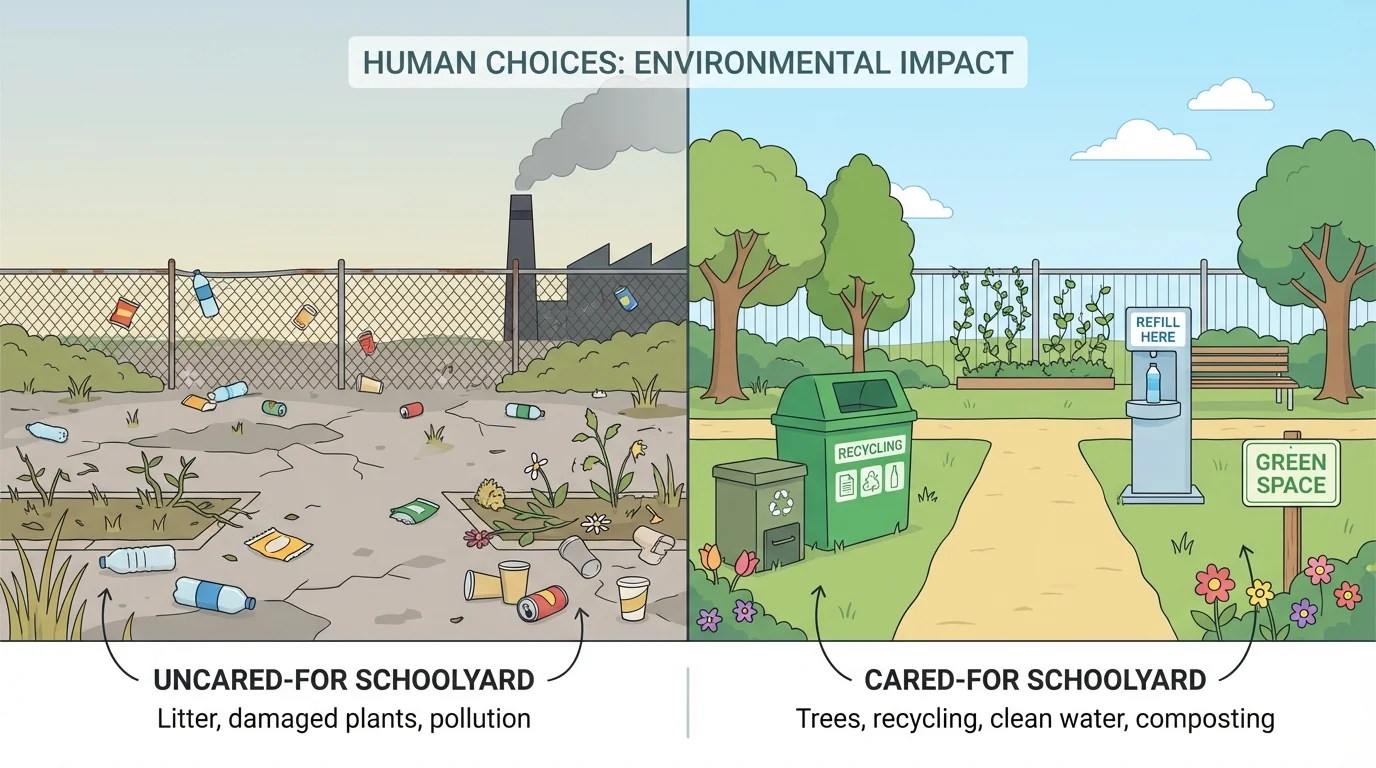
A clean yard, garden, or park helps people and other living things. Planting trees, picking up litter, and staying on paths in nature areas can protect the land. When we care for the ground beneath our feet, we also help worms, insects, birds, and plants.
Tree roots help hold soil in place. That means trees do more than give shade—they also help keep land from washing away when it rains.
Later, when you think about cleanup and planting, remember the contrast in [Figure 1]. A cared-for place supports more life and feels better for people too.
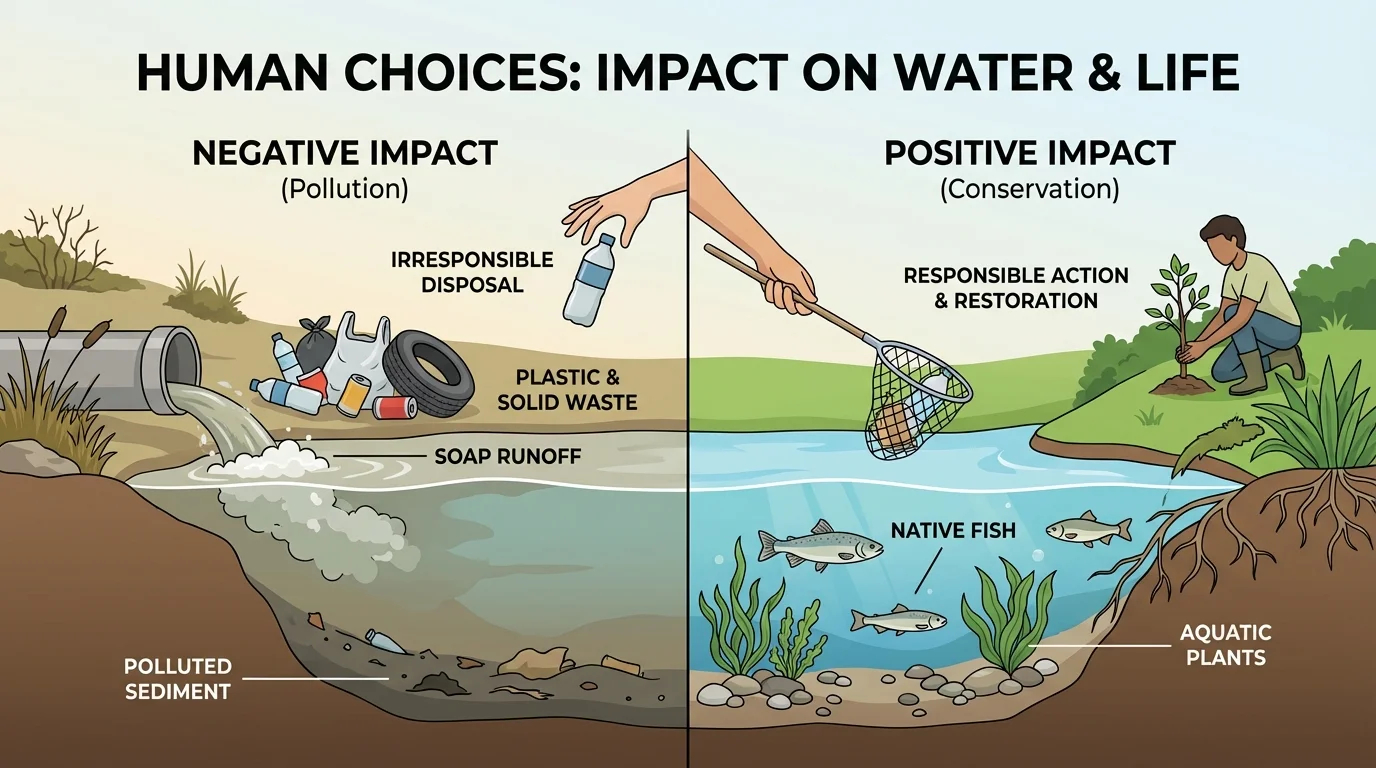
Clean water is very important for people, animals, and plants. We drink it, wash with it, and use it to cook food. Fish, frogs, ducks, and many other living things need clean water to survive. As [Figure 2] illustrates, water that stays clean can support life much better than water filled with waste.
Water can become dirty when trash, soap, oil, or other harmful materials get into streams, ponds, or lakes. If water is polluted, fish and plants may not grow well. Animals that drink the water can get sick. People help protect water when they put trash in bins and are careful about what goes down a drain.
The air around us matters too. Cars, buses, and factories can send smoke and gases into the air. Too much dirty air can make it harder for people and animals to stay healthy. Breathing clean air is important every day.
People can reduce air pollution in simple ways. Walking when a place is nearby, riding bikes, sharing rides, or using buses can mean fewer cars on the road. Turning off lights and machines when they are not needed can also help, because making electricity sometimes causes pollution.
Small choices add up
One car ride, one plastic bottle, or one light left on may seem small. But when many people do the same thing every day, the effect can become very big. In the same way, many small helpful choices can make a big positive difference.
The clean and dirty stream in [Figure 2] reminds us that water and air connect to living things. What people do in one place can affect another place nearby.
Plants and animals are part of Earth's environment too. Birds need trees. Bees need flowers. Fish need clean water. When a habitat changes too much, living things may have trouble finding food, shelter, or safe spaces for their babies.
People can help by leaving nests alone, not picking too many flowers, planting native plants, and keeping parks and streams clean. Even a small garden with flowers can help insects. A bird feeder or bird bath, used carefully, can help birds visit a yard.
Real-world example: A school garden
Step 1: Students plant flowers, vegetables, and a small tree.
Step 2: The plants give shade, food, and shelter for insects and birds.
Step 3: Students water the garden carefully and pull out litter.
The garden becomes a place that helps people learn and also helps living things nearby.
Being careful with nature does not mean people cannot use places. It means using them wisely and kindly. We can enjoy a park, a yard, a lake, or a trail while still protecting the living things there.
Every day, people make choices about what to use and what to throw away. Those choices can create less pollution, which is harmful material in land, water, or air. Simple actions at home and school can protect Earth.
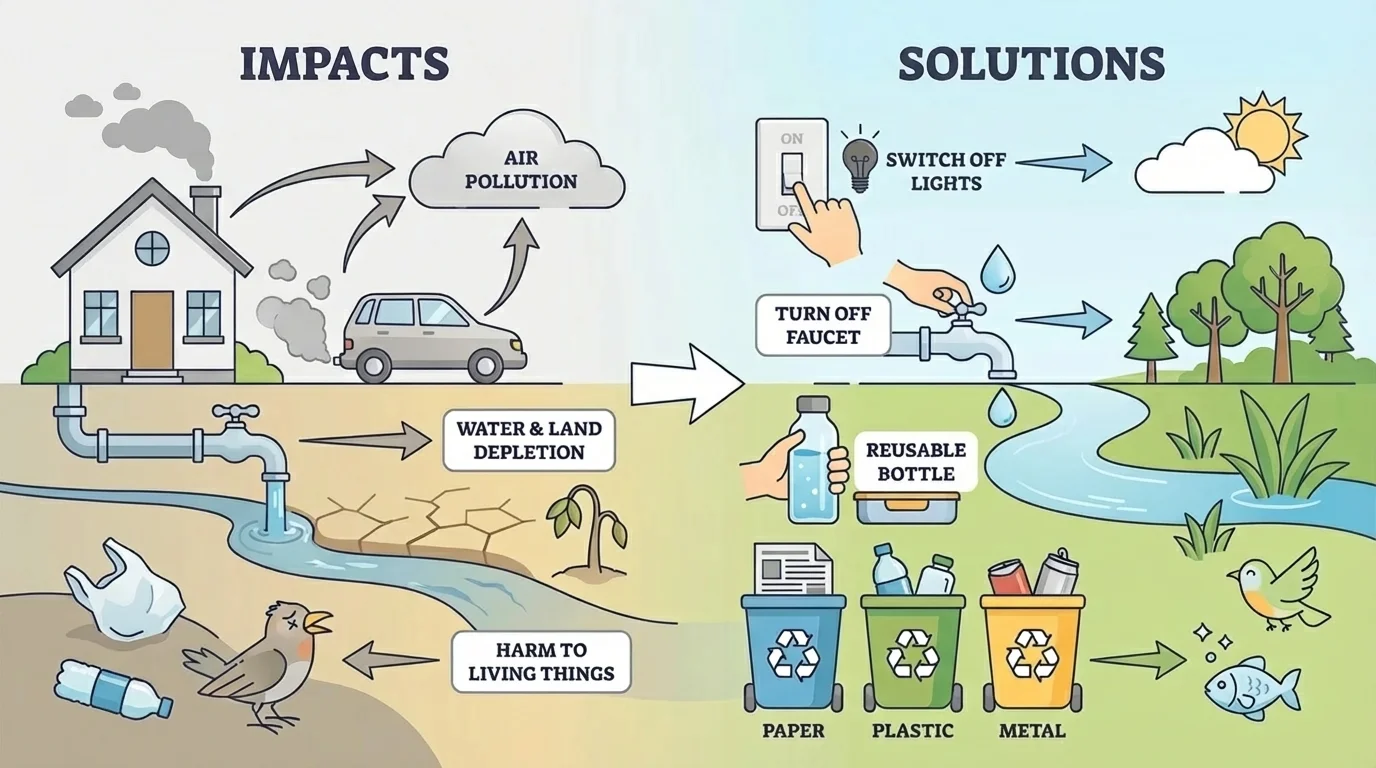
As [Figure 3] shows, one smart choice is saving water. Turn off the faucet while soaping your hands. Use only as much water as you need. Another smart choice is saving energy. Turn off lights when you leave a room. Close a door to keep warm or cool air inside so heaters or air conditioners do not need to work as hard.
People can also make less trash. A reusable water bottle or lunch container can be used again and again. Paper, metal, glass, and some plastics can sometimes be recycled instead of thrown away. Reusing and recycling can help keep land cleaner and reduce waste.
| Choice | How it helps |
|---|---|
| Turn off the tap | Saves water |
| Turn off lights | Saves energy |
| Use a reusable bottle | Makes less trash |
| Put paper in recycling | Keeps useful materials in use |
| Pick up litter | Helps land and animals stay safe |
Table 1. Everyday choices that can reduce harm to land, water, air, and living things.
These actions may look small, but they matter. The actions in [Figure 3] are simple enough for children and adults to do together. When many people make careful choices, neighborhoods, parks, and schools can become healthier places.
People need many things to live well: shelter, food, water, transportation, and energy. Using these things is part of life. The important idea is that people can choose safer, cleaner, and kinder ways to use Earth's resources.
You can help care for the environment by noticing what is around you. Is there trash that belongs in a bin? Is a light on in an empty room? Is water running when no one needs it? Seeing these little moments helps us act wisely.
Earth is shared by people, animals, and plants. When we protect one part of the environment, we often help many other parts too.
Comfort and care can go together. People can build, grow, travel, and play while also protecting land, water, air, and living things. Good choices help Earth stay a good home for everyone.
