Step outside and look around. A patch of grass, a puddle, a garden bed, and a shady corner near a tree may all look close together, but they can be home to very different living things. Earth is full of life, and one exciting job of science is to notice how living things are alike, how they are different, and where they live.
A habitat is a place where a plant or animal gets what it needs to live. A habitat gives living things what they need, such as water, air, space, shelter, and a way to get food. Some habitats are sunny. Some are wet. Some are dry. Some are warm or cool.
[Figure 1] Not all habitats are the same, so the living things in them are not all the same either. A place with lots of water may have very different life from a place with little water. A shady place may have different plants and animals than a bright, open place.
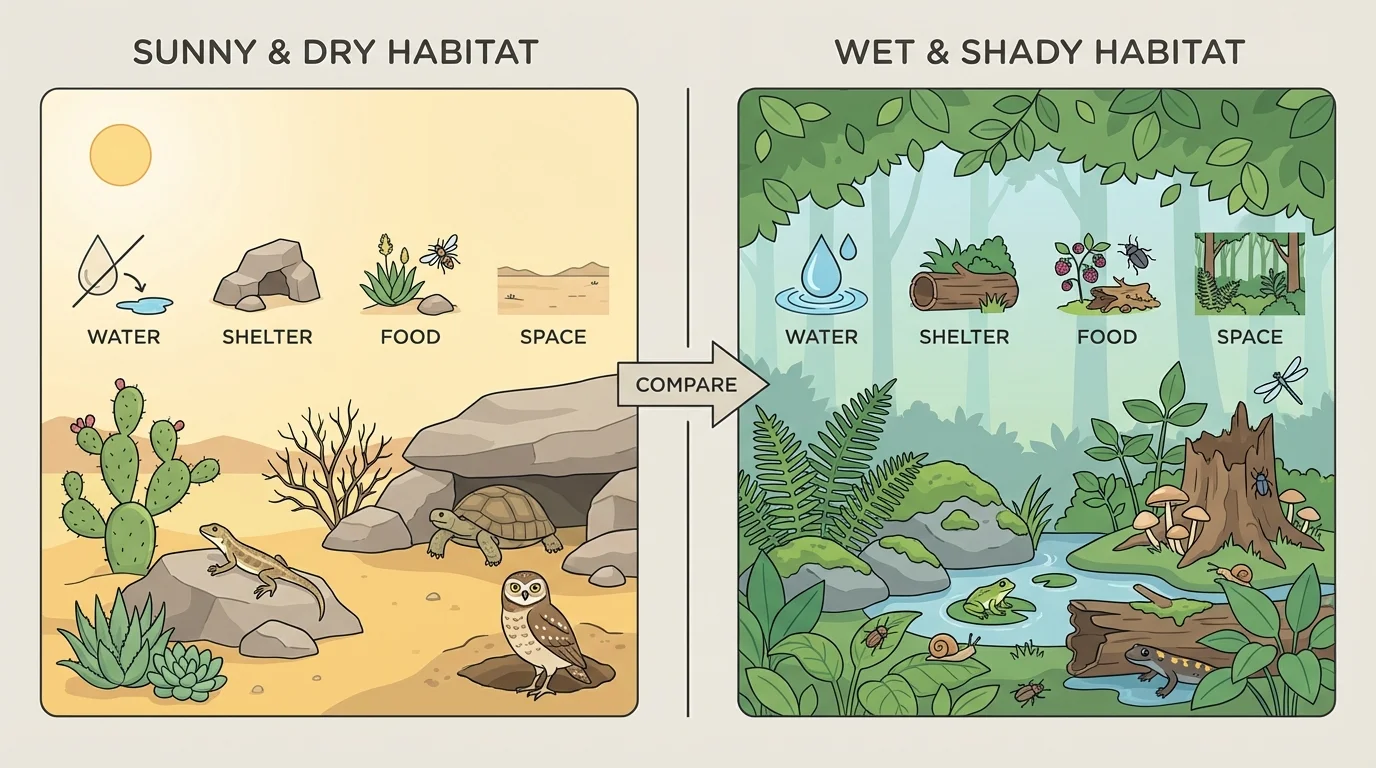
Habitat means the place where a living thing lives and finds what it needs.
Diversity means there are many different kinds of living things.
When we study habitats, we are learning about the diversity of life. Diversity means life comes in many forms. Some plants are tall, some are short, some have broad leaves, and some have narrow leaves. Some animals move fast, some move slowly, some fly, some crawl, and some swim.
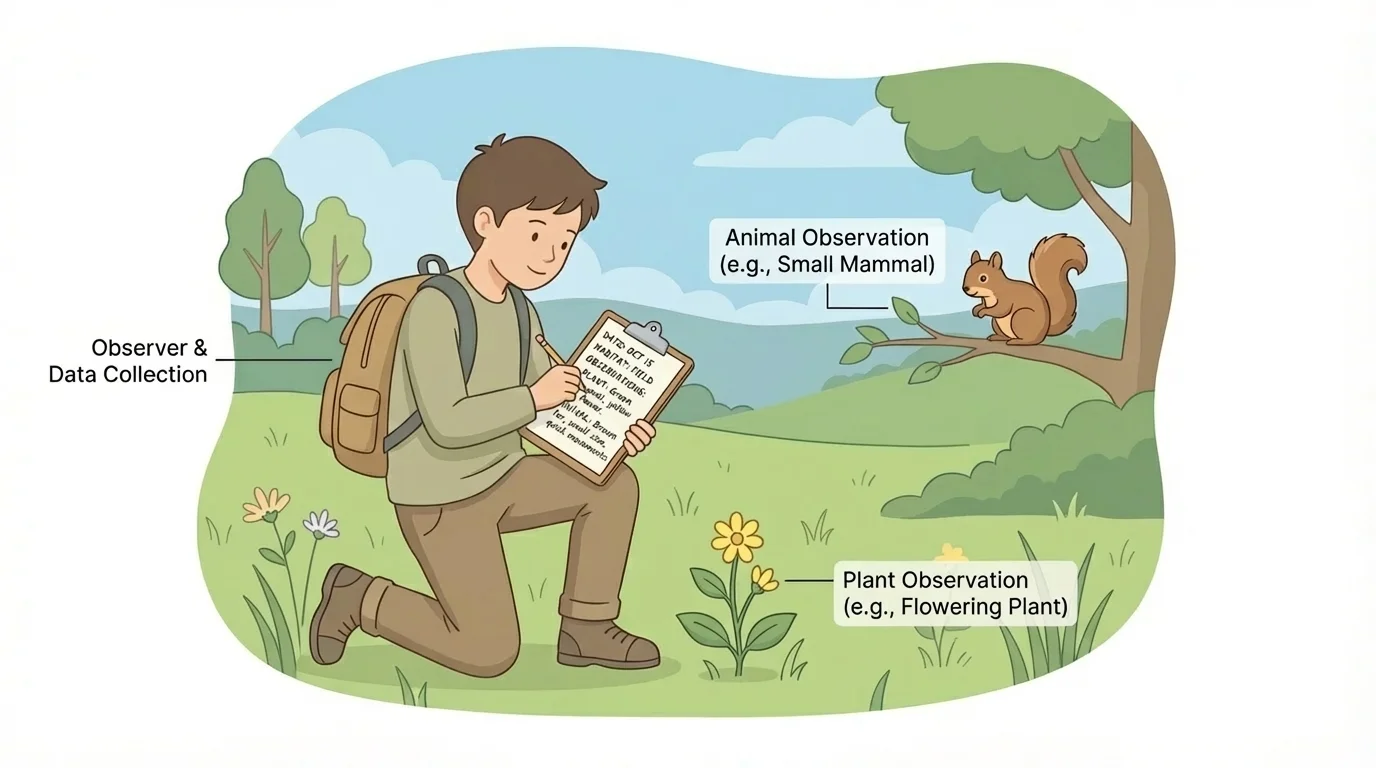
[Figure 2] Science begins with observation. Observation means using your senses to notice details. Scientists look carefully and record what they see, hear, and sometimes smell. They may notice color, size, shape, texture, movement, and where something is found.
When observing plants and animals, it is important to be careful and respectful. We do not need to touch every living thing. Often, the best way to observe is to watch quietly from a safe distance. A notebook, a drawing, or a simple chart can help us remember what we saw.
Good observations use clear words. Instead of saying, "It looks nice," a scientist might say, "The plant has small green leaves," or "The animal moved quickly under a rock." Clear details help us compare one habitat with another.
Living things need basic things to survive. Plants need water, air, light, and space. Animals need water, air, food, shelter, and space.
Observations can also include counting. A student might notice that one place has many plants but only a few animals, while another place has fewer plants but more animal movement. Counting helps us compare what we see in a careful way.
Plants can look different from one another in many ways. They may have different sizes, stem shapes, leaf shapes, colors, or numbers of flowers. Some grow low to the ground. Some grow upright. Some have thick parts that hold water. These differences can help plants live in the places where they grow.
Animals can look different too. They may have wings, legs, fins, shells, fur, feathers, or smooth skin. Their bodies can help them move through their habitat. An animal that lives in a wet place may move differently from one that lives in a dry, open place.
Body parts and habitat
The parts of a plant or animal can help it live in its habitat. Leaves can help plants take in light. Roots can help plants get water and stay in place. Body coverings and body shapes can help animals stay safe, move, and find what they need.
Even when two habitats are close together, the life in them may still be different. A sunny spot and a shaded spot can support different plants. Those plants can then attract different animals. This is one reason the world has so much variety in living things.
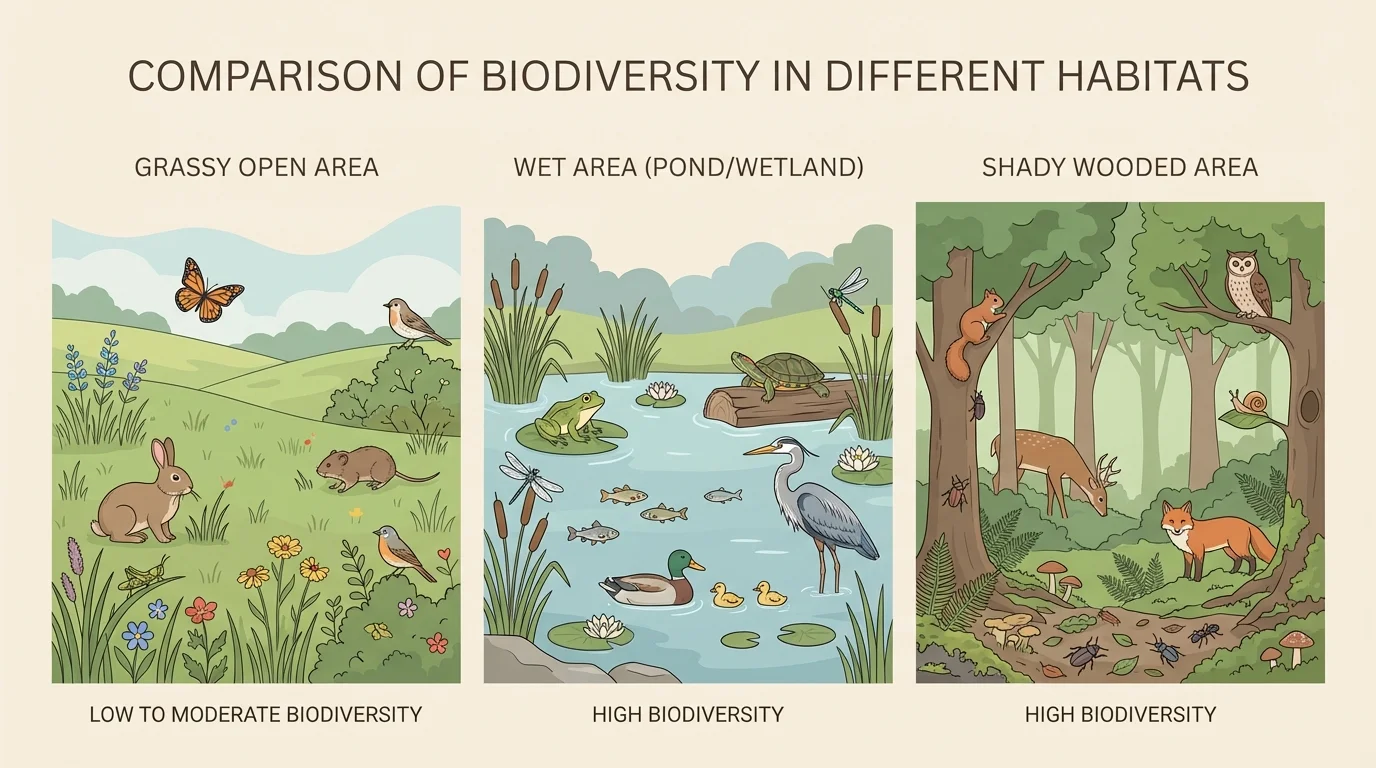
[Figure 3] When we compare habitats, we often notice that some habitats have more kinds of living things, and some have fewer kinds. We may also notice that the kinds of plants and animals are different. This does not mean one habitat is better than another. It means different places can support different life.
For example, a wet place may have plants that can grow where the ground stays damp. A dry place may have plants that do well with less water. A shaded place may have life that does well with less direct sunlight. Animals are found where they can meet their needs, so they may be different in each place too.
Scientists do not have to know every plant and animal name to make strong comparisons. They can still observe that one habitat has taller plants, another has more ground cover, or another has more moving animals. Careful looking helps us learn about patterns in nature.
| Habitat feature | What you might observe |
|---|---|
| Amount of sunlight | More sun or more shade |
| Water | Wet ground, damp soil, or dry soil |
| Plant growth | Tall plants, short plants, many leaves, or few leaves |
| Animal activity | Flying, crawling, hopping, swimming, or hiding |
| Amount of life | More kinds, fewer kinds, more individuals, or fewer individuals |
Table 1. Examples of habitat features and the kinds of observations students can compare.
Comparing means looking at two or more things to find what is the same and what is different. We can compare habitats by asking simple questions. Which place has more plants? Which place has fewer animals moving around? Which place is wetter? Which place is shadier?
We can also sort what we observe. Plants can be sorted by size, shape, or where they grow. Animals can be sorted by how they move or what body covering they have. Sorting helps us see patterns.
Comparing two places
A class observes an open grassy area and a shady area.
Step 1: Observe the plants.
Students notice the grassy area has many short plants. The shady area has fewer short plants but more leaf litter on the ground.
Step 2: Observe the animals.
Students see more flying animals in the open area and more crawling animals in the shady area.
Step 3: Compare.
The habitats are different because they have different light and different living things. Both habitats have life, but the kinds of life are not exactly the same.
Notice that this comparison uses observations, not guesses. That is an important part of science. If we only assume what is in a habitat, we may miss something important. Looking carefully gives us stronger evidence.
As we saw earlier in [Figure 1], habitats provide what living things need. When those needs change from place to place, the living things we observe can change too.
Diversity matters because Earth is not made of only one kind of plant or one kind of animal. Many kinds of life share our world. Different habitats help support this variety. If every place were exactly the same, we would not see such a wide range of living things.
Scientists study diversity to better understand nature. They look for patterns, such as where many kinds of life are found and where fewer kinds are found. These observations help people care for habitats.
Even a very small area can hold surprising diversity. A schoolyard may include sunny spots, shady spots, wet soil, dry soil, and tiny hiding places for living things.
When a habitat changes, the living things in it may change too. If a place becomes drier, wetter, sunnier, or shadier, some plants and animals may do well there, while others may not. This is why paying attention to habitats is important.
People use plant and animal observations in real life. Gardeners notice which places are sunny or shady before choosing where to grow plants. Park workers observe habitats so they can help keep places healthy for wildlife. Farmers also pay attention to soil, water, and living things in the land around them.
At school or at home, careful observing can help us understand our local environment. A student may notice that one corner of a yard has more plant growth after rain, or that another area has more animal activity in the morning. These are real scientific observations.
Patterns in nature
When the same kind of observation happens again and again, we call it a pattern. A pattern might be that wetter places have different plant growth than drier places, or that shady places have different animal activity than sunny places.
Later, when scientists ask bigger questions about living things, they often begin with simple observations like these. The chart in [Figure 3] reminds us that different habitats can hold different kinds and amounts of life. Small observations can lead to big discoveries.
