Have you ever seen a puddle make a tiny river through dirt, or watched wind blow sand into a new pile?
[Figure 1] Wind and water can pick up tiny pieces of soil, sand, and rock and move them somewhere else. This wearing away and movement of soil, sand, and rock is called erosion. A hill can become less steep, a beach can lose sand, and the edge of a stream can wear away.
Water can change land when rain falls on bare dirt, when water runs down a slope, or when waves hit the shore again and again. Wind can change land by blowing loose sand or dry soil from one place to another. Land changes most easily when the ground is bare and loose.
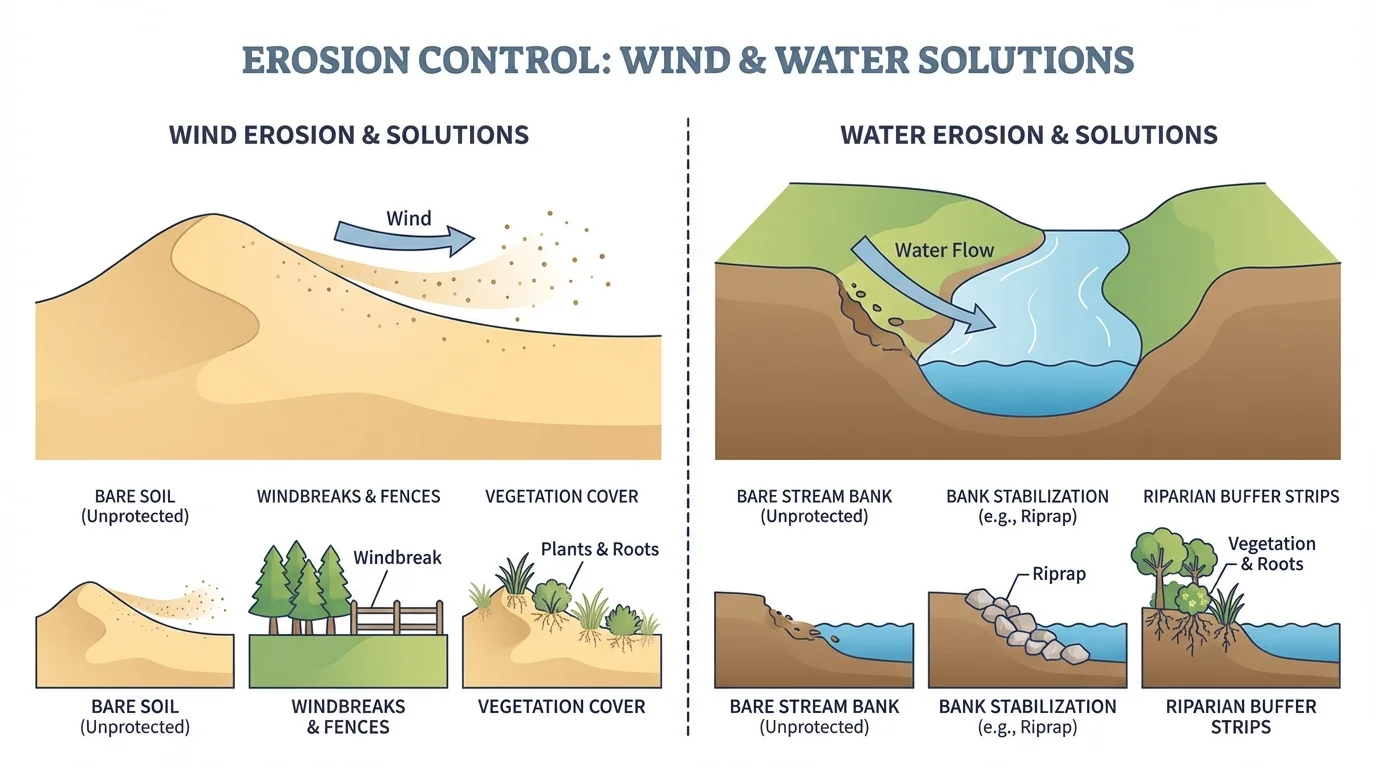
Plants help hold the ground together because their roots grip the soil. When there are no plants, the soil can be much easier for wind or water to move. That is why bare ground often changes shape more quickly than land covered with grass, bushes, or trees.
Erosion is the wearing away and moving of soil, sand, or small pieces of rock by wind or water.
Barrier is a structure or an object that blocks or slows movement.
Model is a simple copy or test setup that helps us study something in the real world.
Even small changes can matter. If enough soil moves away, a path may become uneven, a garden may lose rich dirt, or a beach may shrink. People look for ways to slow these changes so land stays safer and more useful.
People protect land for many reasons. Farmers want to keep good soil for growing food. Families want yards and playgrounds to stay safe. Towns want roads, sidewalks, and buildings to stay strong. At beaches and near streams, people may try to keep the land from washing away.
Not every place needs the same solution. A windy sandy place may need one kind of help, while a rainy hill may need a different kind. To choose wisely, we compare several ideas and ask: What is causing the land to change here? Is it mostly wind, mostly water, or both?
One strong rain can move a surprising amount of loose dirt, especially if the ground has no grass or other plants on it.
When scientists and engineers compare solutions, they think about what the solution does. Does it slow the wind? Does it hold the soil in place? Does it make water move more gently? A good solution matches the problem.
[Figure 2] When wind is the main cause of land change, one helpful solution is planting a windbreak. A windbreak is a row of bushes, plants, or trees that slows the wind before it reaches the soil. When the wind hits the plants or a fence, the air moves more slowly behind them.
Another solution is putting up a fence or wall in a windy area. These barriers can help stop loose sand from blowing across roads, yards, or beaches. In some places, people use special slatted fences that let some air through while still slowing the wind.
Covering bare ground also helps. Grass, mulch, or other ground cover keeps soil from sitting loose in the open. If the wind cannot easily reach dry loose soil, less of it blows away.
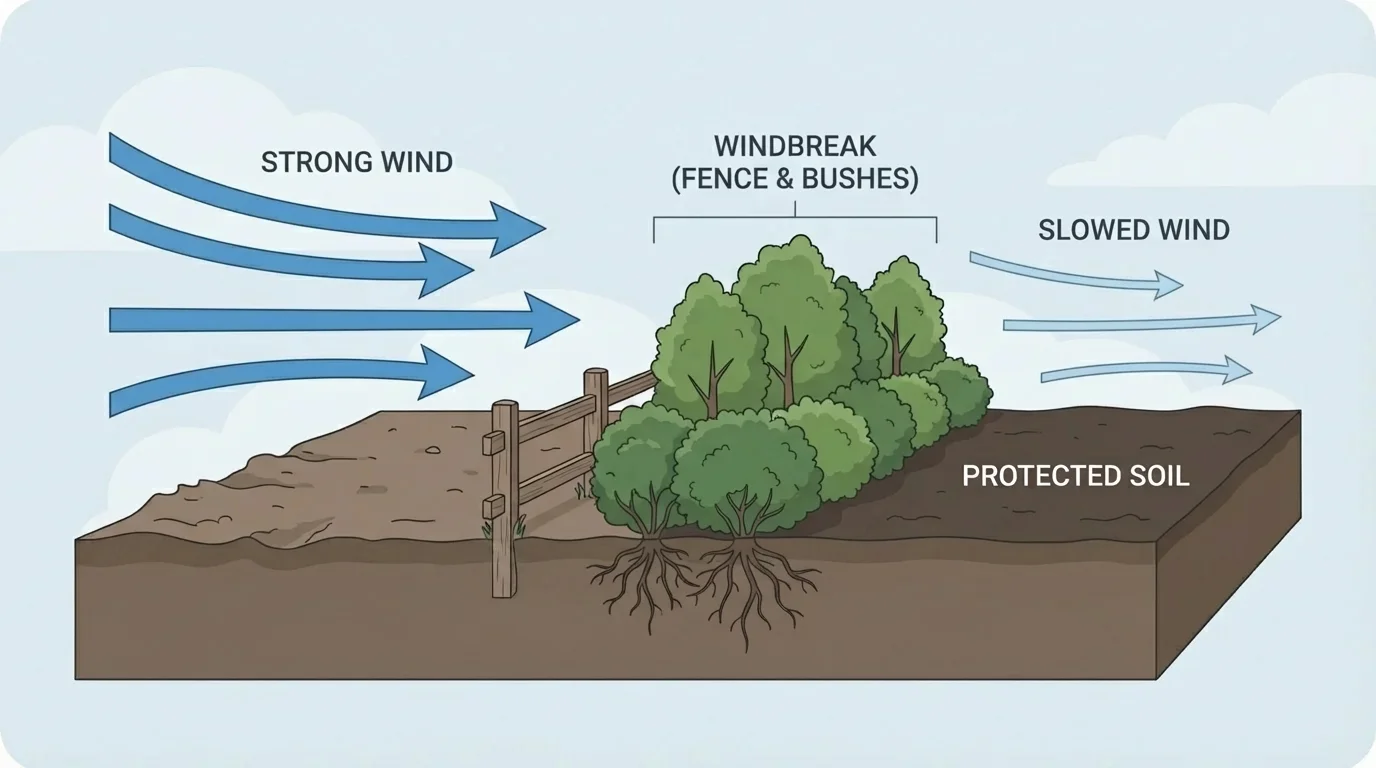
Some wind solutions are better than others depending on the place. Plants can work very well, but they need time to grow. Fences work faster, but they can break or need repair. Ground cover protects the soil well, but it may not help as much if very strong wind keeps blowing over a wide open area.
Comparing two wind solutions
Step 1: Think about a sandy playground with strong wind.
If the sand is blowing away now, the place needs help right away.
Step 2: Compare a fence and new plants.
A fence helps quickly because it can be built fast. New plants help too, but they need time to grow.
Step 3: Decide which works best first.
A fence may be the better short-term choice. Plants may be the better long-term choice.
Sometimes the best answer is using both: a fence now and plants for later.
Later, when we compare solutions again, we can remember that barriers work by changing the speed of the moving air, not by making the wind disappear.
[Figure 3] Water can be very powerful, especially after rain. A useful solution is planting grass or other plants on slopes because roots help hold the soil together. Plant-covered ground is less likely to wash away than bare dirt when water runs downhill.
People also place rocks along the edges of streams, ponds, or other wet places. The rocks break the force of moving water. This helps protect the soil underneath and keeps the edge from wearing away so quickly.
Another idea is building small walls, banks, or barriers to guide the water. If water is slowed down or sent in a safer direction, it may cause less damage. Some drains and ditches are made to carry water away from places where soil might wash away.
Logs, straw, or other materials can also help slow water on the ground. When water moves more slowly, it has less power to carry soil away. Slower water often means less erosion.
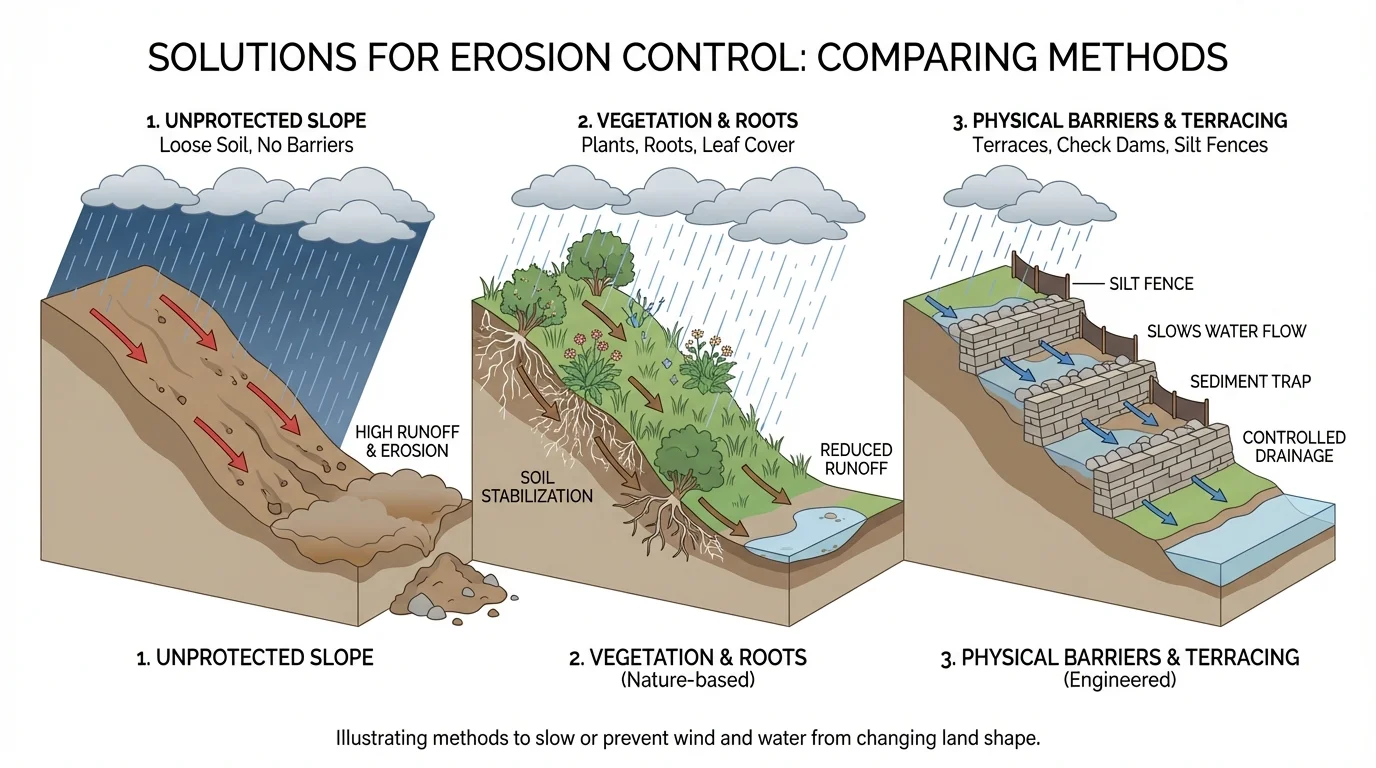
Water solutions also have strengths and limits. Plants are excellent for holding soil, but they may not be enough during very heavy storms. Rocks are strong and last a long time, but they can be heavy and harder to place. Small walls can guide water well, but if they are built in the wrong spot, water may go somewhere else and cause a new problem.
Why slowing water matters
Fast-moving water has more power to push soil away. When grass, rocks, or barriers slow the water, the water drops some of the soil instead of carrying it farther. That is why many good solutions are really ways to make water move more gently.
Just as wind barriers change moving air, water barriers and plants change the path and speed of moving water. We can compare how different materials protect the same slope in different ways.
To compare solutions, we can ask simple questions. What problem are we solving? What is moving the land? How quickly do we need the solution? Does it need care later? Different answers lead to different choices.
| Solution | Best for | How it helps | Possible limit |
|---|---|---|---|
| Plants | Wind and water | Roots hold soil; stems slow movement | Need time to grow |
| Fence | Wind | Slows blowing air and catches sand | May need repair |
| Rocks | Water | Protect edges from strong moving water | Heavy to place |
| Small wall or barrier | Water, sometimes wind | Blocks or guides movement | Can send water another way |
| Ground cover | Wind and light rain | Covers loose soil | May not stop very strong forces |
Table 1. A comparison of common solutions that help slow or prevent land from changing.
Some solutions are best alone, but many work better together. For example, plants plus rocks can protect a stream edge better than either one alone. A fence plus ground cover can protect a sandy place better than only one of them.
From earlier science learning, remember that pushing and pulling can change motion. Wind pushes loose soil, and moving water pushes soil too. Many land-protection solutions work by reducing those pushes.
The "best" solution is not always the strongest-looking one. A huge wall may seem powerful, but healthy grass might work better on a gentle hill because it holds the whole top layer of soil in place. Good choices depend on the land and what is causing the change.
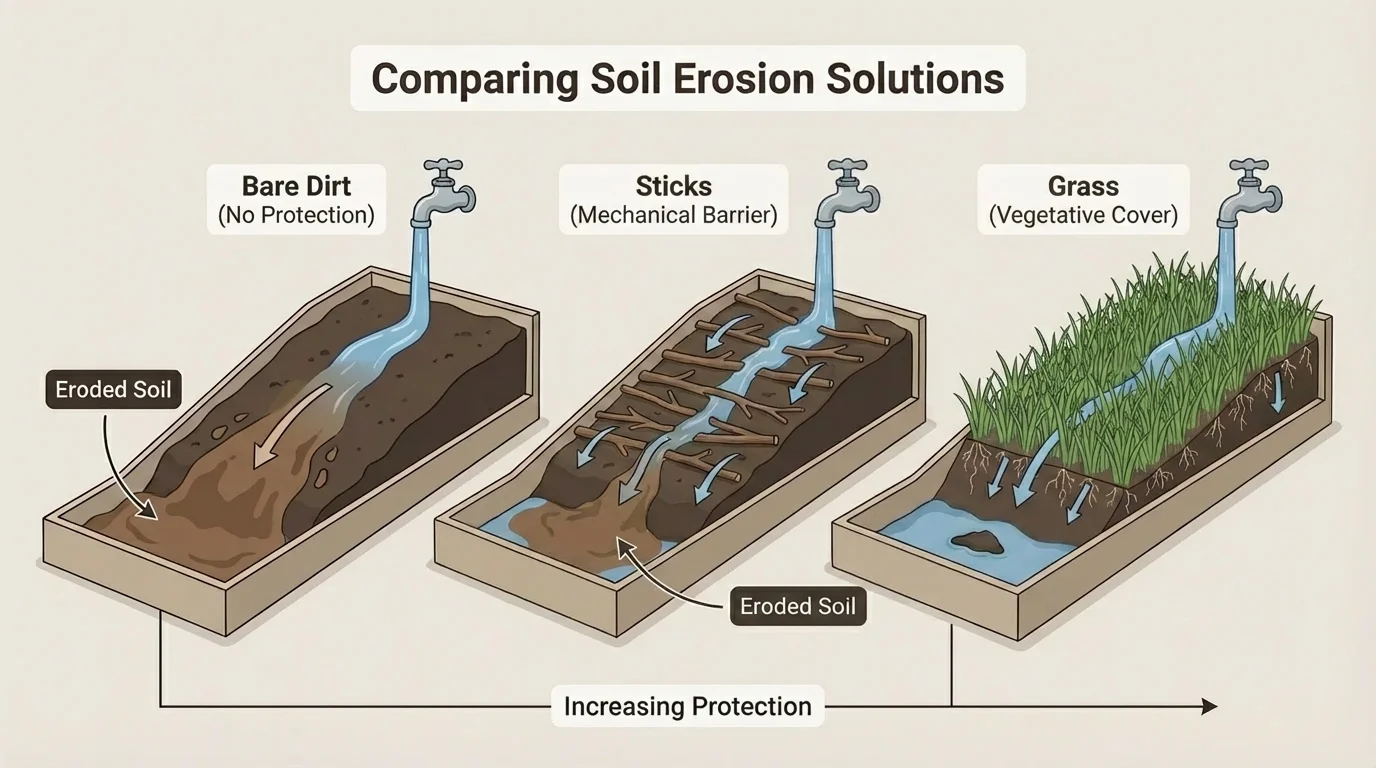
[Figure 4] Scientists often use a model to test ideas before making big changes outside. A model can be as simple as trays of dirt, sand, water, and small plants. In one tray, the dirt is bare. In another, the dirt has grass or small sticks to act like plants. This kind of model helps us compare what happens.
When the same amount of water is poured onto both trays, the bare tray often loses more soil. The tray with grass or sticks usually keeps more soil in place. That makes the model useful because it helps us see which solution works better.
Real places use these same ideas. Beaches may have fences and plants to keep sand from blowing away. Schoolyards may use grass to keep dirt from washing into puddles. Stream banks may use rocks and plants together to protect the edge.
Real-world comparison
Step 1: Look at a muddy hill near a sidewalk after rain.
If water is carrying dirt down the hill, the main problem is moving water.
Step 2: Compare two choices.
A wind fence would not help much because the dirt is not blowing away. Grass or another plant cover would help more because roots hold the soil.
Step 3: Improve the plan.
If water is very strong, adding a small channel or rocks at the bottom could help too.
This shows why we compare solutions to match the real problem.
Later, if we think again about testing ideas fairly, we can remember that models let us compare one change at a time, such as bare soil versus protected soil.
Choosing a solution means thinking carefully. If the land is changed mostly by wind, a windbreak, fence, or ground cover may be the best choice. If the land is changed mostly by water, plants, rocks, or a barrier that guides water may work better.
Sometimes people choose a fast solution first and a long-lasting solution later. For example, they may build a fence now and plant bushes that will grow over time. Or they may place rocks right away and later add plants between them.
Good land protection is really about understanding cause and effect. When wind or water moves too fast, land changes more quickly. When we slow that movement or hold the soil in place, the land is better protected.
"The best solution fits the place."
That simple idea helps scientists, engineers, and communities make smart choices. By comparing more than one solution, we learn which one works best, which one works fastest, and which one lasts the longest.
