A forest may look quiet, but it is full of teamwork. A rabbit nibbles grass, a fox searches for food, a tree reaches toward sunlight, and a bee carries pollen from flower to flower. Every living thing is connected. Very little in nature lives entirely on its own for long.
An ecosystem is a place where living things and nonliving things interact. The living parts include plants, animals, fungi, and tiny living things. The nonliving parts include water, air, sunlight, rocks, and soil. In a pond ecosystem, as shown in [Figure 1], fish, frogs, insects, pond plants, water, and sunlight all affect one another.
Living things need their surroundings. A frog needs water to keep its skin wet and a place to hide. Pond plants need sunlight and water. Insects may rest on plants, and birds may eat the insects. This is why we say the parts of an ecosystem are interdependent. That means they depend on one another.
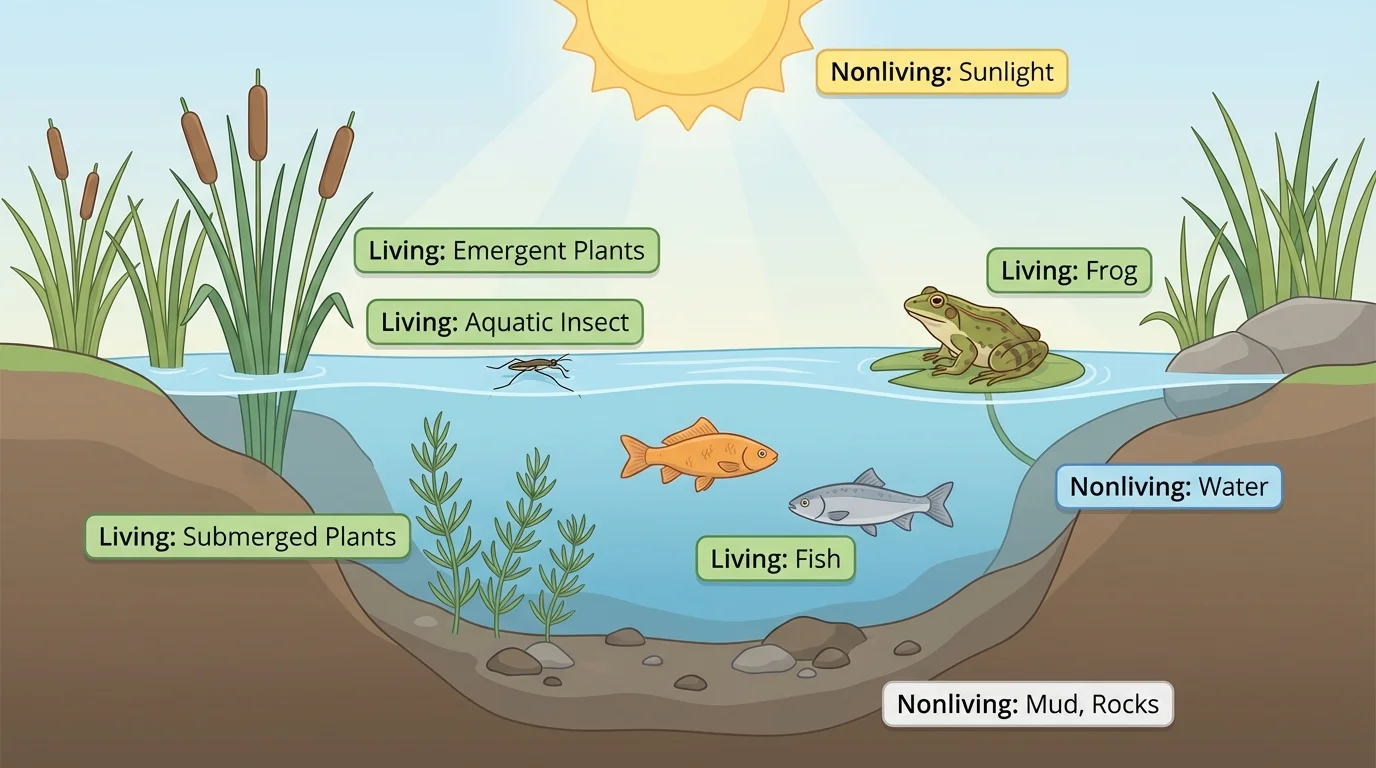
Interdependent means connected in a way that one part depends on another part. In ecosystems, plants, animals, water, air, soil, and sunlight all affect how living things survive.
Some ecosystems are big, like a forest. Some are small, like a garden bed or even a puddle after rain. No matter the size, living things still need the right conditions to live.
Animals need several basic things. They need shelter, food, water, and a place with a favorable temperature. A favorable temperature is a temperature that is not too hot and not too cold for that animal. A polar bear can live in very cold places, but a lizard needs warmth from the sun.
Shelter can mean many things. A bird uses a nest. A rabbit hides in a burrow. A squirrel may live in a tree hole. Shelter helps protect animals from weather and from danger. It can also be a safe place to rest or raise young.
Animals can move from place to place to meet their needs. A deer can walk to a stream for water. A bird can fly to find seeds. A fish can swim to cooler or warmer water. This ability to move helps animals look for food, escape danger, and find better conditions.
Some animals travel very long distances to find what they need. Many birds migrate when seasons change so they can find food and temperatures that suit them better.
If an animal cannot find enough food, water, or shelter, it may have to leave that area. If it cannot leave, it may not survive. This shows how important surroundings are for animal life.
Animals do not all eat the same food, and they do not all get food in the same way. Many depend on plants or on other animals for food. A cow eats grass. A caterpillar eats leaves. A fox may eat rabbits. An owl may catch mice. The food an animal eats helps it grow and gives it energy.
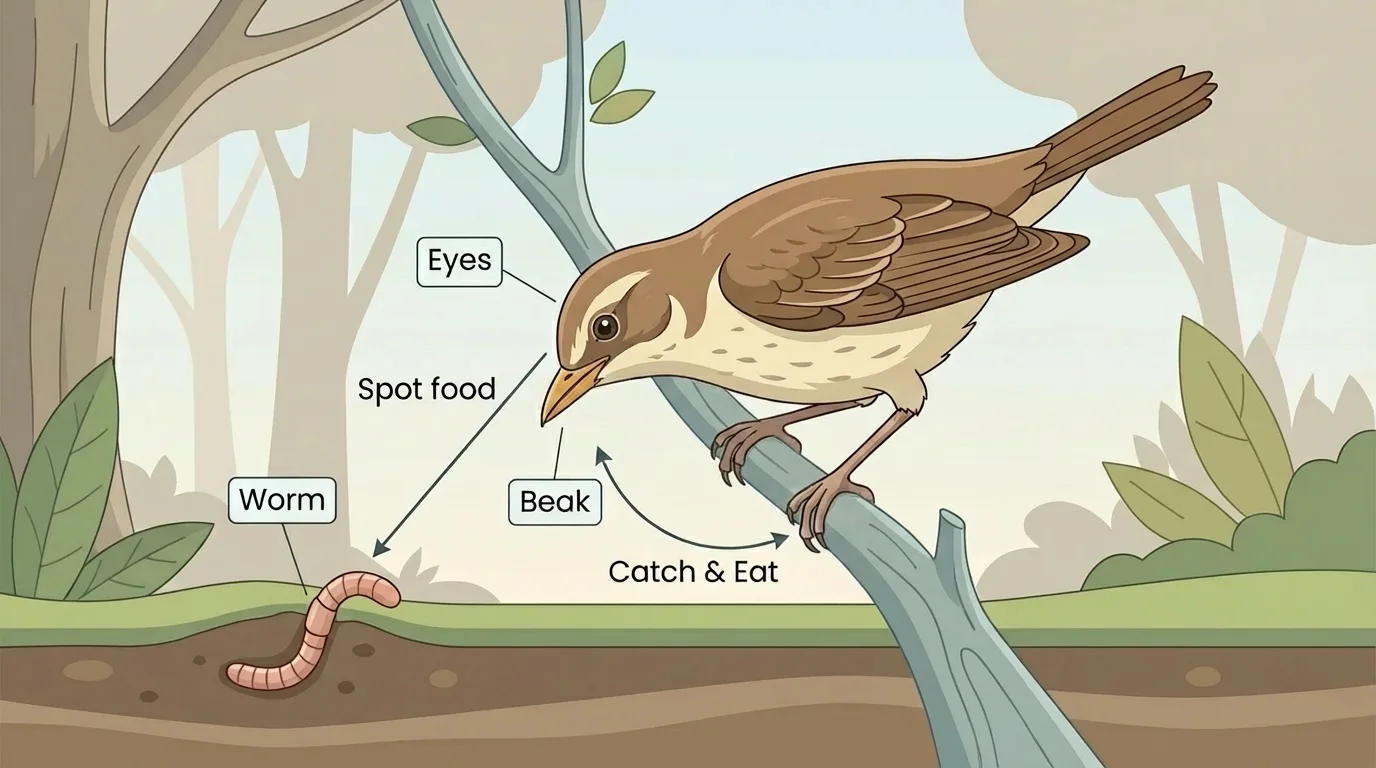
Animals use their senses to find food and water. They may use sight, smell, hearing, touch, or taste. A dog can smell food from far away. An eagle can see small animals from high in the sky. A deer may hear running water. A bird uses its eyes to spot food and its beak and feet to get it.
[Figure 2] Animals also use body parts to gather, catch, eat, and chew food. A squirrel uses its front paws to hold a nut and its teeth to gnaw it. A frog uses a sticky tongue to catch insects. A duck uses its bill to scoop food from the water. A lion uses strong teeth to tear meat. Different body parts help different animals survive.
Example: How one animal meets its needs
Think about a backyard robin.
Step 1: The robin uses its eyes to look for movement in the grass.
Step 2: It spots a worm near the soil surface.
Step 3: It uses its beak to pull up the worm.
Step 4: It may fly to a tree or nest for safety and shelter after eating.
This one small event shows how an animal depends on food, shelter, and its own body parts and senses.
Later, when we compare many habitats, we can remember [Figure 2]. Just as that bird uses special body parts for food, every animal has features that help it live in its own environment.
Plants cannot walk to a better place. They stay where they grow, so they must get what they need from that spot. Plants need air, water, minerals in the soil, and light. They use these to grow, make food, and stay alive.
Plants take in air through their leaves. They take in water and minerals through their roots. Minerals are tiny materials in soil that plants need in small amounts to grow well. Light from the sun helps plants make their own food. Without enough light, a plant may become weak.
How plant needs work together
A plant needs more than one thing at a time. A seedling with plenty of water but no light will not grow well. A plant in bright light but dry soil may wilt. Healthy growth happens when a plant gets the right mix of water, minerals, air, and sunlight.
We can see this around us. Grass often grows well where it gets sunlight and enough rain. A houseplant near a sunny window may grow better than one in a dark corner. A garden plant may struggle if the soil is poor or too dry.
[Figure 3] Plants and animals have many connections. Animals eat plants, so plants can be food. Some animals eat other animals, which means food relationships can form long chains in an ecosystem. But animals do more than eat. They also help plants in important ways.
One way animals help plants is through pollination. Pollination happens when pollen moves from one flower to another so seeds can form. Bees, butterflies, birds, and bats can carry pollen as they visit flowers for nectar. A bee brushing against flowers helps the plant reproduce.
Animals also help move seeds around. A burr may stick to a dog's fur. A bird may eat fruit and later drop the seeds in a new place. A squirrel may bury acorns and forget some of them. Those acorns can grow into oak trees. Since plants cannot move on their own, this help matters a lot.
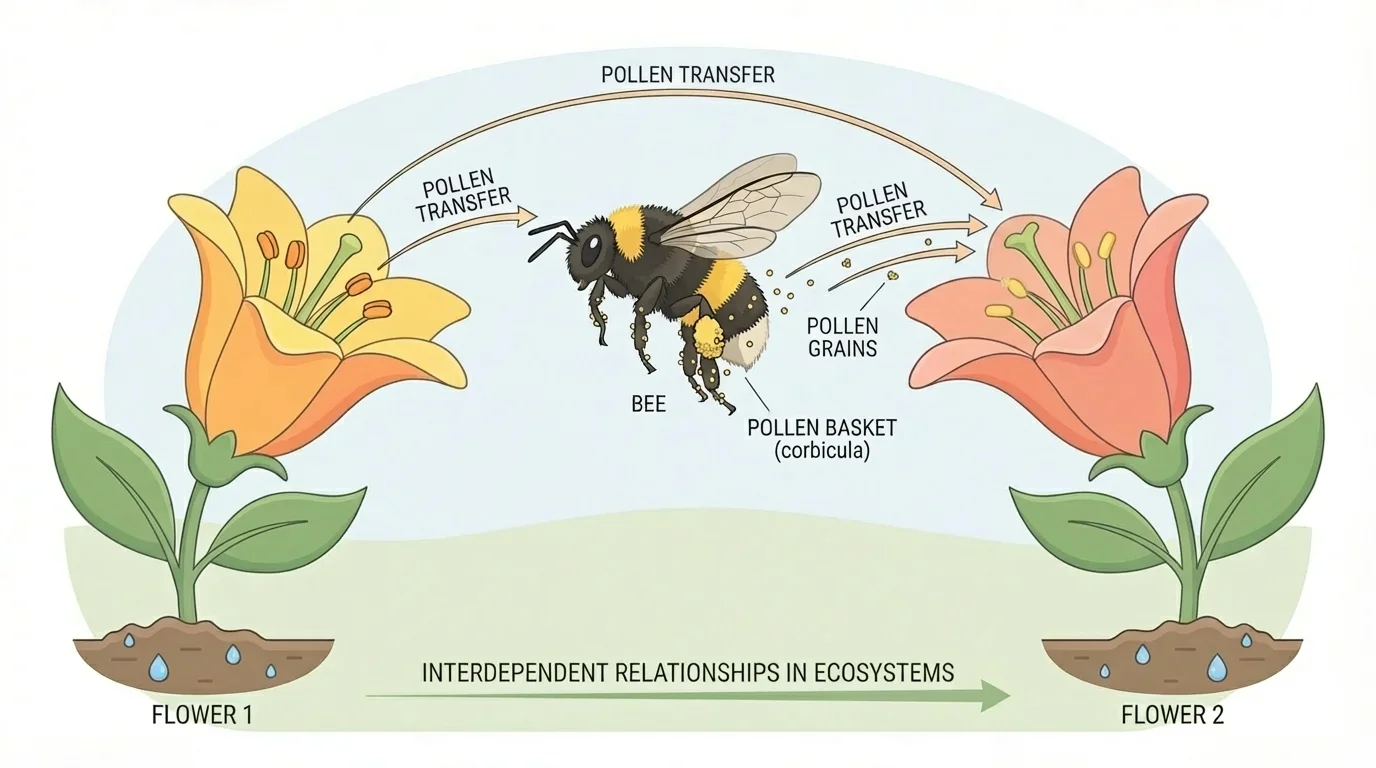
Remember that a seed can grow into a new plant. When animals help move pollen or seeds, they are helping plants make more plants.
These relationships work both ways. Flowers provide nectar for bees. Trees provide fruit for birds. Bushes give animals places to hide. In return, animals may help plants make seeds or spread to new areas. The same idea of connection we saw in the pond in [Figure 1] also appears in gardens, forests, and fields.
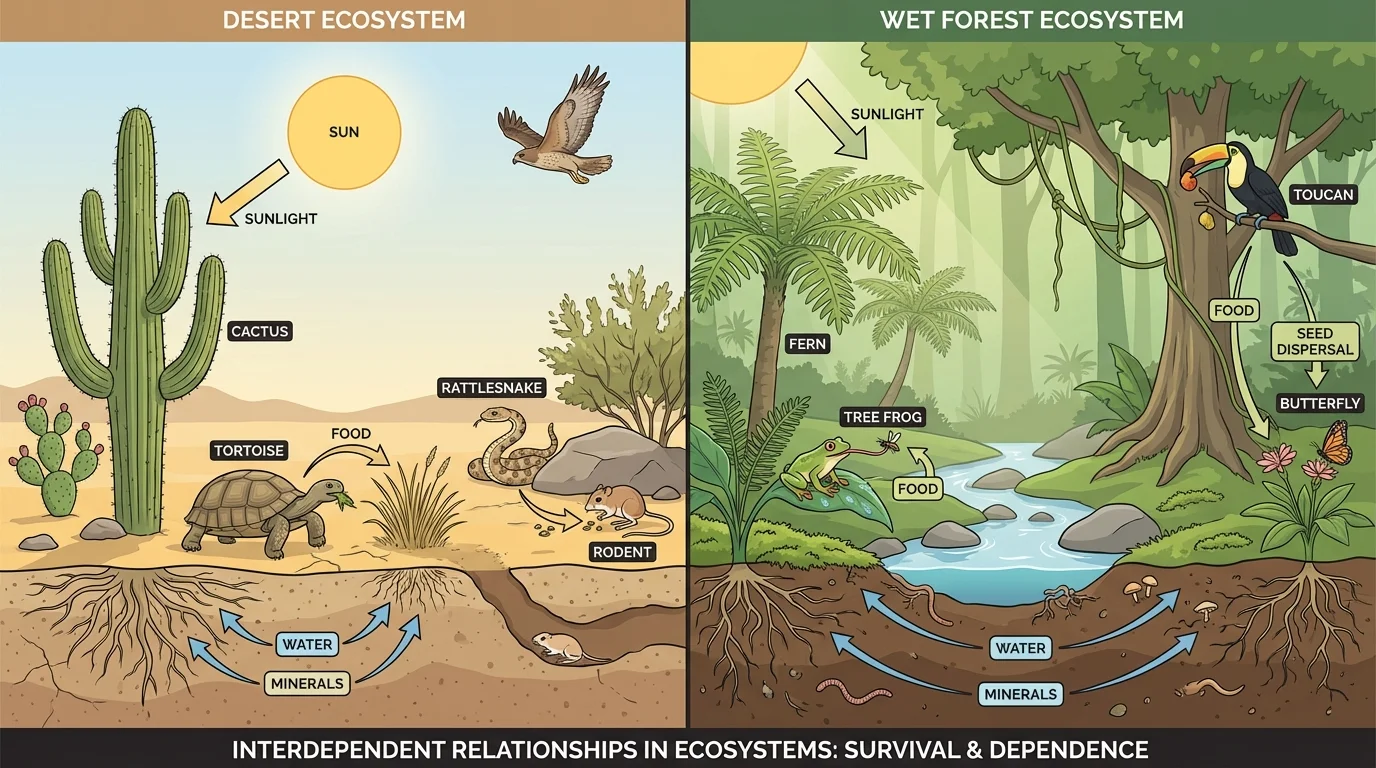
[Figure 4] Not all plants need the same amount of water, minerals, or sunlight. This is why different plants survive better in different settings. A cactus grows well in a hot, dry place because it can store water. A fern often grows well in a shady, damp place. This difference between habitats helps explain why you do not usually see a cactus growing in a swamp.
A habitat is the place where a living thing gets what it needs to survive. A pond is a habitat. A desert is a habitat. A forest, meadow, and garden are habitats too. Each habitat has its own amounts of water, light, space, shelter, and temperature.
Animals also fit different habitats. Fish live in water and use gills. Camels live in dry places and can go a long time without water. Frogs need wet places for part of their lives. Owls do well where they can find prey and nesting spots. Living things survive best where their needs can be met.
| Place | Conditions | Plant that may grow well | Why it fits |
|---|---|---|---|
| Desert | Dry, sunny, hot | Cactus | Stores water and likes sun |
| Forest floor | Shady, damp, cooler | Fern | Needs more moisture and less direct sun |
| Pond edge | Wet soil, lots of water | Reeds | Can grow where soil stays wet |
| Open field | Sunny, breezy, moderate rain | Grass | Grows well with sunlight and space |
Table 1. Examples of how different plants survive better in different settings because conditions are not the same.
When we think back to pollination in [Figure 3], we can see another reason place matters. Flowers must grow where pollinators can reach them, and pollinators must live where they can find flowers, water, and shelter.
Ecosystems can change. A pond may dry up during a hot season. A storm may knock down trees. Too little rain can make it hard for plants to grow. If plants do not grow well, plant-eating animals may have less food. Then animals that eat those animals may also have trouble finding food.
Temperature changes matter too. If a place becomes too cold or too hot for an animal, the animal may move away if it can. Plants cannot move, so they may die if conditions become too different from what they need.
Example: What happens when water is scarce
A small meadow gets much less rain than usual.
Step 1: The grass grows poorly because it does not get enough water.
Step 2: Rabbits find less grass to eat.
Step 3: Foxes may find fewer rabbits in the meadow.
Step 4: Some animals move to places with more food and water.
One change in a nonliving part of the ecosystem can affect many living things.
This is why caring for habitats is important. Clean water, healthy soil, and protected spaces help many living things survive together.
You can see interdependent relationships almost anywhere. In a school garden, bees visit flowers, worms live in soil, birds search for seeds, and plants grow toward the sun. In a park, squirrels use trees for shelter and food. Near a puddle, insects may gather, and birds may come for water.
People use this knowledge too. Gardeners choose plants that fit the amount of sunlight and water in a place. Farmers know crops need good soil, water, air, and light. People who protect wildlife work to keep habitats healthy so animals can find what they need.
Some seeds are built for travel. Maple seeds spin through the air, and some other seeds float on water or hitch rides on animal fur.
When you watch a bird drink from a puddle or notice a flower growing in a sunny spot, you are seeing ecosystem relationships in action. Every organism has needs, and those needs connect it to other living things and to the world around it.
