A quiet hill, a sandy beach, and a winding river may seem like they have always looked the same. But they are changing all the time. A rainy day can wash soil downhill. A strong wind can push sand into new piles. Over many days and years, these small changes can help make big changes in the land around us.
The land on Earth is not frozen in one shape forever. It changes slowly and sometimes quickly. Rain falls, rivers flow, waves crash, and wind blows. These natural forces can wear land down, move pieces of it, and build new shapes in new places.
Some changes are easy to notice. After a heavy rain, you might see mud washed across a path. After a windy day at the beach, you may notice that the sand is piled in a different place. Other changes happen very slowly. A stream may take many years to make its valley wider.
Earth materials are the natural materials that make up the land, such as rocks, soil, sand, and clay.
Landforms are the shapes of Earth's surface, such as hills, valleys, beaches, dunes, and riverbanks.
These changes matter because living things depend on the land. Plants grow in soil. Birds rest on cliffs. Crabs dig in sand. Fish live in the water flowing between riverbanks. Earth's materials and landforms help make habitats, or homes, for living things.
The ground beneath your feet is made of different kinds of materials. Rocks can be large like boulders or tiny like pebbles. Soil is a mixture of tiny rock pieces, bits of dead plants and animals, water, and air. Sand has larger grains than many kinds of soil. Clay has very tiny particles and can feel smooth and sticky when wet.
These materials do not all behave the same way. Sand can be moved easily by wind. Wet clay can hold together in a clump. Loose, dry soil can wash away in rain. Hard rock usually changes more slowly, but even rock can break into smaller pieces over time.
One mountain can slowly turn into tiny grains of sand over a very long time. Wind, rain, ice, and flowing water help break rock into smaller and smaller pieces.
[Figure 1] Different places have different materials. A beach often has lots of sand. A forest floor has rich soil. A river may have muddy banks, pebbles, and stones. These differences help decide what plants and animals can live there.
Weathering is the breaking of rock into smaller pieces, and erosion is the moving of those pieces to a new place. Water can do both jobs. Rain can loosen soil on a hill, and flowing water can carry tiny bits of rock and soil downhill into a stream.
When rain falls on the ground, some water soaks in, but some flows over the surface. This moving water can pick up loose soil, sand, and tiny rocks. Rivers and streams can carry these materials from one place to another. Fast-moving water can carry more material than slow-moving water.
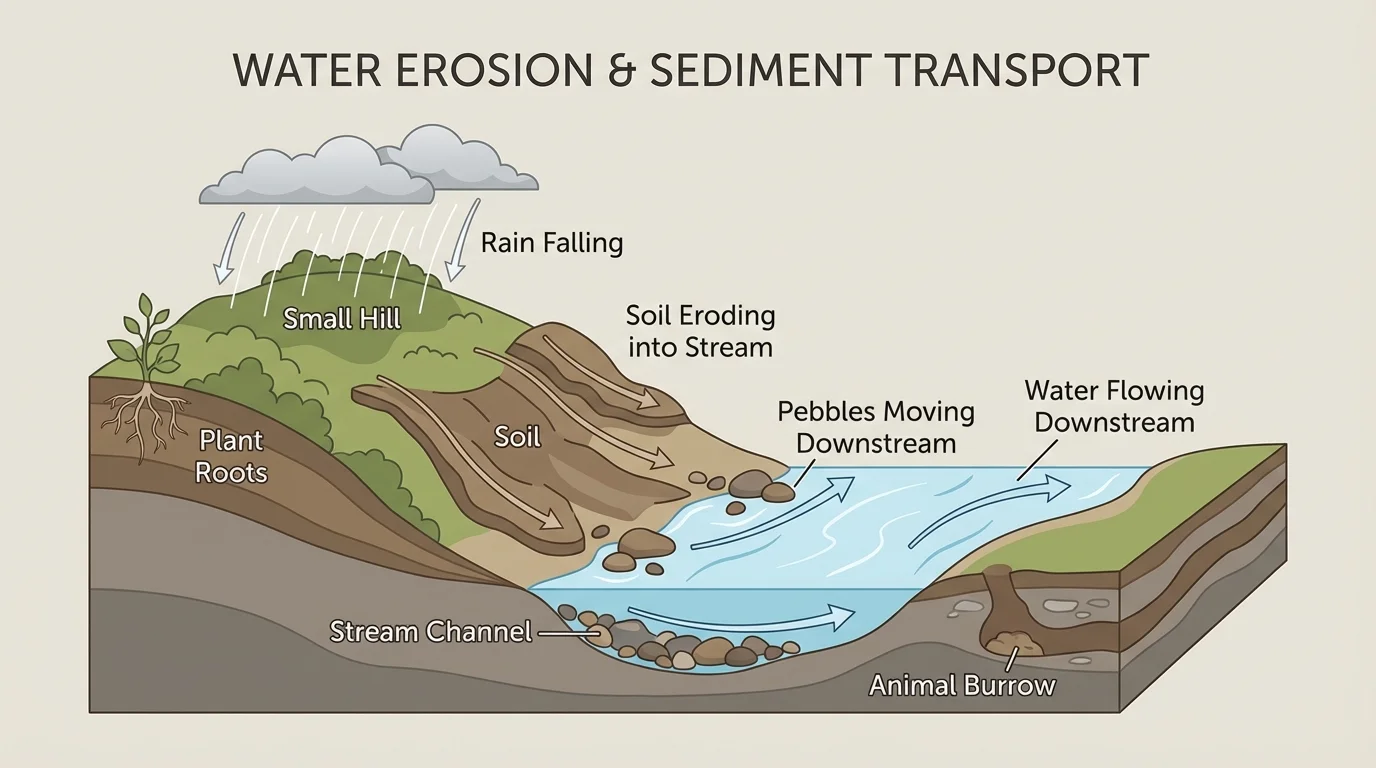
Water can also shape the land in other ways. Waves can wear away the edge of a shore. A stream can cut into the ground and make a small channel. Over a long time, flowing water can help form valleys and canyons.
Sometimes water drops the material it has been carrying. This is called deposition. If water slows down, sand, soil, or pebbles may settle onto the ground. This can help build new landforms, such as sandbars, riverbanks, beaches, and deltas.
How moving water builds and breaks land
Water is powerful because it can wear land down in one place and build it up in another. It may erode a steep bank, carry the sediment away, and then deposit it where the water becomes slower. This means land is always being reshaped.
You can see this in a puddle after a storm or at the edge of a creek. Mud may collect in one spot while another spot has been washed clean. The ideas in [Figure 1] help explain why some places become muddy while others become rocky.
Wind can also move earth materials. It works best on materials that are light and loose, such as dry sand and tiny bits of soil. Wind can pick up sand grains and push them along the ground until they gather in a new place.
[Figure 2] When enough sand is moved by wind, it can form a dune. A dune is a hill or ridge of sand. Dunes are common at beaches and in deserts. Plants with strong roots can help hold dunes in place.
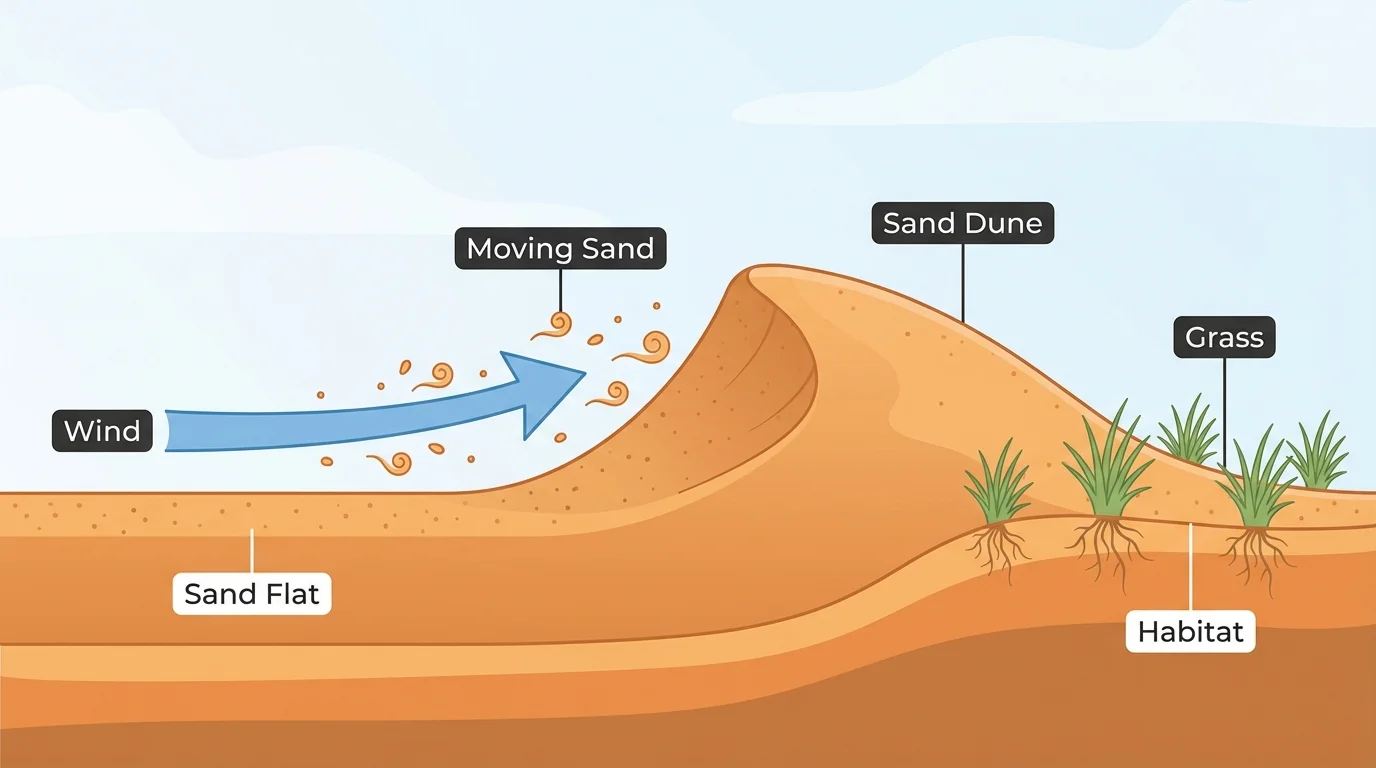
Wind can also remove dry topsoil from open ground if there are not many plants to hold the soil down. That is one reason grass, bushes, and trees are important. Their roots help keep soil in place.
Although wind usually moves smaller pieces than rivers do, it can still shape the land in important ways. Over time, wind can smooth some surfaces, move large amounts of sand, and change the shape of open land.
Real-world example: A beach after a windy day
Step 1: Wind blows across dry beach sand.
Step 2: Some grains of sand roll or hop along the ground.
Step 3: The sand gathers where the wind slows down, often near plants or fences.
Step 4: A small mound grows and may become part of a dune.
This is one way wind changes land a little at a time.
The dune shown in [Figure 2] also helps explain why plants matter. When roots hold the sand, the dune is less likely to blow away.
Wind and water help create many kinds of landforms. A valley is a low area between higher places of land. Flowing water can help make valleys by wearing the land away. A beach forms where sand or pebbles are deposited along the shore. A riverbank forms along the edge of a river or stream.
Some landforms are steep and rocky. Some are flat and muddy. Some are sandy and dry. Each landform depends on what materials are there and how wind and water have moved them. Landforms can change size and shape over time.
| Landform | How it can form | Common material |
|---|---|---|
| Beach | Waves and water deposit sand or pebbles | Sand, pebbles |
| Dune | Wind piles up sand | Sand |
| Valley | Flowing water wears land down | Soil, rock |
| Riverbank | Water erodes and deposits material near a river | Mud, soil, pebbles |
| Delta | A river drops sediment where it meets a larger body of water | Soil, sand, silt |
Table 1. Examples of landforms shaped by wind and water and the materials often found there.
Sometimes one place has several landforms close together. Near a river, there may be a valley, riverbanks, muddy soil, and pebbly areas. Near an ocean, there may be a beach, dunes, and rocky shorelines.
[Figure 3] Land is not just land. It is also home. Different habitats form because different landforms and materials create different living conditions. A sandy dune, a rocky patch, and wet soil by a pond each provide a different kind of place for living things.
Plants need the right kind of ground. Some plants grow well in rich soil. Some beach grasses can grow in sand and help hold dunes together. Mosses may grow on damp rocks. Trees often grow where there is enough soil and water for their roots.
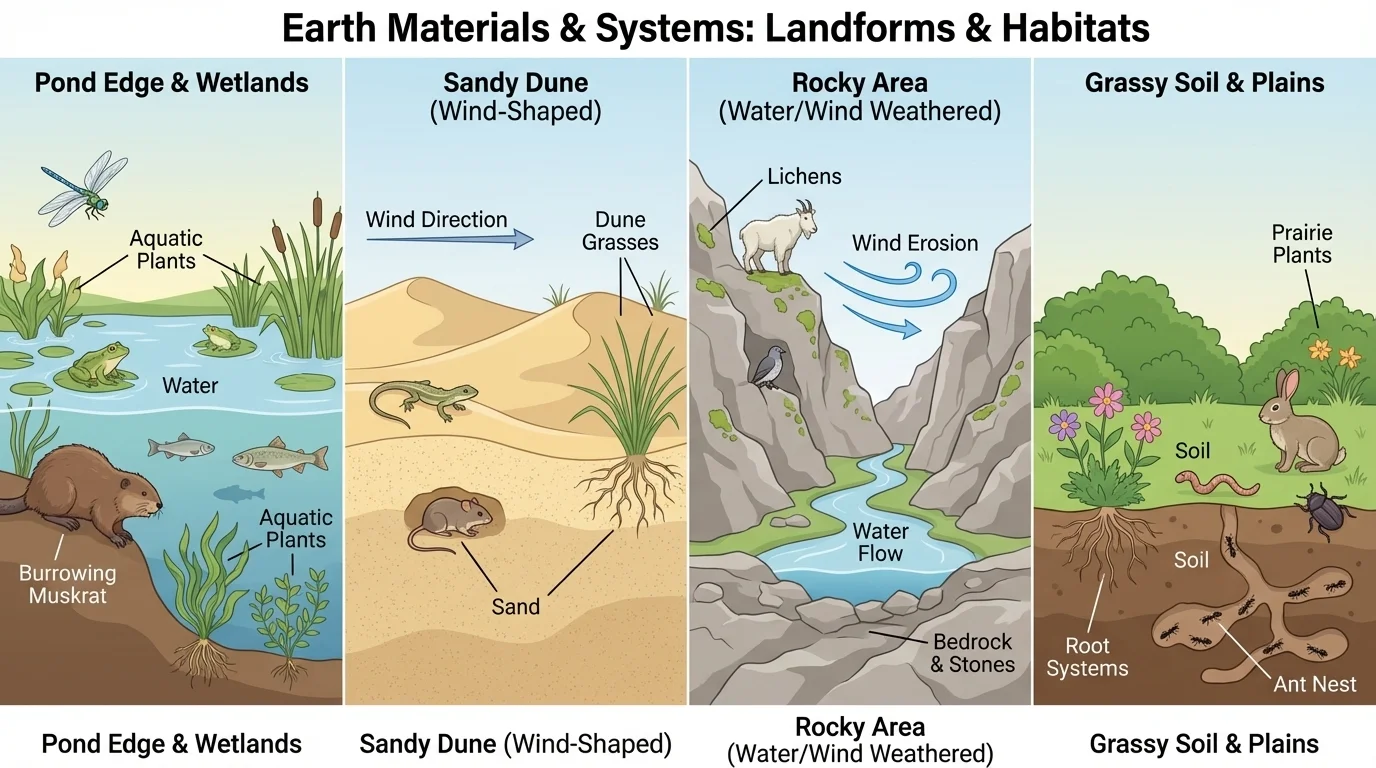
Animals also depend on landforms and materials. Worms live in soil. Rabbits may dig burrows in loose ground. Lizards may rest on warm rocks. Birds may nest on cliffs or in plants near water. Frogs often live near ponds and muddy edges.
Why one place supports one kind of life and another place supports different life
Living things need food, water, shelter, and space. The shape of the land and the materials on it help provide these needs. Wet, muddy ground supports different organisms than dry, sandy ground. Rocky places give shelter that soft soil does not.
If a place changes, the living things there may change too. For example, if a river washes away soil from a bank, some plants may no longer grow there. If new sand is deposited on a shore, beach plants and animals may move into that area. The variety of landforms and materials shown in Figure 3 helps explain why many different kinds of living things can live close to one another.
People notice these changes in everyday life. Farmers try to keep soil from washing away. Gardeners use mulch and plants to protect soil. At beaches, people may protect dunes because dunes help block wind and waves and provide homes for living things.
Communities near rivers may watch for flooding because fast water can change riverbanks and move sediment. Builders also need to know about soil, sand, and rock before roads or buildings are made. The type of ground matters.
Living things need water, shelter, and space to survive. Earth materials and landforms help provide those needs, so changes in land can affect plants and animals.
When people understand how wind and water shape the land, they can make safer and smarter choices. They can plant grasses to help hold soil, avoid damaging dunes, and protect habitats near streams and ponds.
You can often see signs of land changing if you look carefully. A sidewalk crack may collect soil. A puddle may leave behind dried mud after the water is gone. A schoolyard may have places where rainwater makes little channels. A playground may have sand piled more on one side after a windy day.
These small clues help us understand a big idea: Earth's systems are connected. Water, wind, land, and living things all affect one another. The shape of the land influences where water flows. Water and wind move earth materials. Those materials and landforms help create homes for plants and animals.
Earth is active, even when it seems still. Hills, beaches, valleys, dunes, and riverbanks tell the story of water and wind at work. By noticing the land around us, we can better understand how our planet changes and how life depends on those changes.
