A single animal can do amazing things, but many animals are even stronger, safer, or smarter when they are together. A wolf pack can bring down prey that one wolf could not catch alone. A flock of birds can turn in the sky so quickly that a hawk has trouble choosing one target. Even tiny ants, working as a group, can build nests, carry food, and protect their colony. In ecosystems, animals do not only interact with plants, water, air, and land. They also interact with one another, and those interactions can make the difference between survival and danger.
Being part of a group can help animals obtain food, defend themselves, and cope with changes in their surroundings. But groups are not all alike. Some are small, such as a pair of parent birds caring for chicks. Others are huge, such as a swarm of insects or a massive school of fish. Some groups stay together for years, while others form only for a short time. Understanding animal groups helps us understand how living things survive in changing environments.
Animals have basic needs: food, water, shelter, space, and safety. In many habitats, it is easier to meet those needs with help from others. A social behavior is a way animals act toward members of their own species. Social behaviors include working together, warning one another, caring for young, and traveling as a group.
Not all animals are social. Some, like many tigers, live mostly alone. Others, like elephants, dolphins, geese, and ants, spend much of their lives in groups. Whether group life is helpful depends on the habitat, the kind of food available, the danger from predators, and the needs of the young. If the benefits are greater than the problems, group living is more likely to be useful.
Predator means an animal that hunts other animals for food. Prey is the animal that is hunted. A habitat is the place where an organism lives and finds what it needs to survive.
Scientists study these patterns because they show how living things interact with one another and with the environment. Group behavior is one part of how ecosystems stay balanced. For example, when predators hunt in groups, they may affect how many prey animals live in an area. When prey animals gather in groups, they may avoid being eaten and survive long enough to reproduce.
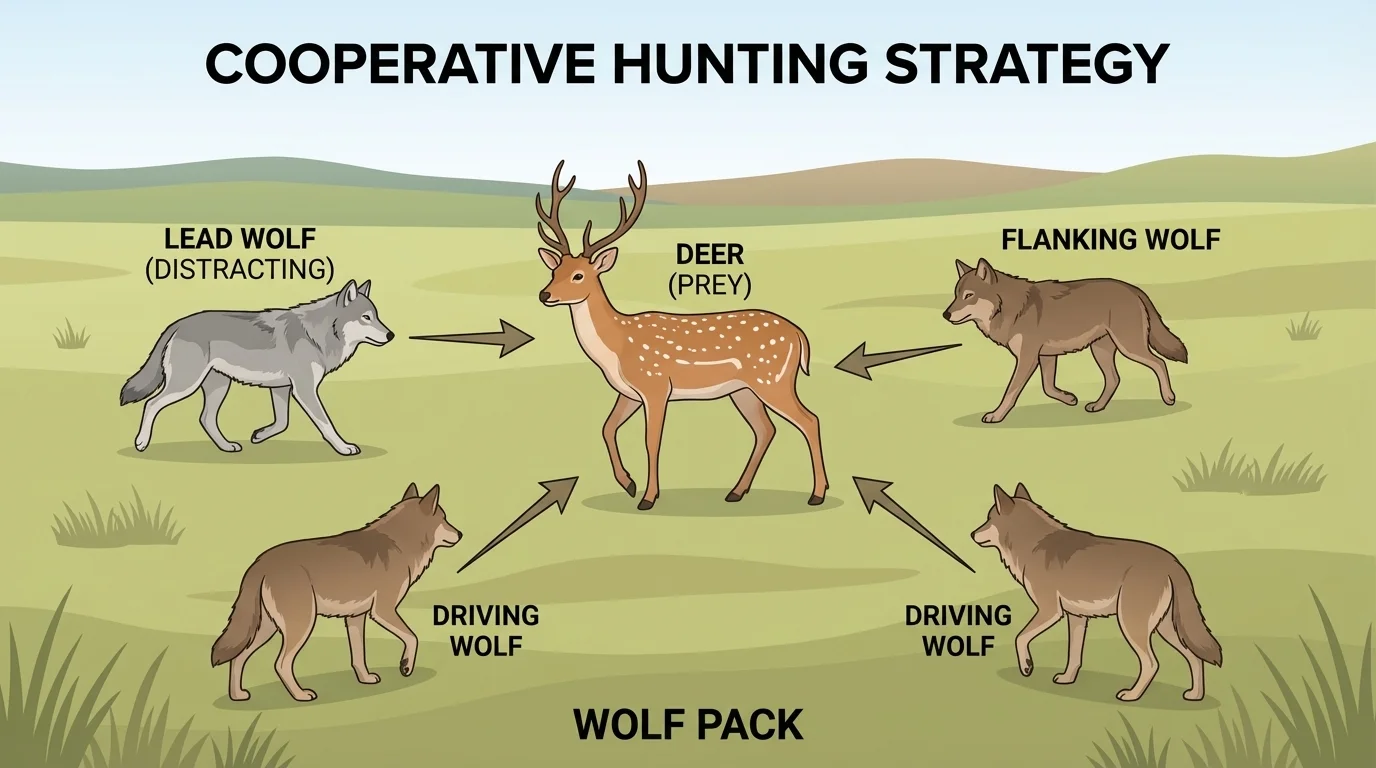
[Figure 1] One major reason animals gather is to find or catch food more successfully. A pack of wolves can spread out, chase prey, and block escape routes. This teamwork gives the group a better chance of catching a large animal such as an elk or deer. One wolf acting alone would have a much harder time.
Group hunting does not mean every animal does the same job. In some species, different members help in different ways. Lions may surround prey from several sides. Dolphins may work together to herd fish into a tight ball near the water's surface. Then the dolphins take turns swimming through the fish to feed. Cooperation can save energy and increase success.
Some animals do not hunt together, but they still benefit from being near others while feeding. Many birds watch one another to find food. If one bird discovers seeds or insects, other birds may notice and join. This is a kind of information sharing. In a large flock, there are many eyes looking for useful places to feed.
Herbivores, animals that eat plants, also gain food-related benefits from groups. Zebras, wildebeests, and bison often move together across grasslands. Large herds can travel to areas with fresh grass and water. If one part of the land becomes dry, the group may continue moving until it reaches better feeding grounds. In this way, the group helps members cope with changing resources.
Real-world example: ants finding food
Ants are small, but their social organization is highly effective.
Step 1: A worker ant leaves the nest and searches for food.
Step 2: When it finds food, it returns while leaving a scent trail.
Step 3: Other ants follow the trail to the food source.
Step 4: More ants strengthen the trail and carry pieces of food back.
Because they work as a group, ants can gather far more food than one ant could manage alone.
This same idea of teamwork also appears in [Figure 1]. Group members may not all be strongest or fastest, but together they can solve the problem of getting food more effectively than one animal acting by itself.
[Figure 2] Another powerful reason for group living is protection. When animals stay close together, they have more eyes, ears, and noses to notice danger. If one deer smells a predator or one prairie dog spots a hawk, the alarm can spread quickly through the group.
Many groups use warning signals. Birds may give sharp calls. Monkeys may make different sounds for different predators. Some animals stomp, flick tails, or suddenly run. These signals help nearby group members react fast. Quick warning can save lives.
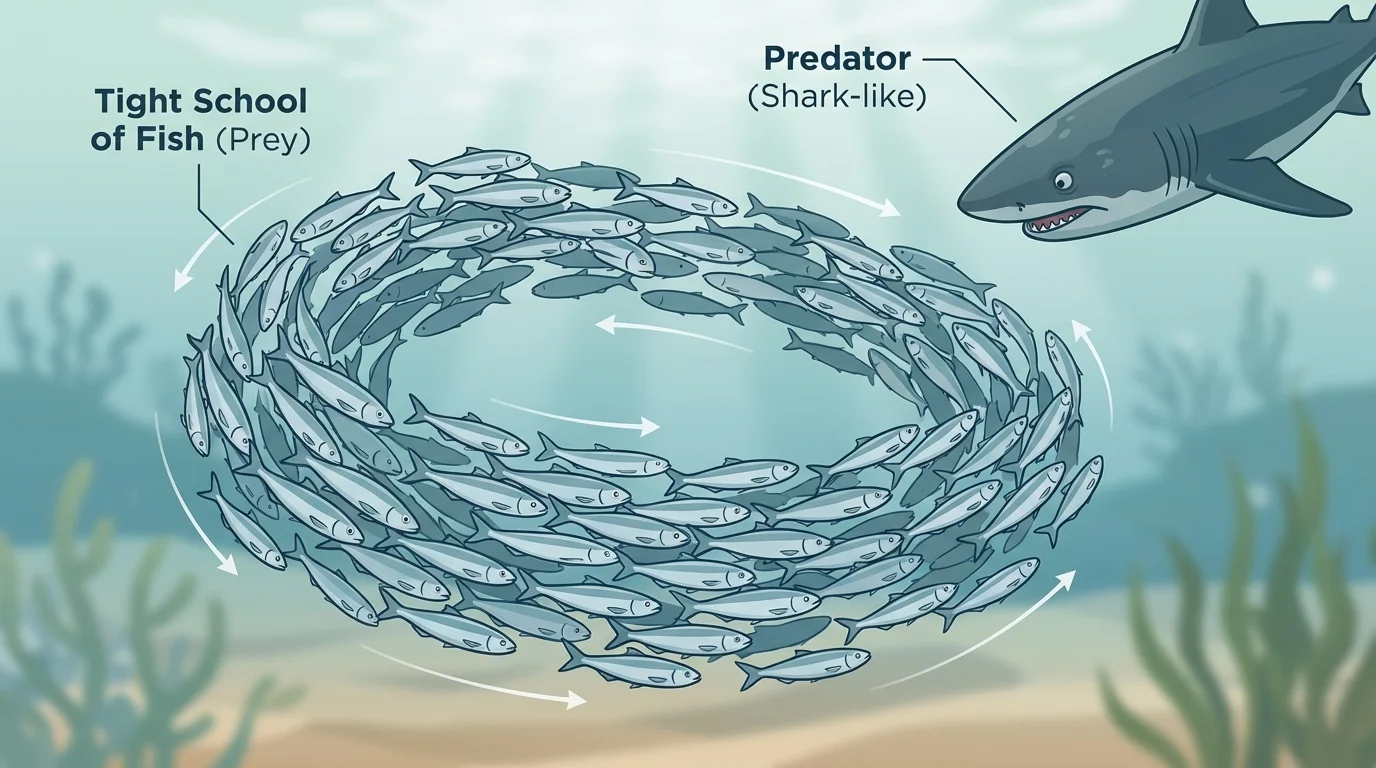
Being in a group can also confuse predators. A school of fish moves together in a coordinated way, turning almost at the same moment. A predator may struggle to focus on one fish because so many similar bodies are moving at once. This is sometimes called the confusion effect. It does not make the group invisible, but it can make catching one individual harder.
Large groups can also look bigger and more dangerous. Musk oxen form a circle around their calves when wolves threaten them. Some birds mob predators by flying at them together, calling loudly, and driving them away from nests. Even animals that are not strong alone can become much more effective when they defend one another.
Young animals often benefit the most from group protection. Elephant calves stay near adults. Penguin chicks gather together for warmth and safety. In many bird species, parents and sometimes other helpers protect eggs and nestlings. Group defense gives young animals a better chance to grow to adulthood.
Meerkats sometimes take turns acting as guards. While others search for food, one meerkat stands up high, watches for danger, and gives an alarm if a predator appears.
The movement pattern in [Figure 2] also reminds us that defense is not always about fighting. Sometimes the best protection is staying together, reacting quickly, and making it difficult for a predator to choose a target.
Environments do not stay exactly the same. Weather changes. Seasons change. Water levels rise or fall. Food may become harder to find. Fires, storms, or human activity may alter habitats. Animals that live in groups often respond better to these changes because they can move, communicate, and learn together.
Some animals migrate in groups. Geese fly in flocks, and caribou travel in herds. Group migration can help animals reach places with more food, safer breeding grounds, or better temperatures. Staying together on a journey can lower the risk of getting lost and increase safety from predators.
Group living can also help animals learn. Young elephants learn migration routes from older elephants. Young wolves learn hunting skills from adults. Many birds learn where to feed, nest, or rest by staying with experienced group members. In this way, knowledge can be passed through the group.
Groups and environmental change
A group can act like a shared survival system. When conditions change, one member may detect food, water, or danger before others do. The rest of the group can respond quickly by following, hiding, migrating, or changing behavior. This does not make groups perfect, but it often improves survival when the environment becomes less predictable.
Consider emperor penguins during the cold Antarctic winter. They gather tightly in large groups and take turns standing on the windy outer edge and the warmer center. This behavior helps them conserve body heat. One penguin alone would lose heat much faster in such extreme conditions.
Animals also face changes caused by humans, such as roads, shrinking habitats, and pollution. In some cases, living in groups helps them continue finding food or mates. In other cases, if the habitat becomes too small, a group may struggle. Group living helps with many problems, but it cannot solve every environmental challenge.
[Figure 3] Animal groups are not all structured the same way. Some groups are organized around hunting, some around safety, some around caring for young, and some around building homes. The names of groups often tell us something about how the animals live.
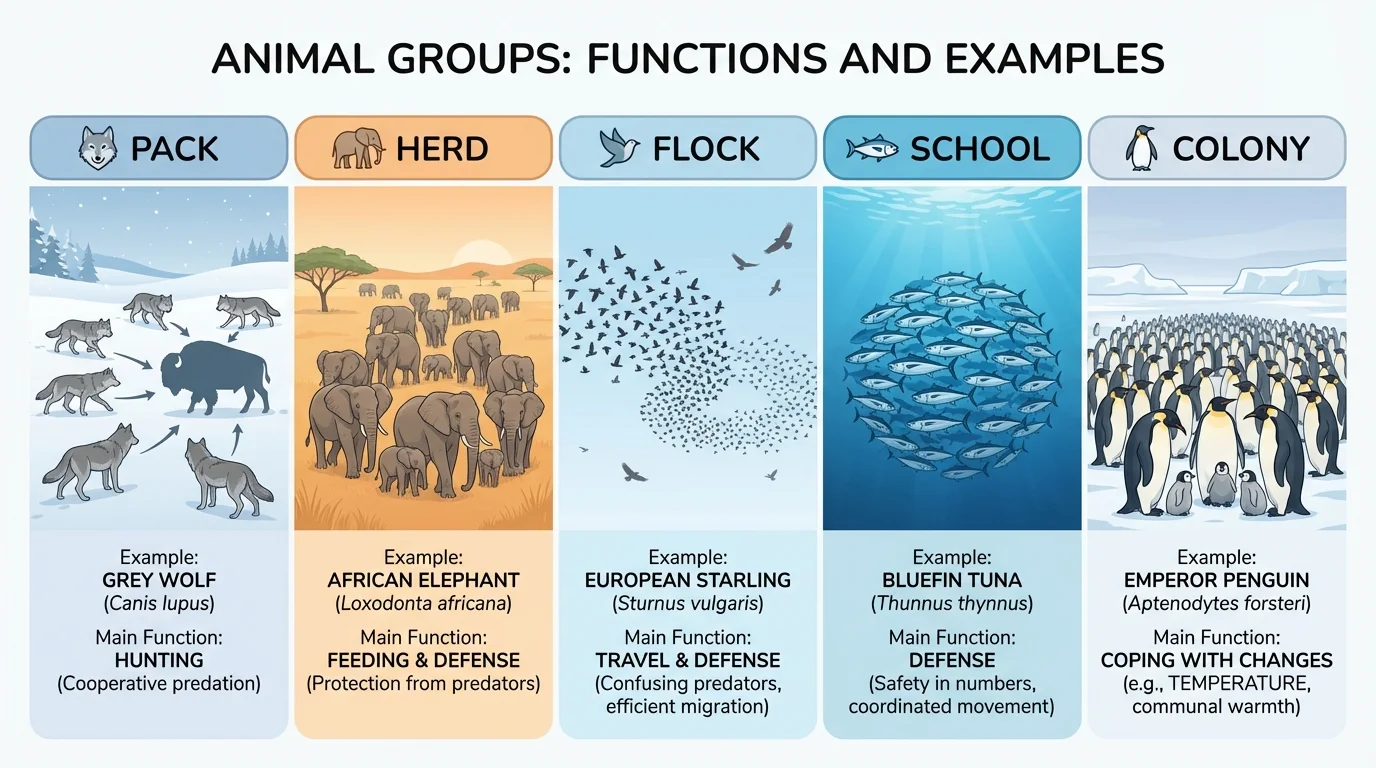
A pack often refers to a hunting group, such as wolves. A herd is a large group of grazing mammals like deer, elephants, or bison. A flock is a group of birds. A school is a group of fish swimming together. A colony is a group of animals that live very closely together, often with special jobs, such as ants, bees, or some seabirds.
Some groups are temporary. For example, many birds gather in flocks during migration or in winter but split into pairs during nesting season. Some groups are long-lasting. Ant and bee colonies may stay organized for long periods, with queens, workers, and other roles.
| Group type | Example | Main function | How long it may last |
|---|---|---|---|
| Pack | Wolves | Hunting, raising young | Often long-term |
| Herd | Zebras | Feeding, travel, defense | Can change over time |
| Flock | Geese | Travel, feeding, warning | Temporary or seasonal |
| School | Sardines | Protection, coordinated movement | Often temporary |
| Colony | Ants | Nesting, food gathering, defense | Often long-term |
Table 1. Common types of animal groups, example animals, and the main jobs those groups help with.
The comparison in [Figure 3] shows that a group's structure matches its needs. A colony may have many specialized workers, while a flock may be much looser and form mainly for travel and safety.
Animal groups vary dramatically in size. Some consist of only two adults and their young. Others contain dozens, hundreds, thousands, or even millions of individuals. Group size depends on what is useful in a certain environment.
Small groups can be easier to organize. A small wolf pack may cooperate smoothly while hunting. A pair of parent birds can focus directly on their chicks. In small groups, each member may know the others well.
Large groups can provide strong protection. Huge flocks of starlings create shifting patterns in the sky called murmurations. Massive schools of fish can make it difficult for predators to attack. Insect colonies can build large nests and collect large amounts of food because so many individuals are working together.
Living things need resources from their environment. When food, water, or space are limited, organisms may compete. That idea helps explain why group size cannot grow forever.
If a group becomes too large, there may not be enough food or space for everyone. Diseases may spread more quickly. Fights may happen more often. So there is often a balance: a group should be large enough to help, but not so large that it creates too many problems.
Group living is helpful in many ways, but it is not perfect. Animals in groups may have to share food. If prey is scarce, a hunting group may struggle. If too many grazers feed in one place, the plants may be used up quickly.
Close contact can also spread parasites and disease. A parasite is an organism that lives on or in another organism and harms it. In a crowded group, germs or parasites may move from one individual to another more easily than they would among animals living alone.
There can also be conflict inside a group. Some animals compete for mates, space, or leadership. Others may take food from weaker members. These costs help explain why some species are solitary instead of social. Whether group living is worth it depends on the balance between benefits and costs.
Case study: why not every animal joins a group
A leopard often hunts alone.
Step 1: It stalks quietly and depends on surprise.
Step 2: If many leopards hunted together, they might scare prey away.
Step 3: They would also have to share the food they caught.
For this kind of hunter, solitary life can work better than group life.
This is an important idea in ecosystems: there is no single best way for all animals to live. Different species survive in different ways, depending on their bodies, behaviors, habitats, and food sources.
Scientists observe animal groups to learn how ecosystems work and how to protect species. If a herd's migration route is blocked by roads or fences, conservationists may create wildlife crossings. If a fish school becomes much smaller because of overfishing, it may be harder for the fish to defend themselves and reproduce.
Studying groups also helps people understand animal behavior in zoos, wildlife parks, and rescue centers. Animals that normally live in groups may become stressed if kept alone. Knowing how a species behaves in nature helps humans care for it more responsibly.
"In nature, survival often depends not only on strength, but on cooperation."
When we watch birds flying together, fish turning together, or ants building together, we are seeing a powerful truth about life in ecosystems. Organisms do not survive only because of what each one can do alone. Very often, survival depends on how living things interact, respond, and work together in a changing world.
