Look at a group of birds on a playground, a patch of flowers in a garden, or even a litter of puppies. They all belong to the same species, but they are not exactly alike. One may be faster, another may be harder to see, and another may have a call that gets more attention. Those differences are important because sometimes they can help an individual stay alive, find a mate, and have young of its own.
Organisms of the same species are similar, but they are not copies of one another. A group of oak trees all have trunks and branches, and during the growing season they have leaves, yet one tree may be taller, another may have thicker bark, and another may grow better in drier soil. A group of foxes all share many features, but some may have slightly different fur color, hearing, or speed.
These differences are called variation. Variation means that individuals in the same species have different characteristics. Some differences are easy to see, such as size, color, or shape. Other differences are harder to notice, such as how well an animal can smell food, how strongly a plant resists disease, or how much cold weather an animal can handle.
Variation is common in nature. It is one reason life is so interesting. If every individual were exactly the same, then one danger or one change in the environment could affect all of them in the same way. Because individuals are different, some may do better than others when conditions change.
All living things need resources from their environment, such as food, water, air, space, sunlight, or shelter. They also face challenges like predators, weather, and sickness.
When we study variation, we are asking an important question: which differences help an individual meet its needs and leave offspring?
A species is a group of living things that are very similar and can produce fertile offspring. For example, all gray wolves are one species. All sunflower plants are another species. Members of a species share many features, but variation still exists within that group.
A trait is a characteristic of a living thing. Traits include body covering, color, shape, behavior, and many other features. A rabbit's fur color, a bird's beak shape, and a flower's petal color are all traits.
Inherited trait is a trait passed from parents to offspring, such as eye color in people or fur thickness in some animals.
Behavior is the way a living thing acts, such as a bird singing or a squirrel storing food.
Offspring are the young produced by parents.
Some traits are inherited from parents. Other characteristics are shaped by experiences and surroundings. For this topic, inherited traits are especially important because they can be passed on to offspring.
If a trait helps an individual survive long enough to reproduce, that trait may appear again in the next generation. This does not mean the trait is perfect or that every individual with that trait will always survive. It means the trait can give an advantage in certain conditions.
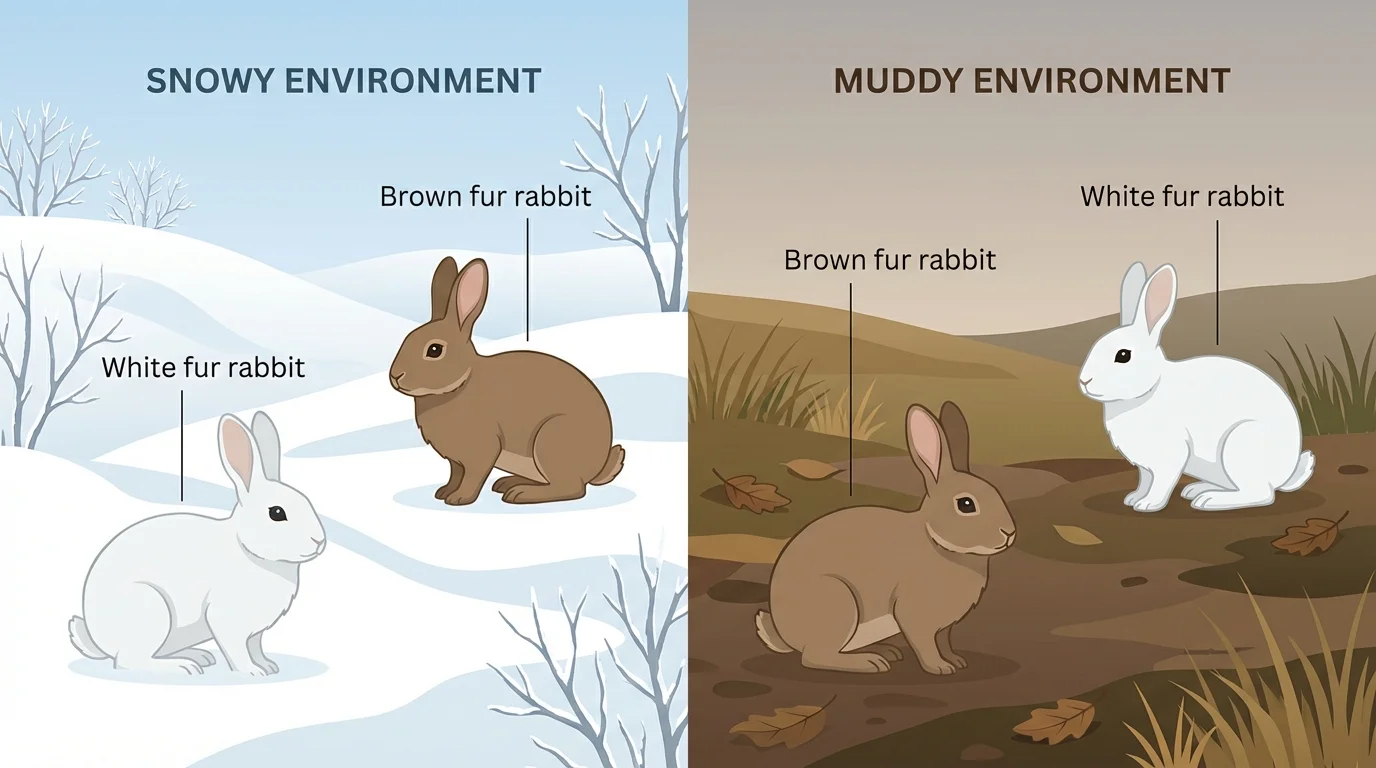
Some traits help living things stay safe, find food, or handle heat, cold, or dryness. For example, coat color can affect whether an animal is easy to spot, as [Figure 1] shows with animals of the same species in different surroundings. A rabbit with white fur may be harder to see in snow, while a rabbit with brown fur may blend in better on dirt or among dead leaves.
This kind of blending in is called camouflage. Camouflage can make it harder for predators to find prey. It can also help predators sneak closer to prey. If one individual is less visible than another in the same habitat, it may have a better chance of surviving.
Other traits help with getting food. Birds of the same species may have beaks that differ a little in size or strength. If seeds are hard and thick, a stronger beak may help crack them. If insects hide in small spaces, a narrower beak may help reach them. A small difference can matter when food is limited.
Speed and strength can also be advantages. In a group of deer, the individuals that run a bit faster may escape predators more often. In a group of young plants, some may have deeper roots that reach water better during dry weather. Those individuals may survive when others do not.
Survival advantages are not only about escaping danger. They can also include resisting illness. Some plants of the same species are more likely to survive a disease that harms nearby plants. Some animals may have immune systems that handle certain germs better than others. If they survive and later reproduce, their offspring may inherit similar helpful traits.
The same idea we saw with rabbit color in [Figure 1] works in many habitats. A trait is helpful when it matches the challenges of the environment. If the environment changes, the most helpful trait may change too.
Arctic foxes can look very different in different seasons. Their coat color helps them blend into snowy surroundings in winter and darker ground in warmer months.
Even within one species, not every individual survives the same way. Variation gives a population many possible ways to handle problems in the environment.
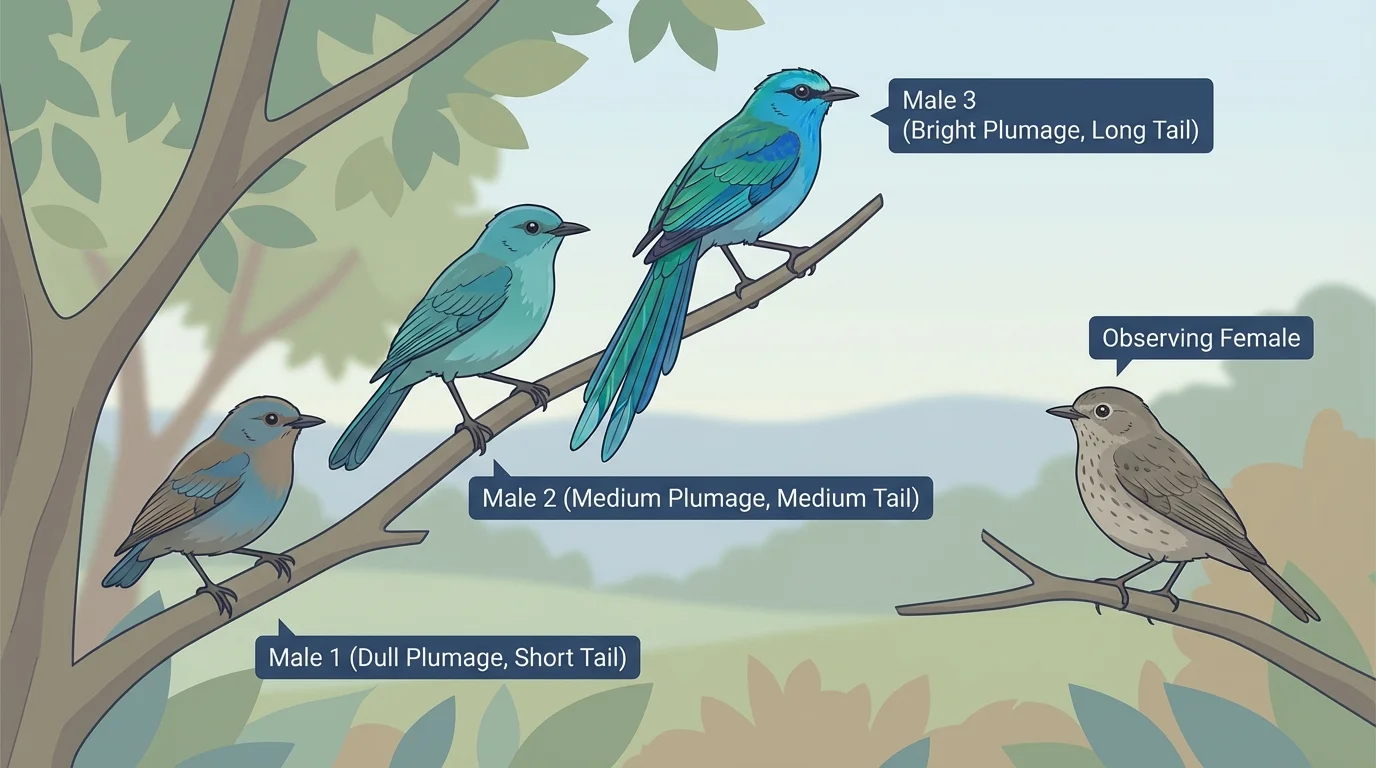
[Figure 2] Survival is only part of the story. To pass traits to the next generation, living things must also find mates and reproduce. In some species, individuals differ in colors, sounds, smells, dances, or body size, and these differences can affect which ones are more likely to attract mates.
For example, in some birds, males may have brighter feathers than other males of the same species. A brighter display may catch a female's attention. In other species, a stronger song or a more skillful dance may help one individual stand out from others.
Deer provide another example. Males of the same species can differ in the size and shape of their antlers. Larger antlers may help a male compete with others or show strength. If that helps him find a mate, then his traits are more likely to be passed to offspring.
Some frogs call more loudly or at a better time than others. Some insects flash light in patterns that are easier for mates to notice. These differences do not guarantee success every time, but they can improve the chances of reproducing.
The bird displays remind us that an advantage is not always about fighting or escaping. Sometimes an advantage is about being noticed, being chosen, or showing that an individual is healthy and strong.
Traits can help in more than one way. A trait might help an animal survive, help it attract a mate, or both. For example, strong muscles may help a bird fly farther to find food and also help it perform a better courtship display.
Finding mates is part of reproduction, so traits that improve mating success can become important over time, especially if those traits are inherited.
Reproducing means producing offspring. Some traits help an individual do this more successfully. A bird that is better at building a safe nest may protect its eggs more effectively. A fish that guards its eggs more carefully may have more young survive. A mammal that can gather food efficiently may be better able to feed its young.
Even small differences can matter. One sea turtle may be better at reaching a safe nesting place. One penguin may be better at keeping eggs warm. One flowering plant may produce nectar that attracts more pollinators, which helps it make seeds.
Real-world example: sea turtles
Sea turtles of the same species are not identical. Some may be stronger swimmers or better able to avoid predators while traveling to nesting beaches.
Step 1: A female turtle must survive long enough to reach the beach and lay eggs.
Step 2: If one turtle's traits help her travel safely and choose a good nesting spot, more of her eggs may survive.
Step 3: If some of those helpful traits are inherited, her offspring may also have a better chance of surviving and reproducing.
This shows how survival and reproduction are closely connected.
Plants also show this idea clearly. Sunflowers of the same species may differ in height, root depth, or how many seeds they produce. In a dry season, plants with deeper roots may stay healthier and produce more seeds than others.
Reproduction is not only about having offspring. It is also about whether those offspring live long enough to continue the species.
A very important idea in evolution is that an advantage depends on the environment. A trait that helps in one place may not help in another. White fur helps in snowy places, but it may make an animal easier to see in a dark forest. Thick fur helps in cold weather, but it may be a problem in very hot weather.
Beak shape gives another example. A beak that is well suited for cracking hard seeds may not be the best for sipping nectar from flowers. There is no single "best" trait for all situations. The environment matters.
| Trait difference | Environment where it may help | Why it can be an advantage |
|---|---|---|
| White fur | Snowy land | Helps an animal blend in |
| Brown fur | Forest floor or soil | Helps an animal blend in |
| Deep roots | Dry soil | Helps a plant reach water |
| Strong beak | Areas with hard seeds | Helps crack food open |
| Bright feathers | During courtship | May attract mates |
Table 1. Examples of trait differences and the environments or situations where they may provide advantages.
This is why scientists study organisms in their habitats. The same characteristic can be useful, neutral, or even harmful depending on the conditions around the organism.
"The environment helps decide which traits are useful."
When the environment changes because of weather, new predators, less food, or disease, the traits that give advantages may also change.
[Figure 3] If helpful traits are inherited, they can become more common in a population over time. This process is called natural selection. Natural selection does not happen because living things "try" to change. It happens because individuals with certain inherited traits are more likely to survive and reproduce.
Suppose a group of beetles lives on green leaves. Some beetles are green, and some are brown. Birds may see the brown beetles more easily and eat more of them. The green beetles may survive more often. If color is inherited, more of the next generation may be green.
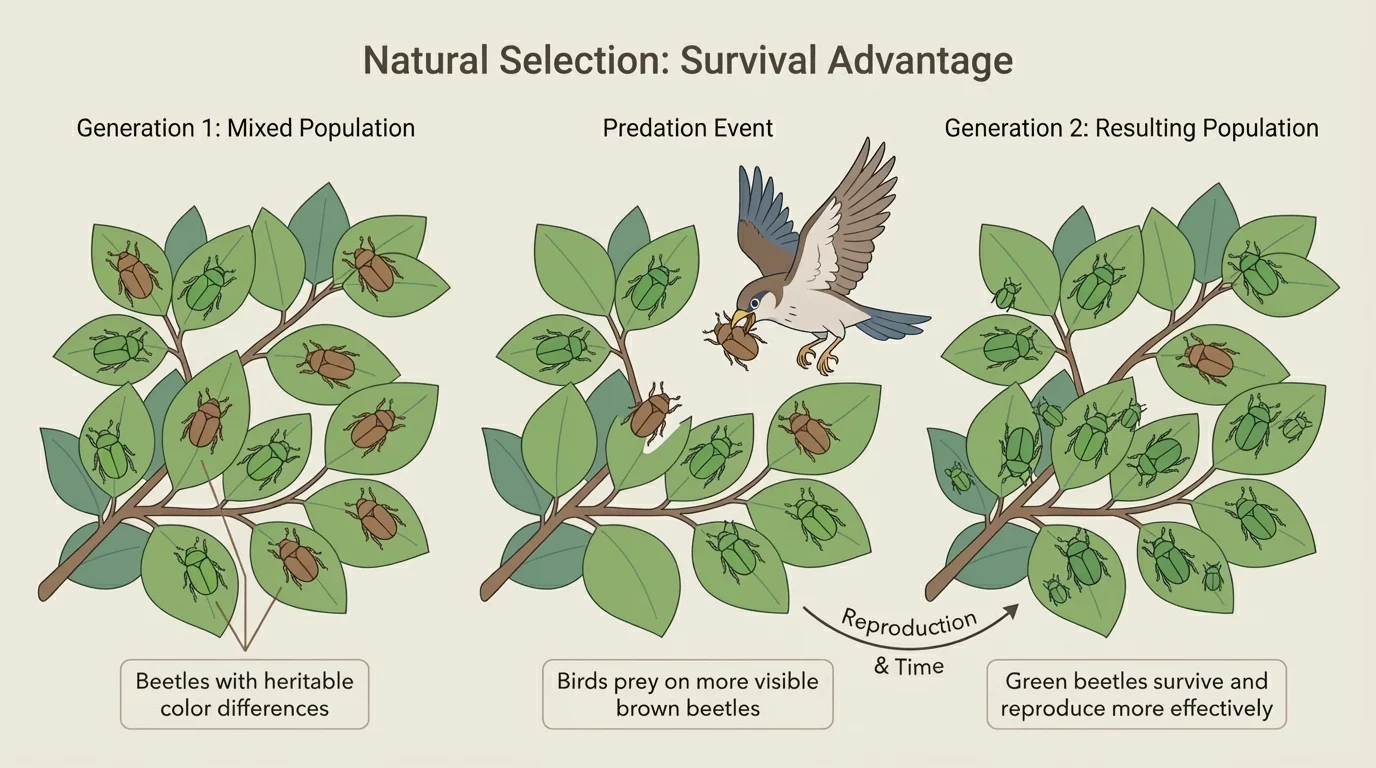
After many generations, the population may look different from the original group because the helpful trait became more common. This does not mean every single individual changes during its life. It means the population changes over time as certain traits are passed on more often.
The beetle example connects with the rabbit camouflage idea from [Figure 1]. In both cases, individuals with traits that fit the environment are more likely to survive and leave offspring.
This same pattern can happen with plants, insects, birds, fish, and mammals. It is one way populations change over very long periods of time.
People see variation all the time. Dogs are one familiar example. Even dogs of the same breed can differ in size, fur thickness, energy level, and behavior. In nature, wolves in a pack also show variation. Some may be better trackers, some may run faster, and some may be better at caring for pups.
Garden plants provide another everyday example. If a disease affects a tomato patch, some plants may wilt badly while others remain healthier. The healthier plants may have inherited traits that help them resist the disease.
Case study: finch beaks
Finches are birds, and individuals can differ in beak size and shape.
Step 1: If small soft seeds are common, birds with one beak shape may feed well.
Step 2: If a drought leaves mostly large hard seeds, birds with stronger beaks may feed more successfully.
Step 3: Birds that get enough food are more likely to survive and reproduce.
This shows that the environment can change which trait is most helpful.
Farmers and gardeners also pay attention to variation. They notice which plants grow best in heat, which resist pests, and which produce the most fruit. These observations help people understand how traits matter in real life.
Birdwatchers, pet owners, and students on a nature walk can all observe differences among individuals. Science often begins with careful noticing.
It is important to avoid a few misunderstandings. First, not every difference gives an advantage. Some differences may not matter much at all. Second, a trait that helps with one challenge might not help with another. Third, individuals do not choose new inherited traits because they need them.
Another important point is that evolution works in populations over generations, not because one single organism changes its inherited traits during its lifetime. A rabbit does not turn white just because snow falls. But if rabbits already vary in fur color, those with helpful colors may survive and reproduce more often.
Also, "advantage" does not mean stronger in every way. A tiny insect may survive very well because it hides easily. A flower may reproduce successfully because its color attracts pollinators. Different species, and different individuals within a species, can succeed in different ways.
Some male bowerbirds attract mates by building and decorating special structures called bowers. Small differences in building skill can affect which birds are chosen as mates.
Understanding these ideas helps explain why living things are so diverse. Variation within a species is not just random detail. It is a key part of how life continues and changes over time.
