A single pond can be home to fish, frogs, insects, turtles, birds, and tiny plants that float on the water. But what if the pond begins to dry up? Suddenly, the same place that once supported many living things may no longer have enough water, food, or shelter. This is an important idea in science: living things depend on their habitats, and when habitats change, the organisms living there are affected too.
A population is a group of organisms of the same species living in the same place at the same time. For example, all the squirrels living in one park make a population. All the frogs in one pond make another population. A population is not just one animal, and it is not all living things together. It is one kind of living thing living as a group in a certain area.
A habitat is the place where an organism lives. A habitat gives living things what they need to survive. It may provide food, water, air, shelter, and space. A cactus lives in a desert habitat. A trout lives in a stream habitat. A fox may live in a forest or grassland habitat.
Each organism has needs. Plants need sunlight, water, air, and space to grow. Animals need food, water, air, shelter, and space. Some organisms can live in many places, but others can only live in special conditions. That is why habitats matter so much.
Population means all the members of one species living in the same area.
Habitat means the natural home of an organism, where it gets what it needs to live.
Organism means a living thing, such as a plant, animal, fungus, or tiny microbe.
Scientists study populations to understand how living things survive, grow, and interact with their environment. They also watch what happens when a habitat changes, because even a small change can affect many organisms.
Earth has many kinds of habitats, and each one has different conditions, as [Figure 1] shows through a comparison of several places. Some habitats are hot and dry. Others are cold and icy. Some are filled with water, while others are mostly land. Because conditions are different, the plants and animals living there are different too.
In a forest, tall trees provide shade and shelter. Birds may nest in branches, deer may eat leaves, and insects may live under bark. In a desert, water is hard to find, so plants like cacti store water in thick stems. Many desert animals rest in shade during the hottest part of the day.
Ponds and lakes are freshwater habitats. Frogs, fish, turtles, insects, and water plants can live there. In oceans, saltwater organisms such as crabs, sea stars, whales, and kelp survive in very different conditions. Grasslands provide open space for animals like bison, rabbits, and hawks. Polar habitats are extremely cold and support organisms adapted to ice, snow, and freezing water.
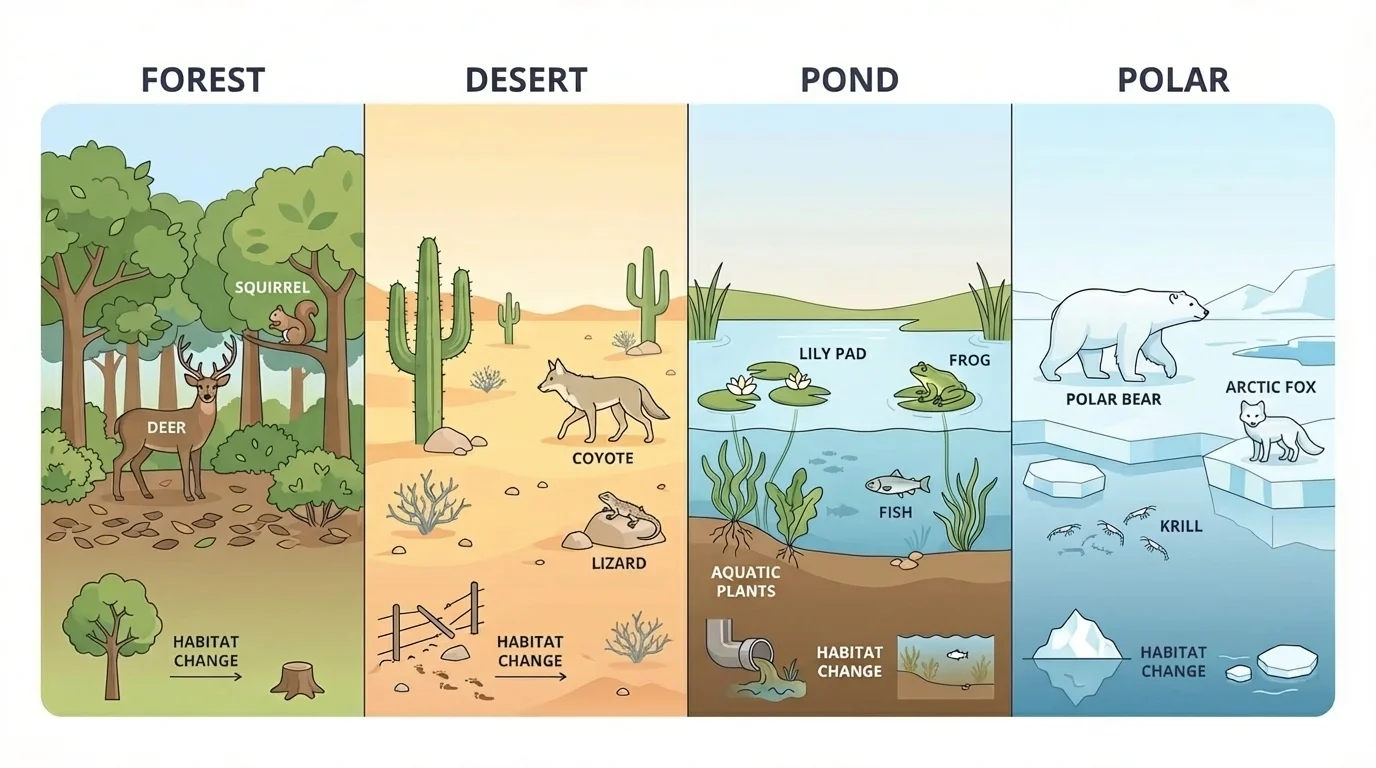
Even when habitats look very different, they all work in the same basic way: they provide the things organisms need to stay alive. Looking back at [Figure 1], we can see that the needs are the same, but the way those needs are met is different in each habitat.
Some organisms are suited for one habitat much better than another. A polar bear would not do well in a desert, and a cactus would not grow well in a dark forest. The place where an organism lives is closely connected to its body, behavior, and way of getting resources.
Some frogs can live in ponds, marshes, or wet forests, but a fish that needs cool, flowing stream water may not survive in a warm, still pond. Small differences in habitat can make a big difference for life.
This is one reason Earth has so much biodiversity, or a variety of living things. Different habitats allow different populations to live and grow.
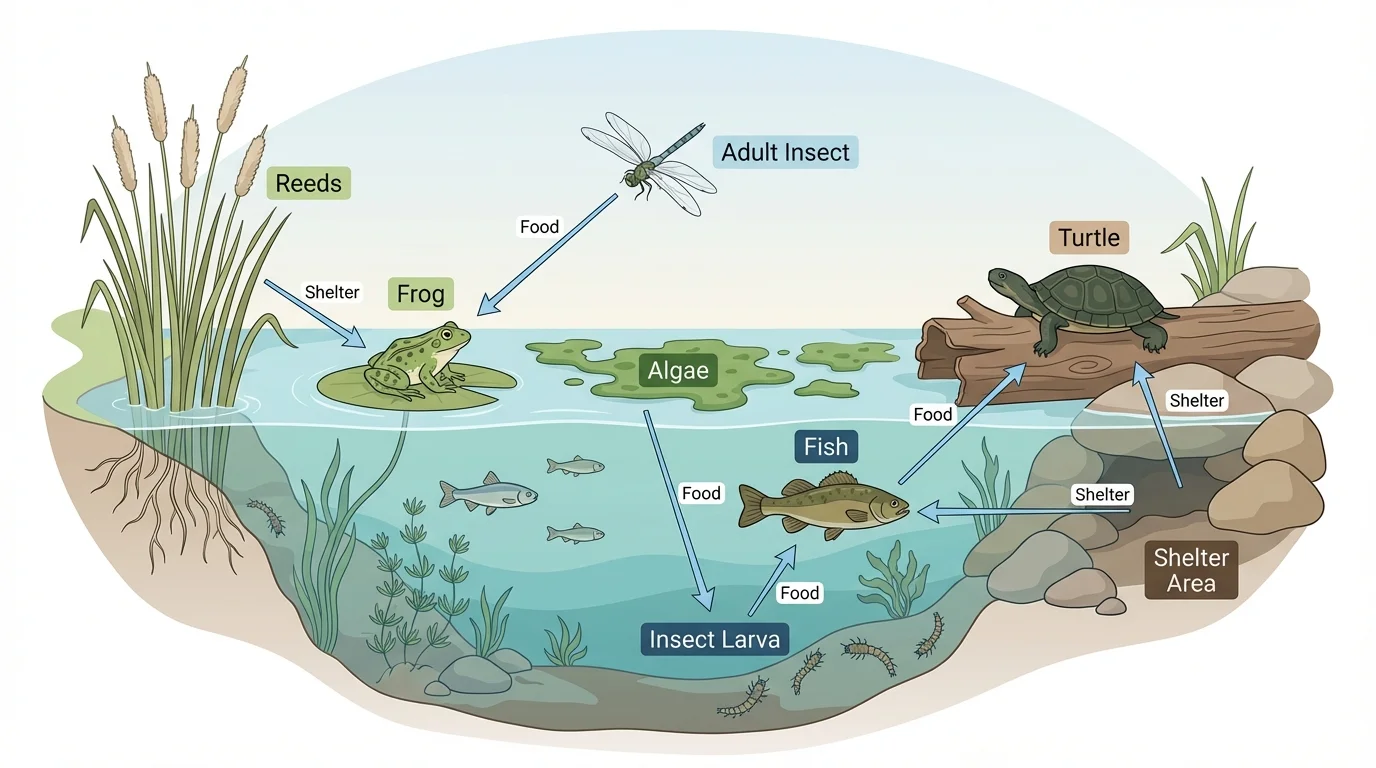
A habitat does more than give an organism a place to stand. It provides resources and connections, as [Figure 2] illustrates in a pond community. Animals need food and water. They also need shelter to hide from danger and space to find what they need. Plants need the right amount of sunlight, water, air, and nutrients in the soil or water.
Organisms also depend on other organisms. A rabbit depends on plants for food. A fox may depend on rabbits or mice for food. Bees depend on flowers for nectar, and many flowers depend on bees to help with pollination. In this way, living things are connected.
If one part of a habitat changes, other parts may change too. If fewer plants grow, plant-eating animals may have less food. If those animals decrease, predators may also have less to eat. A habitat is like a web of relationships, not just a collection of separate organisms.
Think about a bird building a nest. The bird needs trees or bushes for shelter, insects or seeds for food, water nearby, and enough space to raise its young. If trees are cut down or the food supply drops, the bird population may shrink or move away.
Plants are just as dependent on habitats as animals are. A plant that needs damp soil may wilt in dry ground. A plant that needs lots of sunlight may not survive under heavy shade. The right habitat supports growth, reproduction, and survival.
Living things and their environment are connected. A population survives best when its habitat provides enough resources. When resources such as food, water, or shelter become limited, organisms may compete, move away, have fewer young, or die. Because many organisms depend on each other, a change affecting one population can affect others as well.
This is why scientists often study both the organisms and the environment around them. To understand a population, we must also understand its habitat.
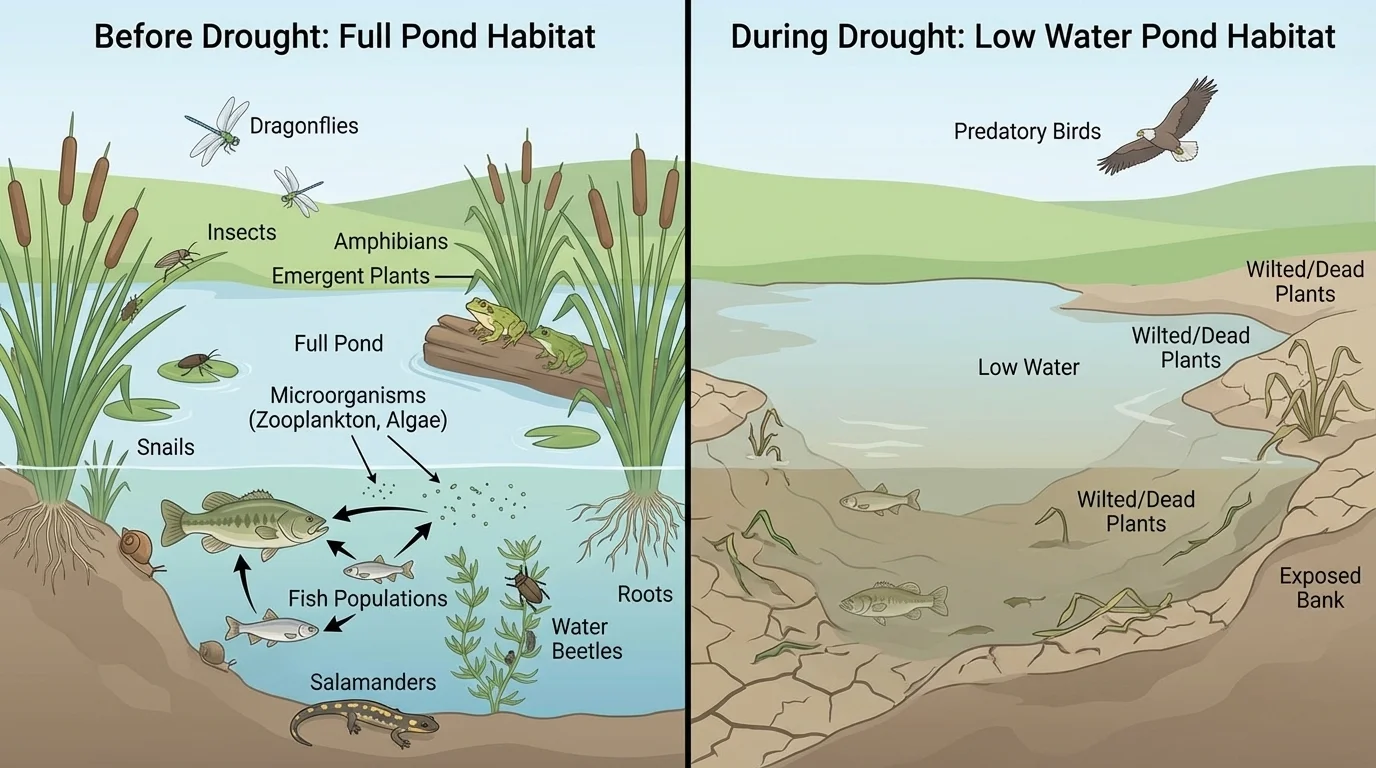
Habitats do not stay exactly the same forever. Rainfall can increase or decrease. Temperatures can rise or fall. Fires, floods, storms, and droughts can change a place quickly. When a habitat changes, the amount of food, water, shelter, or space can change too, as [Figure 3] shows with a pond during drought.
Some habitat changes are natural. A river may flood after heavy rain. A forest fire may burn plants, but later new plants may grow. A cold winter may freeze a pond. These changes can harm some organisms at first, while helping others later.
Other habitat changes are caused by people. Building roads, houses, or parking lots can remove trees and grass. Pollution can make water dirty. Cutting down forests can destroy shelter and nesting places. Draining wetlands can remove homes for frogs, ducks, insects, and fish.
When habitats change, populations may respond in different ways. Some populations decrease because they cannot find what they need. Some move to a different area. Some may survive if they can use different foods or shelter. Others may increase if the new conditions help them.
For example, if a pond dries up, fish may die because they need water all the time. Frogs may move to another wet area if one is nearby. Plants that need lots of water may disappear, while plants that can handle dry soil may spread.
Real-world case: a schoolyard habitat changes
A grassy schoolyard has insects, worms, sparrows, and a few rabbits. Then most of the grass is covered with pavement.
Step 1: The habitat loses plants.
With less grass, there is less food and shelter for insects and rabbits.
Step 2: Animal populations are affected.
Fewer insects means less food for sparrows. Rabbits may move away if they cannot find enough plants to eat.
Step 3: The whole community changes.
The schoolyard may still have some living things, but the populations are different because the habitat changed.
Changes in habitats can happen slowly or quickly. A drought may last months. A storm may change a beach in one day. In both cases, the organisms living there must deal with the new conditions.
When a habitat changes, not all organisms are affected in the same way. Some have traits that help them survive better in certain conditions, as [Figure 4] illustrates with animals that blend into their surroundings. A trait is a feature such as color, body covering, beak shape, or behavior.
An adaptation is a trait or behavior that helps an organism survive in its habitat. For example, thick fur helps some animals stay warm in cold places. Waxy stems help cacti keep water in dry deserts. Camouflage helps animals hide from predators or sneak up on prey.
If a habitat changes, an adaptation that was once helpful may become less useful, and another trait may become more useful. Suppose snow usually covers the ground in winter. White animals may be harder for predators to see. But if there is less snow, darker animals may blend in better.
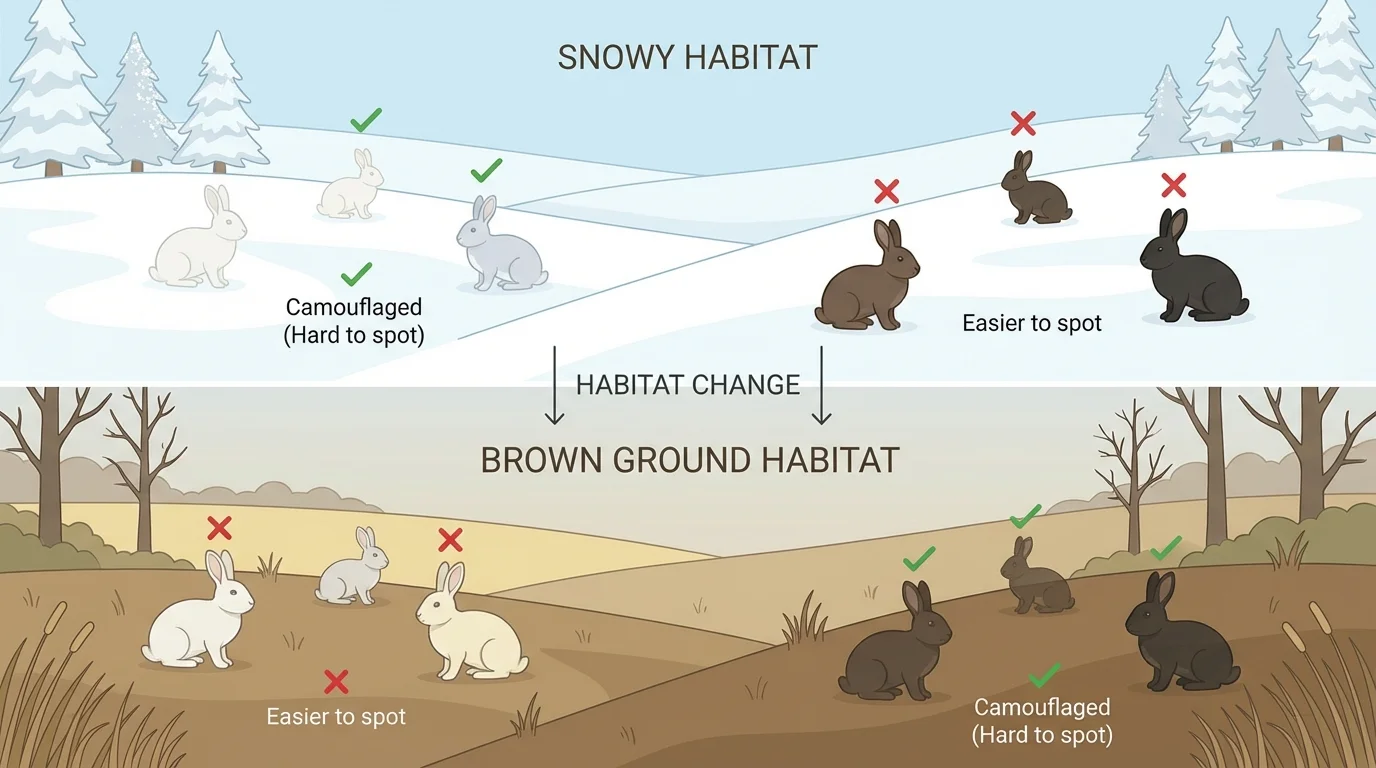
Over time, this can affect the whole population. Organisms with traits that help them survive are more likely to stay alive and have young. Then those helpful traits can become more common in the population. This is one way populations can change over many generations.
However, change does not guarantee survival. If a habitat changes too much or too fast, a population may not be able to adjust. Some organisms may move away, but others cannot. Plants cannot simply walk to a new habitat, and some animals are too specialized to live elsewhere.
Living things inherit traits from their parents. Traits that help survival and reproduction may become more common in a population over long periods of time.
This helps explain why some populations grow while others shrink. It depends on the habitat, the kind of change, and the traits organisms already have.
Let us look at a few examples from nature. These examples show that the same big idea works in many places: habitat change affects populations.
In a pond ecosystem, a long dry season can lower the water level. As we saw earlier in [Figure 3], shallow water means less room for fish and fewer places for insects and frogs to lay eggs. Some birds may visit the pond less often because there is less food.
In a forest, fire can destroy trees and shrubs. At first, many animals may leave or die. But later, sunlight reaches the ground more easily, and new plants may grow. Some populations decrease after the fire, while others increase during regrowth. This shows that habitat change can have both immediate and long-term effects.
In the Arctic, sea ice has been changing. Animals such as polar bears depend on sea ice for hunting and traveling. If ice melts earlier or forms later, the habitat becomes harder to use. That can affect the whole population.
In a stream, pollution can reduce oxygen in the water and harm fish, insects, and plants. Clean water is part of the habitat. When the water changes, the populations living in it change too.
| Habitat | Change | Possible effect on populations |
|---|---|---|
| Pond | Drought lowers water | Fish decrease; frogs move; water plants shrink |
| Forest | Fire removes many trees | Some animals leave; new plants later attract different animals |
| Arctic | Sea ice melts more | Animals that depend on ice have a harder time surviving |
| Stream | Pollution dirties water | Fish and insects may die or decrease |
Table 1. Examples of habitat changes and how they can affect populations.
These examples also remind us that populations do not live alone. When one population changes, others may change too because they are connected through food, shelter, and shared space.
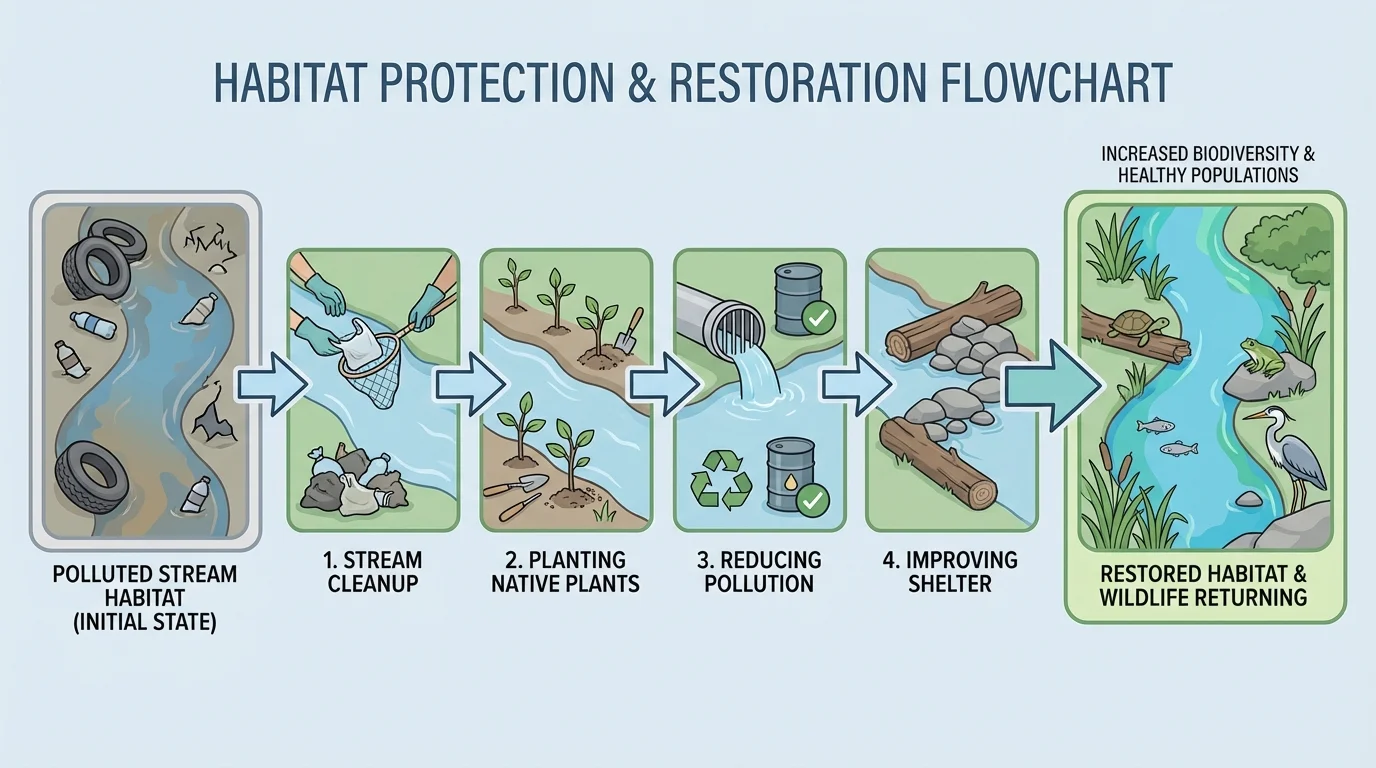
People can also protect and restore habitats, and [Figure 5] shows some common actions that help damaged places recover. When people plant native species, reduce pollution, protect wetlands, or create wildlife corridors, they make it easier for populations to survive.
A native species is an organism that naturally lives in an area. Native plants often provide the right food and shelter for local insects, birds, and other animals. If a school plants native flowers, bees and butterflies may visit more often.
Cleaning up a stream can improve water quality. Planting trees along the banks can provide shade, which helps keep water cooler. Cooler, cleaner water can help fish and insects return. Protecting forests can preserve nesting spots for birds and shelter for mammals.
Even small actions matter. Families can avoid littering, save water, plant gardens that support pollinators, and respect wildlife spaces. Communities can create parks and protected areas. Scientists can study populations to learn which habitats need the most help.
Understanding habitat change helps people make better choices. If we know that cutting down trees removes shelter, we can work to protect forests. If we know wetlands help many populations survive, we can choose not to drain them.
"When we protect habitats, we protect the living things that depend on them."
The big idea is clear: populations live in a variety of habitats, and change in those habitats affects the organisms living there. This idea helps us understand both the natural world and our role in caring for it.
