A flashlight glows, a toaster gets hot, a wind turbine helps power homes, and your own body lets you run and jump. People often say these things "produce energy." That sounds simple, but science gives a more exact idea: they are really changing energy from one form into another form that people can use.
In everyday speech, the phrase "produce energy" usually means make useful energy available. If someone says a battery produces energy, they usually mean the battery helps power a device. But in science, energy is not made from nothing and it does not disappear. Instead, energy is stored, transferred, and transformed.
Stored energy is energy kept in a form that can be used later, such as in food, batteries, gasoline, or stretched rubber bands.
Energy conversion is a change from one form of energy to another, such as electrical energy changing into light and heat in a lamp.
Useful energy is the form we want for a job, like light from a flashlight or motion from a fan.
So when people say "produce energy," a scientist would usually explain it this way: a system changes stored energy into a desired form for practical use. That idea helps us understand machines, living things, and even whole cities.
One important rule is often written as a sentence instead of a math equation: the total amount of energy stays the same, even when it changes form. If a toy uses a battery, the battery's stored energy does not vanish. It changes into electrical energy, and then into motion, sound, light, or heat.
You already know that objects can move, lights can shine, and things can get warmer. Those changes do not happen by magic. Energy is involved every time something moves, glows, vibrates, or heats up.
This is why the topic matters so much. Once you understand energy conversions, many everyday things make more sense: why a phone battery runs down, why you get tired after exercise, and why machines often become warm.
Energy comes in different forms. A store of chemical energy is found in food, batteries, wood, coal, and gasoline. Electrical energy moves through wires to power lights, computers, and refrigerators. Light energy lets us see and can also warm objects. Thermal energy is the energy related to warmth. Kinetic energy is energy of motion, like a rolling ball or spinning fan blade. Sound energy travels as vibrations through air or other materials.
Some energy forms are especially easy to store. Food stores chemical energy inside molecules. Batteries store chemical energy too, but in a different way. Water behind a dam stores energy because of its position, and when it moves, that energy changes into kinetic energy.
Different jobs need different forms of energy. A lamp needs light. A blender needs motion. A speaker needs sound. A heater needs thermal energy. The reason people build devices is to convert stored energy into the form they want most.
| Source | Stored energy | Useful form after conversion |
|---|---|---|
| Battery | Chemical energy | Electrical energy, then light or motion |
| Food | Chemical energy | Motion and body warmth |
| Sunlight | Radiant energy from the Sun | Electrical energy or heat |
| Wind | Moving air | Electrical energy |
| Gasoline | Chemical energy | Motion and heat |
Table 1. Examples of stored energy sources and the useful forms they can become.
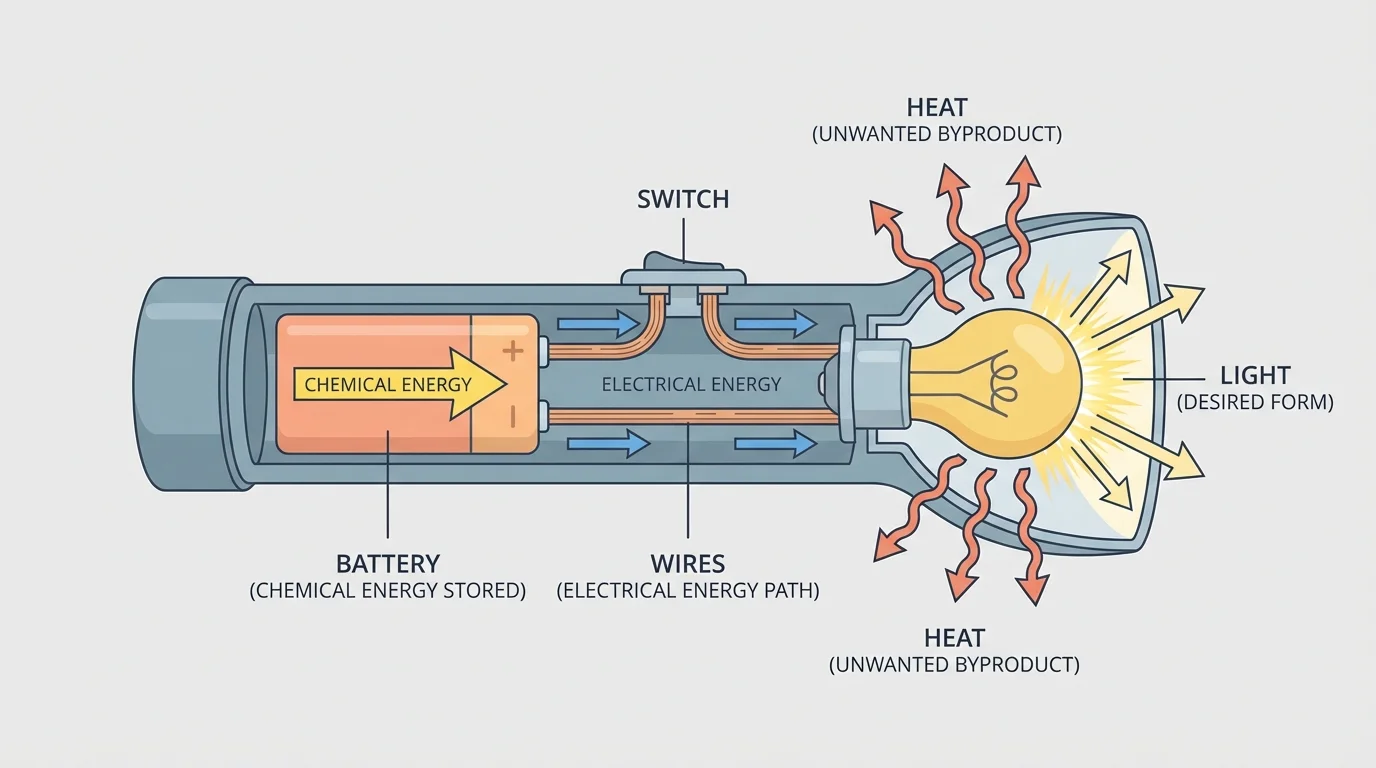
A very common example is a flashlight. In a flashlight, the battery does not create energy from nothing. The battery contains chemicals that store energy. When the flashlight is switched on, that chemical energy changes into electrical energy in the circuit. Then the bulb or LED changes much of that electrical energy into light.
[Figure 1] Not all of the energy becomes light. Some of it becomes heat. If a flashlight stays on for a while, the bulb area may feel warm. That warmth is still energy, but it is not the main form we wanted.
A toaster works in a similar way. Electrical energy flows into the toaster. Inside, parts of the toaster resist the flow of electricity, and electrical energy changes mostly into thermal energy. That heat toasts the bread.
A fan uses electrical energy too, but its useful output is different. Instead of mostly heat, the fan changes electrical energy into the motion of its blades and the movement of air. It also makes some sound and a little heat. That means one source of energy can turn into several forms at the same time.
Real-world example: a phone charging and then being used
Step 1: Electrical energy from the wall charger goes into the phone's battery.
Step 2: The battery stores that energy as chemical energy.
Step 3: When you use the phone, the stored chemical energy changes back into electrical energy.
Step 4: The phone converts electrical energy into light on the screen, sound in the speaker, and a little heat.
The phone seems to "have energy," but really it is storing energy and then converting it.
The same idea from [Figure 1] also helps explain why many devices get warm when they work. Even when a machine is designed for light, motion, or sound, part of the energy often ends up as heat.
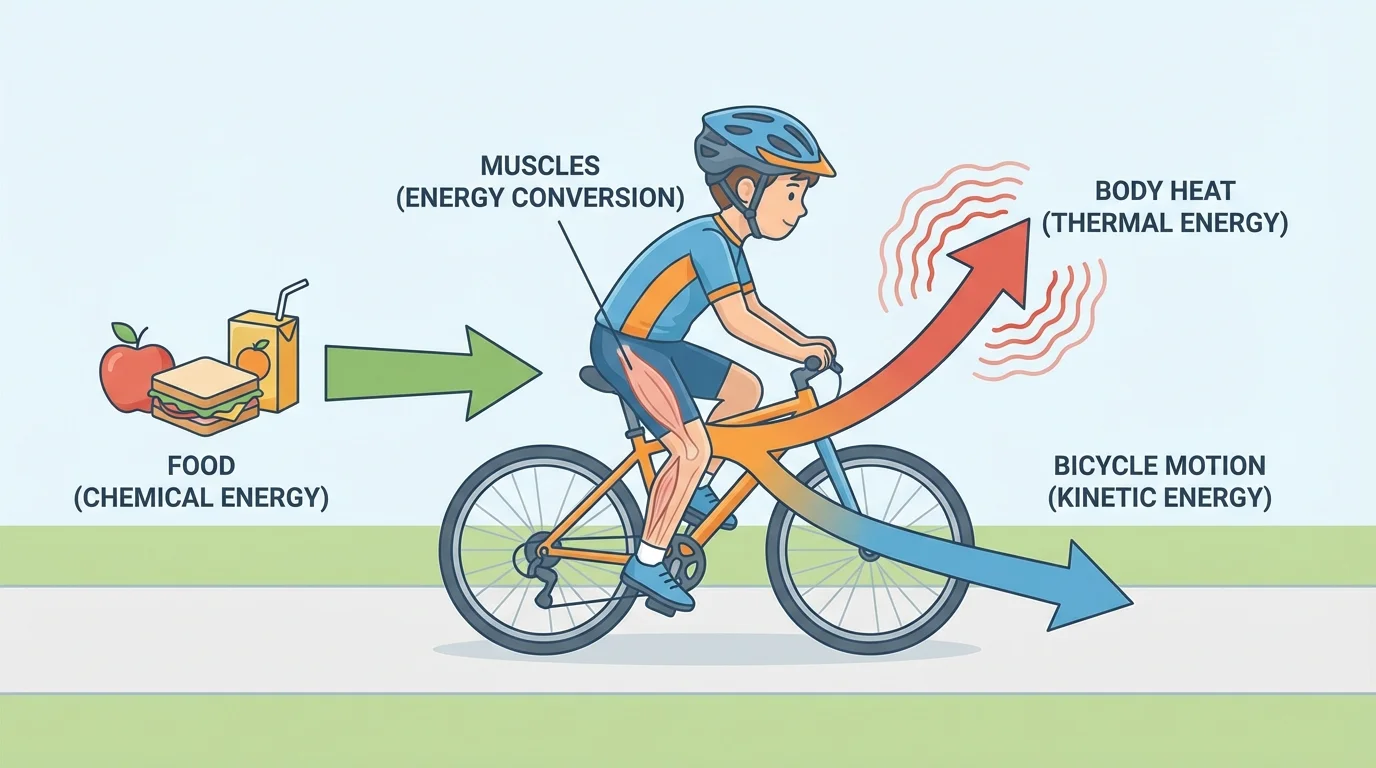
Your body is an energy-converting system too. When you eat, your body gets energy stored in food. That food contains fuel for your cells. Your muscles can change some of that stored chemical energy into motion when you walk, write, dance, or ride a bicycle.
[Figure 2] Your body also changes some of the food's energy into thermal energy. That is one reason your body stays warm. Even when you are sitting still, your body is using energy to breathe, pump blood, and keep important systems working.
Cars and buses also use stored chemical energy, but their fuel is usually gasoline or diesel instead of food. In a car engine, fuel reacts with oxygen from the air. The stored chemical energy changes into thermal energy, and the engine uses that process to produce motion.
Wood in a campfire gives another example. The wood stores chemical energy. When it burns, that energy changes mainly into heat and light. People often say the fire "produces energy," but the better science idea is that the fire converts stored chemical energy into forms we can feel and see.
Your body is never truly "off." Even while sleeping, it keeps converting stored energy from food into warmth and the energy needed for breathing, heartbeat, and growth.
The bicycle example in [Figure 2] reminds us that energy conversions happen in living things as well as machines. People, animals, and plants are all part of energy systems.
When a whole town needs lights, computers, air conditioning, and refrigerators, it needs a lot of electrical energy. Power stations are often described as places that "produce electricity," but they do this by converting other forms of energy first. The diagram compares several common ways this happens.
In a wind power system, moving air turns large blades. The motion of the blades is used to generate electrical energy. In a hydroelectric system, moving water turns turbines. In both cases, kinetic energy is being converted into electrical energy.
[Figure 3] Solar panels are different. They use sunlight and convert light energy directly into electrical energy. That is a very useful conversion because sunlight reaches Earth every day.
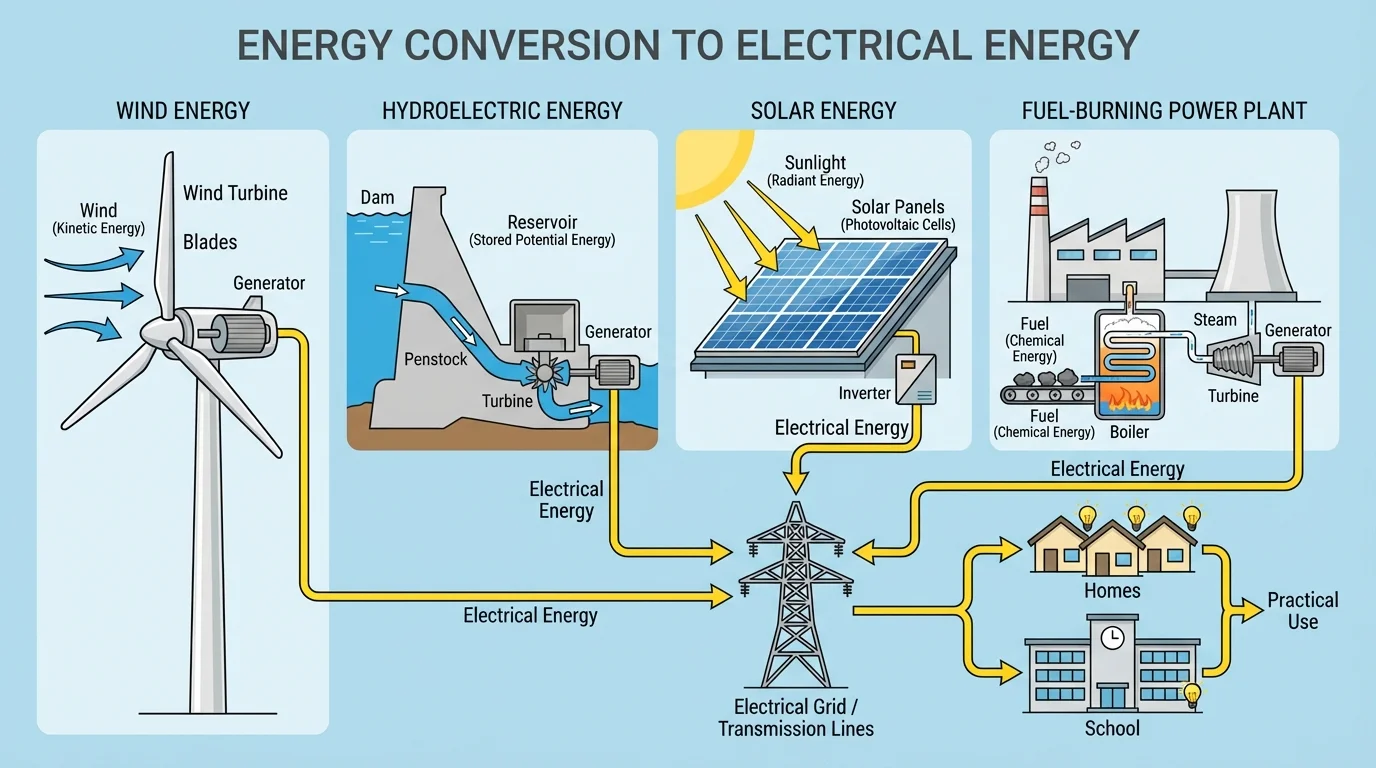
Some power plants burn fuels such as natural gas or coal. In these systems, chemical energy in the fuel changes into heat. The heat is used to make steam, the steam moves a turbine, and the turbine helps generate electrical energy. This is a chain of energy changes, not a single jump from start to finish.
Electricity can then travel through power lines to homes, schools, hospitals, and stores. Once it arrives, devices change electrical energy into the specific form needed: light in a lamp, motion in a washing machine, or thermal energy in an oven.
Energy conversions often happen in a chain. Many systems do not change energy in just one step. A fuel-burning power plant may follow this pattern: chemical energy → thermal energy → kinetic energy → electrical energy. A home appliance then changes the electrical energy again into light, sound, motion, or heat.
The comparison in the diagram shows that different energy sources can lead to the same useful result: electrical energy for people to use.
One reason scientists pay close attention to energy conversions is that not all converted energy is equally useful. Suppose a lamp takes in electrical energy. We want light, but some energy becomes heat. That heat is still energy, yet it may not help much if the main job is to light a room.
This does not mean energy has disappeared. It means the energy has spread into forms that are less useful for that particular task. A car engine, for example, gives us motion, but it also becomes hot and makes sound. Those extra forms show that energy has been converted in several ways.
We can describe this with a simple number example. If a machine starts with a total of 10 energy units and gives 6 units as useful motion, the other 4 units still exist. They may appear mostly as heat and sound. In math form, we can write:
\(10 = 6 + 4\)
This does not mean energy is lost. It means the total stays the same while the forms change.
"Energy cannot be created or destroyed, only transformed."
— A key scientific idea about energy
This idea helps explain why engineers try to build efficient machines. They want as much energy as possible to become the desired form, and less to become unwanted heat or sound.
If energy is not destroyed, why do people talk about saving energy? They mean saving useful energy sources and reducing waste. Turning off unused lights, using good insulation, and choosing efficient appliances all help because they reduce the amount of stored energy we need to convert.
For example, an LED bulb changes more electrical energy into light and less into heat than some older bulbs. That makes it a smart choice for lighting. A well-insulated house keeps thermal energy from escaping too quickly, so less fuel or electricity is needed to keep it warm.
Transportation matters too. Walking or biking for short trips can reduce the amount of fuel burned. Buses and trains can move many people at once, which can make energy use more efficient.
Real-world example: warming soup
Step 1: A stove uses electricity or gas as the starting energy source.
Step 2: That source is converted into thermal energy.
Step 3: The thermal energy moves into the pot and soup.
Step 4: Some energy warms the soup usefully, but some also warms the surrounding air.
This is why putting a lid on the pot can help. More of the thermal energy stays where it is wanted.
Saving energy in daily life is really about making better choices about energy conversions, so more of the energy becomes useful and less is wasted.
When you hear the phrase "produce energy," try replacing it with a better science sentence: stored energy is being converted into a useful form. That one idea works for batteries, bodies, cars, campfires, solar panels, wind turbines, and kitchen appliances.
Here is a simple chain: a battery stores chemical energy. A toy car uses the battery. The toy car converts that energy into electrical energy, then kinetic energy as it moves, plus some sound and heat. The toy seems to "get energy," but really it is receiving and transforming stored energy.
Scientists and engineers study these changes so they can build better machines, choose better energy sources, and understand the natural world more clearly. Once you know how to look for energy conversions, you can spot them almost everywhere.
