A single rainstorm may look gentle, but over many days, months, and years, rain can carve valleys, fill rivers with mud, and even help determine whether a place supports tall trees or cacti. Earth's surface is not fixed like a statue. It is always changing, sometimes quickly in a storm and sometimes very slowly over hundreds or thousands of years.
When rain falls on hills, fields, forests, or city streets, the water begins to interact with the ground. Some water soaks into the soil, some collects in puddles, and some flows downhill. As that moving water travels, it can pick up tiny pieces of rock and soil. Over time, this action helps shape the land and changes habitats for living things.
Weathering is the breaking of rocks into smaller pieces.
Erosion is the moving of rock, soil, or sediment from one place to another.
Deposition is the dropping of sediment in a new place after it has been moved.
Sediment means small pieces of rock, soil, sand, or other material.
These processes are part of Earth's systems. Land, water, air, ice, and living things all affect one another. A rainy climate can make streams larger, help plants grow, and speed up changes to the ground. A dry climate may have fewer streams, but wind can become a stronger force in shaping the land.
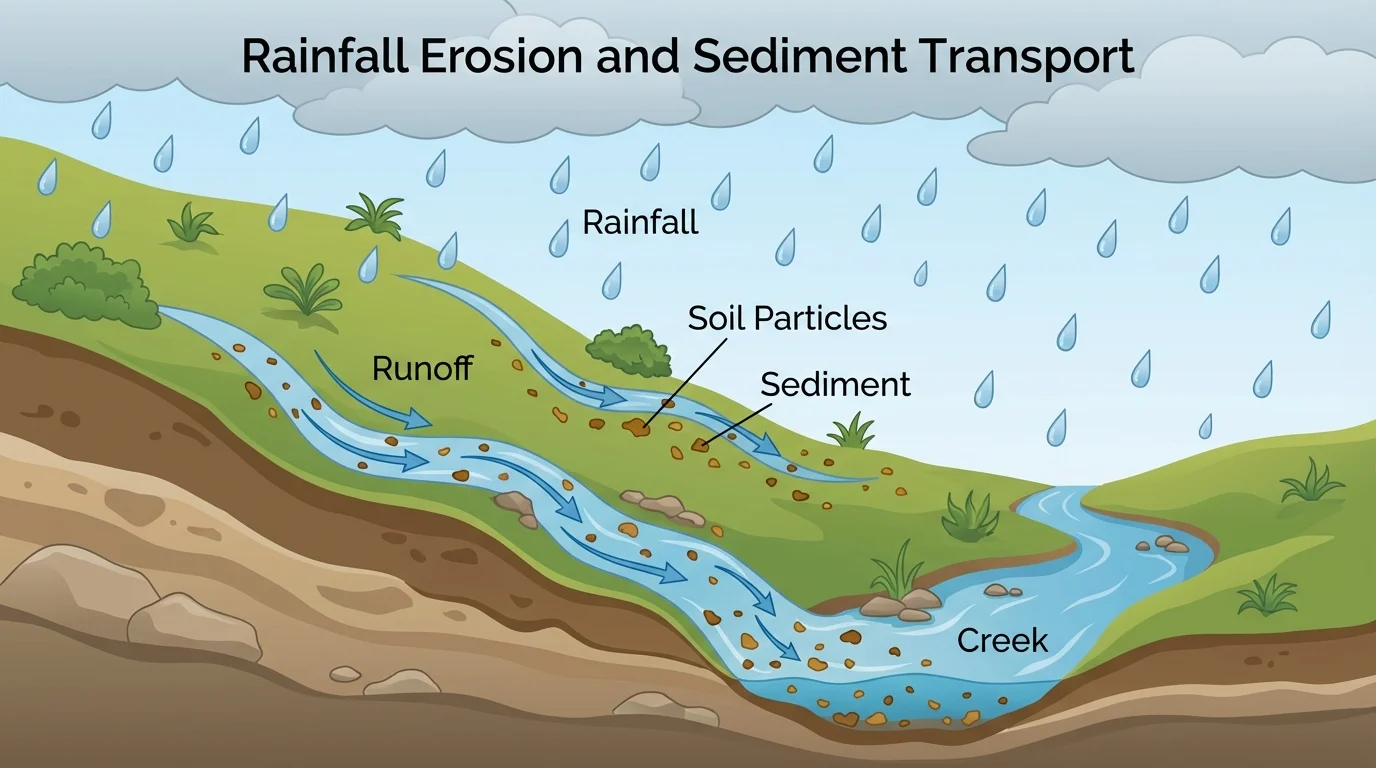
[Figure 1] Runoff happens when rainwater flows over the ground instead of soaking in. On a steep hill, during a heavy storm, or on hard ground, water may rush downhill, carrying tiny bits of soil with it. If this happens again and again, the slope can slowly change shape.
Rain does not affect every place in the same way. A light rain may only dampen the soil. A strong storm can form channels in dirt, wash away part of a riverbank, or make a muddy stream. Places with a lot of rainfall often have more flowing water, and that means more chances for the land to be worn down and moved around.
Rain also affects where plants can grow. In places with enough water, grasses, shrubs, and trees can take root. Their roots help hold soil in place. In places with very little rain, the ground may be bare in many spots, and loose soil can be easier for wind or sudden flash floods to move.
Sometimes rainfall can help build land too. When streams slow down, they may drop the sediment they were carrying. This can create mudflats, sandbars, and new soil layers. So rain can both wear land away and help create new landforms somewhere else.
Some of the world's deepest canyons were shaped mainly by rivers carrying water and sediment over very long periods of time. Slow change can create very big landforms.
People notice these changes in everyday life. After a storm, a playground may have puddles and washed-out patches of dirt. A farmer may see soil moved from one part of a field to another. Along roads, ditches are built to guide rainwater so it does not wear away the land too quickly.
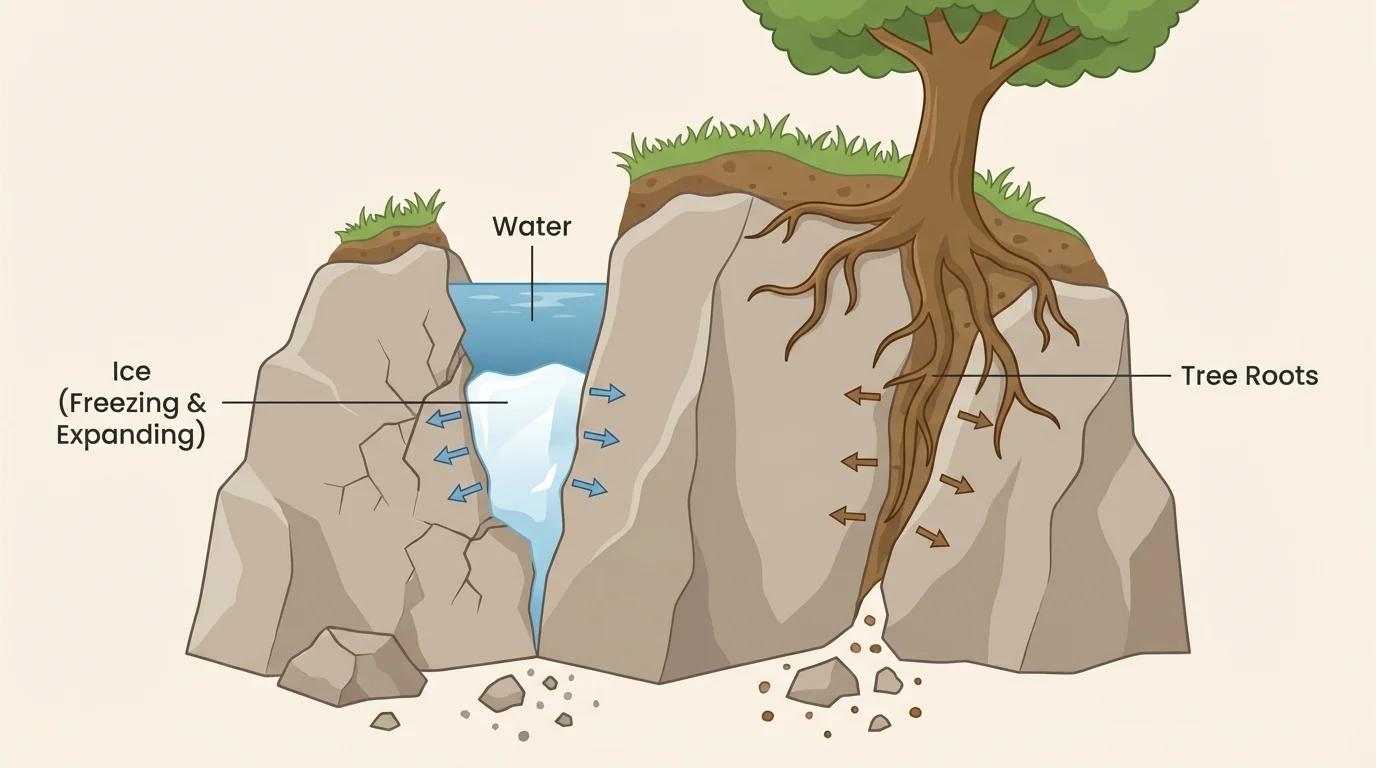
[Figure 2] Weathering is the process that breaks rocks into smaller pieces, and water is one of its most important causes. Over time, rain can seep into tiny cracks in rock. Ice, plant roots, and even changes in temperature can make those cracks wider.
One kind of weathering happens when water enters a crack and then freezes. When water freezes into ice, it expands. That means it takes up more space and pushes against the sides of the crack. After many freeze-and-thaw cycles, the rock can split apart. This is often called ice wedging.
Living things can also cause weathering. A small plant may begin growing in a crack. As the roots grow larger, they push against the rock. Bit by bit, the rock breaks. Animals that dig burrows can loosen soil and expose new rock surfaces to wind and water.
Water can also change rock in another way. Some rainwater mixes with gases in the air and becomes a weak acid. This water can slowly react with certain minerals in rock and change them. This is a kind of chemical weathering. For example, limestone can slowly dissolve when slightly acidic water moves through it.
Not all weathering is easy to see right away. A big boulder may look the same from one day to the next. But over many years, its edges may become rounder, cracks may deepen, and small grains may break free. Those grains can later be moved by erosion.
Breaking first, moving second
Weathering and erosion often work together. First, weathering breaks rock into smaller pieces. Then erosion moves those pieces away. If rock were never broken apart, it would be much harder for water, wind, or ice to carry it.
The rock pieces made by weathering may be very tiny, like clay, or larger, like pebbles and boulders. Size matters because tiny particles are easier for wind and water to carry. Larger pieces may stay put unless a strong force, such as a flood or landslide, moves them.
[Figure 3] Erosion happens when rock, soil, and sediment are moved from one place to another. Water, wind, ice, and gravity are major agents of erosion. Each one moves material in a different way.
Flowing water is one of the strongest agents of erosion. Streams and rivers can carry mud, sand, pebbles, and even large rocks. Faster water can move larger pieces. Slower water usually carries only smaller particles. During floods, rivers can erode banks quickly and reshape the land.
Wind can pick up fine sand and dust, especially in dry places with little plant cover. Over time, wind can wear down rock surfaces and build sand dunes. This is why deserts often have landforms shaped strongly by wind.
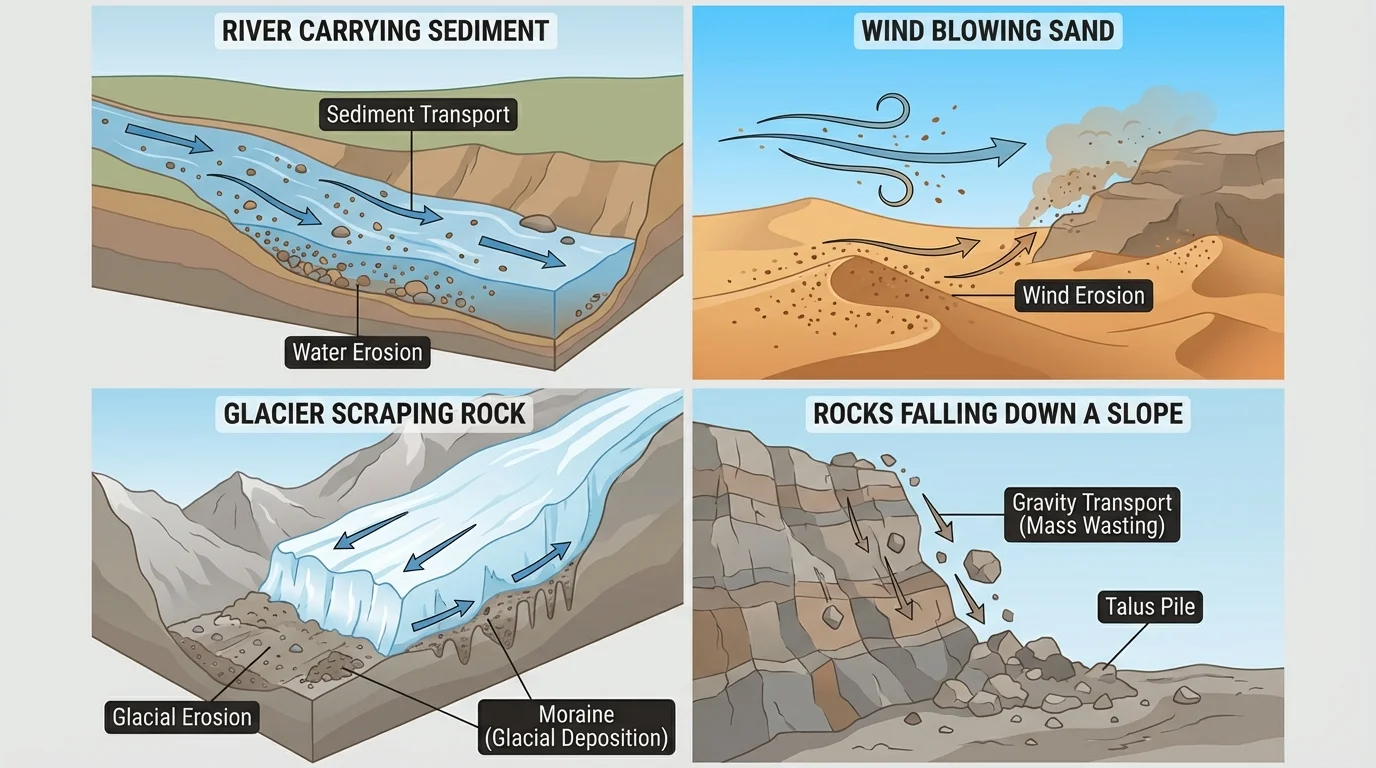
Ice also causes erosion. A moving glacier is a huge mass of ice that slides slowly over land. As it moves, it can scrape rock, pick up sediment, and leave deep marks in the ground. Long ago, glaciers shaped many valleys and lakes.
Gravity pulls everything toward Earth. It helps move loose rock and soil downhill. A small rockslide, a landslide, or even soil creeping slowly down a slope are all examples of gravity helping erosion happen.
Living organisms can play a part too. Tree roots break rocks and hold soil, but when plants are removed, soil may wash away more easily. Burrowing animals stir up the ground. Humans, who are living organisms, can speed erosion when they clear forests, dig mines, or leave soil uncovered during construction.
We can see the same idea from [Figure 1] in a much larger place: tiny bits of soil carried downhill by rain can eventually reach creeks and rivers. Small changes can connect to much bigger ones across a whole region.
Erosion does not keep sediment moving forever. When water, wind, or ice slows down, the material can settle. This settling is called deposition. Deposition helps build new landforms.
For example, a river may rush quickly through mountains, carrying many sediments. When the river reaches flatter land, it may slow down. Sand and mud can then settle on the riverbed or along the banks. Over time, this can create wide floodplains with rich soil.
At the mouth of a river, where it enters a lake or ocean, deposited sediment can build a delta. Deltas are often good places for plants, fish, birds, and farming because they have plenty of water and nutrient-rich soil.
Wind deposition can form dunes. Waves can deposit sand along beaches. Even glaciers leave piles of rock and sediment behind when they melt. Earth's surface is shaped by a balance of breaking, moving, and dropping materials.
| Force | What it can do | Example landform or result |
|---|---|---|
| Water | Breaks, moves, and drops sediment | River valleys, deltas, floodplains |
| Wind | Moves fine sand and dust | Dunes, worn rock surfaces |
| Ice | Breaks rock and scrapes land | U-shaped valleys, glacial deposits |
| Gravity | Pulls material downhill | Landslides, rockfalls |
| Living organisms | Break, loosen, or hold soil | Root cracks, changed soil stability |
Table 1. Main forces that shape land and examples of what they create or change.
Deposition is one reason soil can be deeper and richer in some places than in others. Material from mountains may be carried far away and dropped on plains. That means one place may lose sediment while another gains it.
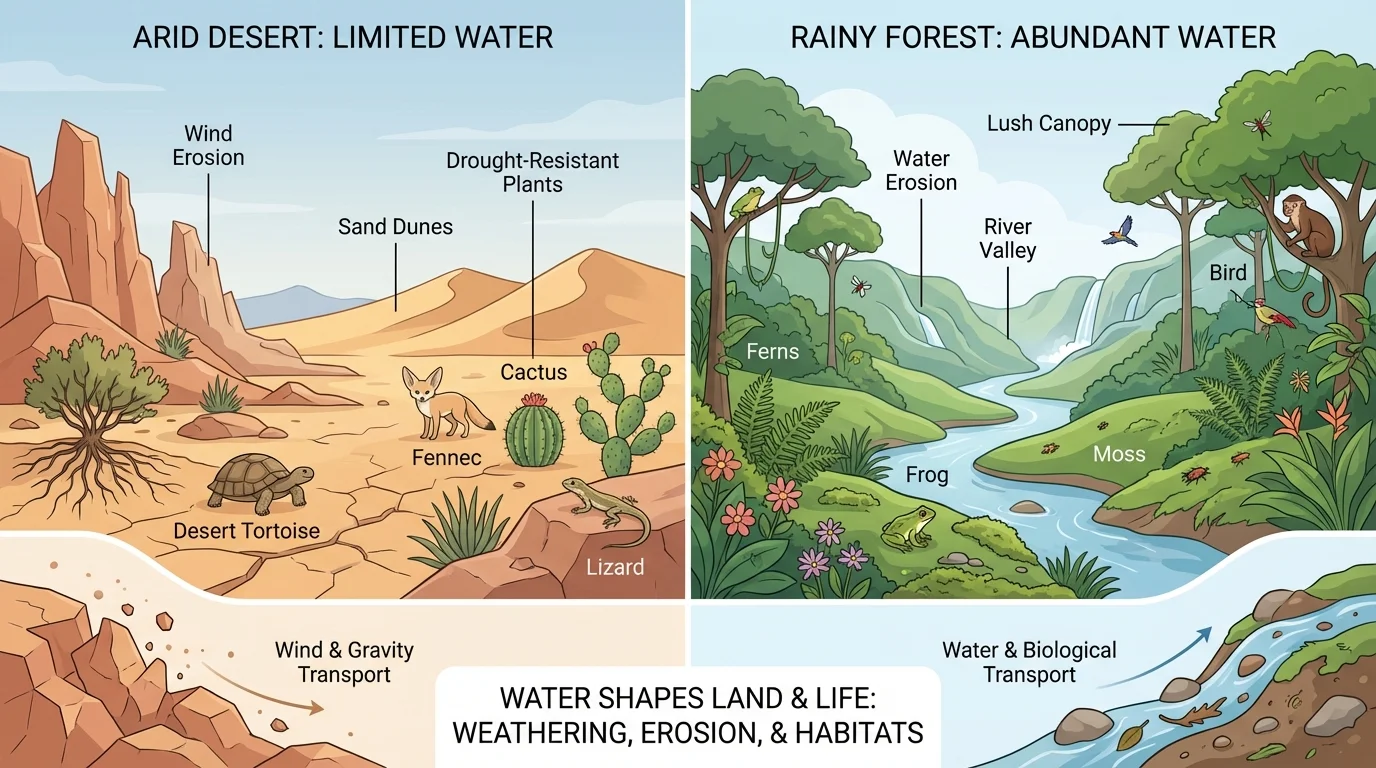
[Figure 4] The amount of rainfall in a region helps decide what kinds of plants and animals can live there. Living things need water, but different species need different amounts. A place with frequent rain can support organisms that would not survive in a very dry place.
In a rainforest, heavy rainfall supports tall trees, vines, insects, birds, frogs, and many other organisms. In a desert, where rain is rare, plants such as cacti store water, and animals may rest in shade or come out mostly at night. Grasslands have enough rain for grasses but usually not enough for thick forests.
Wetlands form where water covers the ground for long periods. These places can be home to reeds, frogs, turtles, fish, insects, and birds. Wetlands also slow down water and trap sediment, which means they help reduce erosion and flooding in some places.
Plants do more than just live in a place; they also shape it. Roots hold soil together. Leaves and stems soften the impact of raindrops. Forests can reduce the speed of runoff. When plants are removed by fire, drought, or human activity, the land may erode faster.
Real-world example: Why a forested hill and a bare hill change differently in rain
Step 1: Rain falls on both hills.
On the forested hill, leaves and branches slow the raindrops. On the bare hill, raindrops hit the soil directly.
Step 2: Water begins to move.
On the forested hill, roots and leaf litter help water soak in. On the bare hill, more water becomes runoff.
Step 3: Soil responds.
The forested hill keeps more soil in place. The bare hill loses more soil because it is easier for water to carry it away.
This is why planting vegetation can help protect land from erosion.
The contrast in [Figure 4] also helps explain why animals are adapted to their environments. In wetter places, some animals depend on ponds, streams, and dense plants for shelter. In drier places, animals often have body features or behaviors that help them save water.
Earth's systems are connected. The landforms in a region affect how water flows. Water affects how rocks and soils change. Plants and animals affect the soil, and the amount of rainfall affects the plants and animals. None of these parts works alone.
For example, a mountain region may get a lot of rain or snow. Water and ice weather the rocks, streams erode the slopes, and sediment is carried into valleys. Those valleys may then have rich soil where forests or farms can grow. One change leads to another.
Even the air is part of the system. Wind moves sediments. Temperature changes help crack rocks. Clouds bring rainfall. Water can exist as liquid water, solid ice, and water vapor in the air. All of these forms help shape Earth's surface.
Water is always moving through the water cycle. It falls as precipitation, flows across land, soaks into the ground, collects in rivers and lakes, and returns to the air by evaporation. Because water keeps moving, it keeps changing the land too.
Scientists study these interactions to understand floods, droughts, soil loss, and habitat change. Farmers, builders, and park rangers also need this knowledge so they can protect land and water.
Along rivers, people sometimes plant grasses and trees on the banks. The roots help hold the soil, so less sediment washes into the water. This can protect fish habitats and keep rivers from becoming too muddy.
Near beaches, storms can move large amounts of sand. Some beaches shrink when waves erode them, while other places grow when sand is deposited. Engineers and communities study these changes to protect homes and roads.
In mountain regions, weather forecasts are important because heavy rain can trigger landslides. Gravity pulls loosened rock and soil downhill, especially after the ground becomes soaked. Knowing how land changes helps keep people safe.
Farmers often leave plant cover on fields or plow in ways that reduce runoff. These methods help keep topsoil from washing away. Topsoil is valuable because it contains nutrients that plants need.
"The surface of Earth is always changing, even when the changes are too slow to notice in a single day."
From a tiny crack in a rock to a giant river valley, the same basic forces are at work. Water, ice, wind, living organisms, and gravity break Earth materials into smaller pieces and move them around. Rainfall is especially important because it affects both the shape of the land and the kinds of life a region can support.
