Flip on a light, ride in a car, heat soup on a stove, or charge a tablet, and you are using energy from nature. That may sound surprising, because the electricity in a wall outlet or the gasoline at a gas station can feel like they simply appear for us to use. But they do not. People find, collect, and change natural resources into forms of energy that power our daily lives.
Energy helps people do work and make things happen. We use energy to light rooms, keep food cold in refrigerators, move buses and cars, run school computers, and heat or cool buildings. Even our bodies use energy from food so we can walk, think, and grow.
When we talk about energy for homes, schools, and transportation, we are often talking about electricity and fuels. Electricity powers lamps, fans, and chargers. Fuels such as gasoline, diesel, natural gas, and wood can be burned to release stored energy.
Earth provides many resources that people use every day, including water, air, soil, rocks, plants, and fuels. A resource is something people use to meet a need.
People do not create energy from nothing. Instead, they change energy from one form to another. For example, a power plant may change energy in fuel into electricity. A solar panel changes energy from sunlight into electricity. A toaster changes electrical energy into heat.
An energy source is where usable energy comes from. Some energy sources come directly from nature, like sunlight, wind, and moving water. Others come from materials found in nature, such as coal, oil, natural gas, and wood.
A fuel is a material that can release energy, usually by burning. Wood is a fuel. Gasoline is a fuel made from oil. Natural gas is also a fuel. When fuels burn, they often combine with oxygen in the air and form new substances. For example, burning natural gas can produce water vapor and carbon dioxide, written as \(\textrm{H}_2\textrm{O}\) and \(\textrm{CO}_2\).
Renewable resource means a natural resource that can be replaced in a fairly short time or can be used again and again, such as sunlight or wind.
Nonrenewable resource means a natural resource that forms so slowly that humans can use it up much faster than nature can replace it, such as coal, oil, and natural gas.
Some energy sources seem almost endless on a human time scale. The Sun shines day after day, and wind keeps moving because the Sun warms Earth unevenly. Other energy sources take so long to form that, for people, they are limited. If something takes millions of years to form, it cannot be replaced quickly after we use it.
There are two big groups of energy resources: renewable resources and nonrenewable resources. The main difference is how quickly nature can replace them.
[Figure 1] Renewable resources include sunlight, wind, moving water, biomass, and geothermal energy. These are replaced naturally over shorter times or can be used repeatedly without being depleted quickly. Nonrenewable resources include coal, oil, and natural gas. These formed long ago and are used much faster than they form.
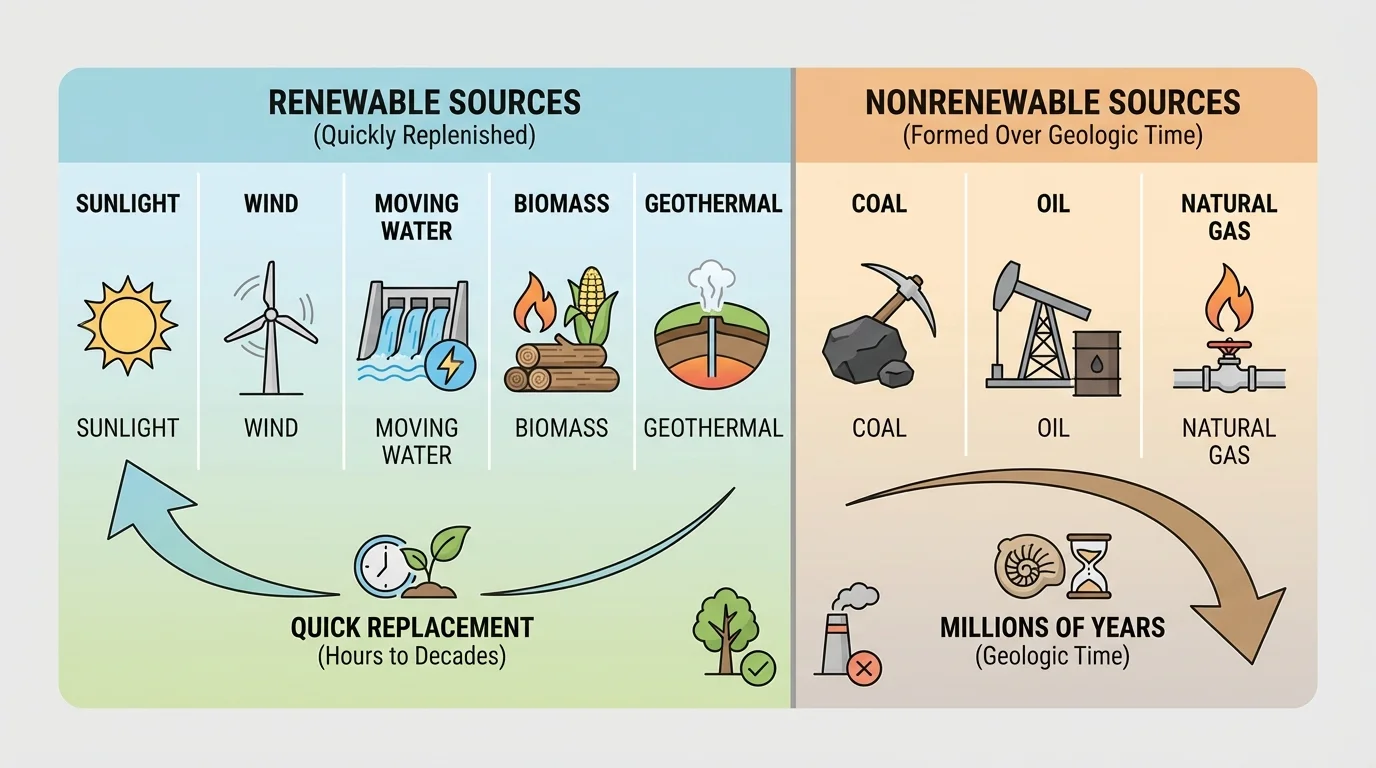
Think of it this way: if you pick apples from a tree each year and the tree keeps growing more apples, that is like a renewable resource. But if you empty a piggy bank that took millions of years to fill and it will not refill during human lifetimes, that is like a nonrenewable resource.
Biomass is a special example. Biomass means energy from living things or once-living things, such as wood, crop waste, or animal waste. Biomass can be renewable if people replace what they use, such as planting new trees after harvesting wood. If forests are cut down faster than they regrow, the resource is not being used in a renewable way.
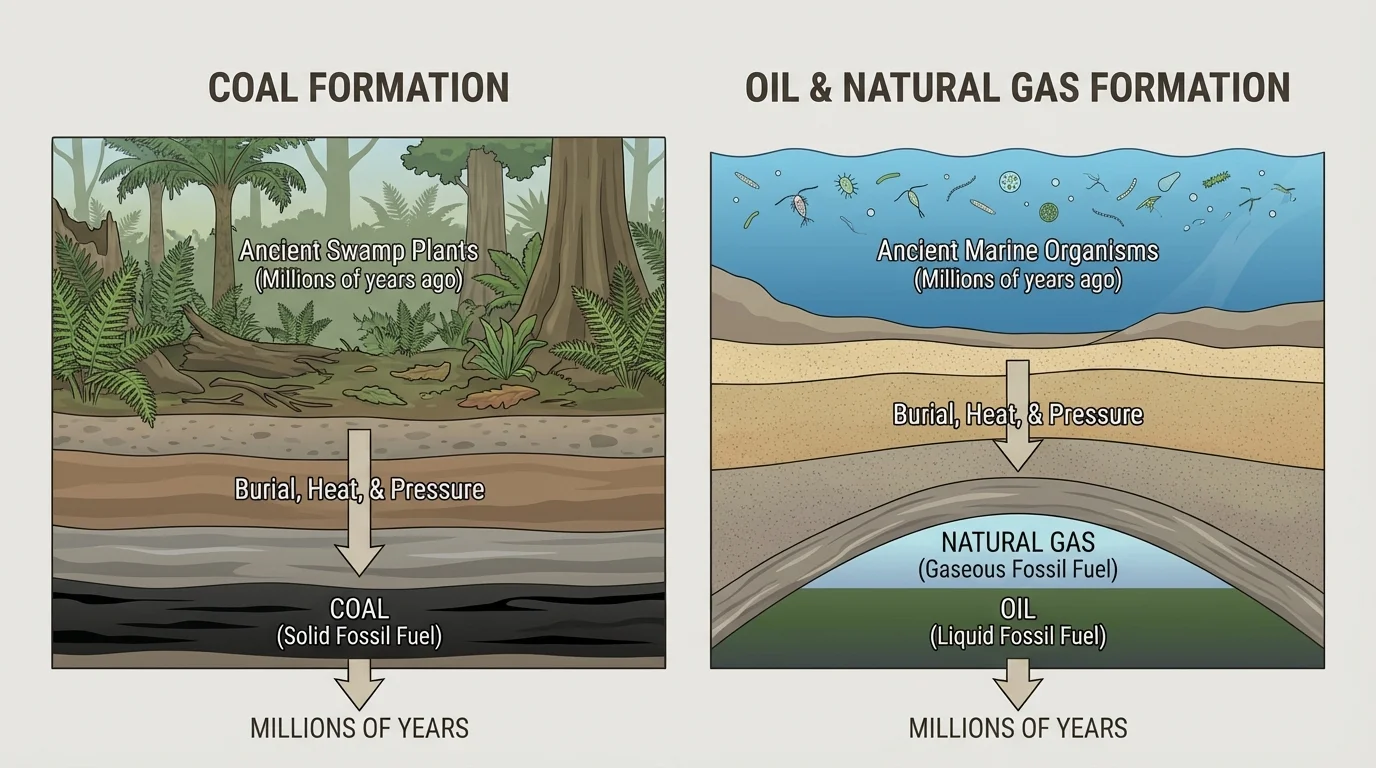
Fossil fuels are energy-rich materials formed from ancient living things. Coal mostly formed from ancient plants. Oil and natural gas formed from tiny sea organisms and other living matter buried under layers of sediment.
[Figure 2] Over millions of years, heat and pressure changed this buried material into coal, oil, and natural gas. Because this process takes so long, fossil fuels are nonrenewable. Humans can burn them in a short time, but Earth cannot quickly make more.
People use coal in some power plants to make electricity. Oil is turned into fuels such as gasoline, diesel, and jet fuel. Natural gas is used for heating, cooking, and electricity generation. These fuels are powerful and useful, which is one reason they have been used so much around the world.
However, using fossil fuels has costs. When they burn, they release gases into the air, including \(\textrm{CO}_2\). Carbon dioxide is a greenhouse gas, which means it helps trap heat in Earth's atmosphere. A small amount of this trapping is natural and helps keep Earth warm enough for life, but too much can cause problems.
Coal, oil, and natural gas all come from natural sources, but they are not all found in the same places. Different parts of Earth have different rock layers and geologic histories, so some places have much more of one fossil fuel than another.
The process shown in [Figure 2] also explains why these fuels are limited resources. Since they form so slowly, every time people burn them, they are using part of a resource that took far longer to form than a human lifetime.
Renewable sources come from natural processes that continue over time. These sources can often make electricity with less air pollution than fossil fuels. They are important because people need energy, but they also need healthy air, water, and land.
[Figure 3] Solar energy comes from sunlight. Solar panels capture light energy and change it into electricity. Solar cookers and solar water heaters use the Sun's energy in other ways.
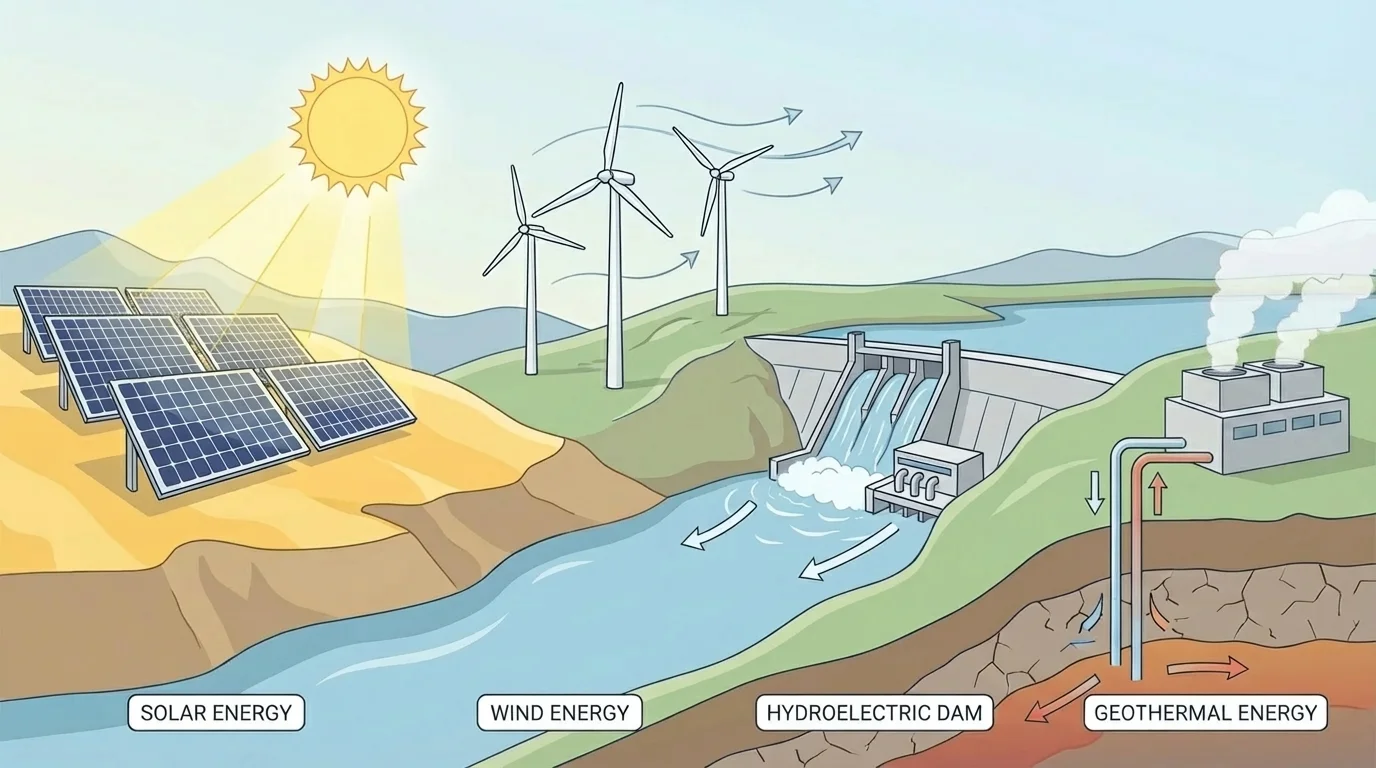
Wind energy comes from moving air. Wind turbines spin when wind pushes their blades. The spinning motion helps make electricity. Wind forms because the Sun heats Earth's surface unevenly, causing air to move.
Hydropower comes from moving water. Water flowing through a dam or down a river can turn turbines and generate electricity. Places with strong rivers or large dams may use this energy a lot.
Geothermal energy is heat from inside Earth. In some places, hot water or steam underground can be used for heating buildings or making electricity.
Biomass can also be used to make energy. Wood can be burned for heat. Some plant materials can be turned into liquid fuels. But biomass must be managed carefully so that forests, soil, and habitats are protected.
Renewable does not always mean no impact. A renewable source can still affect the environment. A dam may change river habitats. Wind turbines must be placed carefully so they do not harm too many birds or bats. Solar farms take up land. The goal is to compare impacts and choose the best options for each place.
The systems in [Figure 3] remind us that renewable energy can come from many parts of Earth's systems: the Sun, the atmosphere, water, living things, and heat inside the planet.
Using energy can affect Earth in several ways. Some effects happen right away, like smoke or noise. Others build up slowly over time, like extra greenhouse gases in the atmosphere.
[Figure 4] When fossil fuels burn, they release carbon dioxide, written as \(\textrm{CO}_2\), and may also release other pollutants. These can make the air dirty and unhealthy to breathe. Some pollution can contribute to smog or acid rain. People, plants, and animals can all be harmed by polluted air.
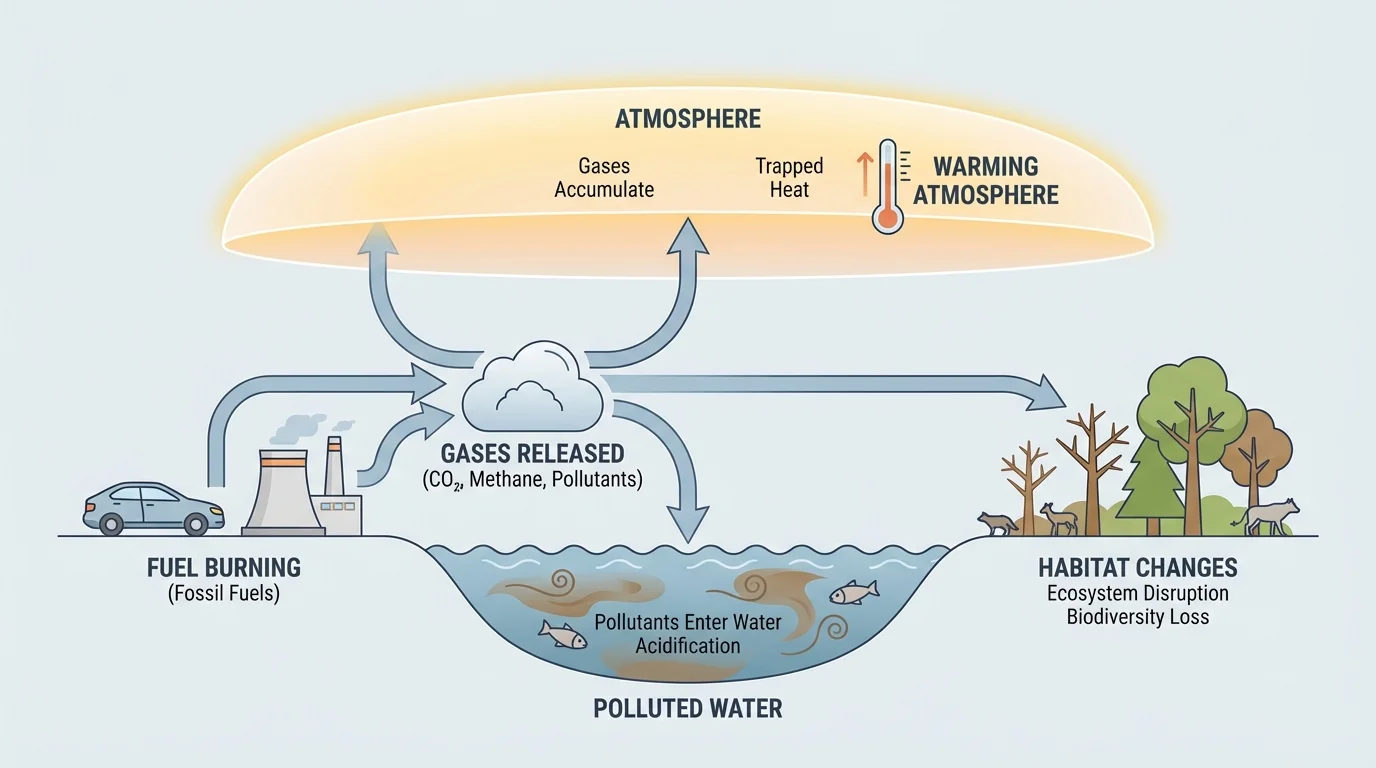
Extra greenhouse gases trap more heat in the atmosphere. This can lead to climate changes such as hotter average temperatures, melting ice, changing rainfall patterns, and stronger heat waves in some regions. Weather is what happens day to day, while climate is the pattern of weather over a long time.
Getting energy resources can also affect land and water. Mining coal may disturb land and habitats. Drilling for oil or gas can sometimes cause spills or leaks. Building roads, pipelines, or power plants can change where animals live. Water used in energy production may become warmer or dirtier, which can affect fish and other living things.
Even renewable energy systems can change environments. A dam can block fish from moving upstream. Large wind farms and solar farms can change land use. That is why scientists and engineers study where and how to build energy systems to reduce harm.
The chain of effects in [Figure 4] helps show that energy choices are connected to air, water, land, and living things. One decision, such as burning more gasoline, can lead to several environmental changes at once.
Energy systems are part of communities. A home might use electricity from a mix of sources. In one place, electricity may come mostly from hydropower. In another, it may come from natural gas, coal, wind, or solar power. School buses may use diesel, while some city buses now use electricity.
A stove can be powered by electricity or natural gas. A car may run on gasoline, while an electric car uses electricity stored in batteries. If that electricity comes from solar, wind, or hydropower, the car may cause less air pollution than a gasoline car.
Real-world example: saving electricity at school
A classroom replaces old light bulbs with bulbs that use less electrical energy.
Step 1: Compare one old bulb and one new bulb.
An old bulb uses \(60\) units of electricity in a certain time, and a new bulb uses \(10\) units in the same time.
Step 2: Find how much energy is saved for one bulb.
Energy saved is \(60 - 10 = 50\) units.
Step 3: Think about many bulbs.
If the classroom has \(8\) bulbs, total savings are \(8 \times 50 = 400\) units in that same time.
Using less electricity can mean less fuel needs to be burned at a power plant, depending on where the electricity comes from.
This example shows that small changes can matter. One classroom may save a little, but many classrooms, homes, and stores together can save a lot of energy.
Conservation means using resources carefully so they last longer and cause less harm. Energy conservation can include turning off lights, unplugging chargers not in use, walking or biking when possible, and using better insulation in buildings.
Efficiency means getting the same job done while using less energy. For example, an efficient refrigerator keeps food cold while using less electricity. An efficient car travels farther on the same amount of fuel.
Communities can help by planting trees for shade, improving public transportation, building bike lanes, and using cleaner energy sources. Engineers design better batteries, solar panels, and wind turbines. Scientists study Earth's systems so people can make wiser choices.
"We all use Earth's resources, so we all share the job of using them wisely."
There is no single perfect energy source for every place. Some places are sunny and good for solar power. Some have strong winds, rushing rivers, or heat close to the surface underground. The best choices often depend on local natural resources, technology, cost, and environmental effects.
Learning about energy helps us understand an important Earth and human activity connection: people depend on Earth for energy, and the ways we use that energy can change Earth's air, water, land, and living systems.
