Look at a group of dogs, birds, or flowers. They may all belong to the same kind, but they are not exactly the same. Some are bigger, some are smaller, some have brighter colors, and some move faster. Those differences are important. In nature, being a little different can help a living thing stay safe, get food, find a mate, and have young.
A species is a group of living things that are alike in many ways. Even within one species, individuals can still be different. As [Figure 1] shows, birds of the same species may have slightly different beak sizes, feather shades, or body sizes. These differences are called variation.
Variation can include color, size, shape, speed, fur thickness, leaf size, or even the sound an animal makes. For example, one rabbit may have thicker fur than another rabbit of the same species. One sunflower may grow taller than another sunflower of the same type. These differences do not mean they are different species. They are still members of the same group.
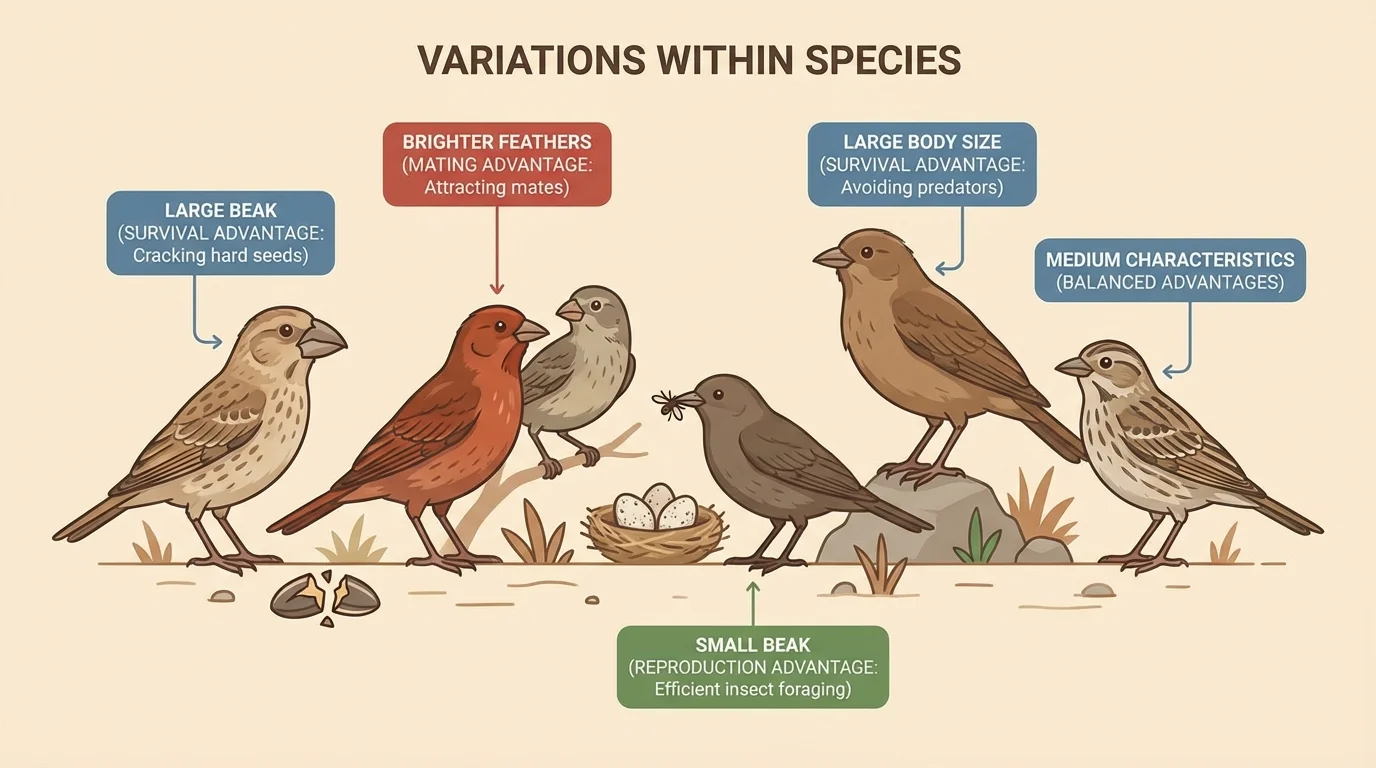
Some variations are inherited, and some are influenced by the environment around an organism, such as food, water, sunlight, and temperature. A plant that gets more sunlight may grow taller than another plant of the same species. The important idea is that individuals in a species are not all exactly alike.
Variation means differences in characteristics among individuals of the same species.
Characteristic means a feature or trait of a living thing, such as color, size, shape, or behavior.
Evidence is information from observations that helps support an explanation.
Scientists pay attention to these differences because variation can help explain why some living things do well in certain places while others do not. Scientists do not just guess. They observe carefully and look for evidence.
When scientists study animals and plants, they often compare individuals of the same species. They may notice that some birds have stronger beaks, some insects have colors that blend into their surroundings, or some plants have waxy leaves that help them keep water. Then scientists ask an important question: which variations seem to help the organism?
Evidence can come from watching what happens in nature. If birds eat the insects they can see more easily, then insects with colors that blend in may survive better. If taller plants reach more sunlight than shorter plants nearby, the taller plants may grow better and make more seeds. These observations help scientists build explanations.
Evidence can also come from comparing places. A rabbit living in a cold area may have thicker fur than a rabbit of the same species in a warmer area. A cactus growing in a dry place may have features that help it store water. By looking at patterns like these, scientists can explain how variation helps living things live in their environments.
Some arctic animals change color with the seasons. White fur or feathers can help them blend into snowy places, while darker colors may help when snow melts away.
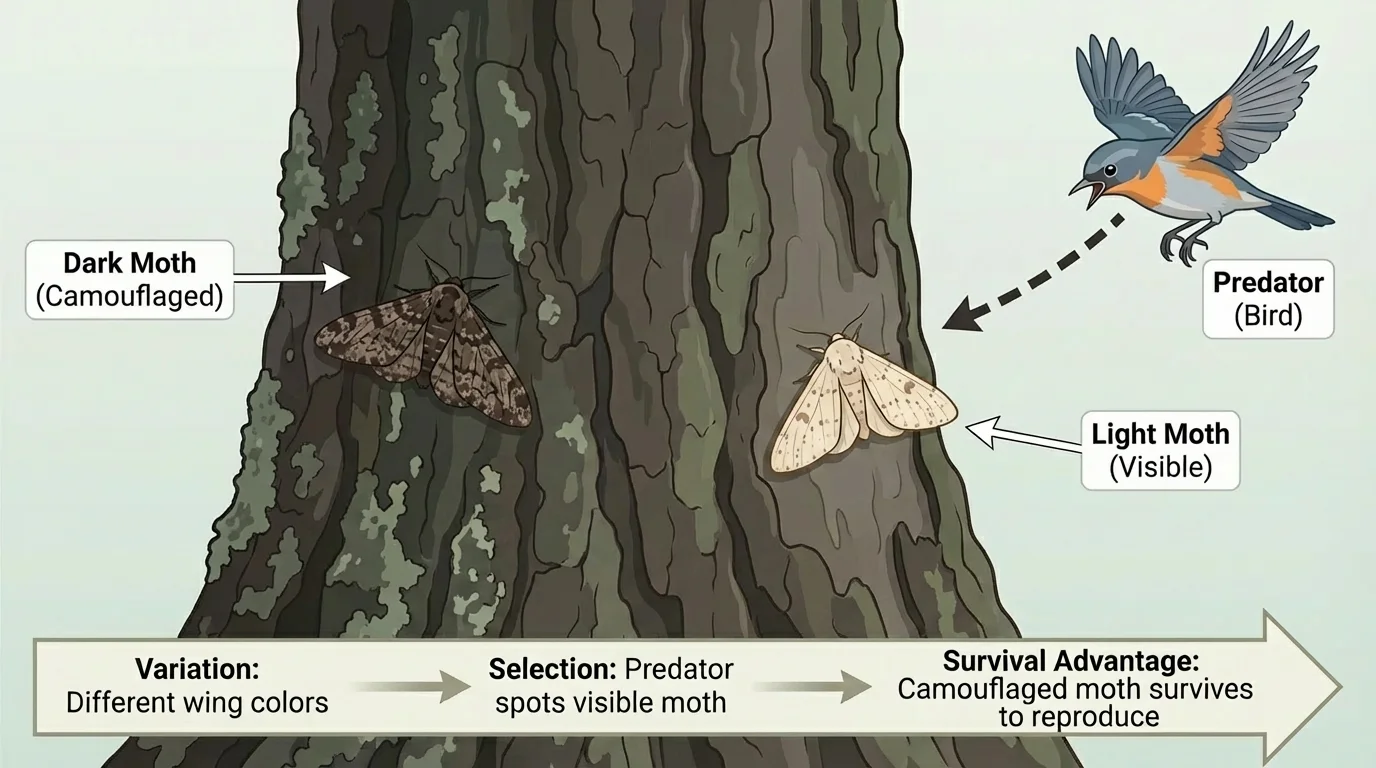
To build a strong explanation, scientists connect what they observed to what happened. They might say, "This moth survived because its color matched the tree bark, so predators had a harder time seeing it." That is an explanation based on evidence.
[Figure 2] Survival means staying alive long enough to grow and meet basic needs. In many species, certain variations help with survival. Color can make a big difference when an animal needs to hide from predators. If one moth blends into tree bark and another stands out, the hidden moth may be less likely to be eaten.
Variation can also help with getting food. Some birds of the same species may have beaks that are a little different in size or shape. In a place with hard seeds, birds with stronger beaks may crack the seeds more easily. If food is easier to get, those birds may survive better.
Other variations help living things deal with weather. Thick fur can help animals stay warm in cold places. Wide leaves can help some plants collect more sunlight. Deep roots can help plants reach water underground. A small difference can become very important when the environment is challenging.
Variation can help living things avoid sickness, too. In a group of plants, some may be better able to survive disease or insect attacks. If a disease spreads, the plants with helpful characteristics may remain healthy longer. This does not mean they are perfect or never get sick. It means some variations can give an advantage.
| Living thing | Variation | Possible advantage |
|---|---|---|
| Moth | Body color matches bark | Harder for predators to see |
| Bird | Stronger beak | Can crack tough seeds |
| Rabbit | Thicker fur | Stays warmer in cold weather |
| Plant | Deeper roots | Reaches water underground |
Table 1. Examples of variations that can help organisms survive.
When we look back at [Figure 1], we can see that even small differences within one species may matter. A slightly bigger beak or a slightly different body size may affect how well an individual gets food or escapes danger.
Not every variation helps in every place
A characteristic that is helpful in one environment may not be helpful in another. Thick fur is useful in cold weather, but it may be less useful in very hot weather. A tall plant may get more sunlight, but in a windy place it may be more easily damaged. Scientists always connect the variation to the environment.
This is why evidence matters. We should not just say, "This characteristic is good." We should say, "This characteristic helps in this place because of these observations."
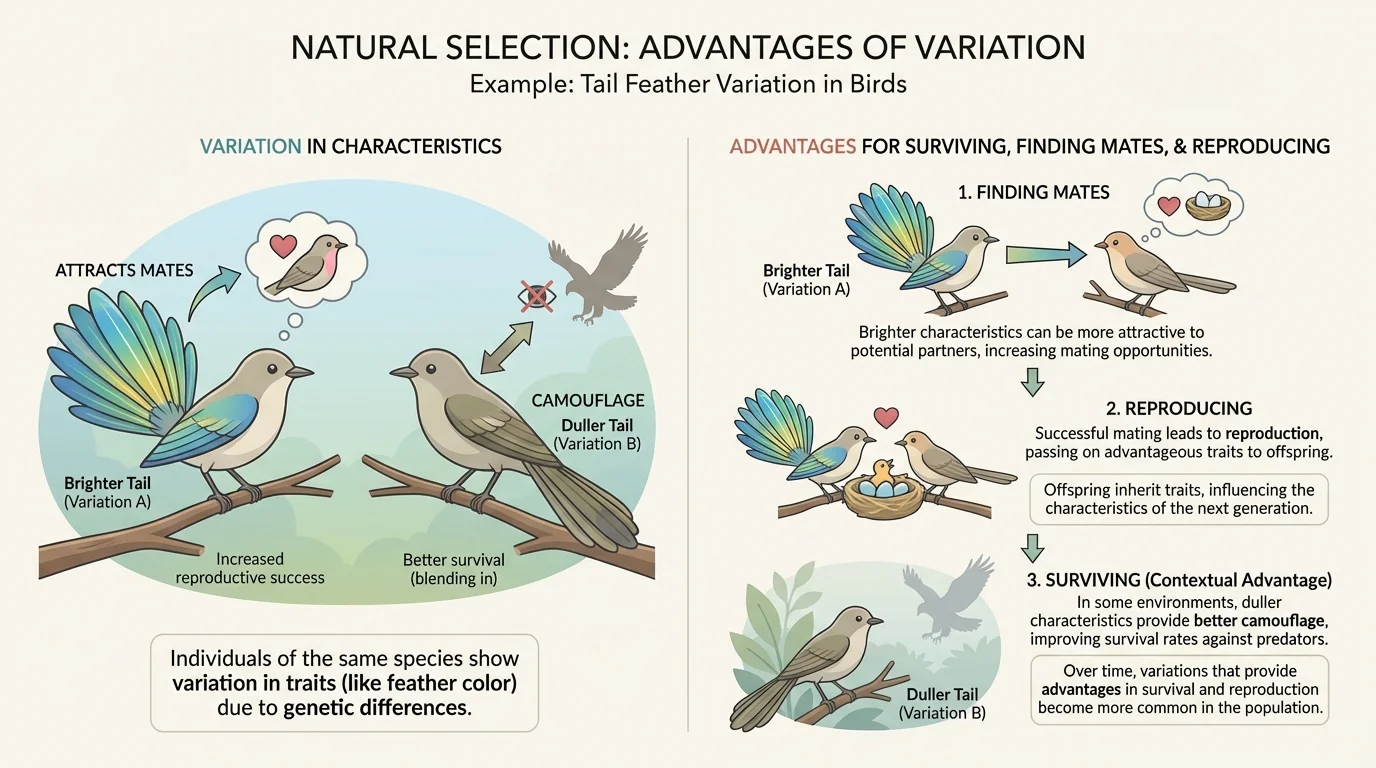
[Figure 3] Surviving is only part of the story. Living things also need to find mates in order to reproduce. In some species, certain variations help individuals attract a mate. Brighter feathers, special dances, or louder songs can help one animal get noticed.
For example, in some birds, a male with brighter feathers may be easier for a female to notice. In other animals, a stronger call or a more impressive movement may help. These characteristics can give an individual an advantage in finding a mate.
Variation in size can matter too. In some animals, being larger or stronger may help an individual compete with others. In some frogs, the way a call sounds may help a mate find the right member of the species. In flowering plants, variation in flower color or smell may attract more pollinators, such as bees or butterflies, which can help plants reproduce.
This does not mean the "brightest" or "largest" trait always wins. The environment still matters. A very bright color might help attract a mate, but it might also make an animal easier for predators to see. Nature often involves trade-offs, where one trait can help in one way and cause a challenge in another way.
The idea is simple: if a variation helps an organism find a mate, that organism has a better chance to reproduce. Later, when we use evidence to explain reproduction, we can connect this idea to what we observed.
Case study: Birds and courtship displays
Step 1: Scientists observe birds of the same species.
Some males have brighter feathers and longer display dances than others.
Step 2: Scientists record what happens.
They notice that females often choose males with stronger displays more often.
Step 3: Scientists explain the pattern.
The brighter feathers or stronger displays may provide an advantage in finding mates.
This explanation uses observations as evidence instead of guesswork.
When you think again about camouflage in [Figure 2], you can see that nature is full of balancing acts. A characteristic can help survival, mate-finding, or both, depending on the situation.
Reproduce means to produce young. To reproduce successfully, an organism usually needs to survive long enough, find a mate if needed, and in some species care for its young. Variations can help at each of these steps.
If a female bird is better at building a safe nest, her eggs may be more protected. If a plant grows flowers that attract pollinators, more pollen may be moved from flower to flower. If a sea turtle hatchling is faster, it may be more likely to reach the ocean safely. These differences can affect whether young are produced and survive.
Some variations help parents care for offspring. A bird with a beak shape that helps gather food quickly may feed its chicks more successfully. A mammal with thick fur may keep its babies warmer. A plant with seed shapes that travel in the wind may spread its offspring to new places.
So when scientists explain reproduction, they do not only talk about babies being born or seeds being made. They also look at the characteristics that help make reproduction successful.
Living things need food, water, air, space, and the right conditions to live. Reproduction happens more successfully when organisms can meet these needs and when their characteristics help them in their environment.
A useful scientific explanation often links these ideas together: a variation helps survival or mate-finding, and that increases the chance that the organism will reproduce.
Some living organisms resemble organisms that once lived on Earth. That means when scientists study fossils and compare them with living things today, they may notice similar shapes, body parts, or ways of living. For example, ancient horse relatives and modern horses share some body features. Ancient reptiles and modern reptiles may also show similarities.
This matters because it reminds us that living things change over very long periods of time, and variation is part of that story. Organisms alive today may have characteristics that are similar to those of organisms from long ago, while also showing differences that help them live in today's environments.
Scientists use evidence from fossils, bones, shells, footprints, and living organisms to make these comparisons. They ask, "What features are similar?" and "How might certain characteristics have helped these organisms survive and reproduce in their environments?"
Fossils can show that some organisms from long ago had body shapes much like organisms living today. Scientists use those clues to compare past life and present life.
We do not need to study patterns of inheritance to understand this grade-level idea. What matters here is that evidence shows living things in the same species vary, and those variations can provide advantages.
[Figure 4] Scientists often organize ideas into a claim, evidence, and reasoning. A claim is what you think is true. Evidence is what you observed. Reasoning explains why the evidence supports the claim.
Suppose scientists observe rabbits of the same species in a cold place. Some rabbits have thicker fur. They notice that rabbits with thicker fur stay active in colder weather. From this evidence, they can explain that thicker fur may provide an advantage for survival in cold environments.
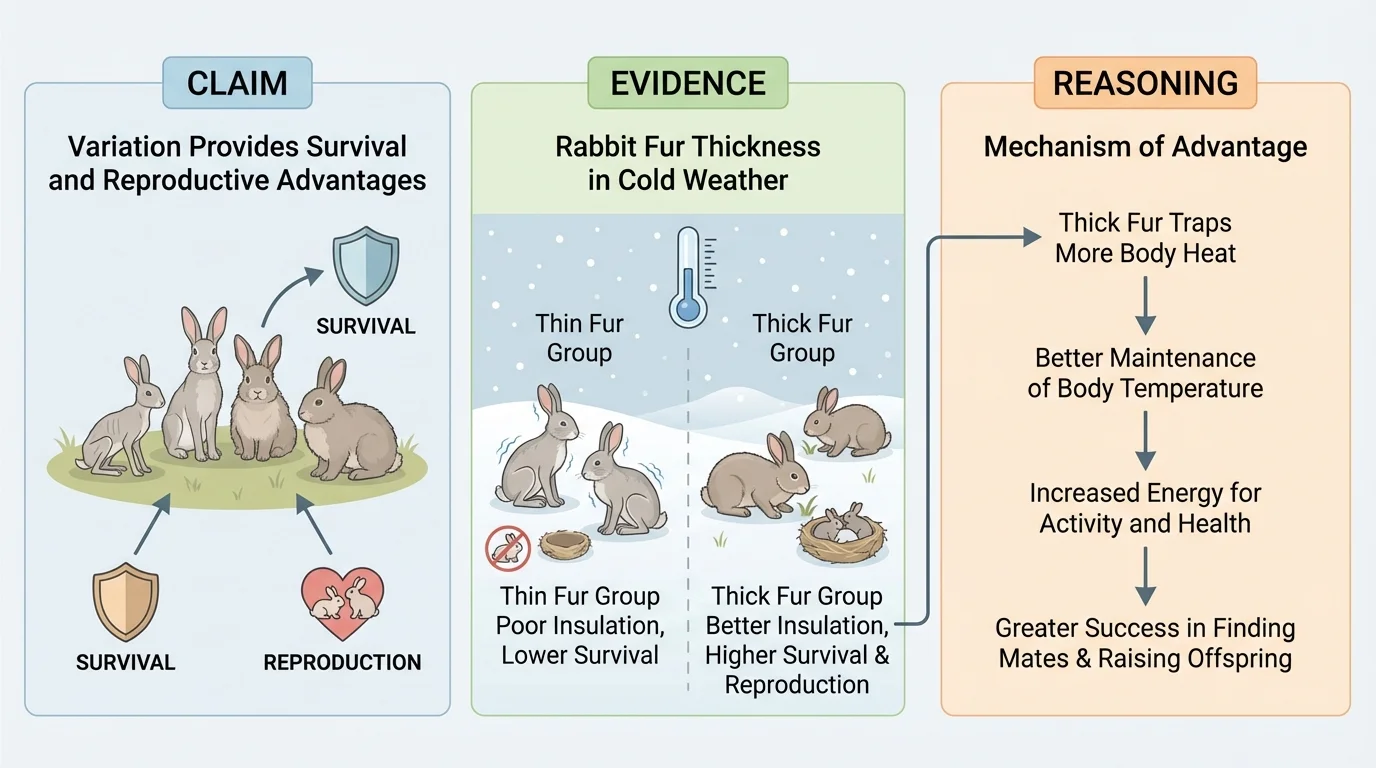
Here is a simple example of an explanation: "Rabbits with thicker fur may survive better in cold weather. The evidence is that rabbits with thicker fur stay warmer and remain active when temperatures drop. This helps them get food and avoid danger."
Notice that the explanation connects a characteristic to an advantage. It does not just list facts. It tells how and why the variation helps.
Building an explanation from observations
Step 1: Make a claim.
Some flowers with brighter colors may reproduce more successfully.
Step 2: Add evidence.
Bees visit the brighter flowers more often than duller flowers of the same species.
Step 3: Explain the reasoning.
If bees visit a flower more often, the flower may be pollinated more often, which can help it make seeds.
This is a strong scientific explanation because it uses evidence and connects it to reproduction.
Later, if we return to bright feathers in [Figure 3], we can build a similar explanation. We can say that brighter feathers may provide an advantage in finding mates because observations show that mates notice those individuals more often.
People use ideas about variation in many parts of life. Farmers notice that some plants in a crop grow better in dry weather, while others do better in wet weather. Gardeners may choose plants with characteristics that help them live in their local climate. Wildlife scientists watch animal populations to learn which characteristics help animals survive in changing habitats.
Conservation is another real-world connection. If a habitat changes because of drought, heat, or human activity, some individuals in a species may handle the change better than others. Understanding variation helps scientists protect species by learning what they need to survive and reproduce.
Even when we look at pets, we can observe variation. Dogs of the same breed can differ in size, fur color, and behavior. These observations remind us that individuals within a species are not identical.
Across all of these examples, the key scientific idea stays the same: differences among individuals can matter. Some variations provide advantages in survival, finding mates, and reproducing, and scientists use evidence to explain how.
