Have you ever watched a squirrel nibble a nut, a bird peck at seeds, or a flower turn toward the sun? Living things are busy getting what they need. Animals cannot make their own food, so they must find it. Plants do something amazing: they use light, water, and air to make food for themselves.
Living things need certain things to stay alive. They need resources from their environment. A resource is something a living thing needs. Animals need food, water, air, and a place to live. Plants need water, light, air, and room to grow.
When living things get what they need, they can live, grow, and sometimes make young. A kitten grows into a cat. A tiny seed grows into a plant. If a living thing does not get what it needs, it may become weak or die.
Food gives living things energy and materials for growth. Light from the Sun helps plants make food. Water is needed by both plants and animals to stay alive.
Animals and plants are both living things, but they do not get food in the same way. That difference is one of the most important ideas in science.
Every animal needs food to live and grow, and [Figure 1] shows that different animals get food in different ways. A cow eats grass. A rabbit eats leaves. A hawk may eat a mouse. Food gives animals energy to move, play, stay warm, and grow bigger.
Some animals get food from plants. Some get food from other animals. A deer eats plants. A frog may eat insects. A cat may eat fish or meat. Baby animals also need food so their bodies can grow strong.
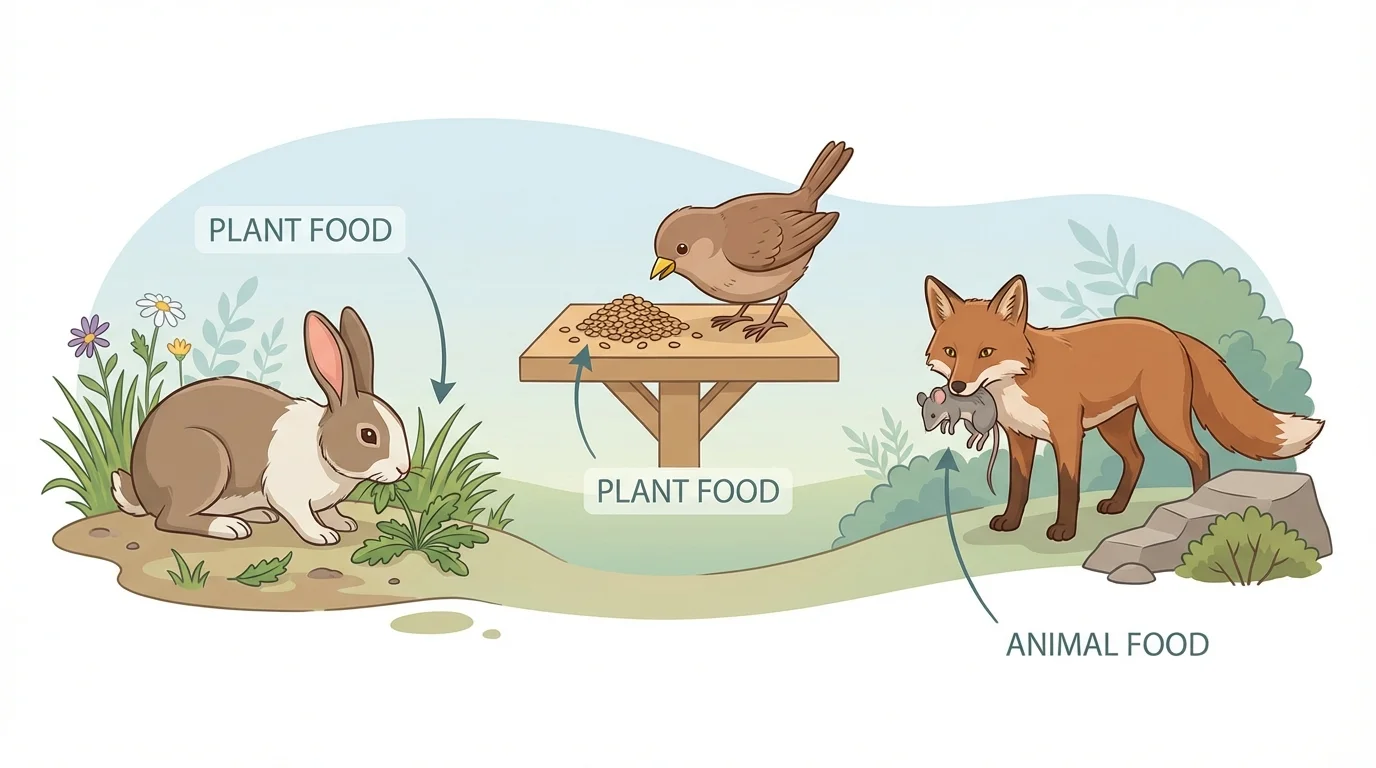
Animals cannot stay alive without food. A pet dog needs meals each day. Wild animals must search, hunt, graze, peck, chew, or catch their food. Finding food is a big part of an animal's life.
Some baby birds eat food their parents bring to the nest many times each day. Growing bodies need lots of energy.
Water matters too. Animals drink water or get some water from the food they eat. Food and water work together to help animals stay healthy.
Scientists use special words to describe how animals eat, and [Figure 2] introduces one way to show these feeding relationships. A herbivore eats plants. A cow, rabbit, and giraffe are herbivores. A carnivore eats other animals. A lion and an owl are carnivores. An omnivore eats both plants and animals. A bear and many people are omnivores.
A food chain shows who gets food from whom. It helps us see how living things are connected. Grass can be eaten by a rabbit. The rabbit can be eaten by a fox.
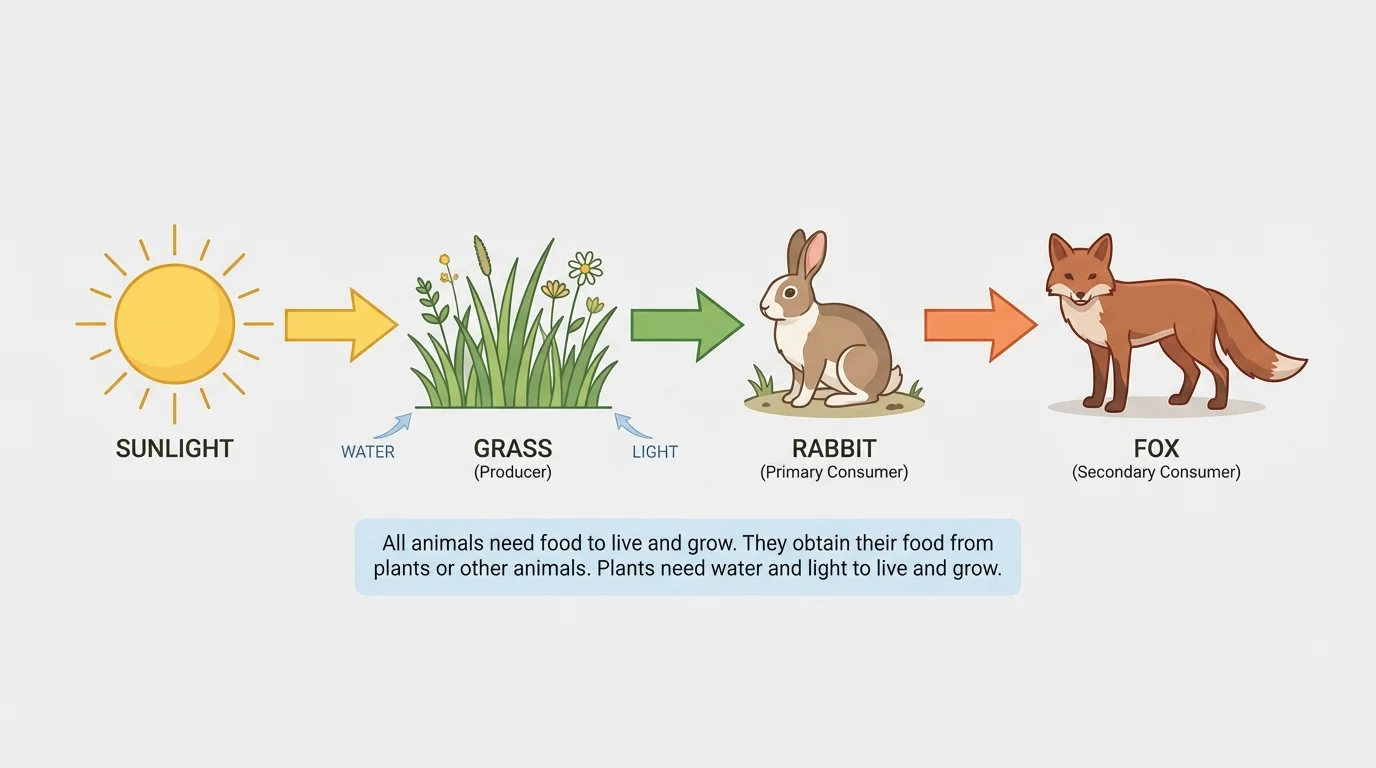
In a simple food chain, plants are very important because they are often the beginning. Many animals depend on plants directly by eating them. Other animals depend on plants indirectly by eating animals that ate plants first.
Real-world example: Backyard food chain
Step 1: A small plant grows in the sunlight.
Step 2: A caterpillar eats the plant.
Step 3: A bird eats the caterpillar.
This shows that the bird depends on the plant too, even though it does not eat the plant directly.
Later, when you think about gardens or forests, remember [Figure 2]: if there are fewer plants, there may also be less food for the animals connected in the chain.
A plant does not hunt or chew food. Instead, it uses water and light to make food, and [Figure 3] shows a plant getting both from its surroundings. Plants need water and light to live and grow. Most plants get light from the Sun and water from the soil.
Roots take in water from the ground. Leaves catch light. With water, light, and air, plants can make food inside their leaves. That food helps the plant grow stems, roots, flowers, fruits, and seeds.
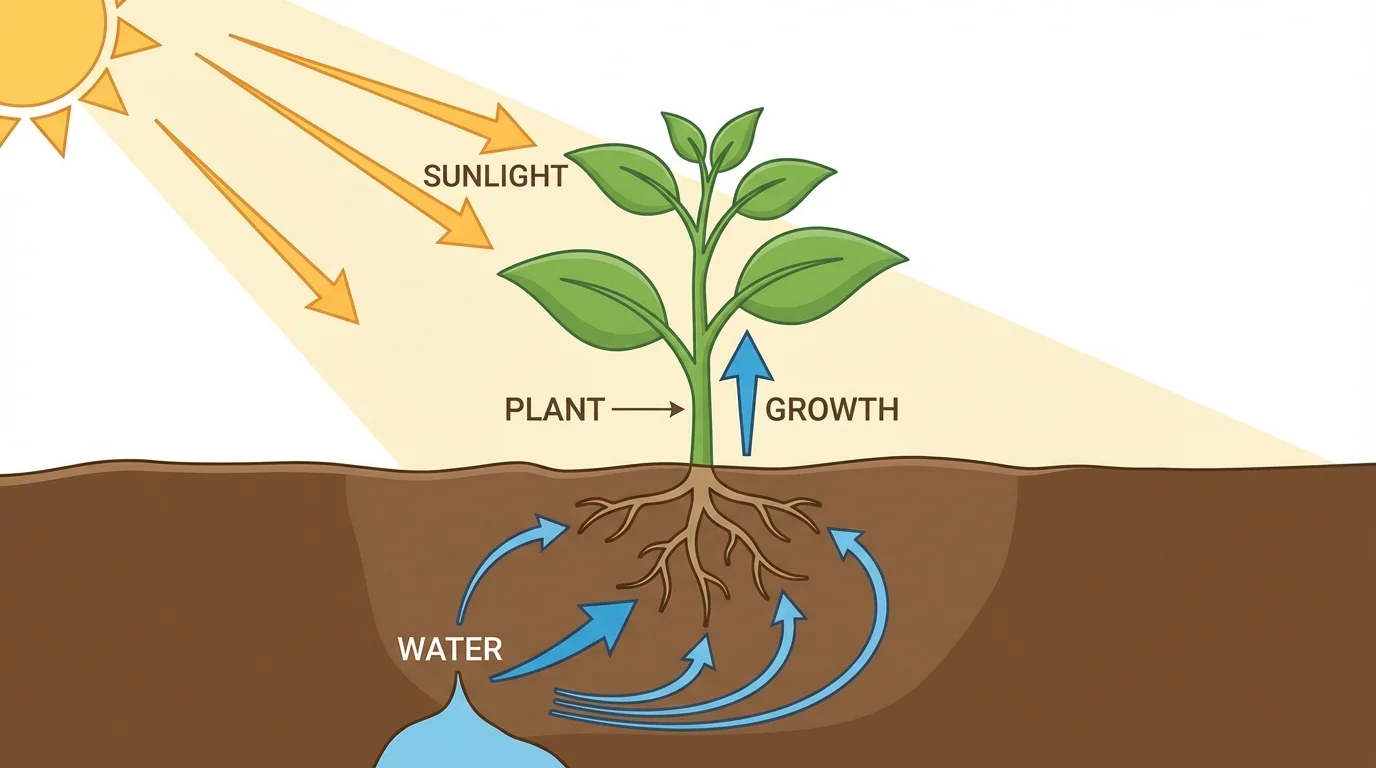
If a plant does not get enough water, it may droop or dry out. If it does not get enough light, it may turn pale or grow weak. A houseplant near a sunny window often grows better than one kept in a dark corner.
How plants help life Plants are important because they make food that starts many food chains. They also provide places for animals to live, such as trees for birds and flowers for insects.
Plants also need space to grow. A tiny seedling in crowded soil may not grow well. Gardeners know this, so they give plants room, water, and sunlight. Looking back at [Figure 3], we can see how roots and leaves each do an important job.
Plants and animals are connected in many ways. Animals depend on plants for food. Many animals also depend on plants for shelter. Birds build nests in trees. Rabbits hide in grass. Bees visit flowers.
Plants can depend on animals too. Some animals help spread seeds. Some animals help flowers make seeds by moving pollen from flower to flower. Living things interact with each other and with their environment.
A place where a living thing gets what it needs is called a habitat. A pond, forest, garden, and desert are all habitats. In each habitat, living things must find water, food, light, air, and space in the right amounts.
| Living thing | What it needs | Example |
|---|---|---|
| Animal | Food, water, air, shelter | Rabbit eating grass and drinking water |
| Plant | Water, light, air, space | Bean plant growing in sunny soil |
Table 1. A simple comparison of what animals and plants need to live and grow.
When one part of a habitat changes, other living things may be affected. If a pond dries up, fish may not survive. If flowers disappear, some insects may have trouble finding food. This is why healthy habitats matter.
People use this science every day. Farmers water crops so plants can grow. Families feed pets so they stay healthy. Gardeners place plants where they can get enough sunlight. Zookeepers make sure animals have the right food for their bodies.
Remember that living things are not all the same. A cactus needs less water than many other plants, and a lion eats very different food from a rabbit. Different living things have different needs, but all need the right resources.
You can notice these ideas at home or outside. A wilted plant may need water. A bird searching the ground may be looking for seeds or worms. A squirrel carrying a nut is gathering food it needs to live.
When we protect gardens, forests, ponds, and parks, we help living things get what they need. Caring for habitats helps plants grow and helps animals find food and shelter.
