Have you ever seen a sidewalk crack because a plant grew there, or a bird carrying twigs to build a nest? Living things do not only live in an environment. They also change it. A plant can grow roots into the ground. An animal can dig a hole, build a home, or move sticks and mud. Little changes can become big changes over time.
An environment is everything around a living thing, such as soil, water, air, rocks, plants, animals, and sunlight. Plants and animals need these things to live. But they also affect these things. That means Earth's surface can change because of living things.
A place where a plant or animal lives is called a habitat. A habitat can be a forest, pond, garden, field, or even a patch of dirt by a school. When plants and animals grow, eat, dig, or build, they can change their habitats.
Environment means the surroundings of a living thing.
Habitat means the home area where a plant or animal gets what it needs to live.
These changes can be small, like grass growing in soil, or large, like a beaver changing a stream.
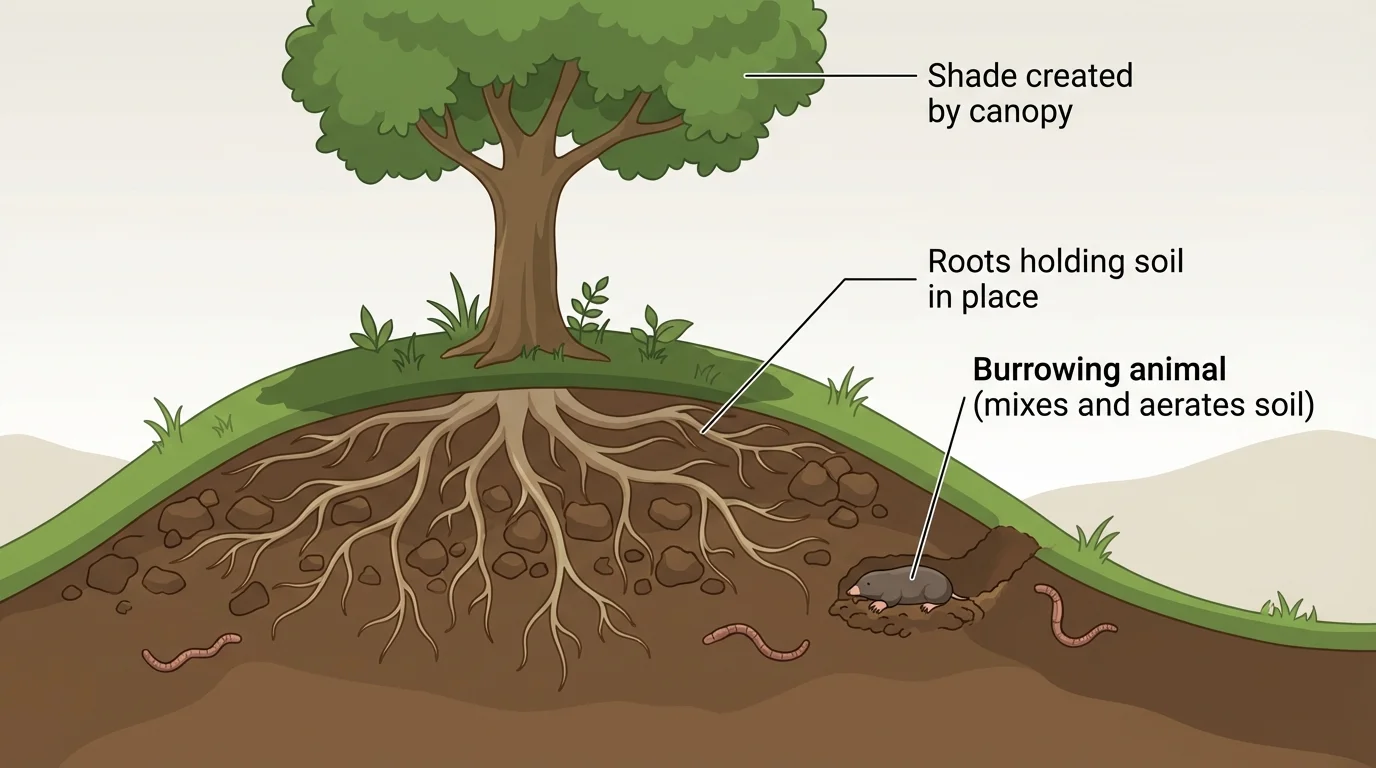
Plants can change the land around them in many ways, as [Figure 1] shows. A plant's roots grow into the ground. Roots can hold soil in place so wind and water do not carry it away as easily. A tree can also make shade, which keeps the ground cooler and gives animals a place to rest.
Plants can also change how water moves. Grass, flowers, and bushes slow down rainwater when it falls. Their leaves and stems help break the force of raindrops. Their roots help soak water into the ground. This can help keep soil from washing away.
Plants can make new places for living things. A tree branch can hold a bird nest. Tall grass can hide insects. A fallen log with moss and tiny plants on it can become a home for many small animals.
Seeds can travel to new places and grow there. When new plants grow, they may change that place by adding more shade, using water, and giving food or shelter to animals. Later, when we talk about animal homes, [Figure 1] still helps us remember that even a stationary plant is always changing the ground around it.
Plants change land, water, and light
Plants are not just decorations in nature. They help shape Earth's surface by holding soil, slowing water, and changing how much sunlight reaches the ground. Because of this, other living things may be able to live there too.
In a garden, children can often see this clearly. A bare patch of dirt may be dry and dusty. After plants grow there, the same spot may feel cooler, look greener, and hold together better after rain.
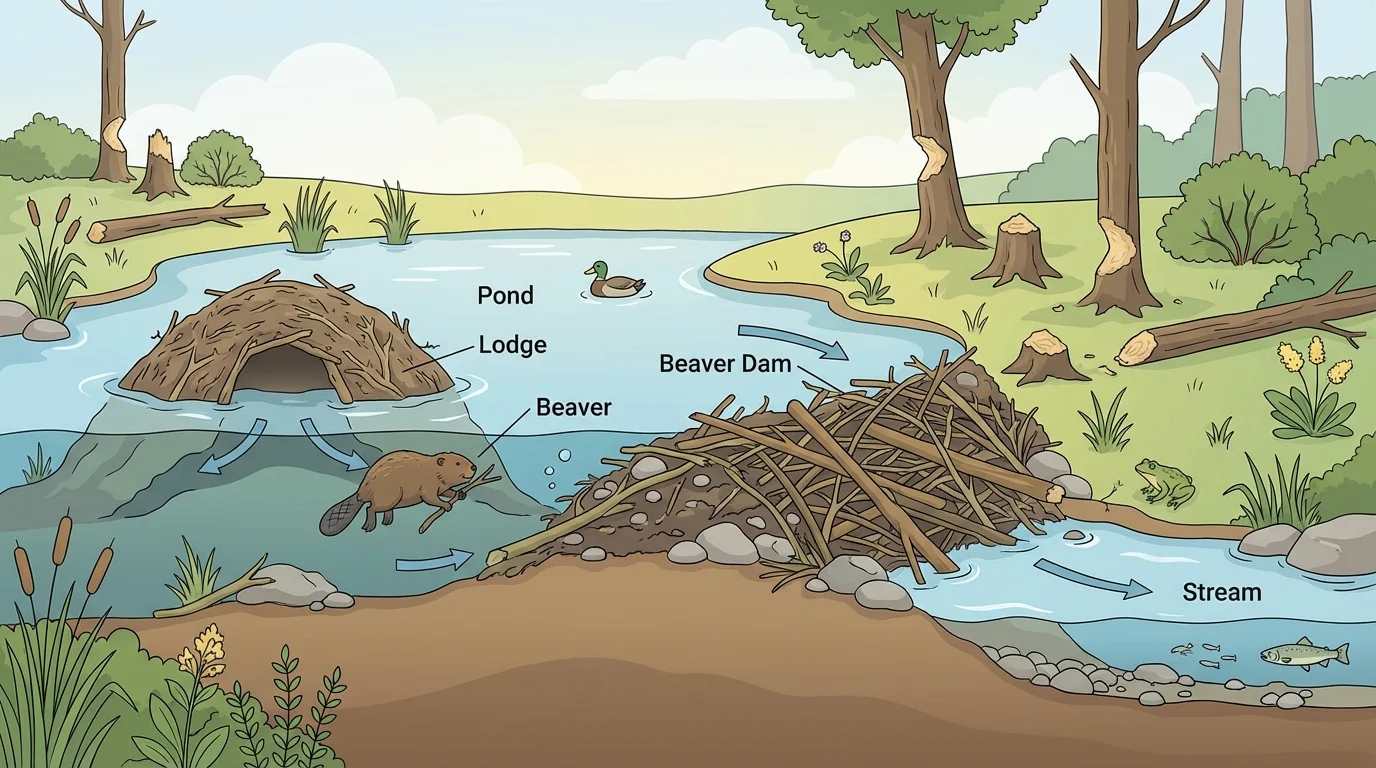
Animals also change their surroundings by building, digging, and moving materials, as [Figure 2] illustrates. Some animals dig holes in the ground. These holes are called burrows. Rabbits, foxes, and other animals use burrows for safety and shelter.
When animals dig, they move soil from one place to another. This changes the shape of the ground. Earthworms are small, but they are important too. As they move through soil, they make spaces where air and water can go.
Some animals build above the ground. Birds make nests from twigs, grass, and mud. Ants make hills. Termites build tall mounds in some places. These structures change the land and create homes.
A beaver dam is one of the clearest examples of an animal changing the environment. Beavers cut branches and place sticks, mud, and stones across moving water. The stream slows down, and a pond can form. Fish, frogs, insects, and birds may then use the new pond.
Sometimes an animal changes the environment while looking for food. A squirrel may bury seeds. Later, some seeds grow into plants. In this way, the animal helps move plants to new places.
Real-world example: A beaver changes a stream
Step 1: The beaver gathers sticks, mud, and branches.
Step 2: The beaver places them across the stream.
Step 3: Water slows down and begins to spread out.
Step 4: A pond forms, and new plants and animals may live there.
This is a strong example of an animal changing Earth's surface and water in its habitat.
Much later, if we compare plant changes and animal changes, [Figure 2] reminds us that one animal's building work can change water, land, and the homes of many other living things.
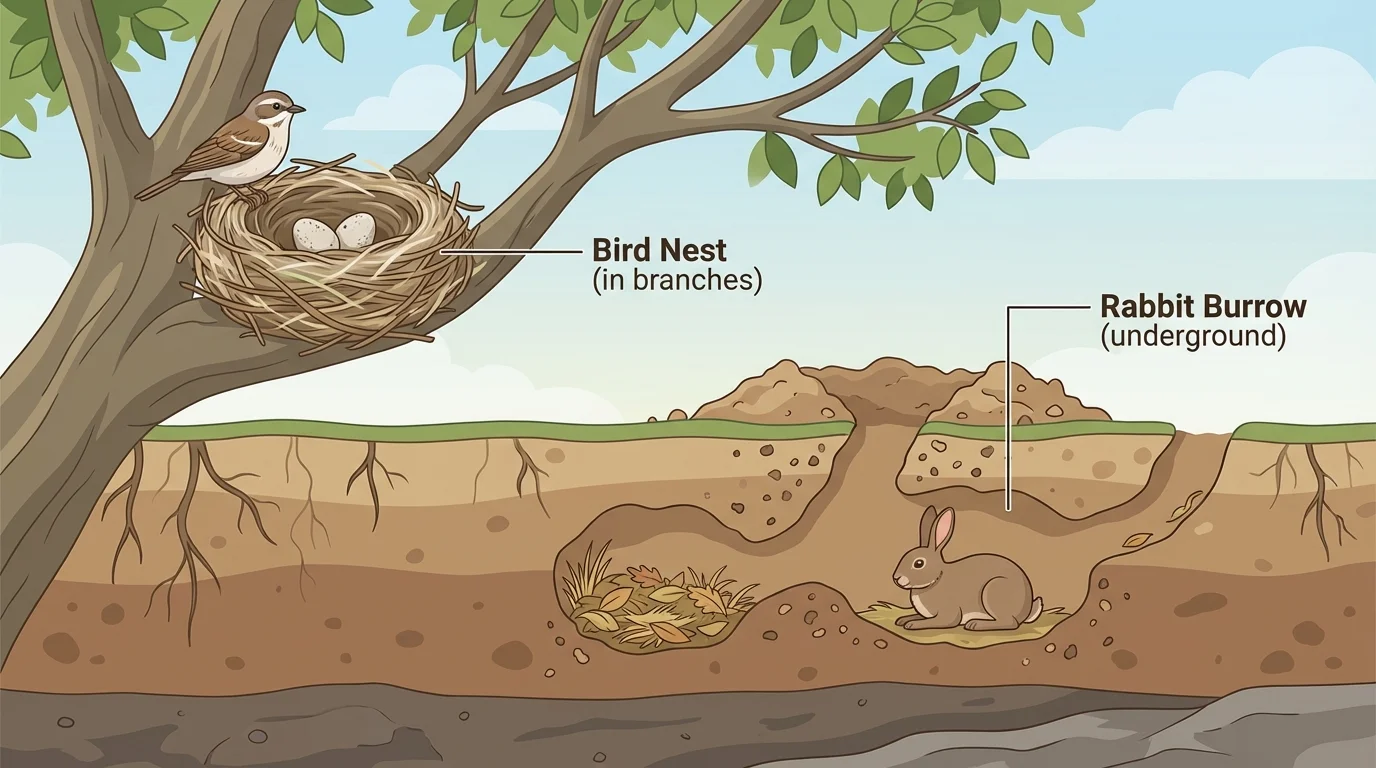
When living things change their environment, those changes can help some organisms and make life harder for others. A nest in a tree can keep eggs safer. A burrow underground can protect an animal from weather.
[Figure 3] But changes are not always helpful for every living thing. If one plant grows very thickly, smaller plants may get less sunlight. If an animal digs in a garden, it may damage roots. If a dam changes water flow, one habitat may grow while another becomes smaller.
This is why scientists observe shelter, food, water, and space in a habitat. A change in one part of nature can affect many other parts. Earth's systems are connected.
| Living thing | Change it makes | What may happen |
|---|---|---|
| Tree | Makes shade and holds soil | Ground stays cooler; soil stays in place |
| Bird | Builds a nest | Creates a safe place for eggs |
| Earthworm | Moves through soil | Air and water can move through soil more easily |
| Beaver | Builds a dam | A pond may form |
Table 1. Examples of plants and animals changing their environment and some results of those changes.
When you think about habitats again, [Figure 3] shows that homes made by animals are also environmental changes. A place can look different because living things have worked on it.
Some of the smallest living things can make big changes. Tiny worms, insects, and grasses can slowly change soil and help shape a whole patch of land.
We can say this in a simple way: living things change places, and changed places affect living things.
People see these changes every day. In parks, tree roots can push up soil. On farms, plants help hold fields together. In ponds, ducks may use reeds for cover. In a backyard, a pet dog may dig a hole and change a patch of ground.
Gardeners know that adding plants can change an area. More plants may bring butterflies, bees, and birds. A place with more shade and plant cover may stay moist longer after rain. People also need to take care of environments because big changes can affect the plants and animals living there.
Living things need water, air, food, and a place to live. When a habitat changes, those needs may become easier or harder to meet.
When children look carefully outside, they can often find clues. A pile of chewed sticks may mean a beaver has been nearby. A small hole in the ground may be a burrow. A patch of cooler ground may be under a tree's shade.
Nature is full of builders, diggers, growers, and spreaders. Plants and animals are part of Earth's systems because they interact with land, water, and air. They do not stay separate from the world around them. They help shape it.
When you notice roots holding soil, birds carrying twigs, or worms moving through dirt, you are seeing how living things change the environment. These changes help create the many different habitats we find on Earth.
