Have you ever seen a flower growing through a crack in the sidewalk or a bird building a nest high in a tree? Living things are very good at finding what they need. Every plant, animal, and person needs water, air, and other helpful things from the land. Living things usually live in places where those needs can be met.
All living things need important things to stay alive. As [Figure 1] shows, a living thing is something that grows and changes, like a tree, a fish, a dog, or a person. Plants and animals may not need exactly the same things, but they all need water, air, and resources from Earth.
Animals need water to drink, air to breathe, and food to eat. They also need places to rest, hide, or raise babies. Plants need water too. They also need air, sunlight, and space to grow. Many plants get what they need from soil, which is the top layer of land where many plants grow.
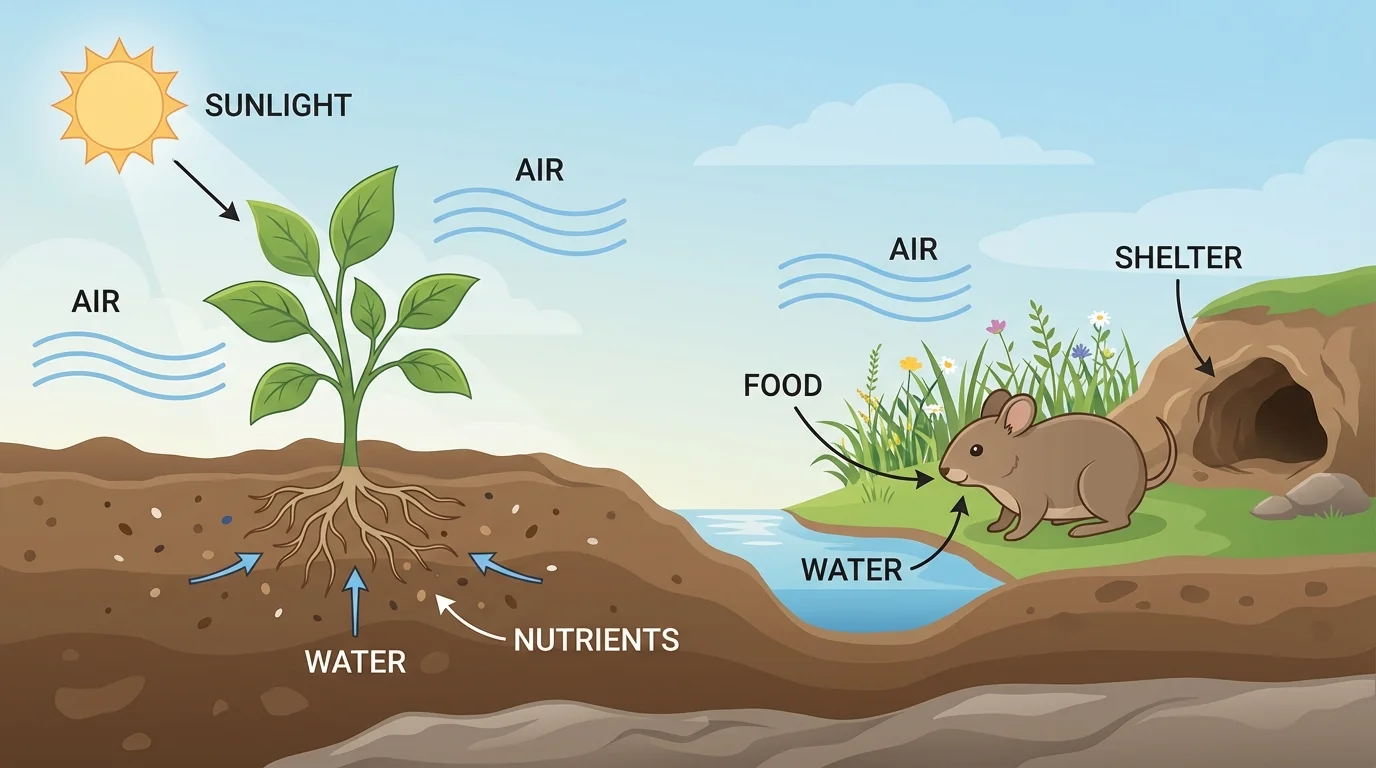
A tree uses water from the ground, air around its leaves, and sunlight from the sky. A rabbit drinks water, breathes air, and eats plants. People need these things too. We drink water, breathe air, and eat food that grows in soil or comes from animals that depend on plants.
Natural resource is something people get from nature and use. Water, air, soil, wood, rocks, and sunlight are natural resources.
Habitat is the place where a plant or animal lives and finds what it needs.
Some resources come straight from the land. Plants need nutrients in the soil. Animals may need trees, grass, or caves for shelter. Humans use land to grow food, build homes, and find materials such as stone, sand, and wood.
As [Figure 2] illustrates, a habitat is the place where a living thing lives and finds what it needs. In a good habitat, there is enough water, air, food, and shelter. A pond, a forest, and a desert are all different habitats because they have different amounts of water, shade, plants, and space.
Fish live in ponds, lakes, rivers, or oceans because they need water all around them. Ducks live near water because they swim and find food there. Cactus plants live in dry places because they can survive with very little water. Tall trees grow well where they can get water, air, sunlight, and room for roots.
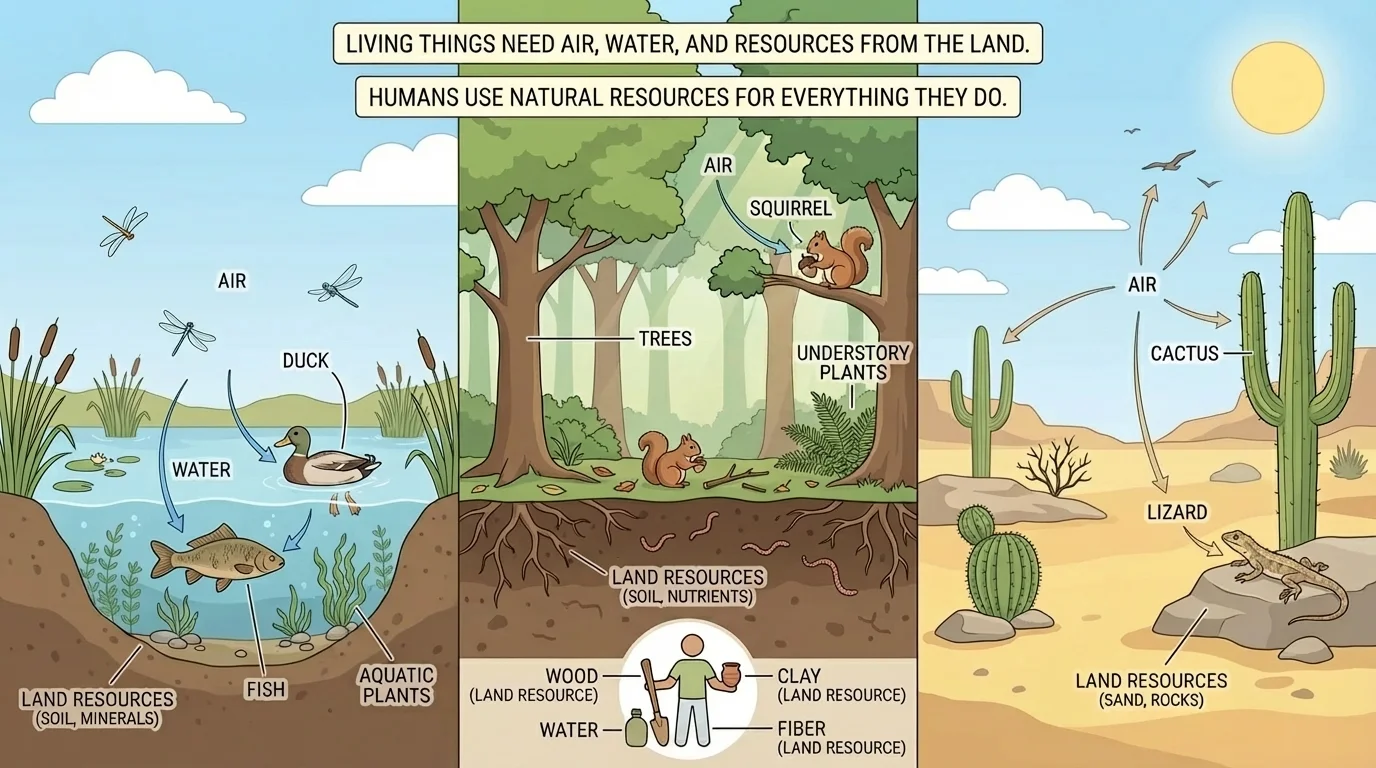
Not every place is right for every living thing. A frog would not do well in a hot, dry desert. A cactus would not do well in deep pond water. Living things live in places that match their needs.
Some seeds can wait a long time for the right amount of water. When rain finally comes, the seeds begin to grow.
This is why we see certain plants and animals in some places but not others. When a place changes, the living things there may change too. If a pond dries up, fish cannot live there anymore. If trees are cut down, animals that used the trees for homes must move or find new shelter.
Earth's parts work together. Rain falls from clouds and soaks into the ground. Plants take in water from the soil. Animals eat plants or drink from streams and puddles. People use the same water for drinking, washing, and growing food.
Air is all around us, even though we cannot see it. Animals and people breathe air. Plants also use air as they grow. Clean air helps living things stay healthy. Dirty air can make it harder for people and animals to breathe.
The land helps too. Soil holds water and gives plants support. Rocks can break into tiny pieces and become part of soil over time. When plants grow well, animals have more food and shelter. We can still think about the needs of living things by remembering the plant and animal examples in [Figure 1].
Earth's systems are connected
Water, air, and land are not separate helpers. They work together. When rain waters the soil, plants can grow. When plants grow, animals can eat them or live near them. People depend on all of these parts too.
When one part changes, another part may change too. Less rain can mean drier soil. Drier soil can mean fewer plants. Fewer plants can mean less food for animals. That is one reason water is so important.
As [Figure 3] shows, people use natural resources for everything they do. Many ordinary things in a home or school come from nature. We use water for drinking, cooking, bathing, and cleaning. We use air every moment when we breathe.
We use soil to grow fruits, vegetables, and grains. Farmers plant seeds in soil and use water to help crops grow. We eat apples, carrots, rice, and many other foods that depend on land and water.
People use trees for wood to build houses, tables, paper, and pencils. We use rocks and sand to help make roads and buildings. We use sunlight to warm Earth and help plants grow. In some places, sunlight can also be changed into electricity with solar panels.
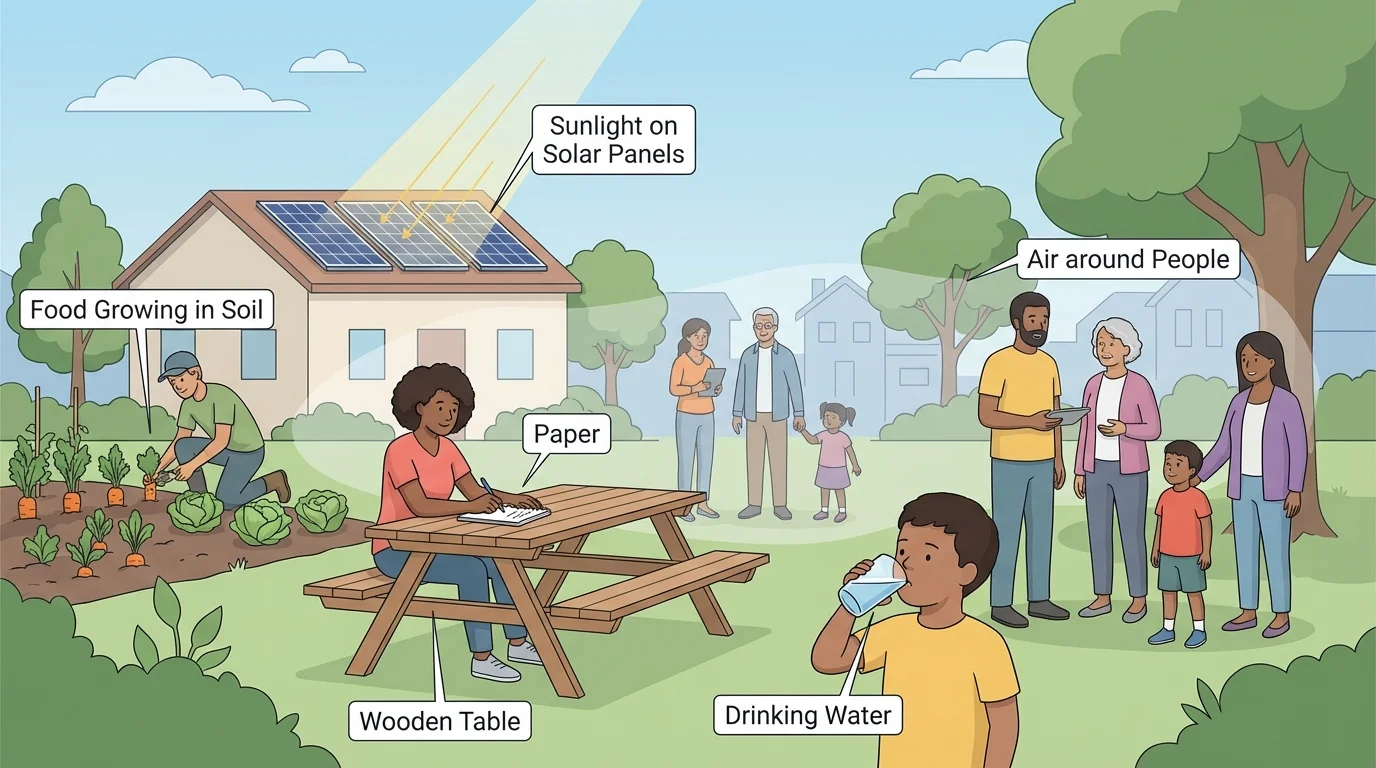
Clothes also come from natural resources. Cotton grows in fields. Wool comes from sheep. Even a glass window starts with materials from Earth. Humans depend on nature every day, whether we are eating breakfast, writing with a pencil, or riding in a car.
| Natural resource | How people use it |
|---|---|
| Water | Drinking, washing, growing food |
| Air | Breathing |
| Soil | Growing plants and crops |
| Wood | Building and making paper |
| Rocks and sand | Roads, buildings, glass |
| Sunlight | Helping plants grow and making solar energy |
Table 1. Examples of natural resources and how humans use them.
When we look again at habitats in [Figure 2], we can see that people also choose places to live where resources are available. Towns and farms need water, land, and clean air, just like plants and animals do.
Natural resources are important, so people should care for them. We can turn off water when brushing teeth, put trash in bins, recycle paper, and plant trees. These actions help protect the water, air, and land that living things need.
Keeping rivers, lakes, and soil clean helps fish, birds, insects, plants, and people. Clean air helps children play outside and helps animals stay healthy. Healthy land grows stronger plants, and stronger plants can feed more living things.
Real-world example: a school garden
A school garden shows how living things depend on water, air, and land.
Step 1: Seeds are planted in soil.
Step 2: The seeds get water, air, and sunlight.
Step 3: The plants grow and may make vegetables or flowers.
Step 4: People care for the garden and use what it grows.
This is one small way humans use natural resources and also learn to protect them.
The neighborhood scene in [Figure 3] reminds us that nearly everything we use comes from nature in some way. When we care for nature, we help ourselves and other living things too.
