Have you ever looked outside and seen dark clouds, strong wind, or pouring rain and wondered, "What is happening in the sky today?" Weather can change quickly, and sometimes it becomes dangerous. That dangerous kind of weather is called severe weather. Weather scientists study the sky, air, water, and land so they can tell people when severe weather may happen. Their forecasts help communities get ready and stay safe.
Severe weather is weather that can hurt people, animals, homes, roads, or trees. A gentle rain is usually not severe. But a storm with lightning, very strong wind, hail, deep snow, or fast-rising water can be severe. Severe weather includes thunderstorms, tornadoes, hurricanes, blizzards, floods, and heat waves.
Weather is what the air outside is like right now or over a short time. Forecast means a careful prediction about what weather may happen soon. A community is a group of people who live and work in the same place.
The Earth has air, water, land, and sunlight. These parts work together. Warm air can rise. Water can fall as rain or snow. Wind can push clouds from one place to another. When these Earth systems interact in powerful ways, severe weather can happen.
Some regions are more likely to have certain kinds of dangerous weather, as [Figure 1] shows. Places near warm oceans may experience hurricanes. Flat grassy central plains may have more tornadoes. Cold northern places may get blizzards. Hot, dry places may have long heat waves.
This does not mean every place gets the same weather. A beach town and a mountain town can have very different storms. A family living near a river may worry more about floods. A family in a snowy place may need to prepare for ice and deep snow. Where people live helps decide which severe weather is more likely.
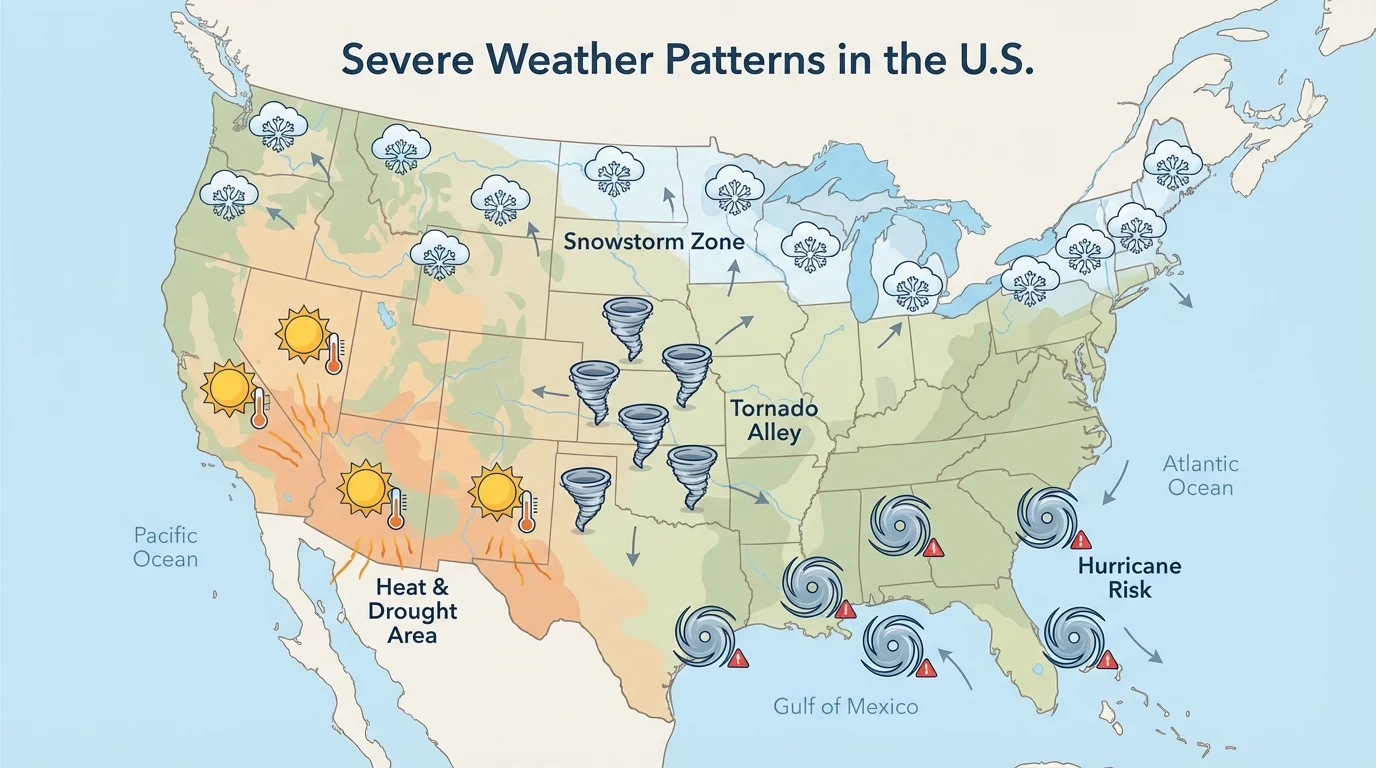
For example, children in Florida may hear about hurricanes during part of the year. Children in Oklahoma may practice tornado safety. Children in Minnesota may prepare for winter storms. Scientists learn about these patterns by studying weather over many years.
Some storms happen in the same season again and again. That is why communities can make safety plans before the storm season begins.
These regional patterns help adults make good choices. They can build strong roofs in windy places, put snowplows where winters are cold, and make flood plans near water. Knowing what kind of severe weather is more likely helps people prepare earlier.
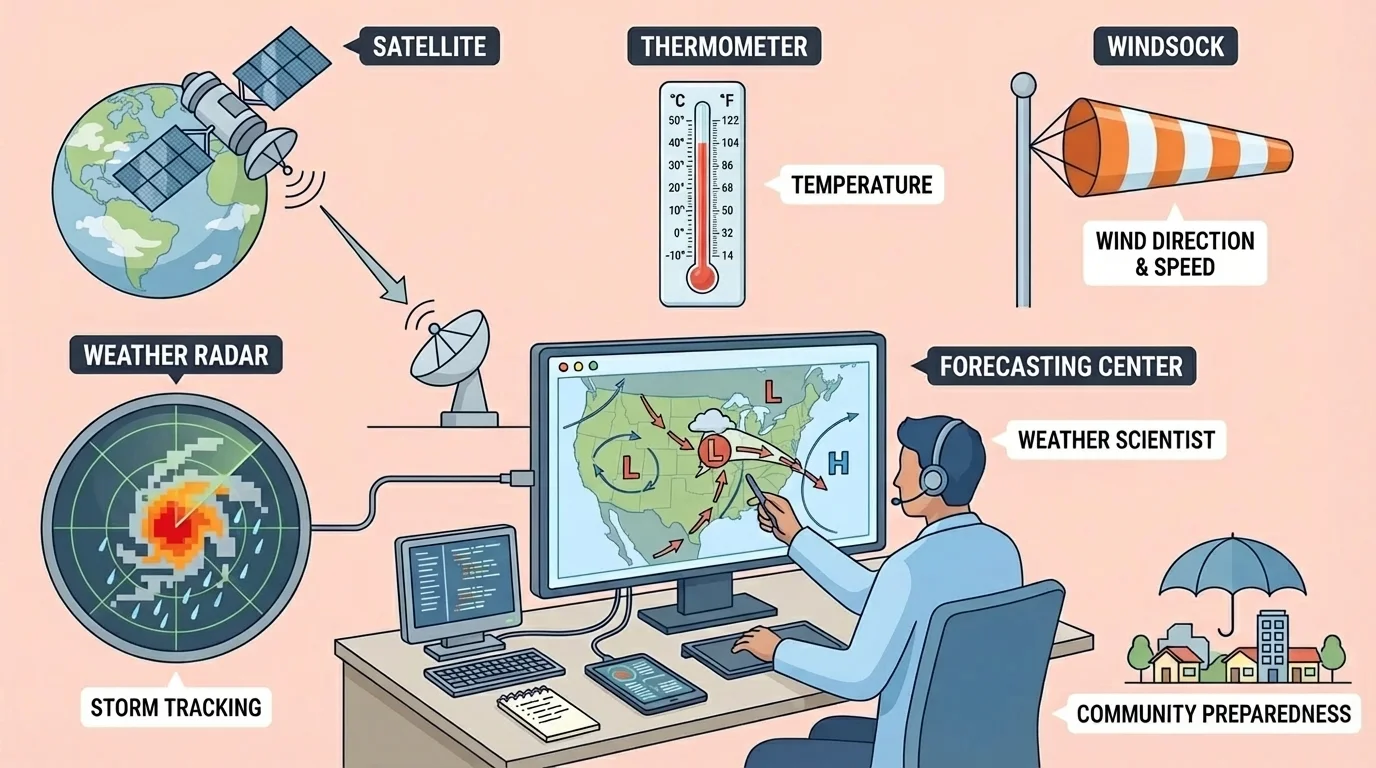
[Figure 2] Forecast means telling what weather is likely to happen soon. Weather scientists make forecasts by watching the sky and measuring what is happening in the air. They use special tools to collect information.
Scientists use radar to track rain and storms. They use satellites high above Earth to look at clouds from space. They use thermometers to measure temperature and other tools to check wind and rain. Then they study all that information to decide if severe weather may be coming.
When scientists think a storm may be dangerous, they send out watches and warnings. These messages can come on phones, television, radios, and school announcements. A warning tells people to act quickly. A watch means people should be ready and pay attention.
How forecasting helps people
A forecast gives people time to prepare. Even a short amount of time can help a family move indoors, help a school change plans, or help a town open a safe shelter. Forecasts do not stop storms, but they help people respond wisely.
Forecasts are not magic. Scientists observe patterns and use evidence. They may see thick storm clouds, shifting winds, heavy rain on radar, or warm ocean water fueling a hurricane. The tools in [Figure 2] help scientists notice these changes before the storm reaches a town.
[Figure 3] A community can prepare in many ways. Families may pack water, food, flashlights, and blankets. Schools may move children away from windows. Town workers may clear drains before heavy rain or put up signs when roads are unsafe.
Preparing means getting ready before the danger arrives. Responding means acting during and after the event. If a flood is coming, people may move to higher ground. If a blizzard is near, snowplows and helpers may get ready. If a heat wave is coming, communities may open cool indoor places.
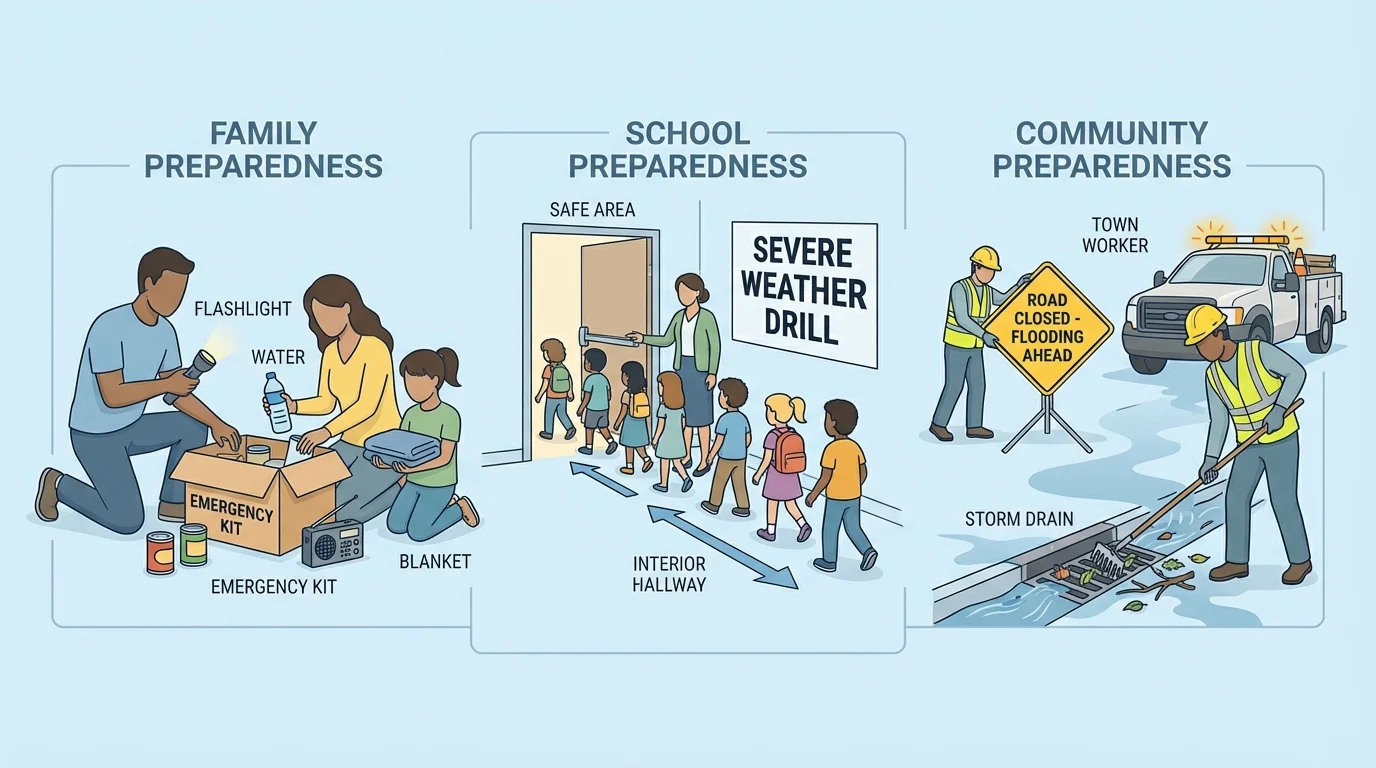
Communities also practice plans. A school may have a tornado drill. A family may choose a meeting place. A town may test its warning sirens. Practice helps people know what to do, so they can stay calmer when real severe weather happens.
Real-world example: A town gets ready for a big storm
Step 1: Weather scientists notice dangerous weather may arrive soon.
Step 2: They send a forecast and warning to the community.
Step 3: Families charge phones, bring pets inside, and gather supplies.
Step 4: Schools and town leaders follow safety plans.
Step 5: After the storm, helpers check roads, buildings, and people who may need help.
This is how forecasting and preparation work together.
People cannot control storms, but they can make smart choices. The safety actions in [Figure 3] help communities protect lives and property.
Different severe weather needs different safety steps. During a thunderstorm, people should go inside and stay away from tall trees and open fields. During a tornado warning, people should go to a small inside room on the lowest floor. During a hurricane, people may need to board windows and sometimes leave for a safer place.
In a blizzard, warm clothes and staying indoors are important. In a flood, people should stay out of moving water. In a heat wave, people need water, shade, and cool places. Adults listen for updated forecasts because weather can change.
| Weather event | What it may bring | Safe action |
|---|---|---|
| Thunderstorm | Lightning, rain, wind | Go indoors |
| Tornado | Very strong spinning wind | Go to an inside safe room |
| Hurricane | Heavy rain, strong wind, high water | Follow warnings and evacuation plans |
| Blizzard | Snow, ice, strong wind, cold | Stay warm and indoors |
| Flood | Fast or deep water | Move to higher ground |
| Heat wave | Very hot weather | Drink water and cool down |
Table 1. Common types of severe weather, the dangers they may bring, and simple safety responses.
Children help too. They can listen to adults, know where to go in an emergency, and learn the meaning of weather alerts. Being prepared is a way communities care for one another.
Severe weather is part of Earth's natural systems, but people make choices about how to live with it. They decide where to build homes, how to make roads, and how to protect neighborhoods. A town near the ocean may build for storms and flooding. A snowy town may keep salt trucks and plows ready in winter.
Scientists, families, teachers, doctors, bus drivers, and firefighters all have jobs during dangerous weather. They work together so communities can prepare and respond. That is why weather science matters in everyday life. It helps people make plans, stay informed, and protect each other.
Weather happens all around us every day. Some days are calm, and some days are dangerous. Learning about patterns and safety helps us respect nature and make good decisions.
When we understand that some kinds of severe weather are more likely in certain places, we can be ready. When scientists forecast severe weather, they give communities time to act. That time can make a big difference.
