Have you ever touched a playground slide in the sun and then stood under a tree? One place can feel warmer, and another place can feel cooler. That happens because the Sun shines light on Earth's surface. We can use smart ideas to build something that helps protect an area from the warming effect of sunlight.
Sunlight warms many things outside. The ground, a bench, a toy, or a patch of sand can feel warmer after the Sun shines on them. A place in direct sunlight can feel warmer than a place in shade, as shown in [Figure 1]. We do not need to measure with numbers to notice this. We can compare and say warmer or cooler.
Shade helps because it keeps some sunlight from reaching the ground or the objects underneath. When less sunlight reaches a spot, that spot can stay cooler.
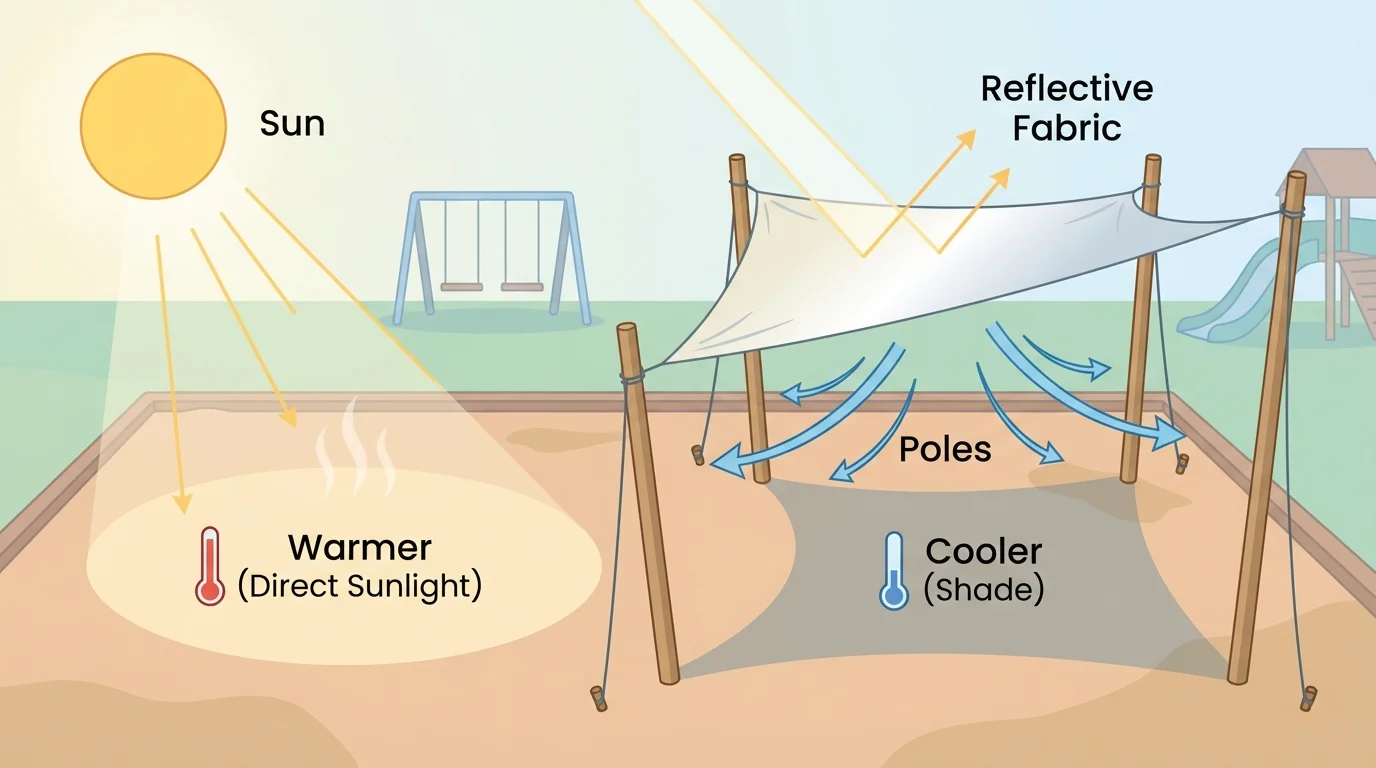
Shade is a darker place where light from the Sun is blocked. A shaded area is often cooler than an area in direct sunlight.
People use shade every day. We stand under a tree, sit under an umbrella, or play under a roofed cover. These are all ways to reduce the warming effect of sunlight on an area.
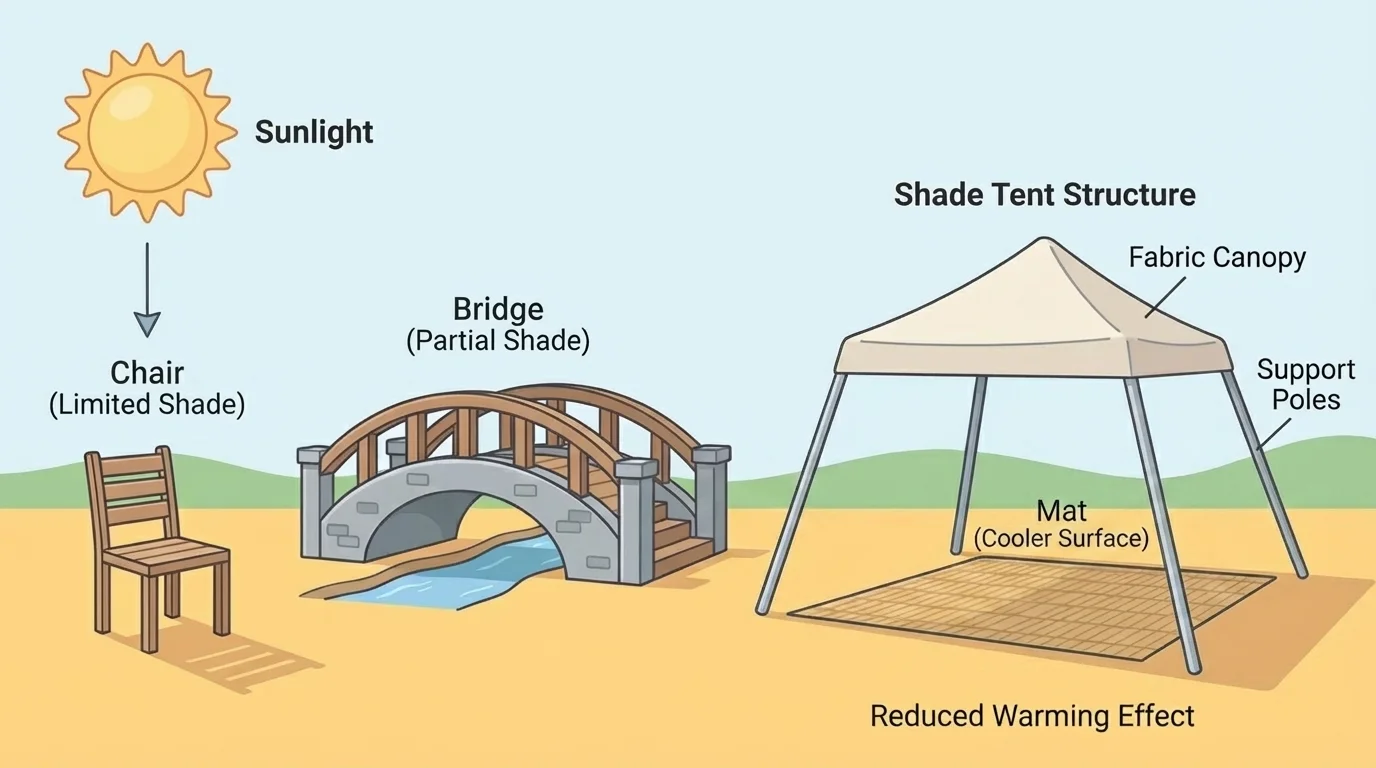
A structure is something people build that keeps its shape and does a job. A chair holds a person. A bridge helps people cross. As [Figure 2] shows, a shade structure does a special job: it blocks sunlight from an area.
A good shade structure has parts that work together. It may have a top part, sides, legs, or a strong base. These parts help it stay up and make shade where it is needed.
Some structures are large, like playground covers. Some are small, like a toy tent over a tiny area. Big or small, the idea is the same: build something that stays up and makes a cooler place underneath.
How a shade structure works
A shade structure works by blocking some sunlight. If the top cover is above an area, the sunlight hits the cover instead of the ground below. That helps the area underneath stay cooler than a nearby area in full sun.
When we build for shade, we are solving a problem. The problem is that sunlight can make an area too warm. The solution is to design a structure that gives enough cover.
Builders choose materials that can do the job well. For a simple shade structure, materials might include cardboard, paper, fabric, craft sticks, straws, tape, clay, or blocks. Some materials are better for the top cover because they block more light. Some are better for the sides or supports because they help hold the structure up.
We also use simple tools to put materials together. Safe classroom tools may include child-safe scissors, tape dispensers, or a glue stick. Tools help us cut, join, and place pieces where they belong.
Not every material works the same way. A soft cloth can spread over the top to make shade. A stiff stick can stand upright to hold the top up. Tape can help pieces stay together. When we pick materials, we think about what job each one will do.
| Material or tool | What it can do |
|---|---|
| Cardboard | Can make a top cover or wall |
| Fabric | Can drape over the top to block sunlight |
| Craft sticks or straws | Can hold the cover up |
| Tape or glue | Can join pieces together |
| Child-safe scissors | Can trim materials |
Table 1. Examples of simple materials and tools used to build a shade structure.
Choosing materials carefully is part of engineering. Engineers think about what they want a structure to do. Then they choose parts that help the structure work well.
A shade structure works best when it covers the place we want to protect. If sunlight shines straight onto the ground, the ground may become warmer. If a cover blocks that sunlight, the area under it may stay cooler.
Think about a small mat for sitting outside. If the mat is in the sun, it may feel warmer. If a roof is placed above it, the mat underneath may feel cooler. The same idea works for a sandbox, a pet area, or a place where people wait for the bus.
Many playgrounds have big covers over slides and climbing areas because the cover helps keep the play space cooler than nearby places in full sun.
Shape matters too. A flat roof, a tent shape, or a wide umbrella shape can all make shade. The important thing is that the structure blocks sunlight from the area below.
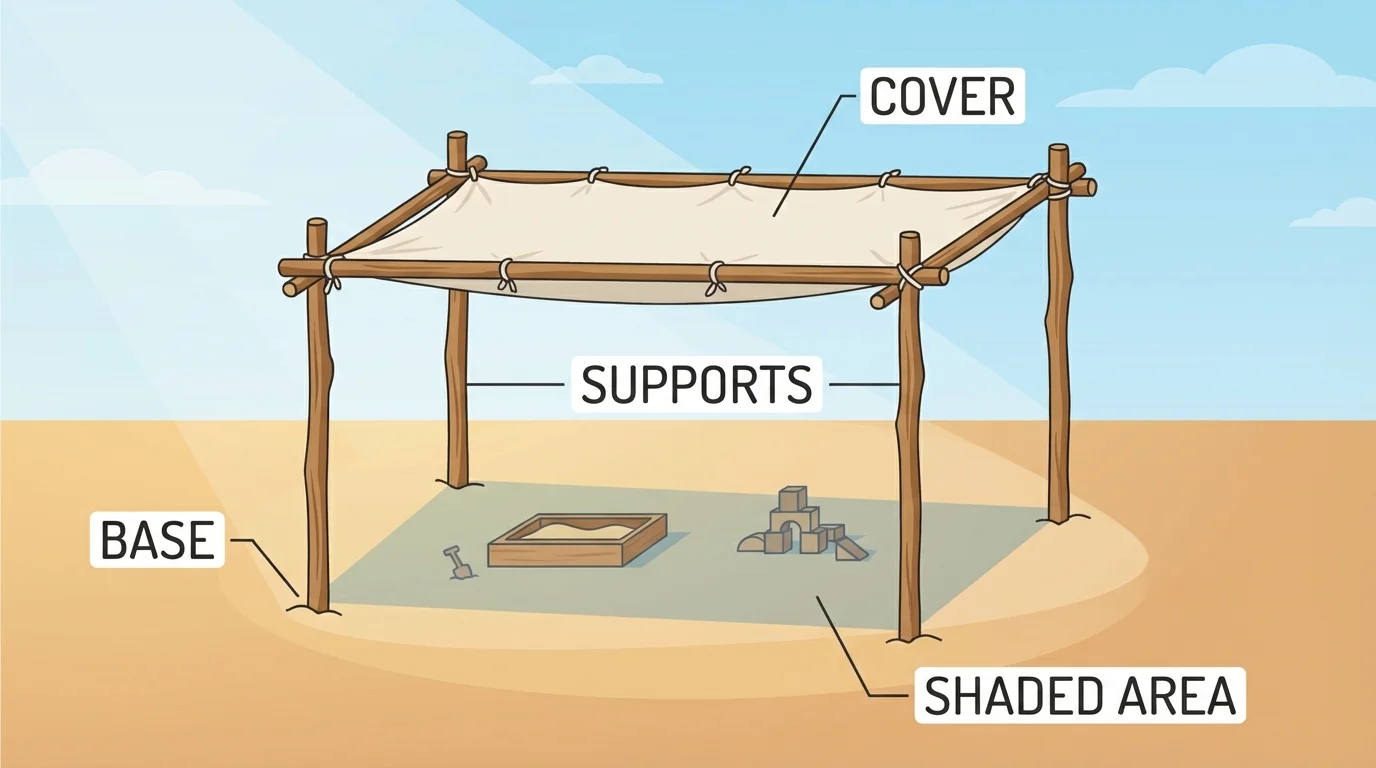
When people design a shade structure, they plan before they build. As shown in [Figure 3], a good design needs a top part to block sunlight and strong parts to hold it up. It should also cover enough space.
One design might use four supports and a paper roof. Another might use blocks with a cloth top. A design is better if it stays standing and makes the area underneath cooler than the area beside it in the sun.
The cover should be wide enough for the space. If the roof is too small, part of the area may still be in sunlight. If the supports are weak, the structure may fall down. Builders need to think about both shade and strength.
Example: Choosing the better design
Two small structures are built over toy animals.
Step 1: Look at the first structure.
It has a tiny top cover. Only part of the toy area is shaded.
Step 2: Look at the second structure.
It has a wider top cover and stands up straight.
Step 3: Compare the areas underneath.
The second structure makes more shade, so the area under it is likely cooler.
The better design is the one that covers more of the area and stays standing.
Position matters. If the Sun shines from one side, the shadow may move. Builders sometimes make the roof wider so the area stays shaded longer. This is one way to improve a design.
We can see shade structures in many places. A beach umbrella shades a towel. A hat shades a face. A bus stop roof shades people waiting outside. A tree can also provide shade, but a built structure is something people make with chosen materials and tools.
As we saw earlier in [Figure 1], a shaded area can feel cooler than a sunny area nearby. This is why parks, schools, and homes often include places with shade.
The idea in [Figure 2] also helps us remember that structures are built for jobs. A shade structure has one very important job: to reduce the warming effect of sunlight on an area.
The Sun gives light and heat to Earth. People can use what they know about sunlight to make smart choices, such as building or using shade.
Families use shade in real life to protect picnic tables, patios, gardens, and play spaces. Engineers and builders make plans so these structures are safe and useful.
After building, we check how well the structure works. We can compare the spot under the structure with a spot beside it in the sun. If the area underneath feels cooler, the structure is helping.
We can also look for problems. Does the cover let too much sunlight through? Is the structure too short or too narrow? Does it tip over? The design in [Figure 3] reminds us to look at each part: the cover, the supports, and the shaded area.
If a design does not work as well as we hoped, we can change it. We might make the roof bigger, use stronger supports, or move the cover so it blocks more sunlight. Engineers often improve their designs step by step.
Building to make shade shows how science and engineering work together. Science helps us know that sunlight can warm surfaces. Engineering helps us build something useful to reduce that warming effect.
