Look outside a window or into a yard. You may see grass reaching up, a bird hopping, or a person taking a drink of water. These living things are very different, but they all need certain things to stay alive. We can learn a lot just by watching carefully and talking about what we notice.
Plants and animals are living things. A living thing is something that is alive. Living things need things from their surroundings to survive. If they do not get what they need, they may become weak, stop growing, or die.
We can use observations to learn about living things. An observation is something we notice by looking, listening, or touching carefully. For example, we might observe that a thirsty dog drinks water quickly, or that a plant by a sunny window grows better than a plant in a dark closet.
Survive means to stay alive. Grow means to get bigger or change as a living thing gets older. Living things need help from their environment to survive and grow.
When we compare many living things, we notice patterns. A pattern is something that happens again and again. One pattern is that all animals need food and water. Another pattern is that plants need water and light.
Animals need several basic things to survive, as [Figure 1] shows in one outdoor scene. Animals need food, water, air, and a safe place to live. People are animals too, so people need these things also.
Animals get food from plants or from other animals. A rabbit eats plants like grass and carrots. A cat may eat food made from other animals. A child might eat an apple, bread, or soup. We can observe that when animals eat and drink, they get energy to move and grow.
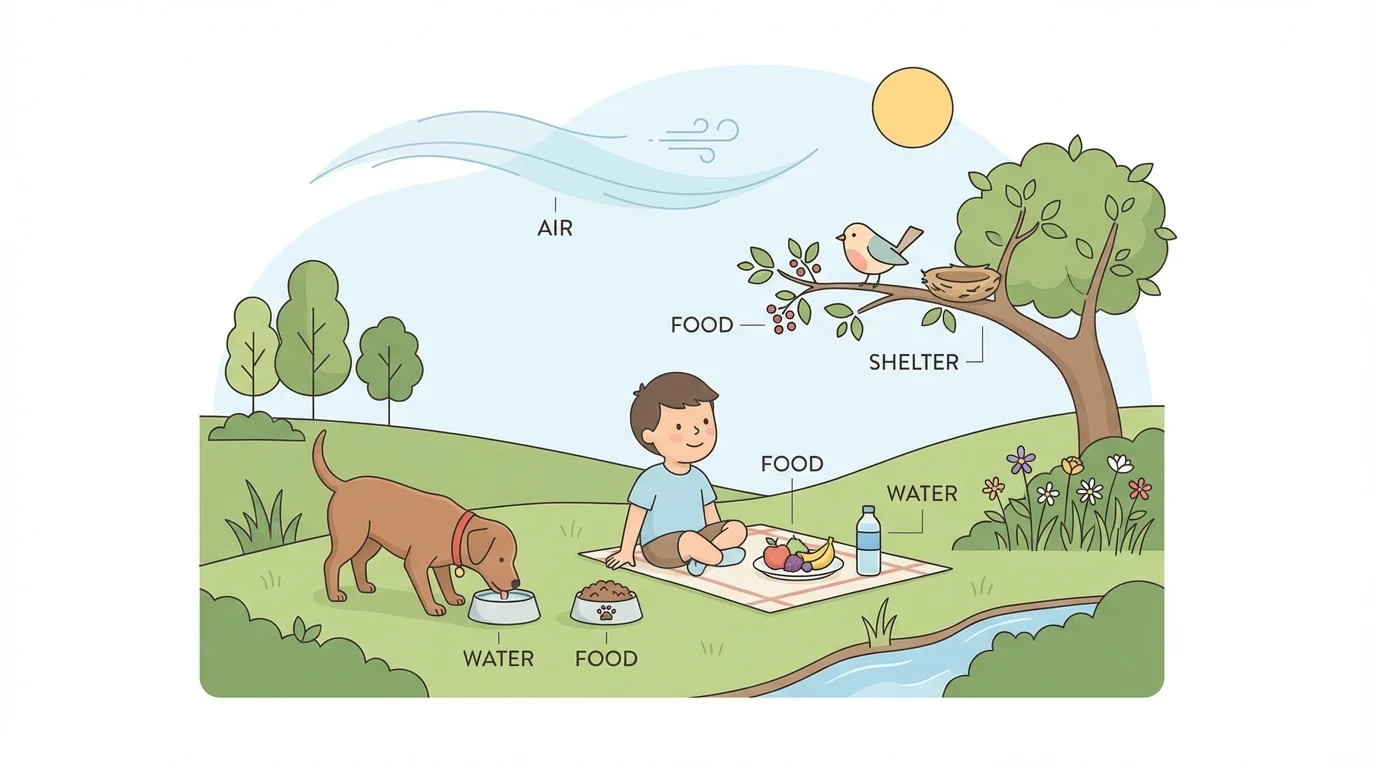
Animals also need air. We cannot always see air, but we can observe animals breathing. A dog pants after running. A fish lives in water, but it still gets oxygen from the water. People breathe in and out every day without even thinking about it.
Animals need a place that helps keep them safe. This is called shelter. A bird's nest, a bear's den, a doghouse, and a person's home are all shelters. Shelter can protect living things from rain, heat, cold, and danger.
Real-world example: watching a pet
Step 1: Observe the pet.
A pet dog may walk to its water bowl after playing.
Step 2: Notice what it uses.
The dog drinks water, breathes air, eats food, and rests in a safe place.
Step 3: Describe the pattern.
The dog needs the same kinds of basic things that other animals need.
Later, when we compare animals again, [Figure 1] still helps us remember that many different animals share the same basic needs even if they live in different places.
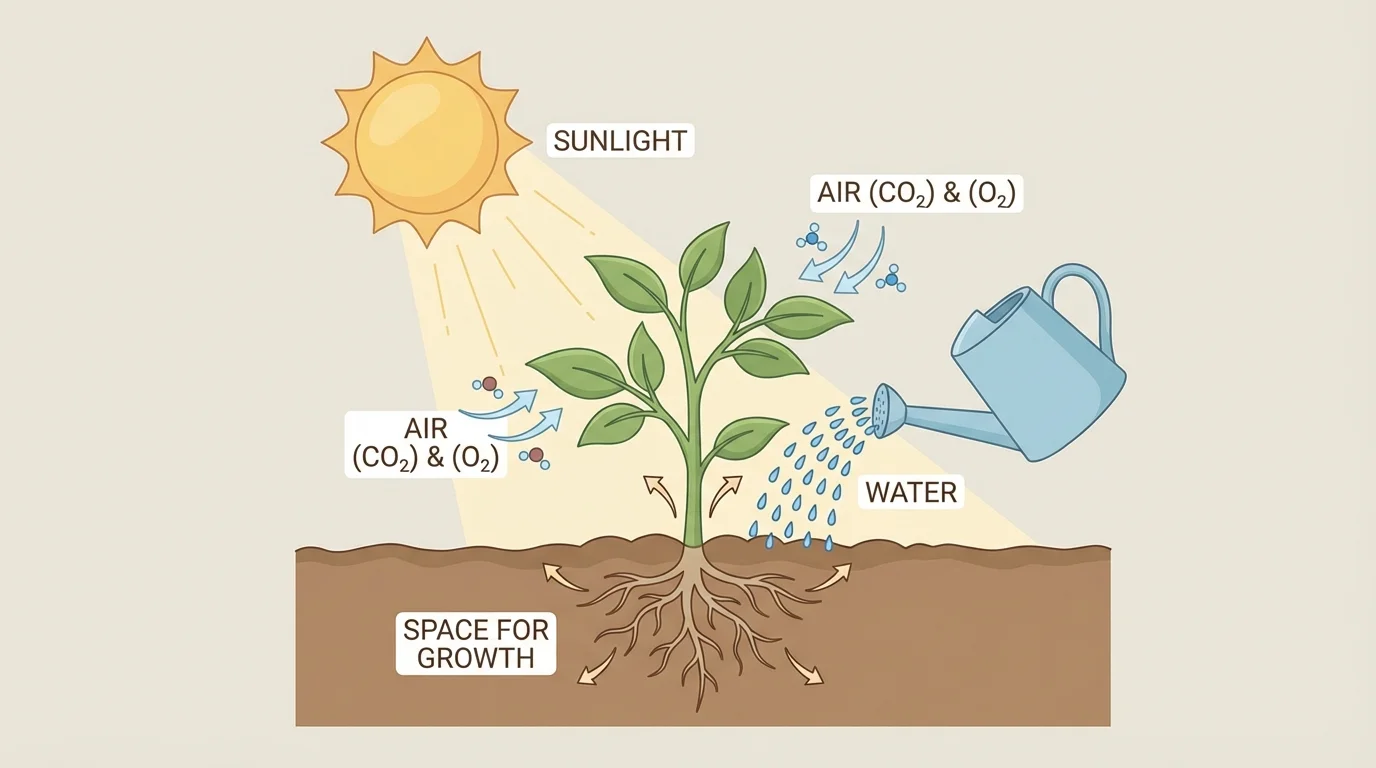
[Figure 2] helps us think about what plants need. Plants do not walk or eat like animals, but they are living things too. We can see that plants need water, light, air, and space to grow. A flower in a garden, a tree in a park, and a bean plant in a cup all show these needs.
Plants need water. If a plant does not get enough water, it may droop or dry out. Plants also need light. We can observe that many plants grow toward light from the sun or a window. Plants need air around them, and they need room for roots, stems, and leaves to grow.
We can notice differences too. Animals must eat food, but plants do not chew or swallow. Instead, we simply observe that plants need water and light to live and grow. We do not need to explain more than what we can observe.
A healthy plant may have green leaves, strong stems, and new flowers or fruit. A plant without what it needs may turn brown, become weak, or stop growing. These observations help us describe what plants need.
Some seeds can wait a long time before they start to grow, but when they get water and the right conditions, they can begin growing.
When we care for a class plant or a garden, [Figure 2] reminds us to check for the basic things the plant needs: water, light, air, and space.
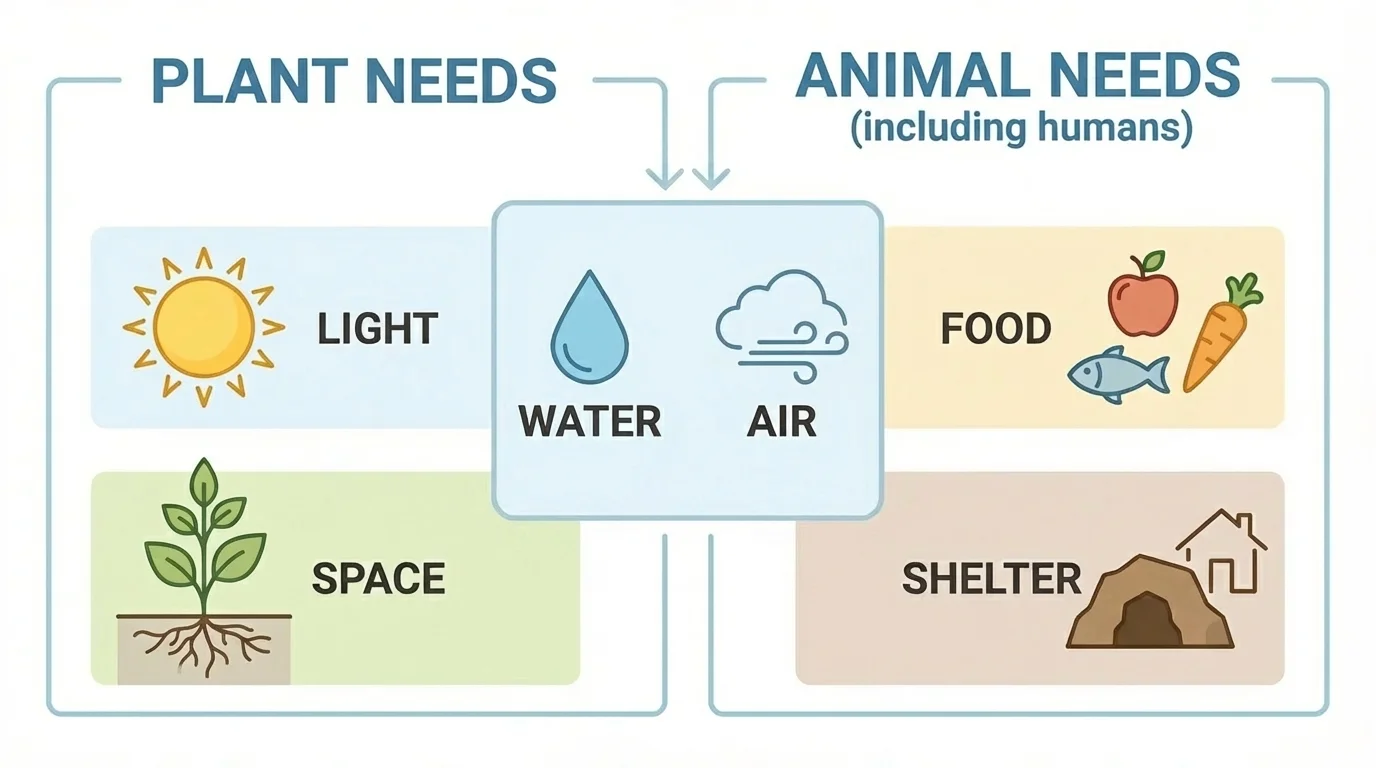
Scientists look for patterns to make sense of the world, and [Figure 3] helps us compare the needs of plants and animals side by side. One pattern is that both plants and animals need water and air. Another pattern is that animals need food, while plants need light.
We can also notice that living things need the right place to live. Fish live in water. Birds need places to perch and build nests. Cactus plants live well in dry places. Water lilies grow in ponds. Different living things live in different places, but all of them need what helps them survive there.
| Living thing | What we can observe it needs |
|---|---|
| Dog | Food, water, air, shelter |
| Bird | Food, water, air, shelter |
| Child | Food, water, air, shelter |
| Flower | Water, light, air, space |
| Tree | Water, light, air, space |
Table 1. Observed needs of several animals and plants.
As we compare the examples in [Figure 3], we see that the pattern is not about one dog or one flower. It is about many living things. Observations help us describe these patterns clearly.
People use this science idea every day. When we feed a pet, water a plant, or build a birdhouse, we are helping living things get what they need. Farmers give water to crops. Families give pets food and clean water. Gardeners put plants where they can get light.
People also need the same basic things as other animals. Humans need food, water, air, and shelter. That means when we learn about animal needs, we are also learning about ourselves.
Using observations to learn
We do not need fancy tools to begin science. We can look at a wilted plant after a hot day, watch birds peck for seeds, or notice a thirsty pet drinking. These observations help us describe patterns about survival.
When we observe carefully, we can answer simple questions such as: Which plant looks healthy? Why is the bird visiting the feeder? Why does a person carry a water bottle on a hot day? The answers connect to what living things need to survive.
