Have you ever seen a bird carrying sticks, a dog digging in dirt, or a flower growing through a crack in the ground? Living things do not just exist in the world. They often change the world around them. Plants, animals, and people all need food, water, air, shelter, and space. To meet these needs, they can change their environment.
The environment is everything around a living thing. It can include soil, water, rocks, air, plants, animals, and places to live. A living thing may change its environment to stay safe, find food, or make a home.
Argument means stating a claim and explaining why the evidence supports it. In science, we support an argument with things we notice, like "I saw the bird carry grass to the tree, so I think it was building a nest."
We do not need numbers to make a good science argument here. We can use words about what we observe. We might say a place is shadier, wetter, safer, or better for hiding. These observations are our evidence.
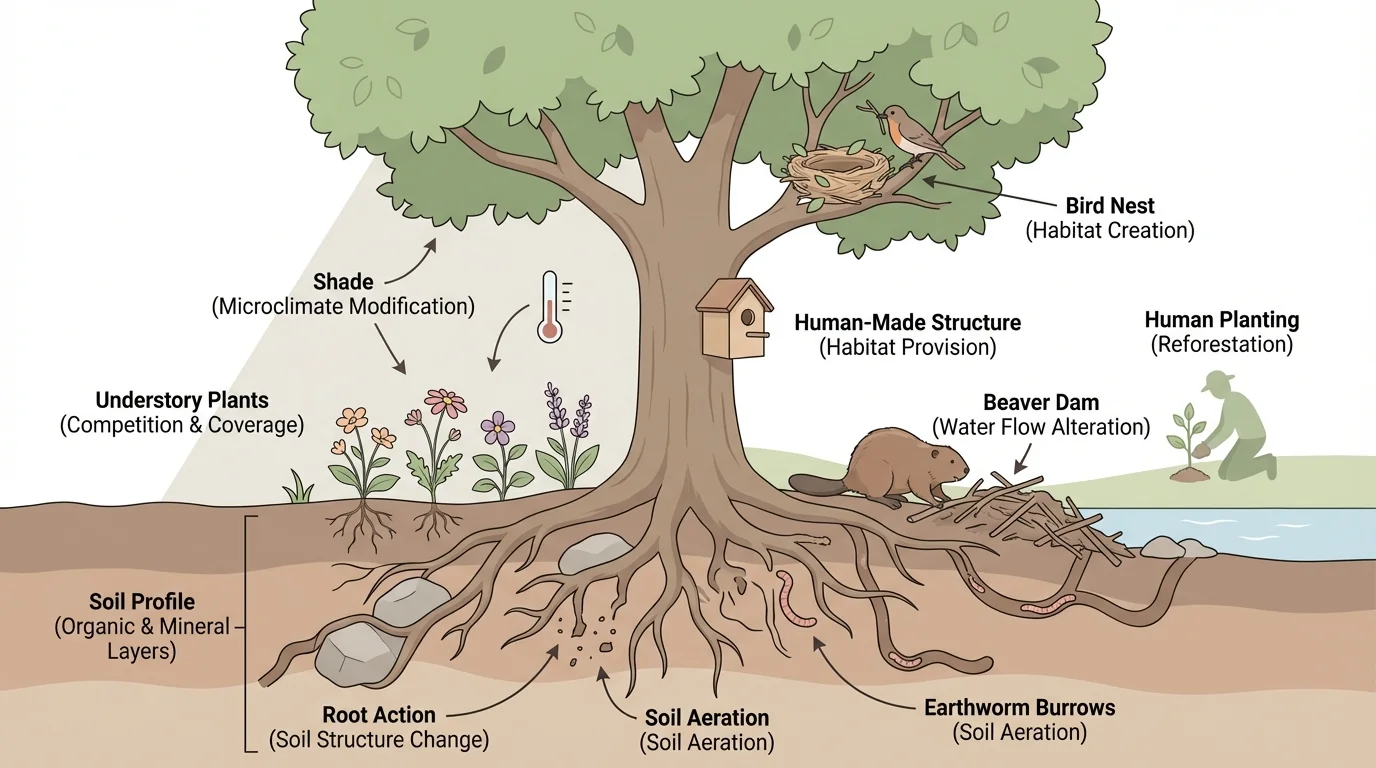
Plants may look quiet, but they change the places around them in important ways. A big tree, as [Figure 1] shows, can make shade under its branches. That shady spot is cooler and can become a good resting place for animals. Roots can hold soil in place, and flowers can bring bees and butterflies to the area.
Plants can also become shelter. Birds may build nests in branches. Squirrels may hide in trees. Small bugs may live under leaves. When a plant grows, it can make a place where other living things can live too.
Some plants grow over fences, climb up walls, or spread across the ground. This changes how the place looks and feels. Grass covers bare dirt. Bushes can make hiding places. A cactus can grow in a dry place and help animals find shelter there.
Plants can be habitat builders. A habitat is a place where a living thing gets what it needs to live. When plants grow, they can help create habitats for insects, birds, and other animals by offering food, cover, and space.
We can make an argument about plants by using what we notice. For example: "I think the tree changed the environment because now there is shade, birds are in the branches, and the ground under it is not the same as the sunny ground nearby." That idea matches what we see in [Figure 1], where the tree changes light, soil, and shelter in one place.
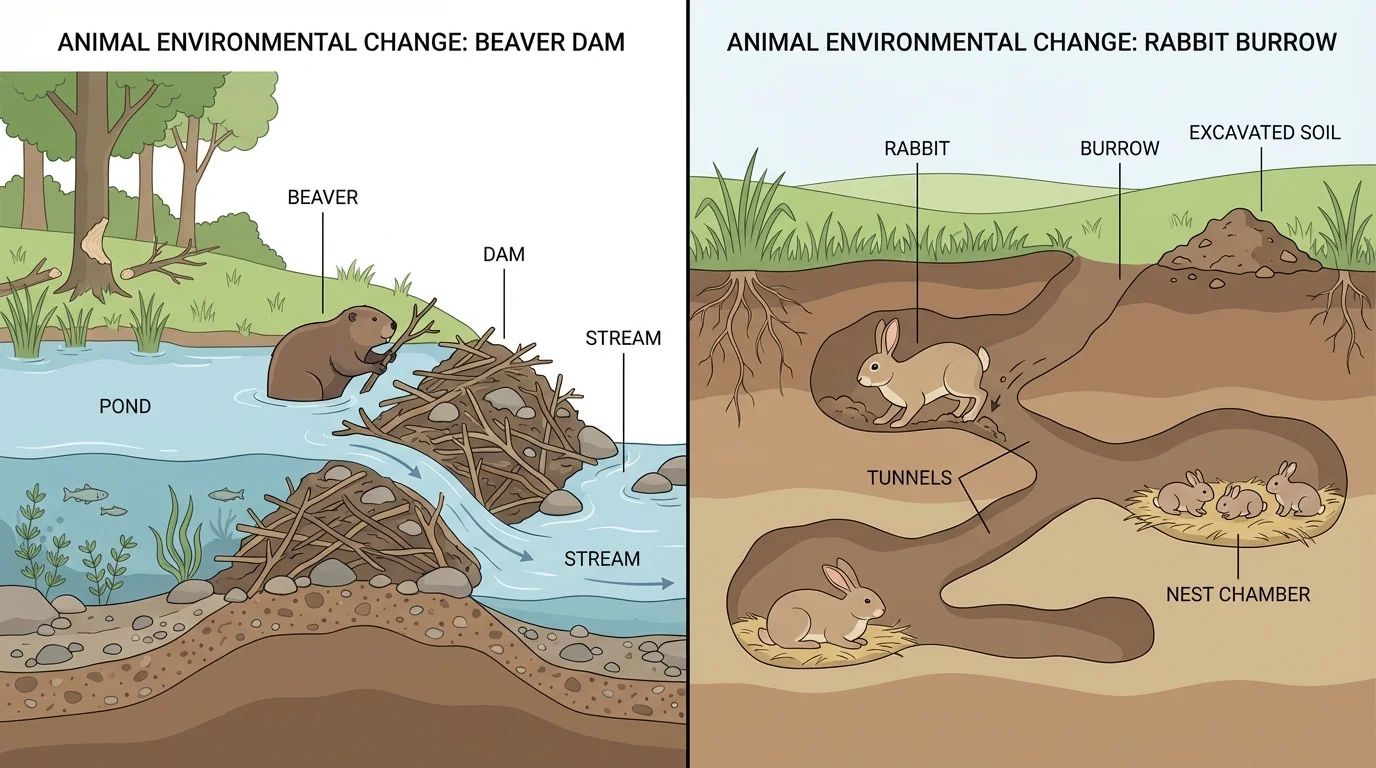
Animals change their surroundings in many ways. Some build, some dig, and some carry things from one place to another. As [Figure 2] illustrates, these actions can make new homes and change land or water.
Birds build nests with sticks, grass, and mud. Rabbits dig holes called burrows to stay safe. Ants move tiny pieces of dirt to make ant hills. When animals dig and build, the ground around them changes.
Beavers are famous builders. They use sticks, branches, and mud to make a dam. A dam can slow water and make a pond. That new pond can become a home for fish, frogs, insects, and plants.
Even pets can change the environment. A dog may dig a hole to make a cool spot to lie in. A hamster shreds paper to make a soft nest. A spider spins a web to catch food. These changes help the animal meet its needs.
Using evidence for an animal argument
Step 1: Notice what the animal does.
A bird carries twigs to a tree branch.
Step 2: Notice what changed.
Later, there is a nest on the branch.
Step 3: Make the argument.
The bird changed the environment by building a nest to make a safe place for eggs or babies.
Later, when we think again about animal changes, [Figure 2] helps us compare two ways animals meet needs: beavers build in water, and rabbits dig in soil. Both are changing the environment to stay safe and live well.
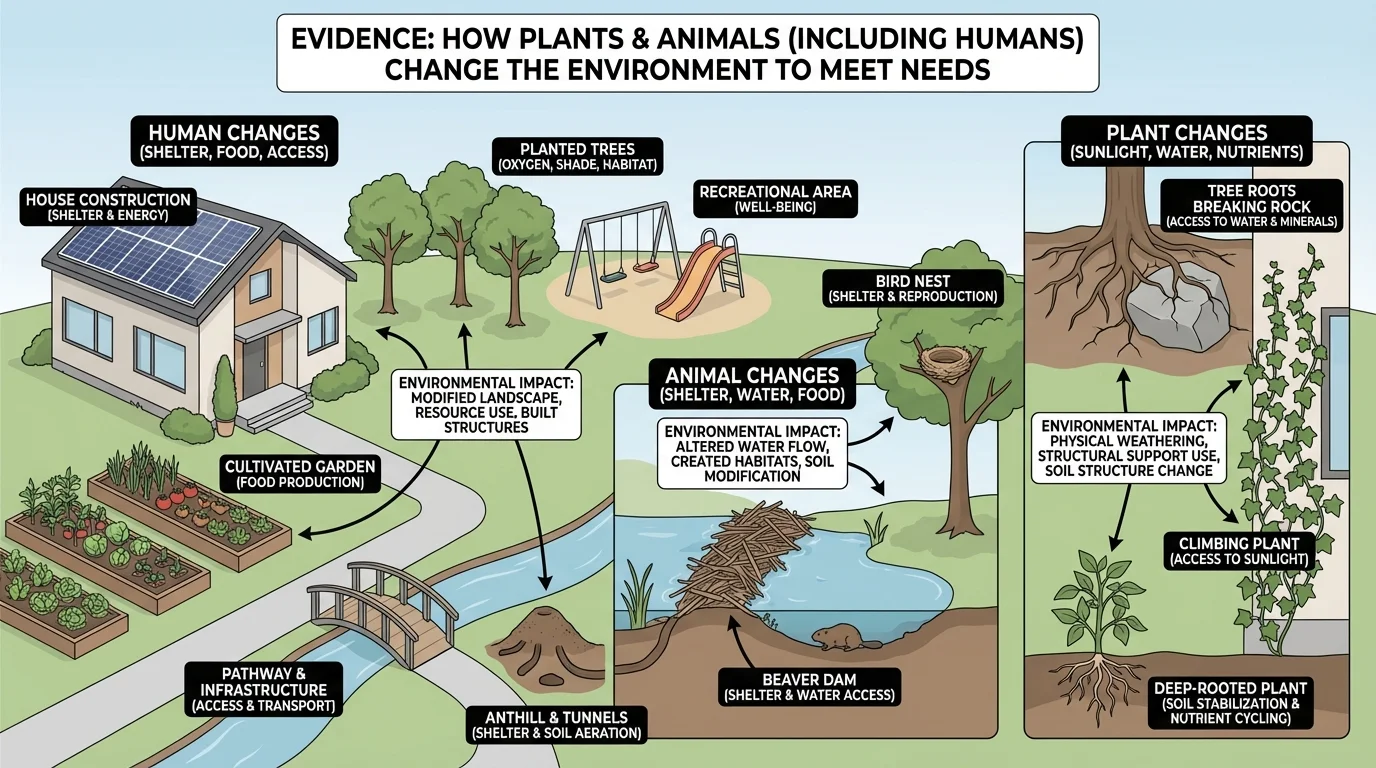
Humans are animals too, and people change the environment in many ways. In neighborhoods, as [Figure 3] shows, people build homes for shelter, plant gardens for food, and make paths or playgrounds to move and play safely.
People plant trees for shade. They dig wells or bring water to homes. They build fences to protect plants or animals. They make parks so people have space to enjoy nature. All of these changes are ways humans meet their needs.
Sometimes people change the environment a lot. Roads, buildings, and farms can replace fields or forests. These changes can help people, but they can also change where animals live. That is why people need to think carefully about the choices they make.
Some people help the environment while meeting their needs by planting native flowers. These flowers can make yards beautiful and also give food to butterflies and bees.
We can support an argument about people with observations too. We might say, "People changed this place because I see a garden where food is growing, and I see a house where people can live." The scene in [Figure 3] makes those changes easy to notice.
In science, an argument is not a fight. It is a careful idea with reasons. A strong argument tells what changed, who changed it, and how the change helps meet a need.
Here are simple sentence frames: "I think the plant changed the environment because I see ______." "I think the animal changed the environment because it made ______." "I think people changed the environment to get ______."
The best evidence is something you can notice with your eyes or hear someone describe clearly. You may notice a hole in the ground, a nest in a tree, a shady spot under leaves, or a garden next to a house. These are all clues.
Living things have needs. Plants need water, air, light, and space. Animals, including humans, need food, water, air, shelter, and space. When a living thing changes its surroundings, it is often trying to meet one or more of these needs.
Good evidence for this topic uses descriptive words rather than counts or measurements. We say things like "the ground is covered now," "there is more shade," "the bird has a safer place," or "the water is blocked by sticks." These are qualitative observations.
Changing the environment is a natural part of life. Plants grow, animals build, and people create places to live. But changes can affect other living things too. A tree can help many animals. A garden can feed people and insects. A road can make travel easier but can also change animal habitats.
When we understand how living things change environments to meet their needs, we can make wiser choices. We can protect trees, leave bird nests alone, and build spaces that help both people and nature.
