Why does a cactus not live in a pond, and why does a fish not live in a desert? Living things cannot live just anywhere. They live in places that help them get what they need. When we look carefully at nature, we see that each plant and animal belongs in a place that fits it.
All living things have needs. A plant needs sunlight, water, air, and a place to grow. An animal needs food, water, air, and shelter. Humans are animals too, so people also need food, water, air, and shelter.
A need is something a living thing must have to live. If a plant does not get water, it cannot stay healthy. If an animal does not get food, it cannot live well. Needs are important because they help us understand why living things live in certain places.
Habitat is the place where a plant or animal lives. A habitat has what the living thing needs.
Shelter is a safe place that gives protection.
Some needs are easy to see. A bird may eat seeds. A flower may grow where rain falls. A person may live in a house or apartment. Even though plants, animals, and people are different, they all need the right place to live.
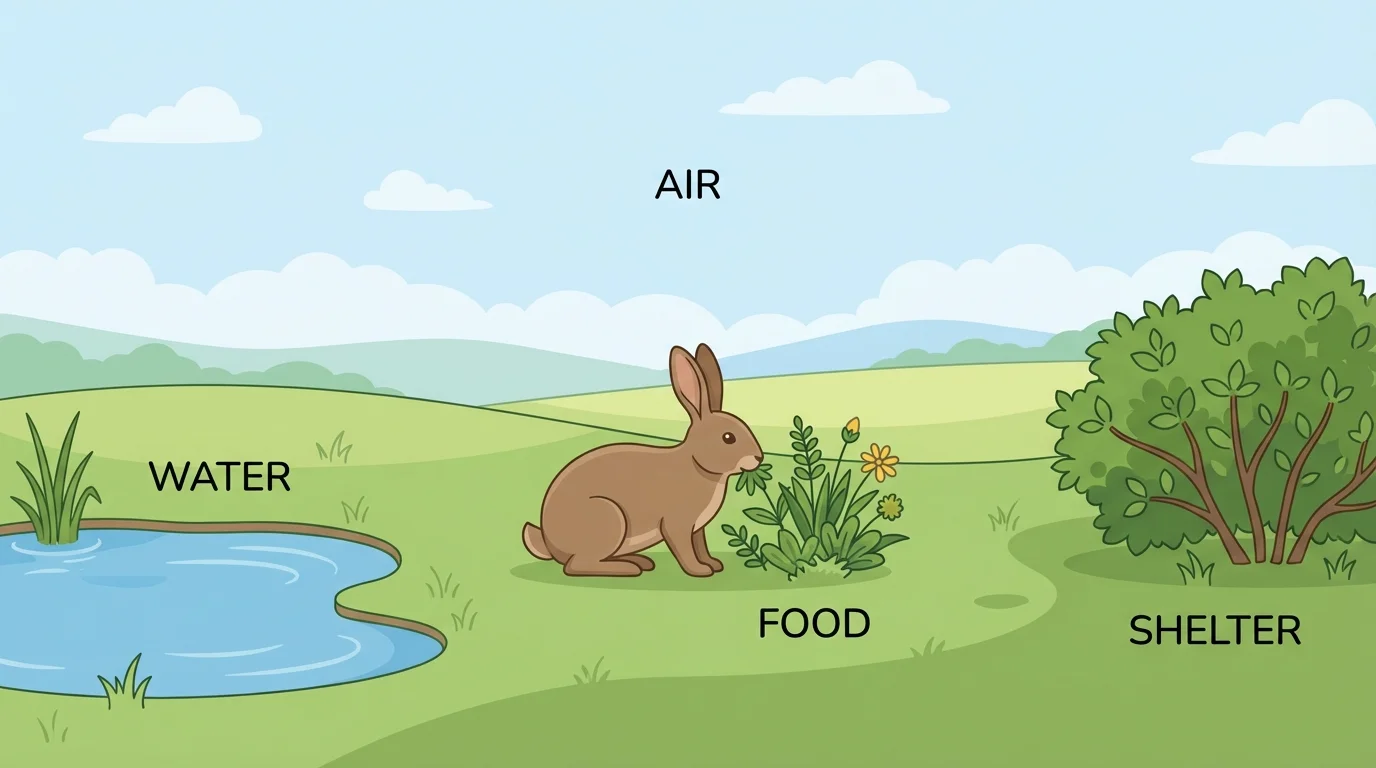
A habitat is more than just a spot on the ground. It is a place that has food, water, air, and shelter or space. [Figure 1] shows a meadow habitat where a rabbit can find grass to eat and places to hide. The place and the living thing go together.
When we talk about the relationship between a plant or animal and its habitat, we are saying, "This living thing lives here because this place has what it needs." That is the big idea. We are not looking closely at body parts. We are simply describing the match between needs and place.
A pond is a habitat. A forest is a habitat. A desert is a habitat. A home where people live is also a habitat for humans. Different habitats help different living things.
Some tiny plants live in water, and some huge plants live on land. The place matters because each kind of plant needs the right amount of water, light, and space.
We can describe habitats with simple words such as wet, dry, sunny, shady, hot, and cool. These words help us tell why a plant or animal lives in one place and not another.
Plants do not all live in the same kind of place. A cactus grows well in a dry desert. A water lily grows in a pond. A tall tree may grow in a forest. Grass can grow in a yard or field. These examples show that plants live in places that match their needs, as [Figure 2] illustrates.
A desert plant lives where there is not much water. A pond plant lives where there is lots of water. A forest plant may live where there is shade from other plants. Each plant lives in a place where it can get what it needs.
People also choose places for plants. In a garden, people give flowers and vegetables soil, water, and sunlight. When a plant is put in a good place, it grows better.
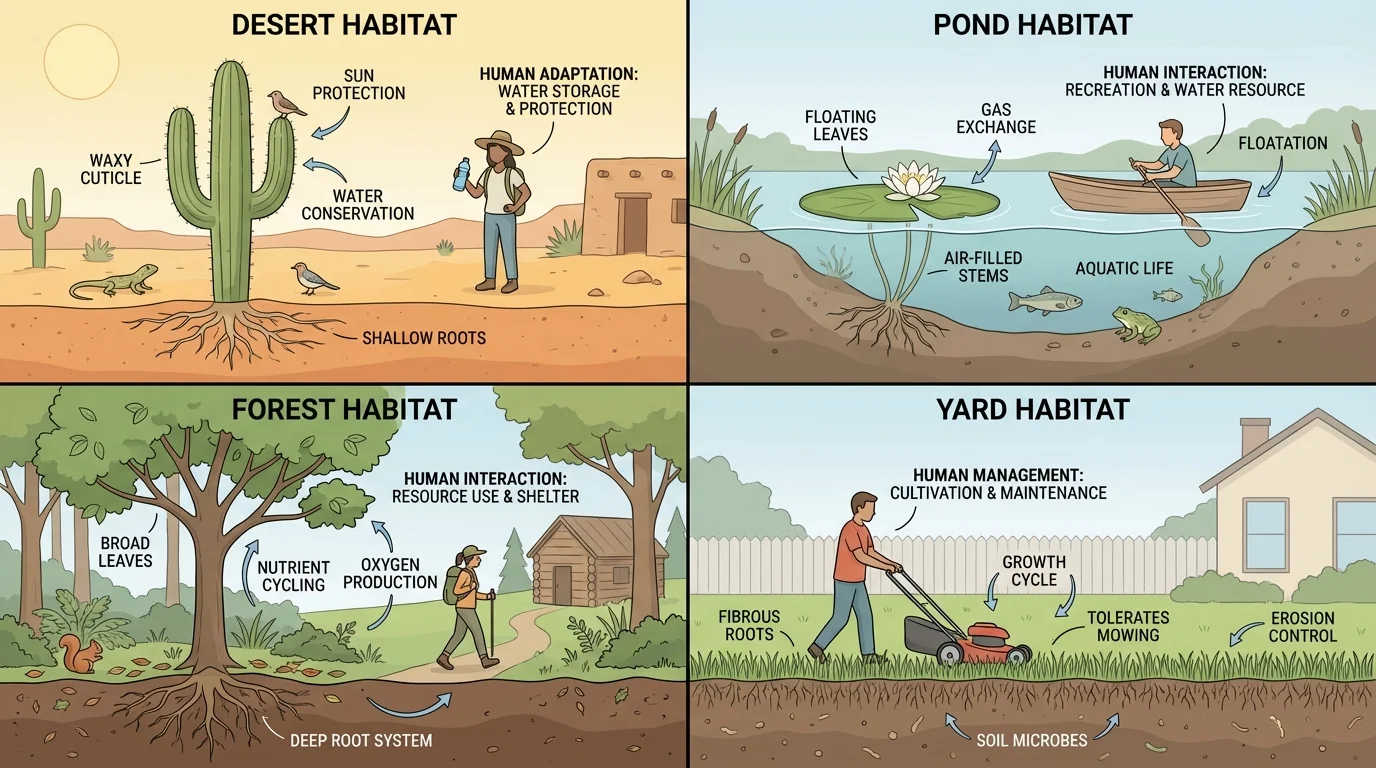
Later, when we compare habitats, we can think back to [Figure 2]. The picture makes it clear that one kind of plant does not belong everywhere. The place helps us know which plant can live there.
Animals also live in habitats that fit their needs. Fish live in ponds, lakes, rivers, or oceans. Birds may live in trees. Frogs can live near ponds. A bear may live in a forest. A dog may live with people in a home.
An animal's habitat gives it food, water, air, and shelter. A squirrel in a tree-filled place can find nuts and a safe space. A fish lives in an aquatic habitat. A person in a home has shelter, water, food, and air.
People are animals with habitats too. Humans live in places that help meet their needs. A house, apartment, or home is a place where people stay safe and find what they need each day. Cities, towns, farms, and neighborhoods are places where humans make homes.
Humans can live in many places, but people still need the basics: food, water, air, and shelter. A snowy place and a hot place are different, yet people find or build safe places to live in both.
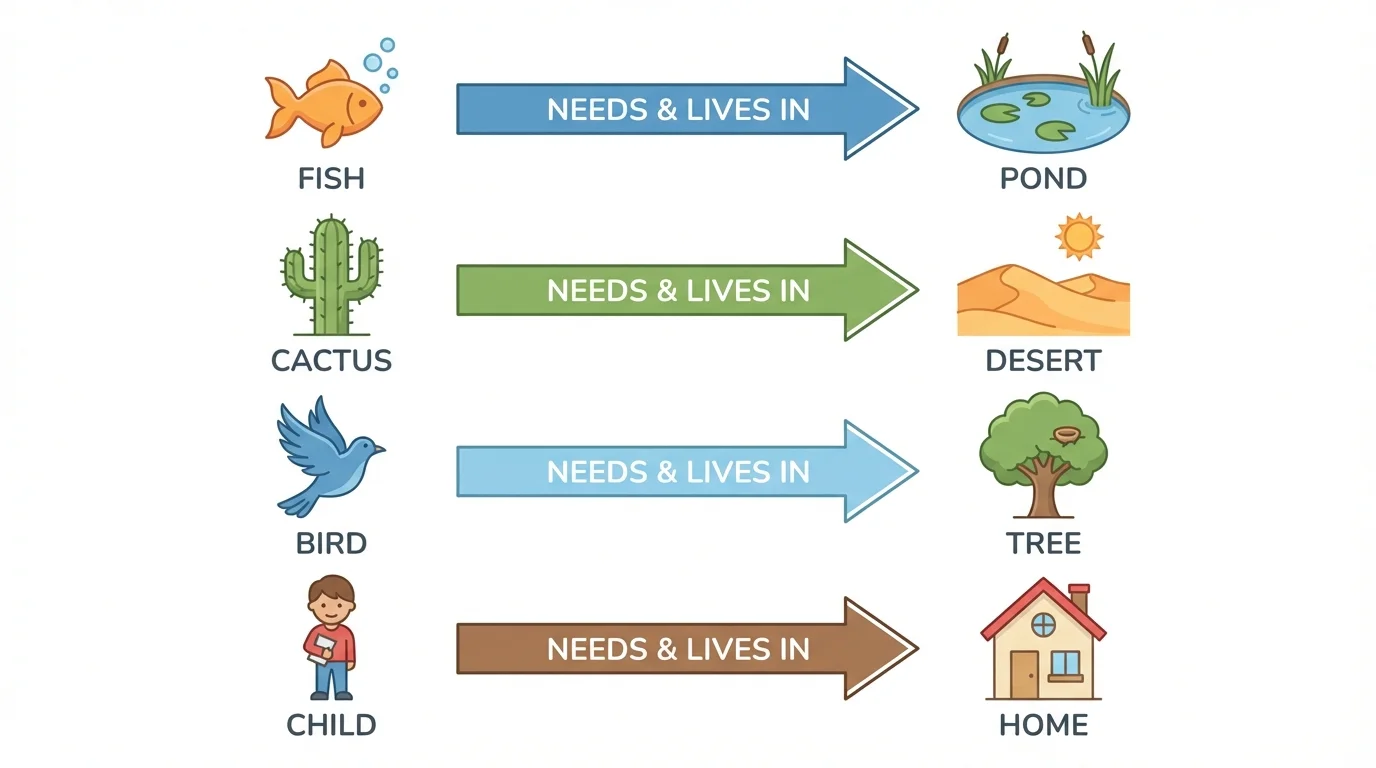
A model helps us show an idea in a simple way. [Figure 3] shows how pictures, arrows, or a chart can match each living thing with its habitat. A model helps us describe the relationship between needs and habitat.
For example, a picture of a fish can point to a pond. A picture of a cactus can point to a desert. A picture of a child can point to a home. The model does not have to tell every detail. It only needs to show the connection between the living thing and the place it lives.
We can also use a table as a model. The table below shows some living things and the places where they live.
| Living thing | Habitat | Needs found there |
|---|---|---|
| Fish | Pond | Water, air, food |
| Cactus | Desert | Sunlight, air, place to grow |
| Bird | Woodland | Food, air, shelter |
| Human | Home | Shelter, water, food, air |
Table 1. Examples of living things, their habitats, and needs found there.
When we read the model in [Figure 3], we are practicing how scientists organize ideas. The model helps us say, "This living thing lives here because this place gives what it needs."
Example: Describing a relationship with a model
Step 1: Look at the living thing.
A frog is the living thing.
Step 2: Think about the place.
A pond is the place.
Step 3: Tell the relationship.
A frog lives near a pond because the pond habitat has water and food.
This kind of model is simple, but it is powerful. It helps us organize what we see in nature.
[Figure 4] shows that weather can change where people and animals go for a little while. On a stormy day, people go inside buildings. Birds may go to nests or trees. Pets may stay in a house. Safe places during strong weather matter.
When rain, wind, or snow comes, shelter becomes especially important. A home protects people. A nest or burrow protects animals. Living things need places that help keep them safe.
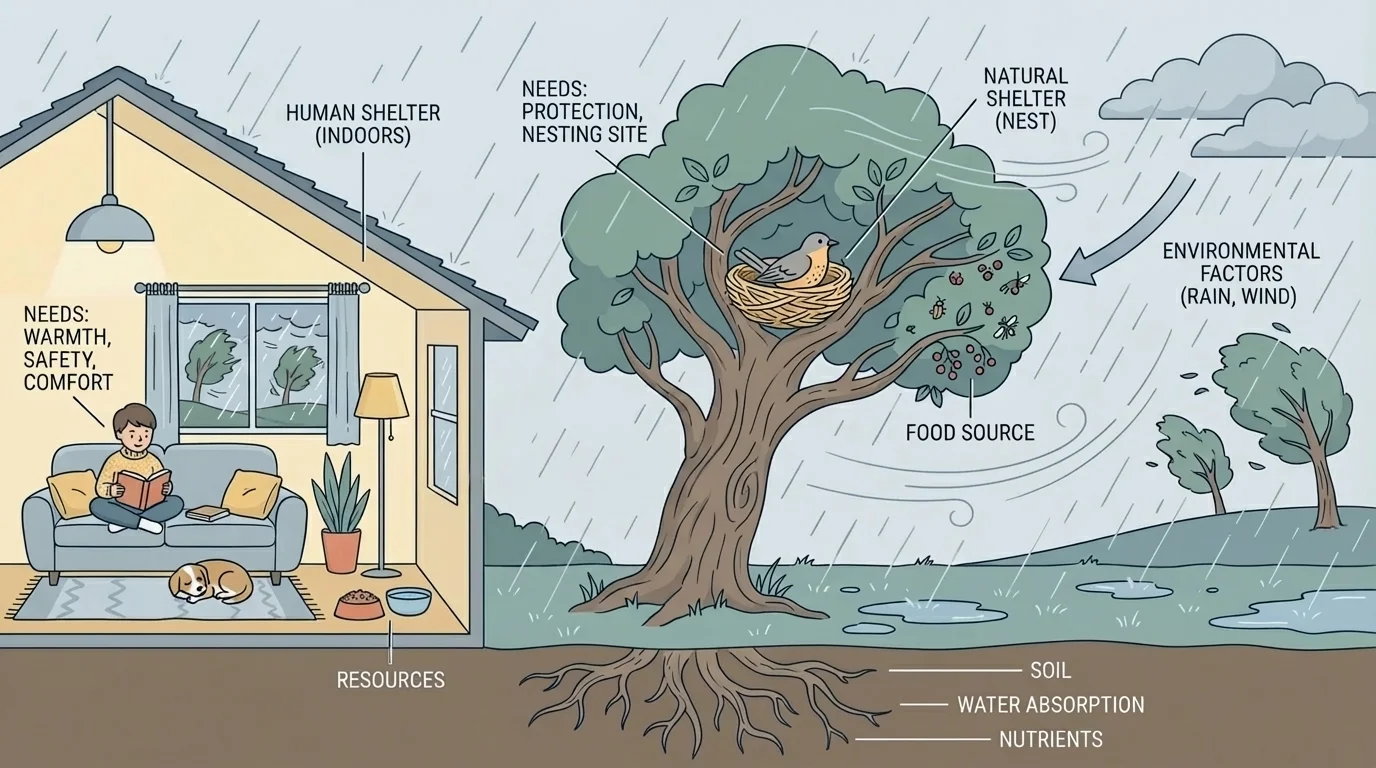
Thinking about weather helps us understand habitat in real life. A habitat is not just where a living thing stays on a sunny day. It is also a place that helps meet needs when the weather changes.
Suppose we see a plant floating in water. We can say its habitat is a pond because that place has water and space to grow. Suppose we see a camel in a dry, sandy place. We can say its habitat is a desert. Suppose we see a person sleeping, eating, and staying warm in a house. We can say a home is part of that person's habitat.
The same idea works again and again. Plants and animals live where their needs can be met. Humans do too. That is why matching living things to their habitats is such an important science idea.
Earlier, [Figure 1] showed a rabbit in a meadow habitat. That same pattern works for many other living things: the place and the needs belong together. We also saw in [Figure 4] that safe shelter matters when weather gets rough.
You already know that living things grow and change. To grow and stay alive, they must have what they need in the place where they live.
When scientists use models, they are making thinking visible. A picture, a matching chart, or a table can help us understand where living things live and why those places matter.
