Have you ever looked outside and seen dark clouds, then heard an adult say, "Let's check the weather"? That is a sensible thing to do. Weather can change, and sometimes it can become very strong. A forecast helps people know what weather may happen soon so they can get ready.
A weather forecast tells us what the weather may be like. It may say sunny, rainy, windy, or stormy. It can tell about weather today, tonight, or tomorrow. Forecasts use words, pictures, and maps, as [Figure 1] shows, to help people understand what may happen outside.
People can see a forecast on TV, on a phone, on a computer, or hear it on the radio. Adults, teachers, community helpers, and families use forecasts to make plans. If severe weather is expected, a forecast gives important information.
Weather forecast means a report that tells what the weather may be like soon. Severe weather means very strong weather that can be dangerous, like a big storm with heavy rain or strong wind.
When we want to learn from a forecast, we ask questions. Questions help us get information. Good questions help us know what to wear, where to go, and what to do.
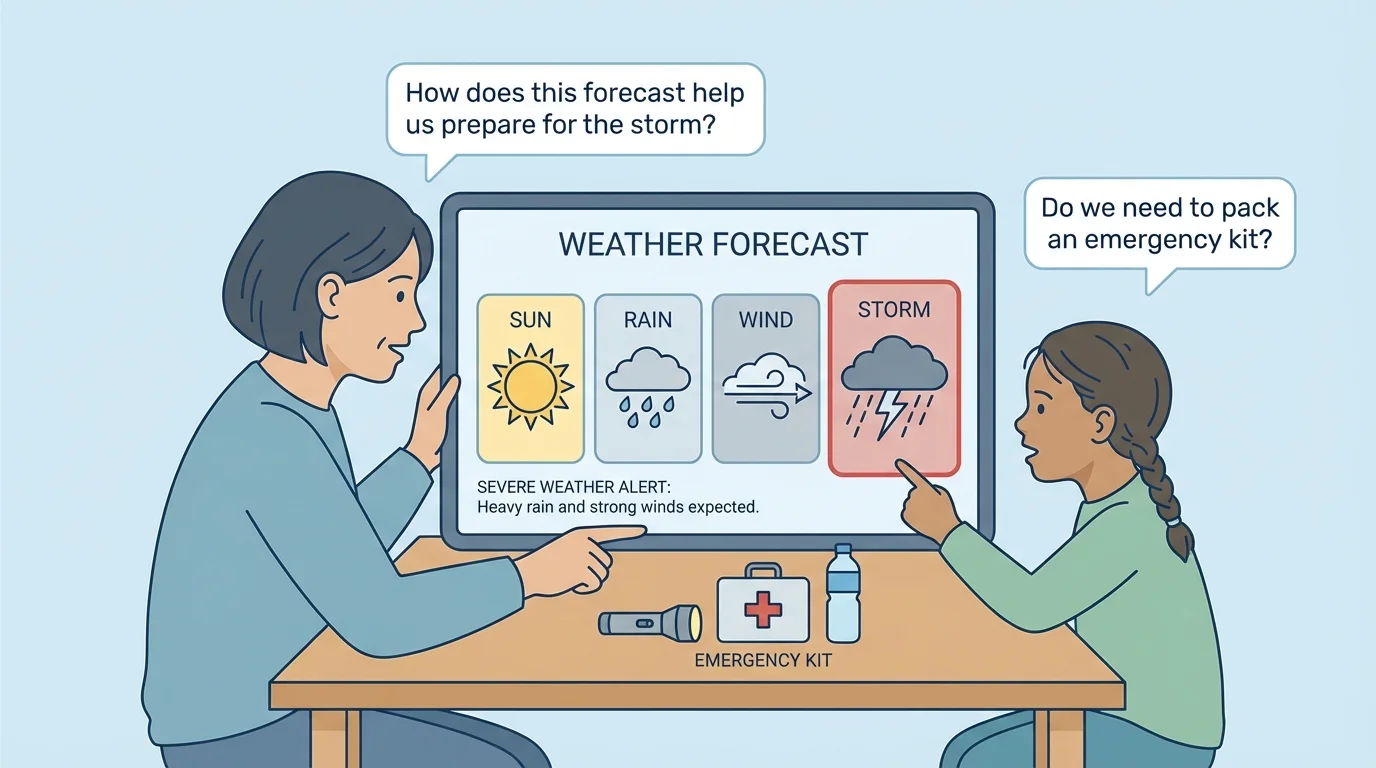
The purpose of forecasting is to help people prepare. To prepare means to get ready before something happens. If a forecast says heavy rain is coming, people may bring umbrellas, wear boots, or stay inside. If a forecast says very strong weather is coming, people can make safer choices.
Forecasts also help people respond. To respond means to act in the right way. People may move indoors, stay close to trusted adults, or listen carefully for more information. Forecasts do not just tell about weather; they help people decide what to do next.
Many helpers use weather forecasts every day. Pilots, bus drivers, farmers, and teachers all need to know what the weather may be like.
Animals also react to weather. Birds may look for shelter. Pets may come inside. People watch forecasts so they can take care of themselves and the animals around them too.
Asking questions is a science skill. We ask questions to learn new things. When we hear a forecast, we can ask simple, helpful questions.
Here are some good questions: "What weather is coming?" "When is it coming?" "Will we be inside or outside?" "What should we wear?" "What should we do to stay safe?" "Who can help us?" These questions help us get clear information.
Questions help us make safe decisions. A forecast gives clues, but questions help us understand those clues. When children ask and adults answer, everyone can make a better plan for strong weather.
We can also ask questions at school. A child might ask, "Will we have recess outside?" or "Should we line up inside?" At home, a child might ask, "Do we need raincoats?" or "Should we stay away from windows?"
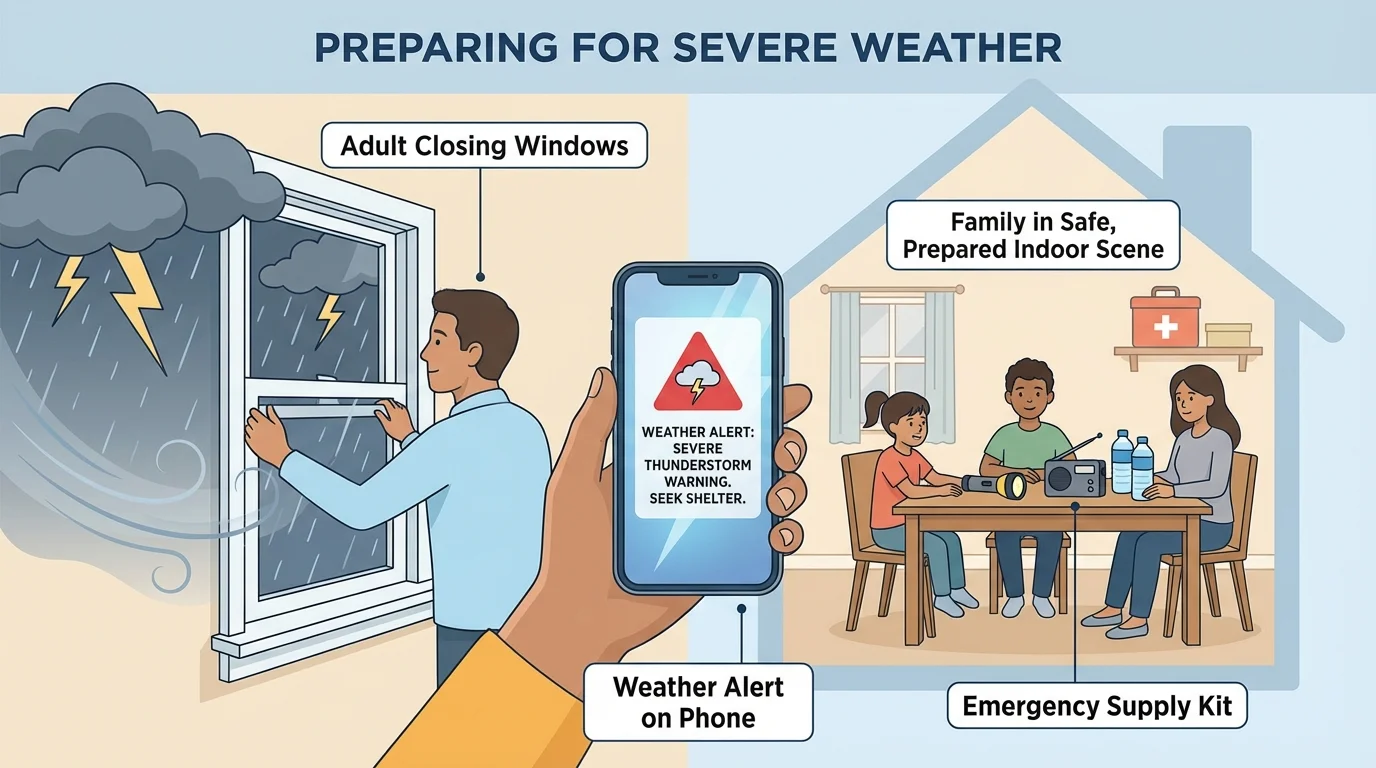
When severe weather is near, people make safe choices. A family may go indoors. A teacher may keep children inside the classroom. Adults may close windows and doors. Everyone listens carefully to trusted helpers and weather messages.
As [Figure 2] illustrates, a warning tells people to pay close attention and take action. Young children should stay with a trusted adult. They should not go outside to watch the storm. They should listen, stay calm, and follow directions.
Real-world example
A class wants to go outside, but the forecast says strong storms may come later.
Step 1: The teacher checks the forecast.
Step 2: The children ask, "Will the weather be safe for recess?"
Step 3: The teacher decides the class will stay inside.
Step 4: The class stays safe because they used the forecast to prepare and respond.
Safe responses are different in different places, but the big idea is the same: listen, prepare, and stay safe. The forecast helps people know when it is time to change plans.
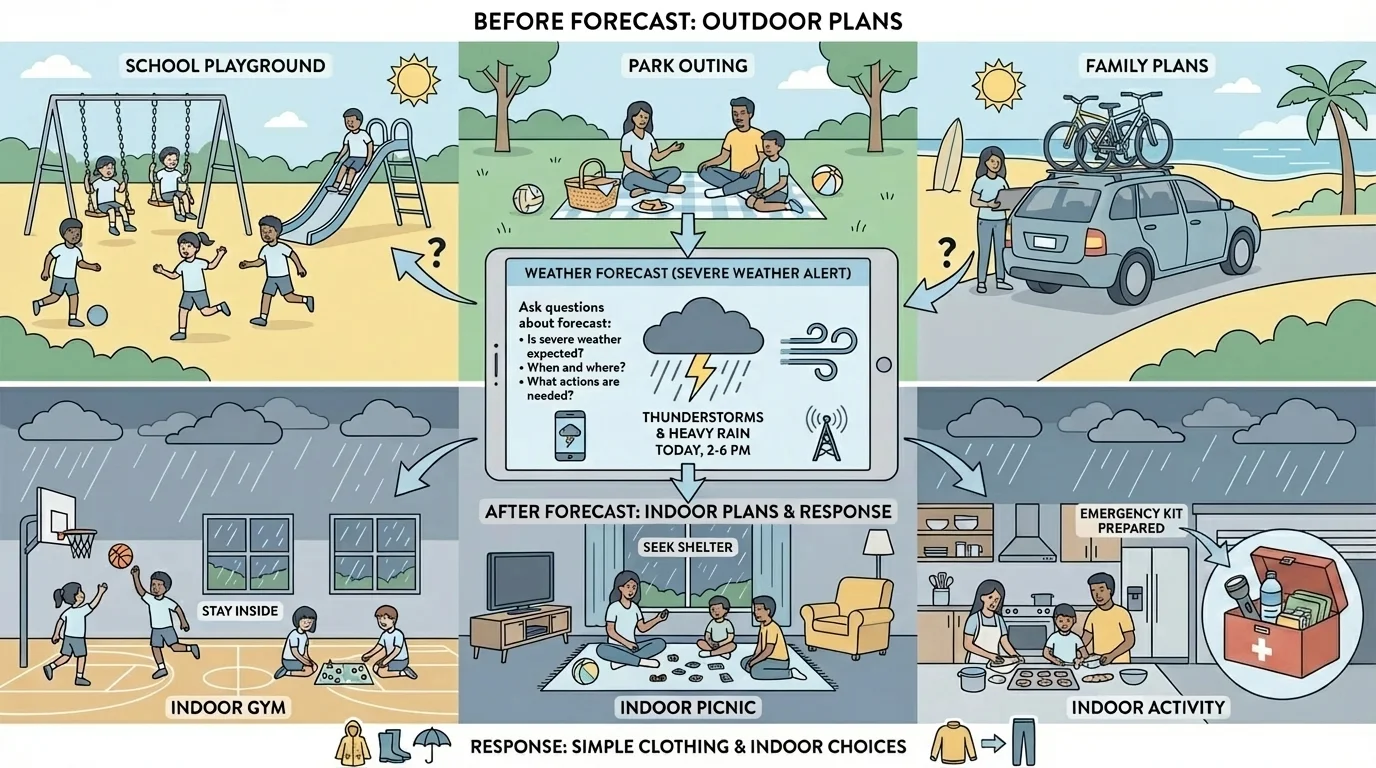
Forecasts help people at home, at school, and on trips, as [Figure 3] shows. A family going to the park may check the forecast before leaving. A school may look at the forecast before outdoor play. A coach may check weather before practice. Forecasts help people decide whether to go, wait, or stay inside.
Forecasts can also help people choose the right things to bring. On a rainy day, people may bring coats. On a windy day, people may hold hats tightly. When severe weather may happen, adults may keep flashlights, water, and important items together so they are ready.
Weather is what the air and sky are like outside. You may observe clouds, rain, wind, sunshine, or temperature with your senses and with help from tools and grown-ups.
Later, when a child hears a forecast again, the pictures from [Figure 1] help make sense of the words, and the safety actions from [Figure 2] remind the child what people do next. This is how information and action work together.
Scientists ask questions to learn. Students can do that too. You can ask about the purpose of a forecast: "Why are we checking it?" The answer is: we check it to get ready and to stay safe.
You can ask about action: "What should we do now?" You can ask about time: "Is the strong weather coming soon?" You can ask about place: "Should we be inside?" These questions help you obtain information from trusted adults.
"Good questions help us make safe choices."
When people use weather forecasts, they are not making random guesses. They are trying to learn useful information. That information helps families, schools, and communities prepare for severe weather and respond in careful ways.
