Have you ever seen a candy wrapper on the ground or muddy water running into a drain after rain? Small things people do can make a big difference. We can help the places around us stay clean and safe for plants, animals, and people.
Your local environment is the place around you where you live, learn, and play. It has land, water, air, plants, animals, and people. These parts work together, as [Figure 1] shows. If one part gets hurt, other parts can be hurt too.
For example, trash on the ground can blow into grass, roads, or streams. Dirty water can make it hard for fish and bugs to live. Too much smoke in the air can make it harder for people and animals to breathe. When we care for one part of nature, we often help many parts at the same time.
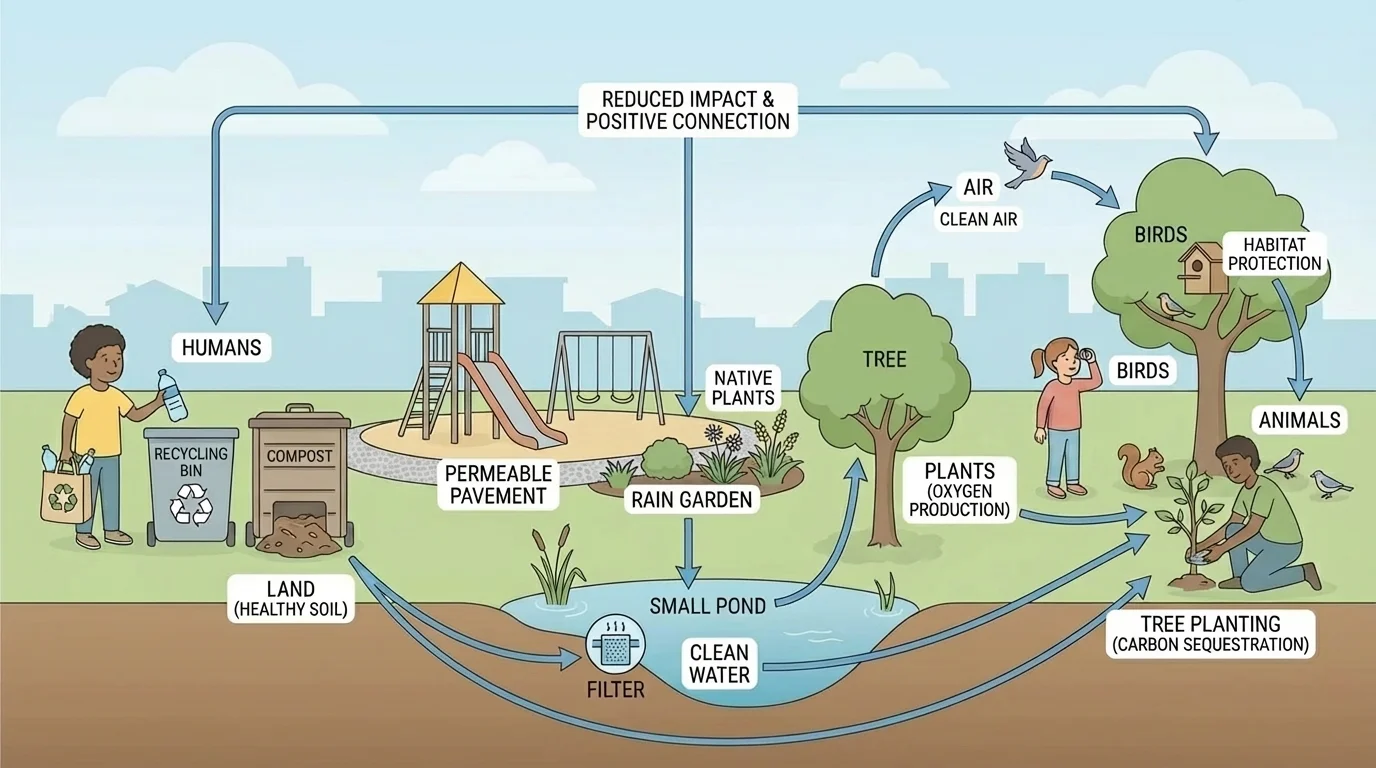
Environment means everything around us in a place, including land, water, air, plants, animals, and people.
Habitat is a place where a plant or animal gets what it needs to live, such as food, water, air, and shelter.
Our schoolyard, park, sidewalk, or backyard can all be part of the local environment. A bird may find food in grass. A worm may live in soil. A flower may need sunshine and water. People share these places, so people can also help protect them.
Land includes soil, sand, rocks, and the ground we walk on. People can hurt the land by dropping litter, breaking plants, or stepping where tiny plants are trying to grow. People can help the land by putting trash in a bin, picking up litter, and staying on paths when possible.
Planting flowers, grass, or trees can help too. Roots hold soil in place. Plants give shade and shelter. When we keep land clean, animals can find safer homes and people can enjoy cleaner places to play.
Real-world example: Helping the playground garden
Step 1: A child sees paper on the ground near a flower bed.
Step 2: The child puts the paper in the trash can.
Step 3: The flowers have a cleaner place to grow, and the paper is less likely to blow away.
This is a simple solution that reduces harm to the land.
We can also be gentle with leaves, sticks, and logs. Sometimes small animals hide under them. Taking care of land helps protect the homes of living things.
Water in puddles, ponds, streams, and drains moves from place to place, as [Figure 2] illustrates. When rain falls, it can carry dirt and trash along sidewalks and streets. That is why keeping the ground clean also helps keep water clean.
People can reduce harm to water by not throwing trash into puddles, storm drains, or creeks. Soap, paint, and other polluting liquids should not go into outside drains. We can also save water by turning off a faucet when we do not need it.
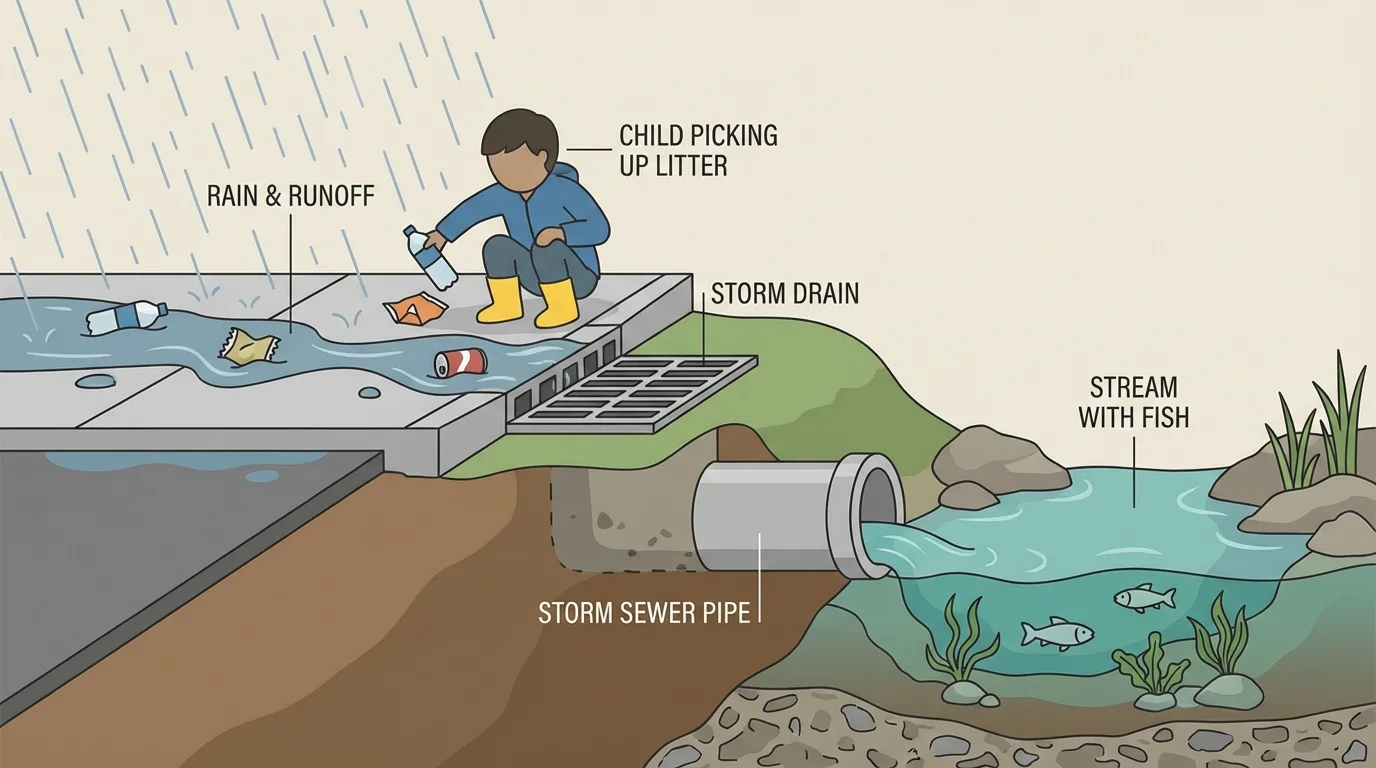
Clean water is important for fish, frogs, birds, plants, pets, and people. If water gets dirty, living things may not have what they need. Later, when you see water moving after rain, you can think about where that water goes.
Some storm drains lead water straight to streams or ponds. That means litter on a sidewalk can travel to places where animals live.
A good solution is simple: keep trash out of water, save water, and tell others why clean water matters.
Air is all around us, even though we cannot see it. People and animals need clean air to breathe. Smoke, too much dust, and car exhaust can make air less clean.
Some ways to help the air are walking short distances, riding bikes when it is safe, or traveling together in one car with a grown-up. Planting trees and other plants can help make the air feel fresher too. Clean air helps people feel better when they run, play, and rest outside.
One helpful choice can help more than one part of nature. If a family walks to a nearby park instead of driving, they may help the air by using less fuel, and they may also enjoy the land and living things around them. Environmental solutions often work together.
Even young children can share air-helping ideas, such as "Please do not leave trash burning" or "Let's plant a tree." These are kind, safe messages that protect the place we live.
Plants and animals live in a habitat. They need food, water, air, and shelter. In a local park or yard, birds may use trees, bees may visit flowers, and worms may live in soil. We can protect these homes by making safe choices, as [Figure 3] shows.
Helpful choices include watching animals quietly, leaving nests alone, not chasing butterflies, and not picking every flower. When we leave some flowers, bees and other pollinators can still find food. When we give animals space, they can stay calm and safe.
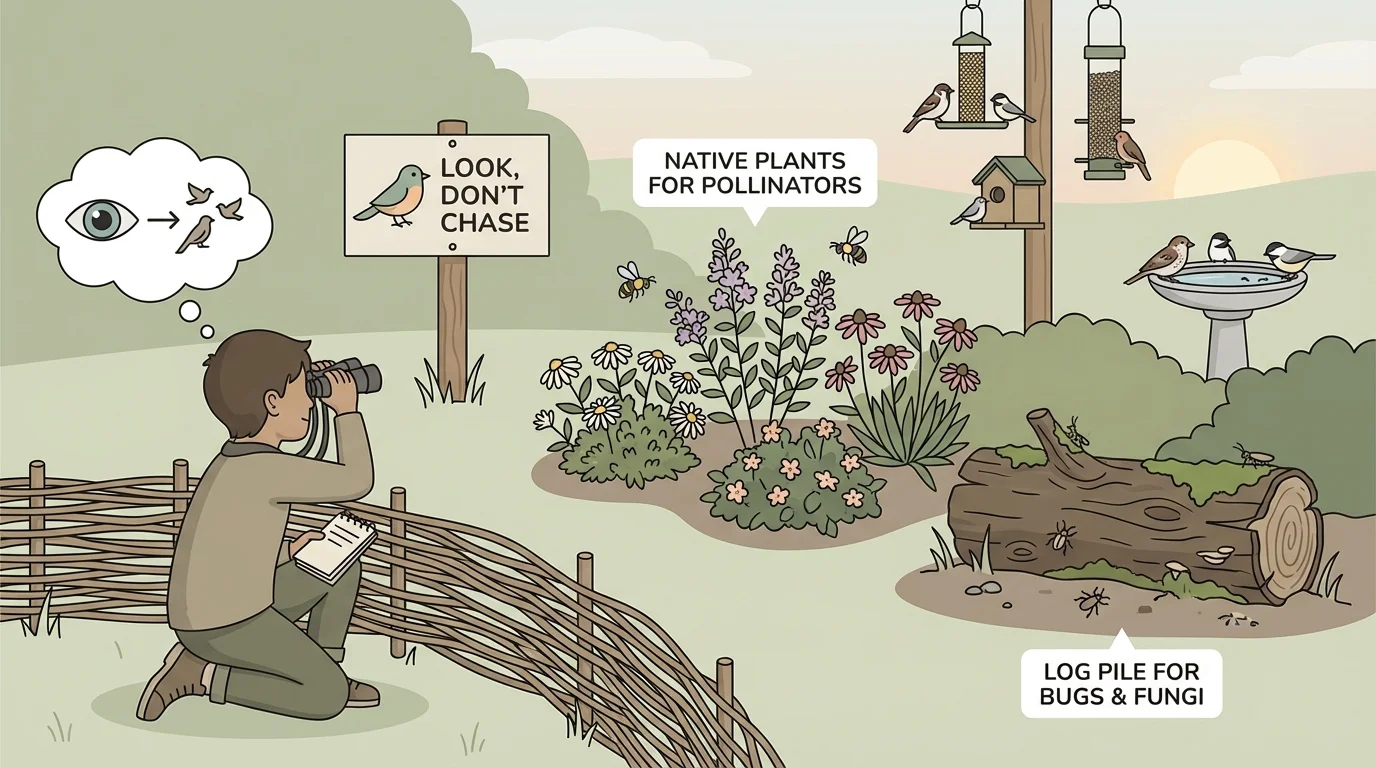
Plants are living things too. They need sunlight, water, and room to grow. Pulling up plants or stomping on them can damage a habitat. Gentle behavior helps many living things at once.
Living things have needs. Animals need food, water, air, and shelter. Plants need water, air, sunlight, and space to grow.
When people help habitats, animals and plants have a better chance to live well in the local environment.
To communicate means to share ideas with others. We can communicate environmental solutions by speaking, drawing, making signs with an adult, or reminding friends in kind words.
For example, a child might say, "Trash goes in the bin," "Please save water," or "Let the ladybug stay on the leaf." These messages tell what action helps. A good environmental message is short, clear, and kind.
| Problem | Helpful solution | Kind message |
|---|---|---|
| Trash on grass | Put it in a bin | "Let's keep the ground clean." |
| Litter near a drain | Pick it up safely with an adult | "Trash can hurt water." |
| Chasing birds | Watch quietly | "Animals need space." |
| Water left running | Turn it off | "Let's save water." |
Table 1. Simple local environmental problems, solutions, and messages children can share.
When we communicate solutions, we help other people learn how to protect land, water, air, and living things too.
Sometimes strong weather, like heavy rain or wind, can move loose trash into streets and water. People can prepare by securing loose items, closing lids on bins, and staying safe with grown-ups during storms.
After a storm, people can help the environment by cleaning up safely. This protects habitats and helps keep land and water cleaner. Caring for the environment and preparing for weather are both ways of taking care of our community.
"Small helping hands can make a big difference."
Every helpful action matters. One piece of trash in a bin, one flower left for a bee, and one kind reminder to a friend are all solutions that reduce human impact on the local environment.
