Have you ever felt crunchy sand between your toes or picked up a smooth rock from the ground? The Earth is full of amazing things we can touch, see, and use. Young learners can begin to notice that the ground is made of different materials and that these materials are useful in many parts of life.
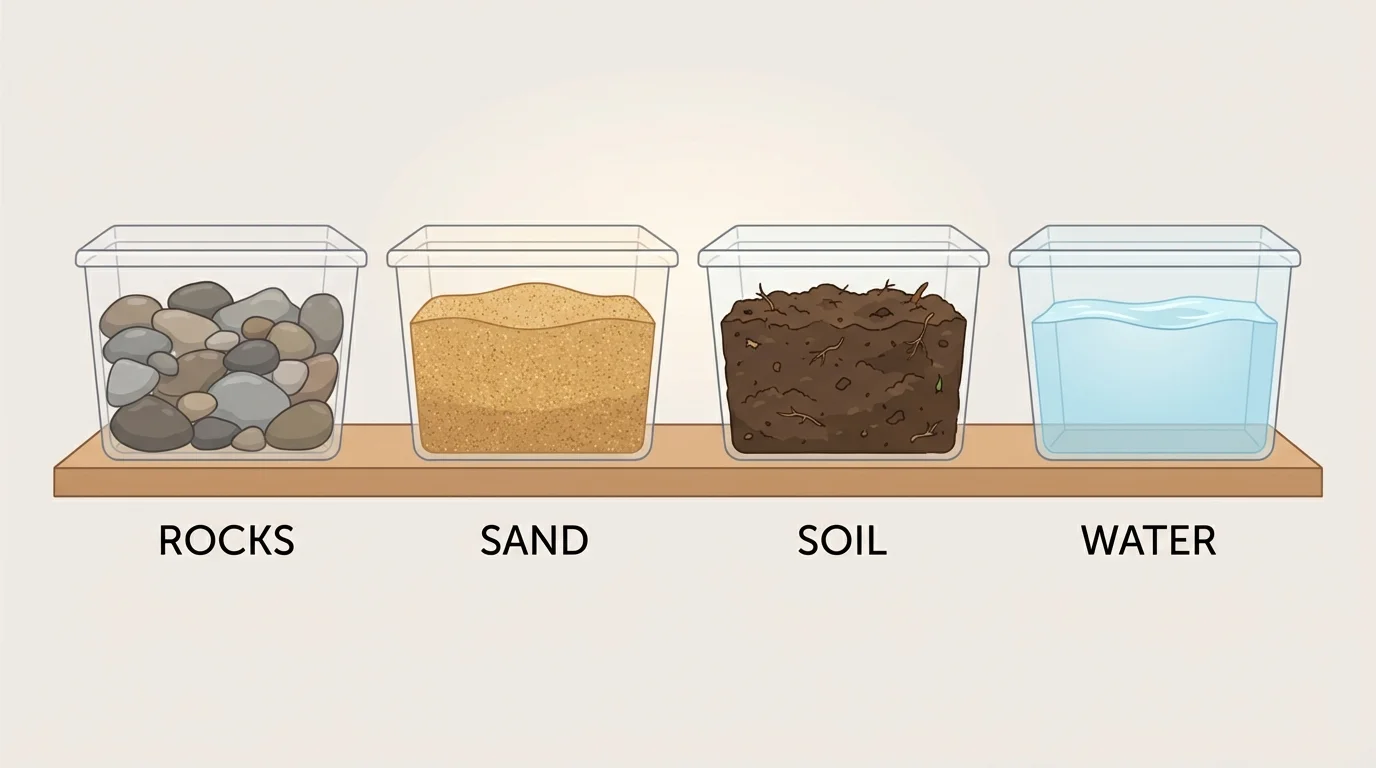
[Figure 1] The Earth gives us many kinds of materials that children often see: rocks, sand, soil, and water. A rock may feel hard and heavy. Sand is made of tiny grains. Soil can feel crumbly and may help plants grow. Water can move, splash, and soak into the ground.
These materials do not all look the same. Some rocks are big, and some are small. Sand may be pale or dark. Soil may be dry and dusty or wet and sticky. Water may be in a puddle, a cup, or a stream. Children at this age can begin to see that Earth materials can be alike in some ways and different in other ways.
When children explore outdoors, they may find pebbles, mud, or a patch of grass growing in soil. These are early science observations. Looking carefully helps children make sense of what is around them.
Earth materials are natural things from the Earth, such as rocks, sand, soil, and water, that people can see and use.
Some Earth materials are used just as they are, and some are changed by people. For example, rocks can be broken into smaller pieces, and soil can be moved to make a garden. Even very young children can begin to understand that natural materials come from the world around them.
People use Earth materials every day. We use water for drinking, washing, and helping plants grow. We use soil to grow flowers, fruits, and vegetables. Sand can be used in play areas and in building materials. Rocks can be used to make walls, roads, and paths.
A preschool child may notice these uses in familiar places. A playground sandbox has sand. A garden has soil. A fish tank or sink contains water. Stones may line a walkway. Seeing these examples helps children connect science to real life.
Some very big buildings and roads begin with simple Earth materials. Tiny grains of sand and small pieces of rock can help make strong things people use every day.
Children do not need to know every building process, but they can learn that natural materials are helpful. They can also learn that some materials are better for one job than another. Water helps a thirsty plant, but a rock does not. Soil holds roots, but sand feels loose and grainy.
[Figure 2] Scientists look carefully, and young children can do that too. When children compare materials, they can sort them by what they notice. One rock may be smooth, while another is rough. Sand feels tiny and loose. Soil may hold together more than sand. Water does not keep its own shape like a rock does.
Simple describing words are important in science. Children can say hard, soft, rough, smooth, wet, and dry. They can also notice color, size, and shape. A child might say, "This rock is gray and hard," or "This soil is dark and wet."
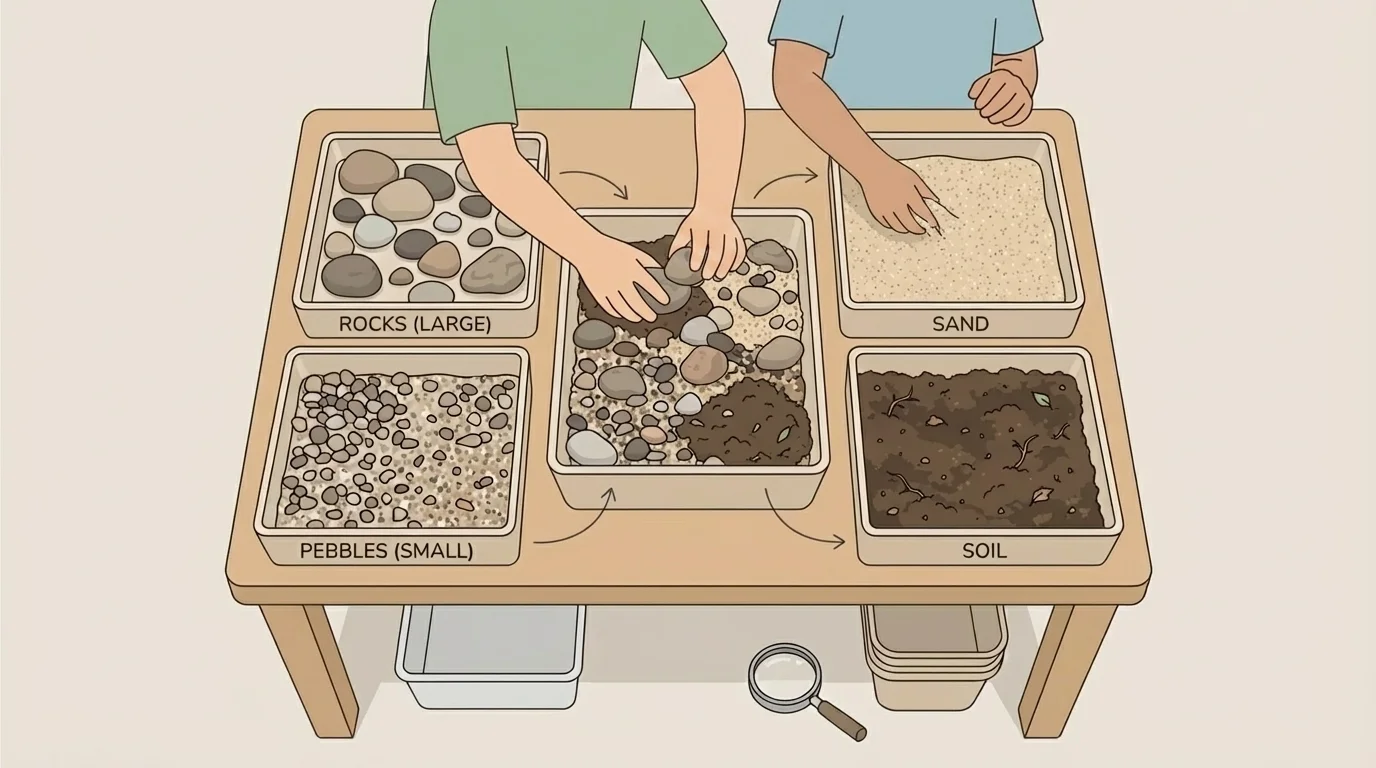
Sorting is a science skill. Children may put big rocks in one group and small rocks in another. They may notice that sand pours, but rocks do not pour in the same way. These small comparisons help build early understanding of materials and their properties.
Real-world example
A child explores outside after rain.
Step 1: The child sees a puddle and touches the ground nearby.
Step 2: The child notices that the water is wet and the soil feels muddy.
Step 3: The child compares the muddy soil with dry soil under a covered place.
Step 4: The child learns that the same soil can change when water is added.
This is an early way of observing how Earth materials interact.
As seen earlier in [Figure 1], different Earth materials are easy to tell apart when children look, touch, and compare carefully. These observations are the beginning of science thinking.
[Figure 3] People do more than find Earth materials. People also change the land in simple ways, such as digging, making a path, or planting a garden. When someone scoops soil to plant a seed, the ground changes. When workers place rocks on a path, the surface changes. When people dig holes, build homes, or move dirt, they change the Earth's surface.
These changes may be small or large. A child using a shovel in a garden makes a small change. A machine digging for a road makes a bigger change. Young learners can begin to understand that human actions affect the places where we live and play.
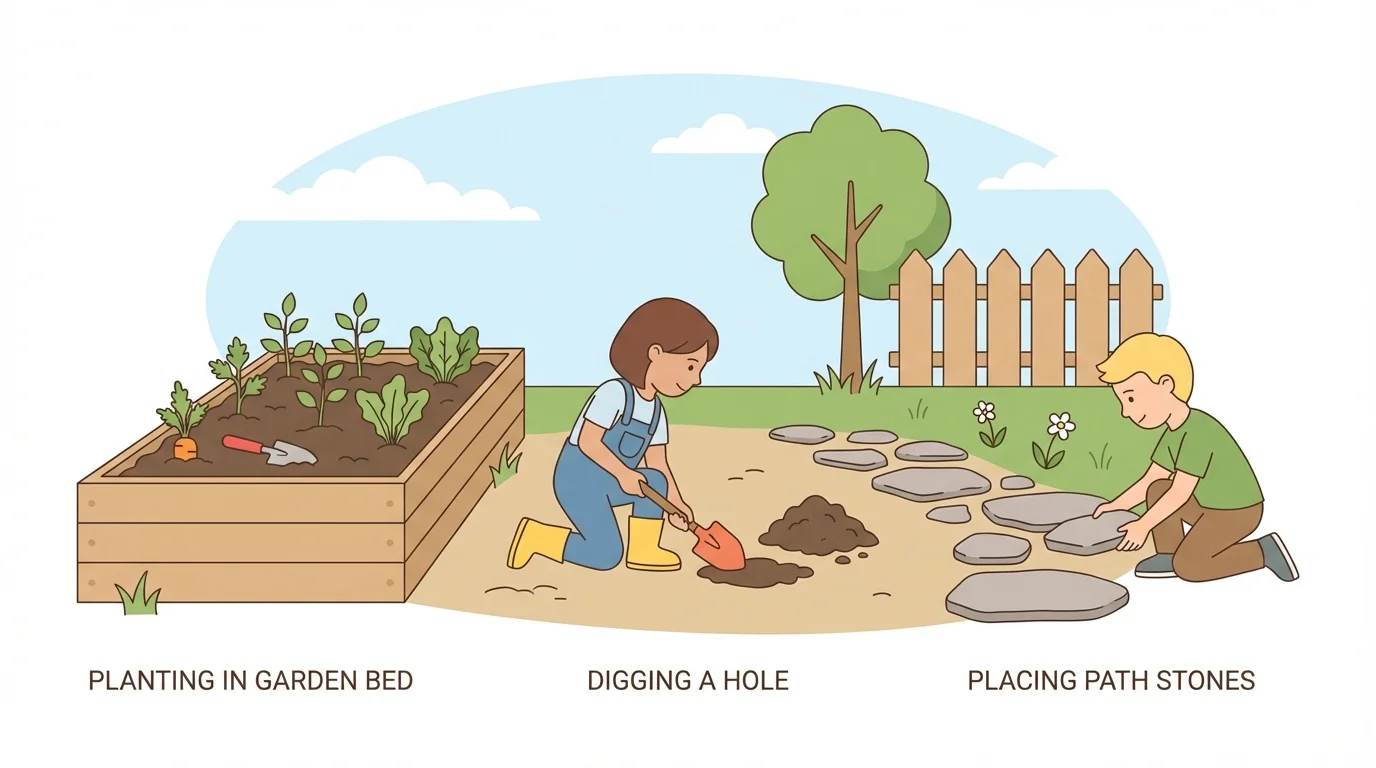
Some changes help people. A garden gives a place for plants to grow. A path helps people walk safely. A pond edge built with stones may stop some soil from washing away. This shows that people can use Earth materials to solve problems in everyday life.
People use and change Earth materials when they dig, build, plant, and make places safer or more useful. Learning this helps children connect natural materials to human choices and to the world they see around them.
Later, children may learn more about wind, rain, and moving water changing the land too. For now, it is enough to know that both nature and people can shape the ground.
Earth materials are useful, so we should treat them with care. Clean water is important. Healthy soil helps plants grow. Rocks and sand should be used safely and in the right place. Children can begin to learn not to throw rocks, not to waste water, and to help care for gardens and outdoor spaces.
Looking again at [Figure 3], the same actions that change the ground can also help it. Planting in soil, making a careful path, and taking care of a garden are good examples of people using Earth materials wisely.
We use our senses to learn about the world. In science, seeing, touching carefully, and talking about what we notice help us understand materials and changes.
By the end of the preschool years, children may notice common Earth materials, talk about how they feel and look, tell simple ways people use them, and recognize that people can change the land around them. These are important first steps in understanding the Earth.
