Have you ever watched an ice cube turn into water? That is matter changing right before your eyes. The world is full of changes: a banana gets mushy, clay gets squished, and water can become ice. These changes are interesting because they help us notice what things are like and what can happen to them.
Matter is anything that takes up space. Water is matter. A ball is matter. Sand is matter. Your cup, your shoe, and your snack are all matter too. Matter can look different, feel different, and change in different ways.
Matter is the "stuff" things are made of. A change happens when matter looks, feels, or acts different from before.
We can notice changes by looking carefully. Sometimes matter changes size, shape, color, or temperature. Sometimes it changes from hard to soft, or from solid to liquid.
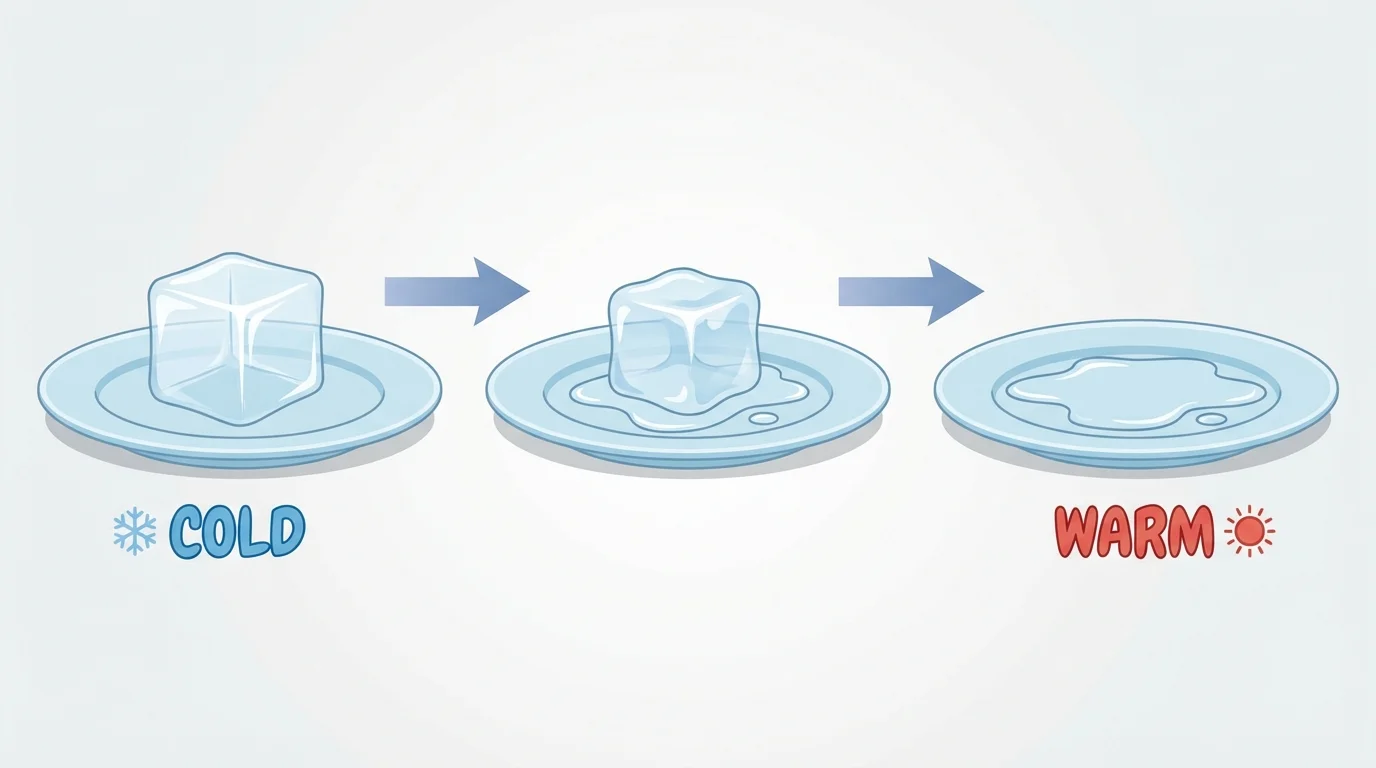
A change can be easy to see, as [Figure 1] shows with ice becoming water. Ice is hard and cold. When it gets warmer, it melts. Then it becomes liquid water.
A toy block can stay the same block even if you move it. But clay changes shape when you press it. Paper changes shape when you tear it. A cracker changes when you crush it into tiny pieces.
Some things mix together. When you stir water and juice powder, the drink looks different from plain water. When rain falls on dry dirt, the dirt can become dark and muddy.
Everyday examples of changes
Step 1: Ice in a cup sits in a warm room.
The ice melts and becomes water.
Step 2: A child presses soft dough.
The dough changes shape.
Step 3: A banana is peeled and left out.
It may become brown and softer.
These are all changes in matter. We notice what the matter was like first, and then we notice how it is different later.
Some changes can go back. Water can freeze and become ice again. Ice can melt and become water again. This is a change we can see many times.
Some changes do not go back easily. If you tear paper, it does not become one whole sheet again. If you smash a cracker, it does not turn back into one cracker. Young scientists can still notice these changes even if they do not use big words for them yet.
Water is a great example of changing matter. It can be ice, liquid water, or water vapor in the air.
When we compare "before" and "after," we learn more about matter. We can ask: Was it hard before? Is it soft now? Was it cold before? Is it warm now?
A cause and effect relationship means one thing happens and then another thing happens because of it. Heat, cold, and pushing can cause matter to change, as [Figure 2] shows. If something gets warm, it may melt. If something gets very cold, it may freeze.
Pushing, pulling, squishing, and breaking can also cause change. When you press clay, your hands cause the clay to flatten. When you bend a pipe cleaner, it changes shape because you pushed and pulled it.
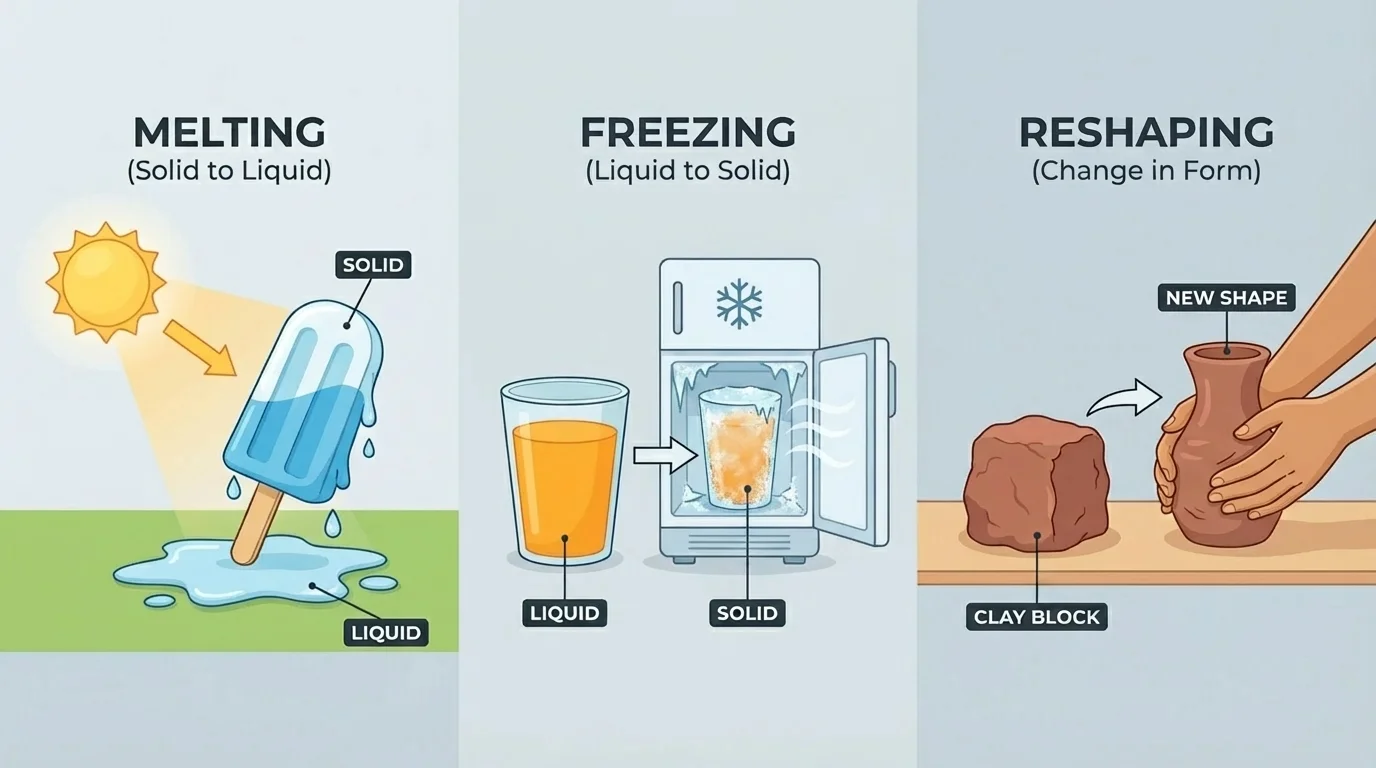
Mixing can cause change too. Flour and water together make a sticky mixture. Soap and water make bubbles. In the kitchen, heat changes food when adults cook. Batter changes into pancakes. An egg changes when it is cooked.
Cause and effect in matter means we look for what made the change happen. The cause is what happened first, such as warming, cooling, or pressing. The effect is the change we notice, such as melting, freezing, or changing shape.
We can use simple words to tell the story of a change: "The ice was cold and hard. The room was warm. The ice melted. Now it is water." The pictures in [Figure 1] and [Figure 2] help us connect what caused the change to what happened next.
We see changing matter at home, outside, and at school. Butter gets soft on warm toast. Wet clothes dry in the sun. Puddles shrink after a sunny day. Snow or frost can melt when the weather gets warmer.
At bath time, a bar of soap can get smaller as it is used with water. In the garden, a dry sponge becomes bigger and softer when it soaks up water. In playtime, stacking blocks does not change the blocks themselves, but molding sand changes its shape.
Your senses help you observe matter. You can look for color and shape, touch to notice hard or soft with safe materials, and listen for sounds like a cracker snapping.
Real-world scientists also notice change in matter. Cooks watch food change while heating. Builders test materials to see if they bend or break. Doctors use ice packs because cold can change how something feels.
To notice matter change, look slowly and talk about what you see. Use words like hard, soft, wet, dry, warm, and cold. You can say what happened first and what happened next.
A scientist can observe carefully. That means watching closely. When you observe, you may notice that the same matter can change in more than one way. Water can be cold, then frozen, then melted. Clay can be rolled, pressed, and flattened.
Noticing change helps us understand the world. Matter is all around us, and it is always doing interesting things.
