Why is a spoon hard, a pillow soft, and water able to flow? The things around us are made from different kinds of materials. We can look at them, touch them carefully, and talk about what they are like. When we do that, we are being young scientists.
A toy car may be made of plastic and metal. A window may be made of glass. A shirt may be made of fabric. A table may be made of wood. Water, sand, paper, and clay are materials too. Different materials have different jobs because they have different properties.
We can describe a material by asking simple questions. What is it made of? What does it feel like? What does it look like? Can it bend? Can it pour? Can it soak up water? These questions help us observe carefully.
Material is what something is made from. A property is something we can notice about a material, like whether it is hard, soft, smooth, or rough.
Some objects are made from one material. Some are made from many materials. A rain boot may be rubber on the outside and soft fabric inside. Each part is chosen for a reason.
Scientists use words to tell what materials are like, as shown in [Figure 1]. We can describe a ball as smooth, a rock as hard, a blanket as soft, and a sponge as squishy. We can also say whether something is wet or dry, heavy or light, clear or not clear.
When we describe something, we use our senses safely. We look closely. We touch gently. We never taste unknown materials, and we smell only when an adult says it is safe.
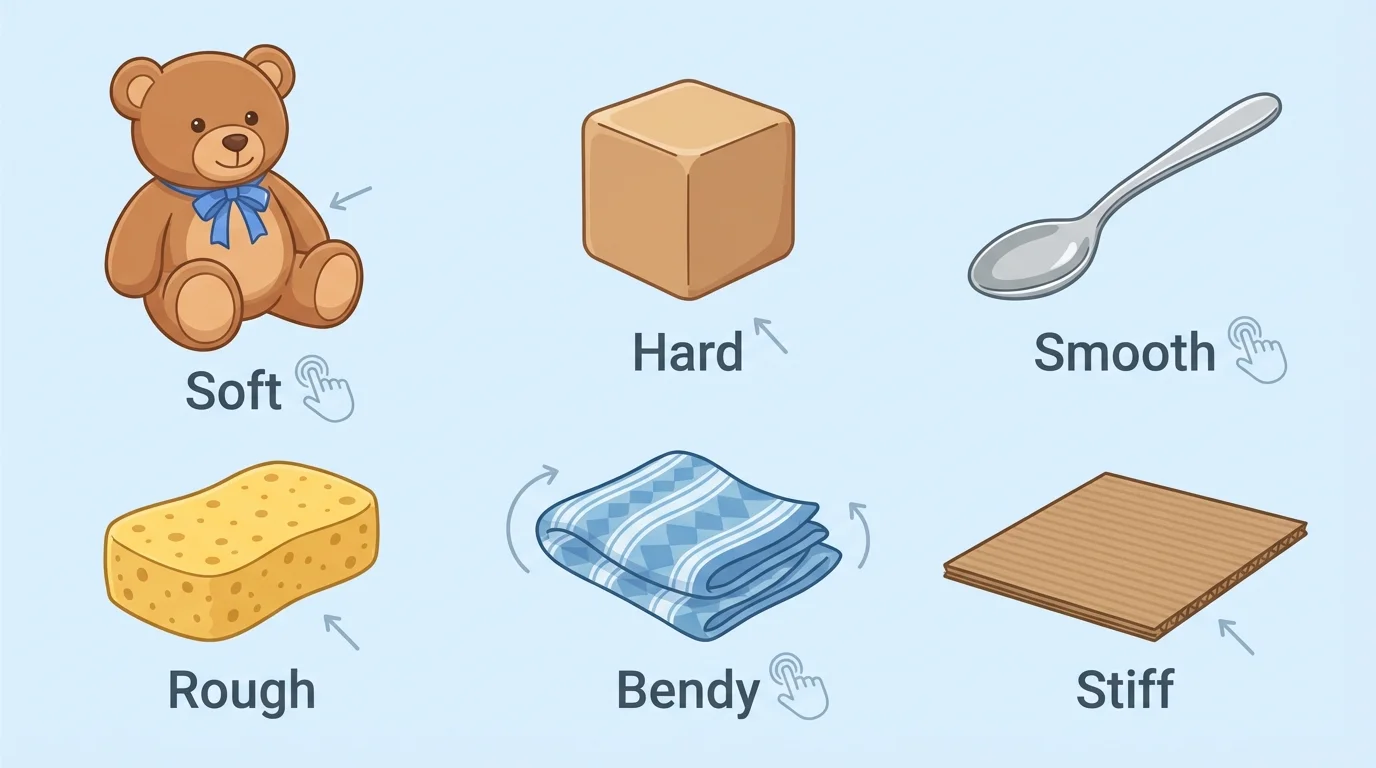
A plastic cup may be smooth and light. A metal pan may be hard and shiny. A wool scarf may feel soft and warm. These property words help us compare one material with another.
Some materials can bend easily. Others stay stiff. Fabric bends and folds, but thick cardboard is stiffer. This matters when people choose materials to make clothes, boxes, and books.
Glass can look delicate, but it is very useful because it is hard and often clear. That is why it works well for many windows.
We can also compare how materials act with water. A towel can soak up water, but a plastic raincoat helps keep water out. The properties we observe help explain why different objects are useful.
[Figure 2] shows that some materials are solids, and some are liquids. A solid often keeps its own shape, like a block, spoon, or rock. A liquid flows and takes the shape of its container.
Water, juice, and milk are liquids. They can be poured. A toy block stays block-shaped when you move it. That is a solid. Sand can be tricky because it pours, but each tiny grain is a little solid piece.
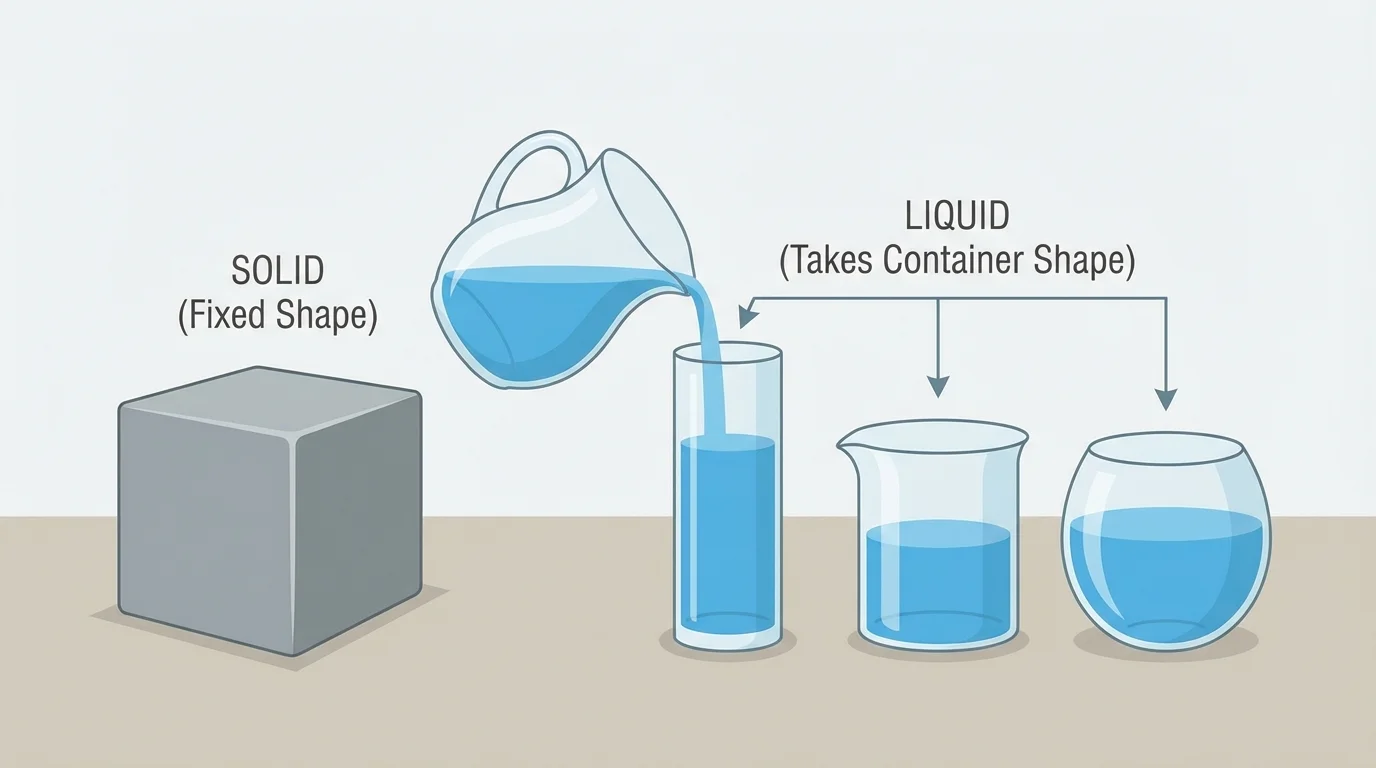
When water is in a tall cup, it looks tall. When water is in a wide bowl, it looks wide. The water changes shape because the container changes shape. The block does not do that.
Later, when we talk about changes, we can remember [Figure 2]. It helps us notice how a substance may stay the same material even when its shape looks different.
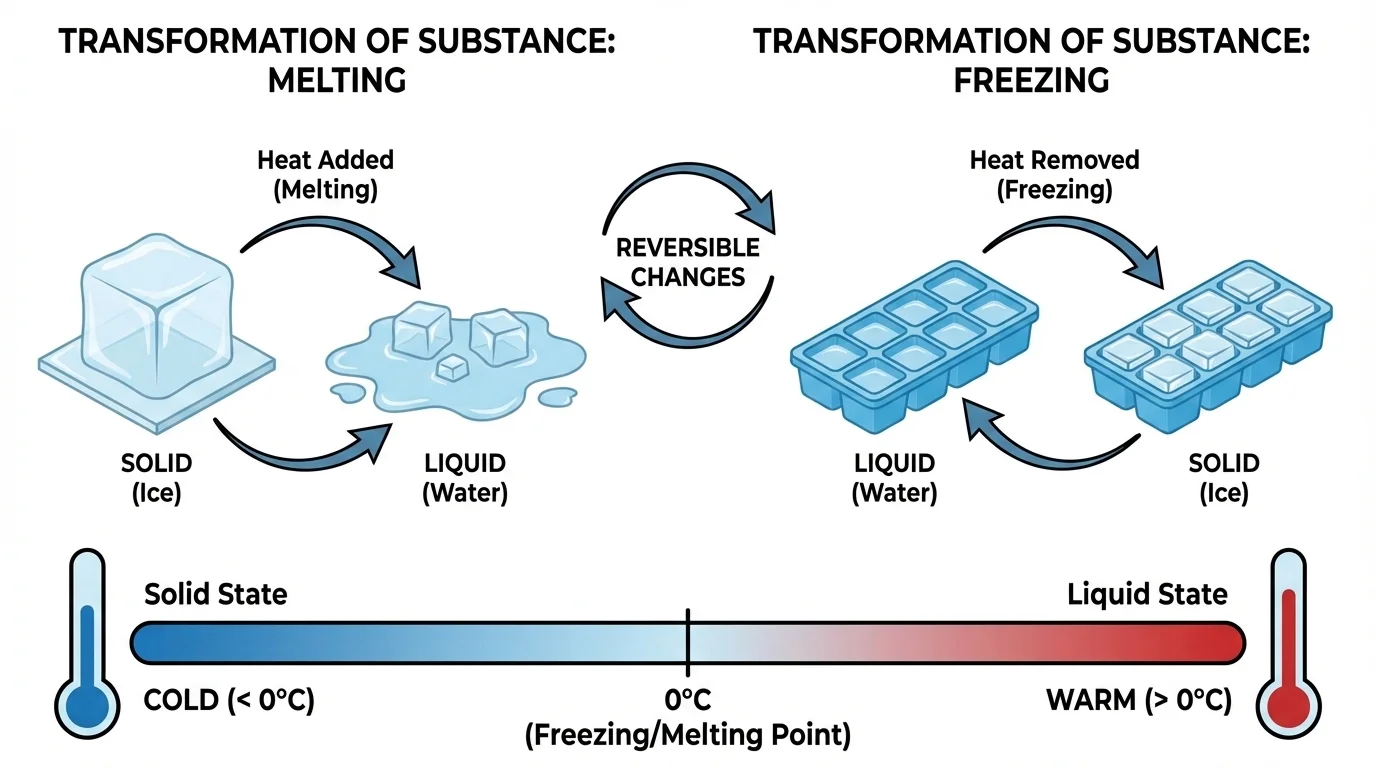
[Figure 3] shows that materials can change in many ways. Sometimes people cause the change by tearing, cutting, squashing, or mixing. Sometimes heat or cold causes a change, such as with water and ice.
If you tear paper, the paper is still paper, but now it is in smaller pieces. If you roll clay into a ball and then flatten it, the clay is still clay. The shape changed, but the material is still the same.
Ice can melt and become liquid water. Water can freeze and become ice. Warmth can cause melting. Cold can cause freezing. This is a simple change with a clear cause and effect.
When we mix paint, a yellow paint and a blue paint can make green paint. The colors change because the paints were mixed together. When ingredients are cooked, they may change more. Wet batter can become a cake after heating. The heat causes the substance to change.
Cause and effect in material changes means one thing makes another thing happen. If the sun warms an ice pop, it melts. If water is put in a freezer, it freezes. If paper is cut with scissors, it becomes smaller pieces.
Not every change looks the same. Some changes are about shape, like bending foil. Some are about temperature, like melting ice. Some are about mixing, like stirring sand into water. Careful observing helps us tell what happened.
Real-world examples of changing substances
Step 1: A child leaves an ice cube on a plate.
The ice cube gets warmer.
Step 2: The ice melts.
The solid turns into liquid water.
Step 3: The child tells the cause and effect.
The warmth caused the melting.
This helps us talk about what changed and why it changed.
We can think again about [Figure 3]. The picture makes it easier to see that the same substance, water, can look different when it is frozen or melted.
People choose materials for a purpose. A cup should hold water, so it needs to be strong enough and not leak. A window should let light through, so clear glass is helpful. A blanket should feel soft and help keep us warm.
A spoon is often metal because metal is hard and strong. A raincoat is often made from a material that helps keep water out. A playground ball may be made from rubber because rubber can bounce.
| Object | Material | Helpful property |
|---|---|---|
| Window | Glass | Clear |
| Towel | Fabric | Soaks up water |
| Spoon | Metal | Hard and strong |
| Rain boot | Rubber | Helps keep water out |
| Pillow | Fabric and stuffing | Soft |
Table 1. Everyday objects, the materials they are made from, and useful properties.
When we compare a towel and a raincoat, we learn something important: different jobs need different properties. That is why observing materials matters in real life.
Young scientists observe first. They look closely and notice details. Then they describe what they see using simple words such as hard, soft, smooth, rough, wet, dry, bendy, and stiff.
They also compare. One rock may feel smoother than another. One cup may be heavier than another. When something changes, they talk about the cause and the effect. What happened first? What happened next?
We can return to [Figure 1] and remember that property words help us talk clearly. We can also return to [Figure 2] and notice that liquids flow while many solids keep their shape.
Using our senses carefully helps us learn about the world. Looking, touching gently, and comparing are important science skills.
When we observe, describe, and discuss materials, we learn more than names. We learn how properties help objects do their jobs and how changes happen for reasons.
