A tiny seed and a playful puppy seem very different, but both are alive. That means both need basic resources to live and grow. When we look closely at living things, we can see that they have basic needs. We can also see that they do not all get those needs in the same way.
A living thing is something that grows, needs food or makes food, and needs water and air. People, dogs, birds, fish, trees, flowers, and grass are living things. A toy car and a rock are not living things because they do not grow or need food and water.
Living things are things that are alive. They need resources such as water, air, food, and a safe place to live so they can grow and stay alive.
We can learn about living things by watching them carefully. We may see a cat drinking water, a bird building a nest, or a plant turning toward light. These observations help us understand what each living thing needs.
All living things need important things to survive, as [Figure 1] shows. Many living things need water, air, food, and a place to live. If a living thing does not get what it needs, it may not survive.
Plants and animals share some of the same needs. A dog drinks water. A flower also needs water. A bird needs air. A tree needs air too. Animals eat food, and plants make their own food using light, water, and air.
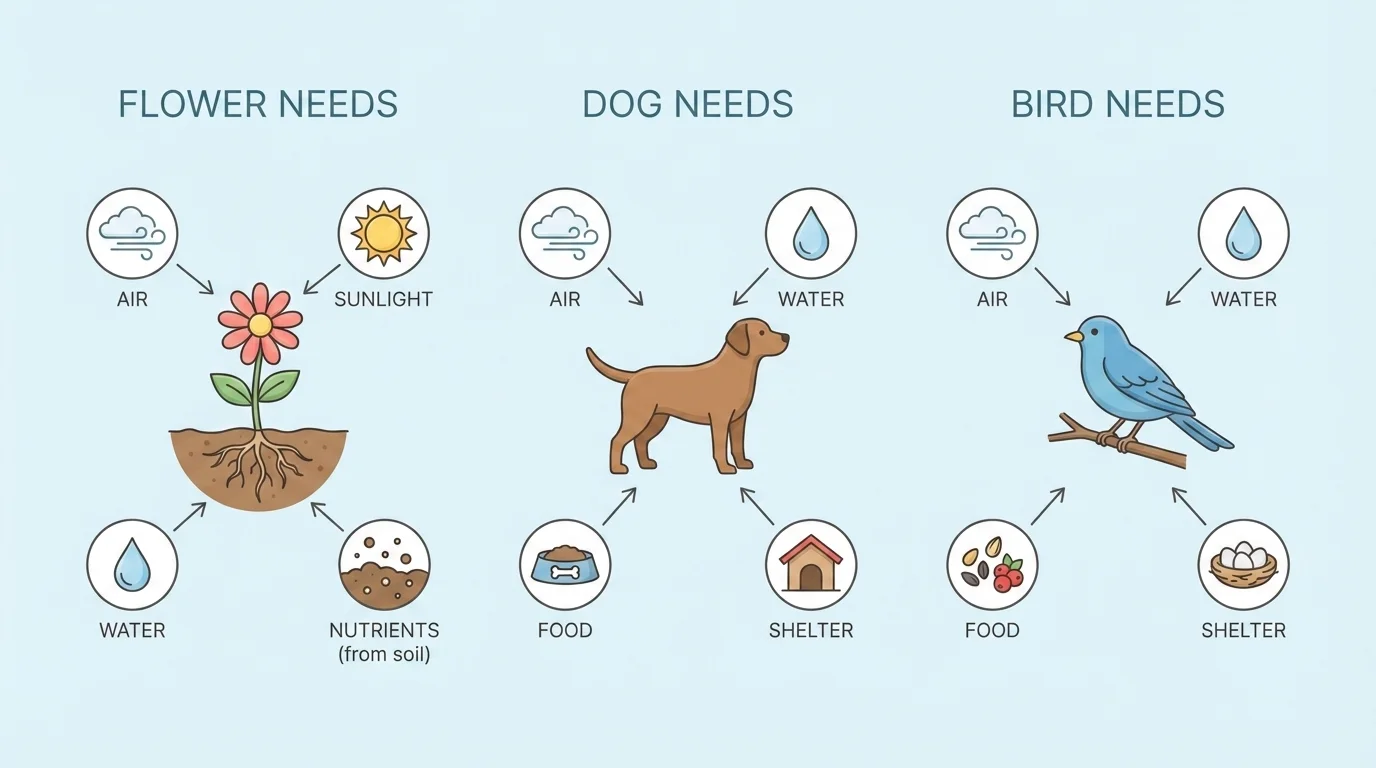
Some needs are a little different. Many plants need sunlight and soil. Animals do not need soil, but many animals need shelter, such as a nest, a den, or a home. Even when needs are different, every living thing needs the right place and the right resources.
Some plants can grow in very dry places, and some can grow near lots of water. Living things may live in different places, but they still need the things that help them stay alive.
When we compare living things, we can ask simple questions. Does it need water? Does it need air? Does it need food? Where does it live? These questions help us find similarities and differences.
Plants and animals are alike because both are living things, and [Figure 2] helps us see their shared needs and their different ways of meeting them. Both can grow. Both need water and air. Both need energy to live.
Plants are different from animals in an important way. A plant usually stays in one place and makes its own food. An animal moves from place to place and eats food. A rabbit nibbles grass, but the grass does not nibble anything. The grass uses sunlight, water, and air to make food.
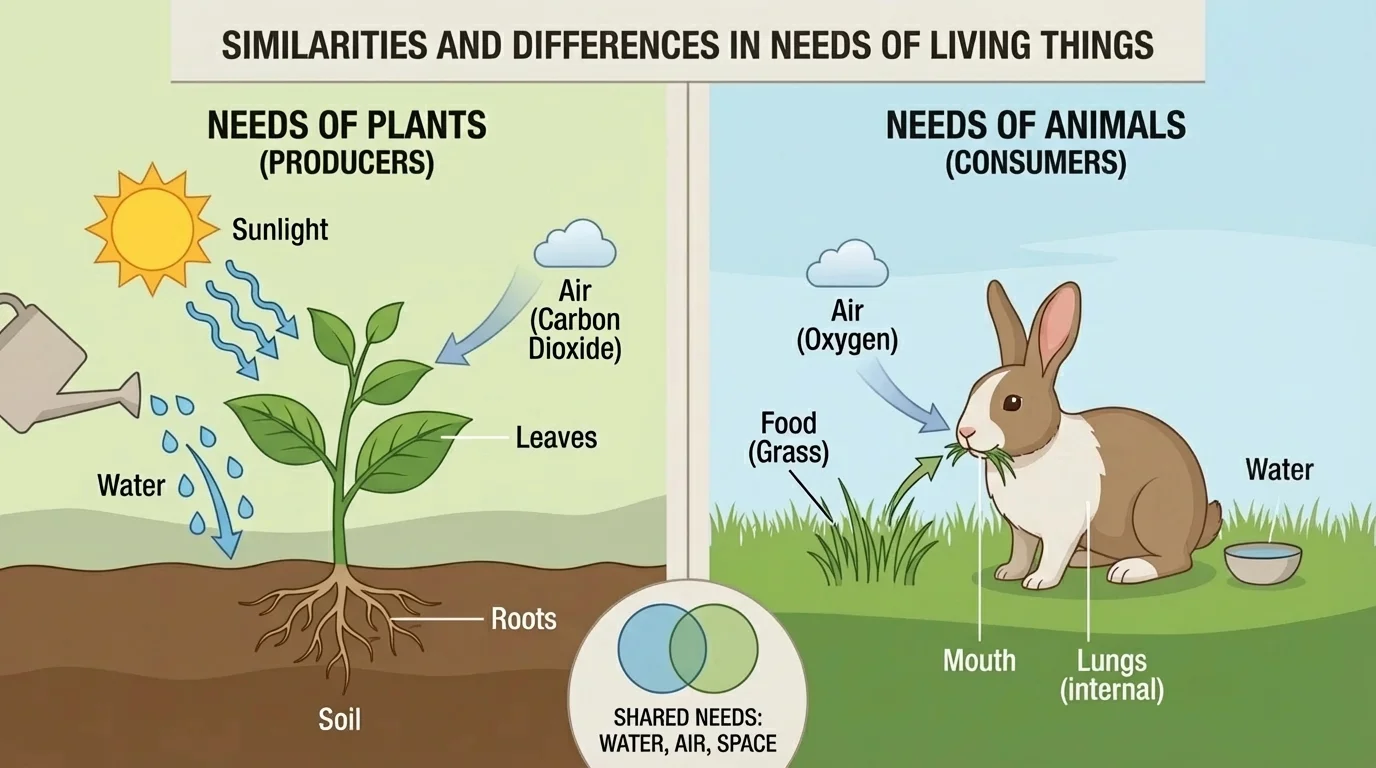
Animals are different from one another too. A fish lives in water. A bird lives in a nest or on branches. A dog may live in a house or yard. Each animal needs a habitat that fits its body and behavior.
Same needs, different ways
Living things can need the same kind of resource but use it differently. For example, both a tree and a cat need water. The tree takes water in through its roots, while the cat drinks water with its mouth. This is an important way to compare living things.
Plants are different from one another as well. A cactus stores water for dry places. A water lily grows where there is lots of water. Both are plants, but they live in different places because their needs are met in different ways.
Real examples make these ideas easier to notice, and [Figure 3] shows how different living things fit different places. A fish needs water all around it to live. A bird needs air, food, water, and a safe place for its eggs. A tree needs water, air, sunlight, and soil so its roots can hold it in place.
A child at home might see a houseplant by a window. The plant leans toward the light. That observation tells us light is important for the plant. The same child may see a pet dog go to its bowl when it is thirsty or hungry. That observation tells us dogs need water and food every day.
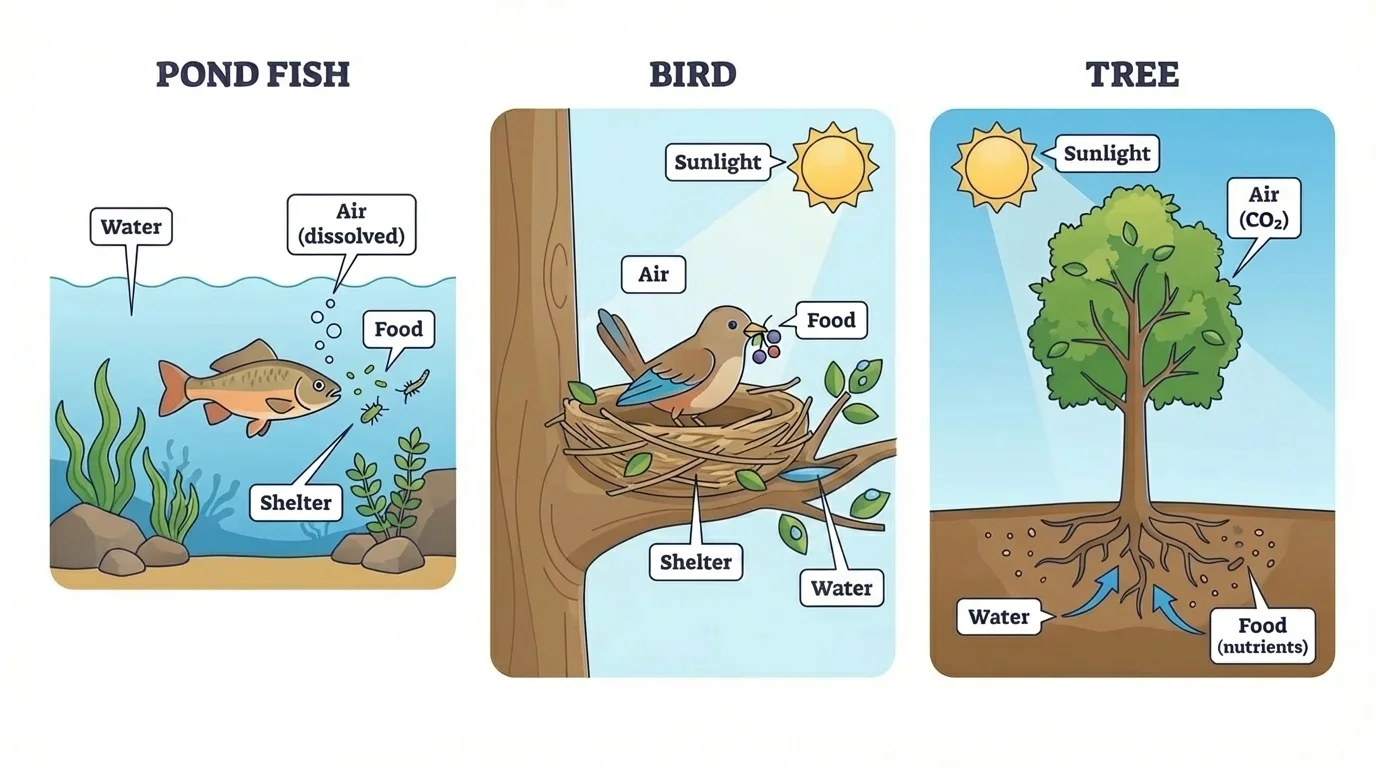
At a park, we may notice ducks in a pond, squirrels in trees, and grass on the ground. These living things share some needs, but they do not live in exactly the same place. Their surroundings help meet their needs in different ways.
Observation example
Step 1: Look at a flower.
Notice that it grows in soil and reaches toward light.
Step 2: Look at a bird.
Notice that it moves, eats, drinks, and rests in a nest.
Step 3: Compare them.
Both are living things. Both need water and air. The flower stays rooted, but the bird moves from place to place.
When we describe what we see, we use words like same, different, needs, grows, and lives. These words help us talk like young scientists.
To observe means to look carefully. We can use our eyes to notice color, size, shape, and movement. We might see that leaves are green, fur is soft, or roots grow down into the soil. We can compare what we see without guessing too much.
For example, we can say, "The plant is small and green," or "The hamster is drinking water." We should say only what we notice. Careful observation helps us understand needs clearly.
Living things are not all the same shape, size, or color. Even when they look different, they can still share important needs like water and air.
Looking again at shared needs from [Figure 1], we can tell that a flower, a bird, and a dog all need resources from their environment. Looking again at [Figure 2], we can also tell that they do not all get food in the same way.
Living things need the right things at the right time. Without water, a plant may droop. Without food, an animal becomes weak. Without a safe place, young animals may not be protected. These needs help living things stay alive, grow, and reproduce.
People use this idea in real life. Gardeners water plants and place them where they can get sunlight. Pet owners give animals food, water, air, and shelter. Zookeepers and veterinarians also pay attention to what each animal needs to stay healthy.
When we understand similarities and differences in living things, we become better at caring for them. We learn that all living things matter, and each one has needs that can be observed and studied.
Examples from [Figure 3] remind us that a fish, a bird, and a tree may live in different places, but each depends on its habitat to provide what it needs. Observing these patterns helps us understand the natural world.
